FIBC Bag Uses by Industry
Whether you are sourcing FIBC bags for mining and minerals, bulk bags for the chemical industry, construction bulk bags or agriculture bulk bags, industry labels do not decide FIBC bag type. Four product facts do: flammability as a dust, moisture behaviour, bulk density and abrasion, and regulatory classification. The industries below are entry points — each one lands on the same four questions.
What Actually Decides Your Bag Type
Two buyers in the same industry routinely need different bags. These four properties are what a supplier specifies from — every industry section further down is an application of them.
Flammability as a dust
Minimum Ignition Energy and site zone classification decide Type A, B, C or D. The chemical name alone does not — sugar, aluminium powder and milk powder all form ignitable dust clouds.
Type A vs B vs C vs D static protection →Moisture behaviour
Hygroscopic products need a coating, a liner, or both. Products that respire — firewood, onions, root vegetables — need the opposite: ventilated fabric that lets the load breathe.
FIBC liner types explained →Bulk density and abrasion
Fabric weight follows bulk density and edge sharpness, not fill weight. A 1,000 kg bag of ore concentrate loads the fabric very differently from 1,000 kg of resin pellets.
Safety factor 5:1 vs 6:1 →Regulatory classification
Dangerous goods under IMDG or ADR require UN-certified construction. Food contact requires compliant liners and traceability. Both are decided before any other spec detail.
UN 13H1–13H4 marking codes →Six Industries, Six Failure Modes
Each industry has one dominant way bulk bags fail in the field. The spec that prevents it is what separates a working bag from a cheap one.
Chemicals
- · PTA and resin powders
- · Pigments and dyes
- · Solvent-adjacent intermediates
- · Powder coatings
The problem: Chemical buyers can't risk the wrong static classification — an ungrounded conductive bag near solvent vapor is an ignition source, not a packaging inconvenience.
Our fix: We specify Type C (grounded) or Type D (dissipative, no grounding) based on your zone classification and Minimum Ignition Energy data, with a current IEC 61340-4-4 test report for the exact fabric batch.
Before you order: Tell us your product's MIE value and site zone classification (ATEX/NEC) — that determines Type B vs C vs D, not the chemical name alone.
FIBC for chemical powders, granules and flakes →Fertilizer
- · Urea prill and granules
- · NPK blends
- · DAP and MAP
- · Ammonium nitrate (where not restricted)
The problem: Hygroscopic fertilizer products absorb moisture through even small fabric imperfections, caking product and damaging bag integrity mid-shipment.
Our fix: Coated fabric and form-fit PE liners keep moisture out during ocean freight, and baffle construction reduces the wasted space that comes from round-filled bags shifting in transit.
Before you order: Confirm whether your fertilizer grade is classified as dangerous goods (some ammonium nitrate blends are) — that decides whether you need UN certification, not just a coated liner.
Bulk bags for fertilizer: caking and moisture control →Minerals & Mining
- · Metal ores and concentrates
- · Silica sand
- · Industrial salt
- · Crushed aggregates
The problem: Abrasive minerals wear through undersized fabric faster than buyers expect, leading to torn bags and lost product at the discharge point.
Our fix: We size fabric weight and safety factor to your specific bulk density and handling method — 6:1 multi-trip construction for repeated use, heavier GSM for sharp-edged aggregates.
Before you order: Give us the bulk density (t/m³) and whether the bag will be reused or single-trip — abrasive fines wear fabric faster than the fill weight alone suggests.
FIBC bulk bags for mining ore and minerals →Food & Feed
- · Grain, rice and cereal
- · Sugar and starch
- · Animal feed and additives
- · Food-safe minerals
The problem: Food safety audits fail on traceability gaps, not just contamination — buyers need to prove which batch a bag came from, not just that it's "food grade."
Our fix: Clean-room production, FDA-compliant liners and batch-numbered tags with production date and origin give your quality team a complete paper trail for every shipment.
Before you order: Ask your buyer whether they need a specific certification (BRC, a named FDA CFR section) before ordering — "food grade" alone is not a single fixed standard.
What makes a bulk bag food grade →Construction
- · Cement and dry mortar
- · Gypsum
- · Sand and aggregates
- · Demolition waste
The problem: Standard bags shipped loose waste container space, and freight cost per ton climbs fast on high-volume, low-margin construction materials.
Our fix: Baffle construction packs tighter on pallets, cutting cost-per-ton on freight for high-volume routes — we model the container loading difference before you commit to a spec.
Before you order: High-volume, low-margin materials are exactly where baffle construction earns back its premium — ask for a per-container cost comparison, not just a per-bag quote.
Bulk bags for cement: moisture protection and coating →Agriculture
- · Firewood and kindling
- · Onions and potatoes
- · Root vegetables
- · Seed stock
The problem: Sealed bags trap moisture around firewood, onions and root vegetables, accelerating mold and rot before the product reaches the buyer.
Our fix: Ventilated woven strips let air circulate through the load — we tune the vent ratio to your storage conditions (covered warehouse vs. open yard) instead of a fixed default.
Before you order: Tell us whether storage is a covered warehouse or an open yard — that decides how much open mesh you can afford before rain or pests become the bigger risk than moisture.
Ventilated bulk bags for firewood and agriculture →Bulk Bag Guides for Your Product
Each guide starts from one material — what it does to a bag in filling, storage and transport — and ends with the spec that handles it.
Hemp Super Sacks: You're Buying Volume, Not Strength
Dried hemp biomass is so light a super sack fills at under a fifth of its rating. Size the bag for volume, and seal it only once drying has finished.
Read guide
Super Sack Cofferdams: The Bag Holds Weight, Not Water
A super sack cofferdam is a mass structure, not a seal. Woven polypropylene seeps, so the bag supplies ballast and a separate membrane has to stop the water.
Read guide
Bulk Bags for Coffee Beans: The 12% Moisture Problem
Green coffee is not a dry cargo. It ships in a narrow moisture band, and the real threat in a container is condensation putting water back into the bean.
Read guideDewatering Bulk Bags: The One FIBC Built to Let Water Out
Every other bulk bag keeps moisture away from the product. A dewatering bag does the opposite — and specifying it with coated fabric guarantees it will fail.
Read guide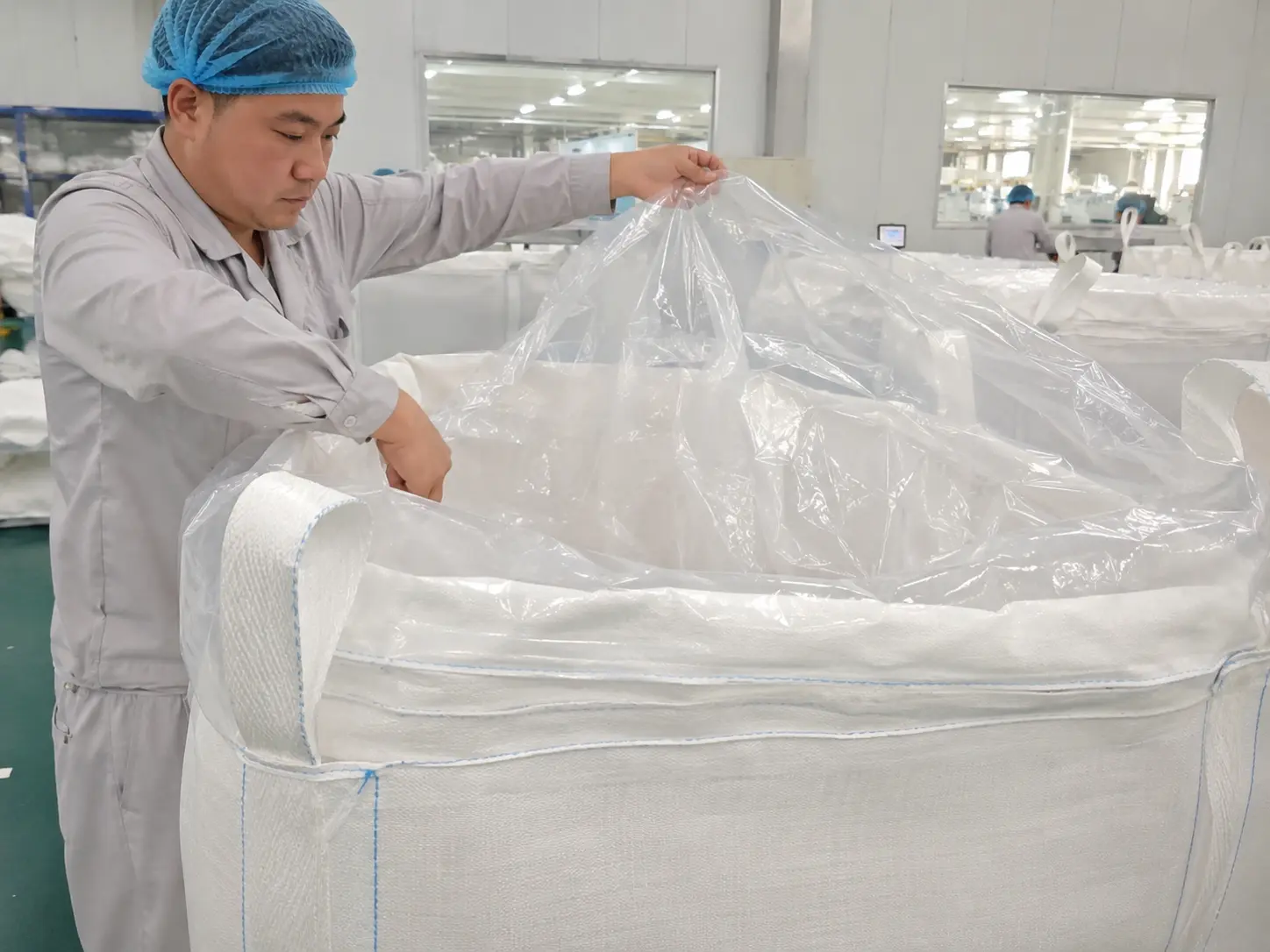
Bulk Bags for Fertilizer: Why NPK Blends Cake Faster Than Urea
Fertilizer caking is set by critical relative humidity, not by bag quality. Blended NPK absorbs moisture at humidity levels where straight urea stays dry.
Read guideBulk Bags for Mining: Abrasion, Not Moisture, Is the Risk
Dense, sharp-edged ore wears fabric faster than smooth granules — and high bulk density breaks generic sizing charts. Spec for both.
Read guideBulk Bags for Grain: Why Dried Crops Need Sealing
Dried grain needs its moisture content held steady, not vented. Ventilating a properly dried crop lets ambient humidity back in — the opposite goal.
Read guide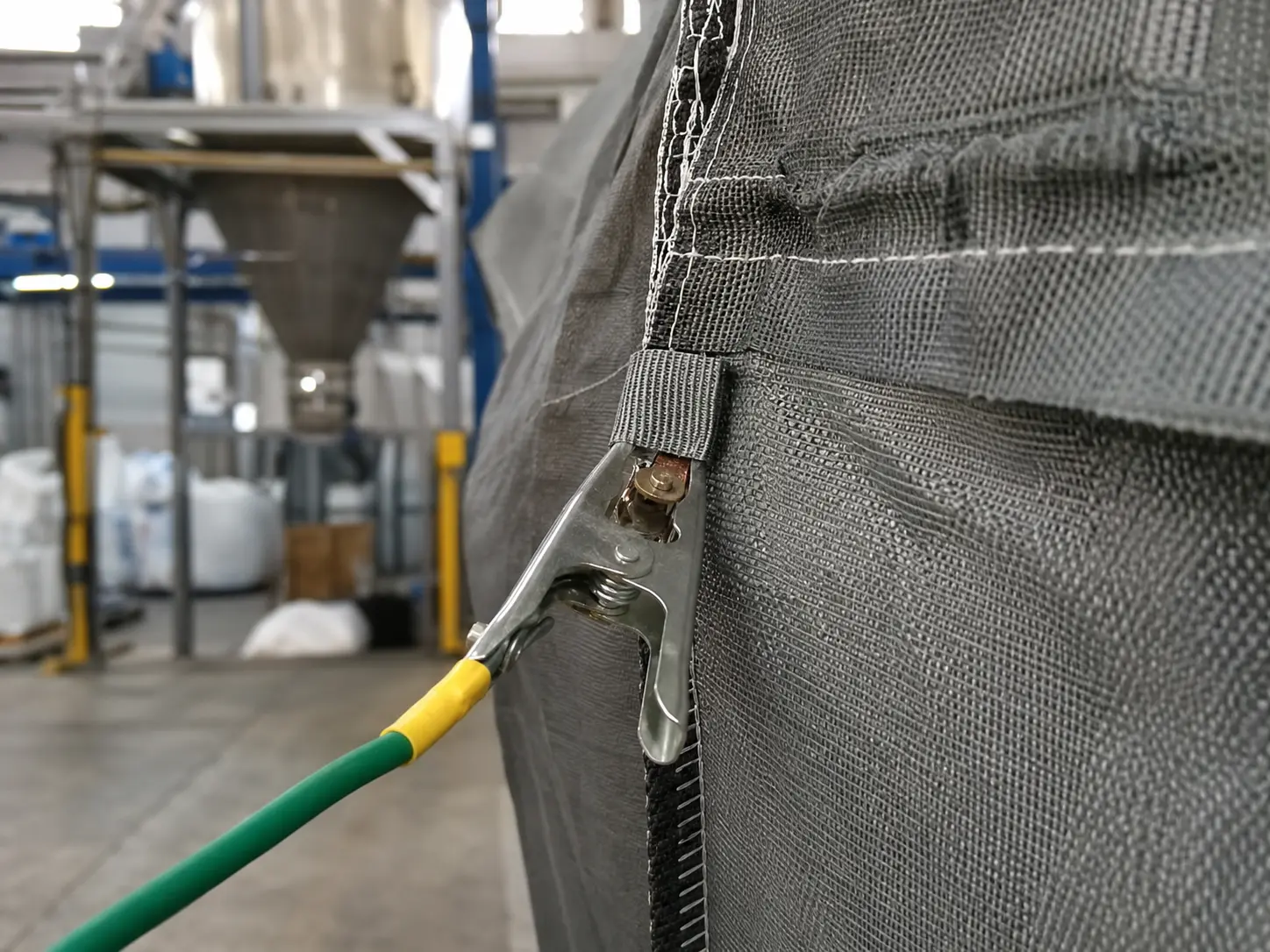
Bulk Bags for Resin: The Static Risk Pneumatic Fill Adds
Pneumatic conveying builds far more static than gravity fill, and molding-grade resin needs cleanliness a standard bag doesn't give. Spec for both.
Read guideBulk Bags for Cement: Why Moisture Means Total Loss
Cement doesn't degrade with moisture — it hydrates and hardens into an unusable mass. That changes how coating and liner get specified.
Read guideFIBC for Chemicals: Why Physical Form Drives the Spec
Powder, granule or flake changes dust risk, liner needs and fill style more than the chemical's name does. Here's how to spec by form.
Read guide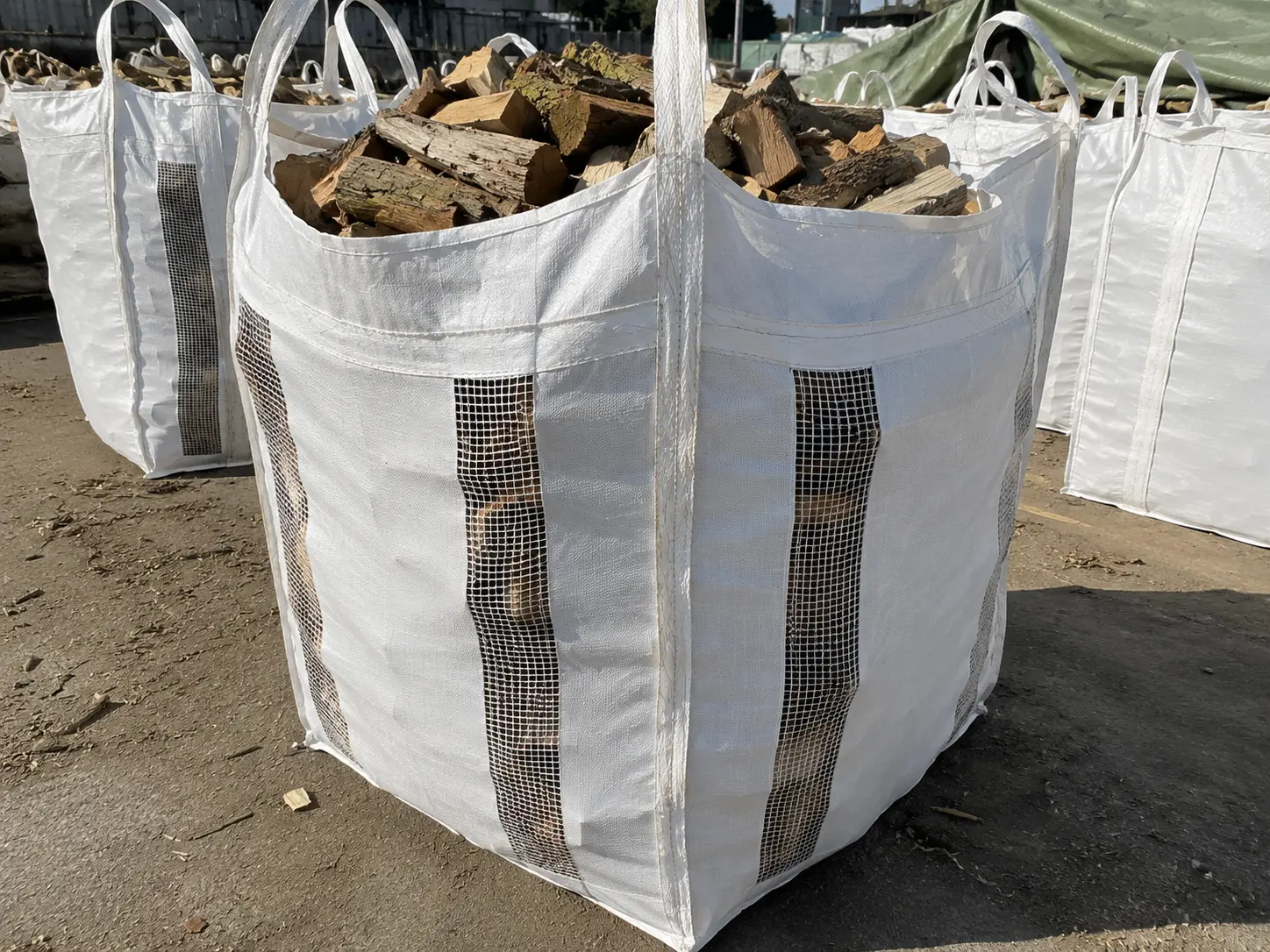
Ventilated Bulk Bags for Firewood: Why Airflow Beats Sealing
Firewood and produce need airflow, not sealing — a solid bag traps the moisture that causes rot. Here's how to spec ventilated construction right.
Read guideWhich Bag Fits Which Industry
A general starting point, not a certification claim — always confirm against your specific product and site conditions.
| Industry | Type A | Anti-Static | Food Grade | UN Certified | Baffle | Ventilated |
|---|---|---|---|---|---|---|
| Chemicals | Possible | Recommended | — | Recommended | Possible | — |
| Fertilizer | Recommended | — | — | Possible | Recommended | — |
| Minerals & Mining | Recommended | — | — | — | Possible | — |
| Food & Feed | Possible | — | Recommended | — | Possible | — |
| Construction | Recommended | — | — | — | Recommended | — |
| Agriculture | Possible | — | Possible | — | Possible | Recommended |
Three Ways Buyers Get This Wrong
Each of these starts the same way: ordering against an industry name instead of the material in the bag.
"Food grade" gets treated as one standard
It is a category, not a specification. A European buyer working to BRCGS and a US buyer working to a named FDA CFR section will accept different documentation for the same bag. Fix the target standard before the bag spec.
BRC, FDA and EU food packaging certification →Non-chemical products are assumed non-hazardous
Dangerous goods classification follows the shipping code, not the industry. Some ammonium nitrate fertilizer blends, certain metal powders and a range of agricultural chemicals all trigger UN packaging requirements a standard bag cannot meet.
UN certified bulk bags →Type C is specified without a grounding routine
A Type C bag that is not clamped to earth on every fill and discharge cycle performs worse than Type B. Where grounding depends on an operator remembering, Type D removes the failure mode entirely.
Type C vs Type D: conductive or dissipative →Your Spec Checklist
Five questions. Answer them and any competent supplier can quote you accurately — leave them open and you will get a generic bag priced against a generic assumption.
- 01Can you state your product's Minimum Ignition Energy as a dust cloud? If the SDS does not list it, get that number before you choose a static type.
- 02Does a grounding clamp get connected on every single fill and discharge cycle at your site? If you cannot guarantee it, specify Type D rather than Type C.
- 03Is your product hygroscopic, or does it need to breathe? One answer points to coated fabric plus a liner, the other to ventilated construction — they are opposite builds.
- 04Do you know your bulk density in t/m³ and whether bags are single-trip or reused? Those two facts set fabric weight and the 5:1 or 6:1 safety factor.
- 05Is the product classified as dangerous goods, or is it destined for food contact? Settle that first — it overrides every other spec decision on the list.
Final Thoughts
You do not need to know which bag code you want before you talk to a supplier. You do need the four facts about your product — how it behaves as a dust, how it handles moisture, how heavy and abrasive it is, and how it is classified for shipping. Send us those, and we come back with a spec you can check, not a catalogue page.
Application Questions
How do I know which FIBC type my industry needs?
Start with two questions: is your product flammable as a dust, and does it need to stay dry or ventilated? Flammable powders need Type B/C/D anti-static protection; moisture-sensitive produce needs ventilation; everything else can typically use standard Type A. Send us your product and we will confirm.
Why does the same industry use several different bag types?
Because the industry label describes the buyer, not the product. A chemical distributor may ship inert pigment in a Type A bag and a solvent-adjacent powder in a Type C on the same day. Bag type follows the material properties of each individual product line.
What happens if I order the wrong FIBC type for my product?
The consequences scale with what went wrong. An undersized fabric weight shows up as torn bags and lost product at discharge. A wrong static classification near ignitable dust or solvent vapor is a safety incident, and using a non-UN bag for dangerous goods can stop the shipment at the port.
Can one factory supply multiple bag types for different product lines?
Yes. Most importers running multiple product lines — for example a fertilizer distributor also handling minerals — order several FIBC types from the same supplier to consolidate freight and simplify their supply chain.
Can I use one bag spec across several products to simplify ordering?
Sometimes, by specifying to the most demanding product in the group. That works when the gap is small — a heavier fabric covers a lighter duty. It does not work across regulatory boundaries: a food grade or UN certified bag costs more than the non-regulated products in the same group need.
Do industry regulations affect which bag I can legally use?
Yes, particularly for hazardous chemicals (UN certification required under IMDG/ADR) and food products (FDA-compliant liners and traceability). Non-regulated products like construction aggregates have more flexibility in bag selection.
What if my product doesn't fit neatly into one industry category?
Many products cross categories — a food-safe mineral additive, for example, may need both food grade liners and mining-grade fabric weight. Tell us the product and its handling environment directly; we specify from those two facts, not from the industry label.
Tell Us Your Product — We'll Recommend the Right Bag
Send the product name, its MIE value if you have one, bulk density, whether it is food contact or dangerous goods, and your target bag size. That is enough for us to come back with a full spec.
Discuss Your Application