Your Export Desk for China's FIBC Industry
A supplier is worth trusting when they hand you the means to check them, not when they describe themselves well. We work directly with partner factories in Shandong — the heart of China's FIBC industry — and everything below is about what you can verify: how production is checked, what documents you get, and where you can put your own inspector in the process.
Where China's Bulk Bags Are Made
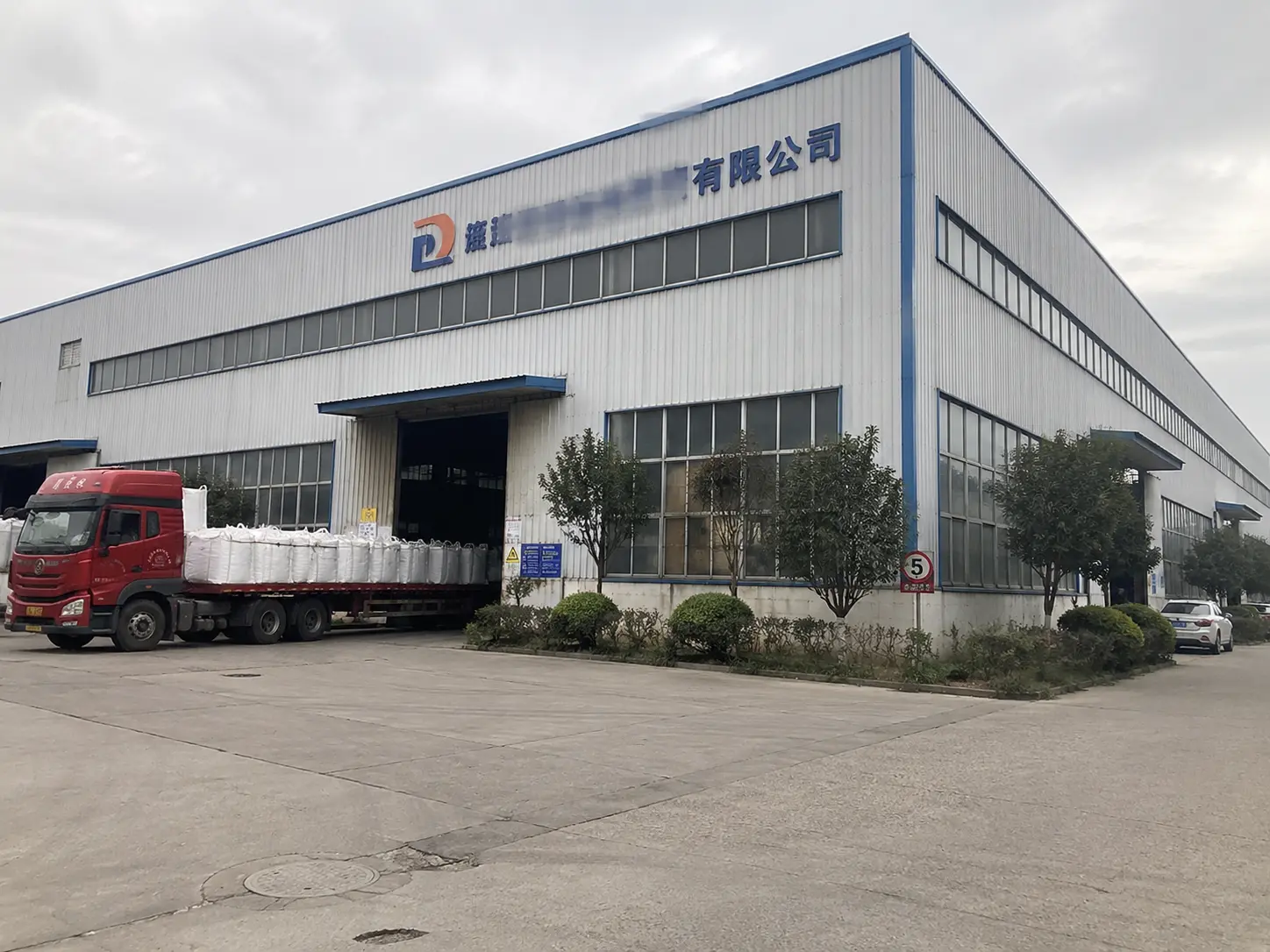
Shandong province — including the Zibo and Gaoqing area — is one of China's largest FIBC production clusters, with decades of export experience covering standard, food grade and UN certified bulk bags. China now accounts for roughly 38% of global FIBC production, and together with India supplies more than 70% of US bulk bag imports — this region is not a niche sourcing detour, it's where the industry scaled. The production process behind a woven PP bag is the same here as anywhere; the difference is depth of supply.
We built PackTonne on relationships with mid-sized export factories here: large enough to run consistent quality and export documentation, small enough to still take custom orders from importers who aren't buying by the container-ship-load yet. Large factories chase the biggest accounts first; small workshops can't guarantee export-grade quality. Our partner factories sit in the middle — motivated to earn your business and equipped to keep it.
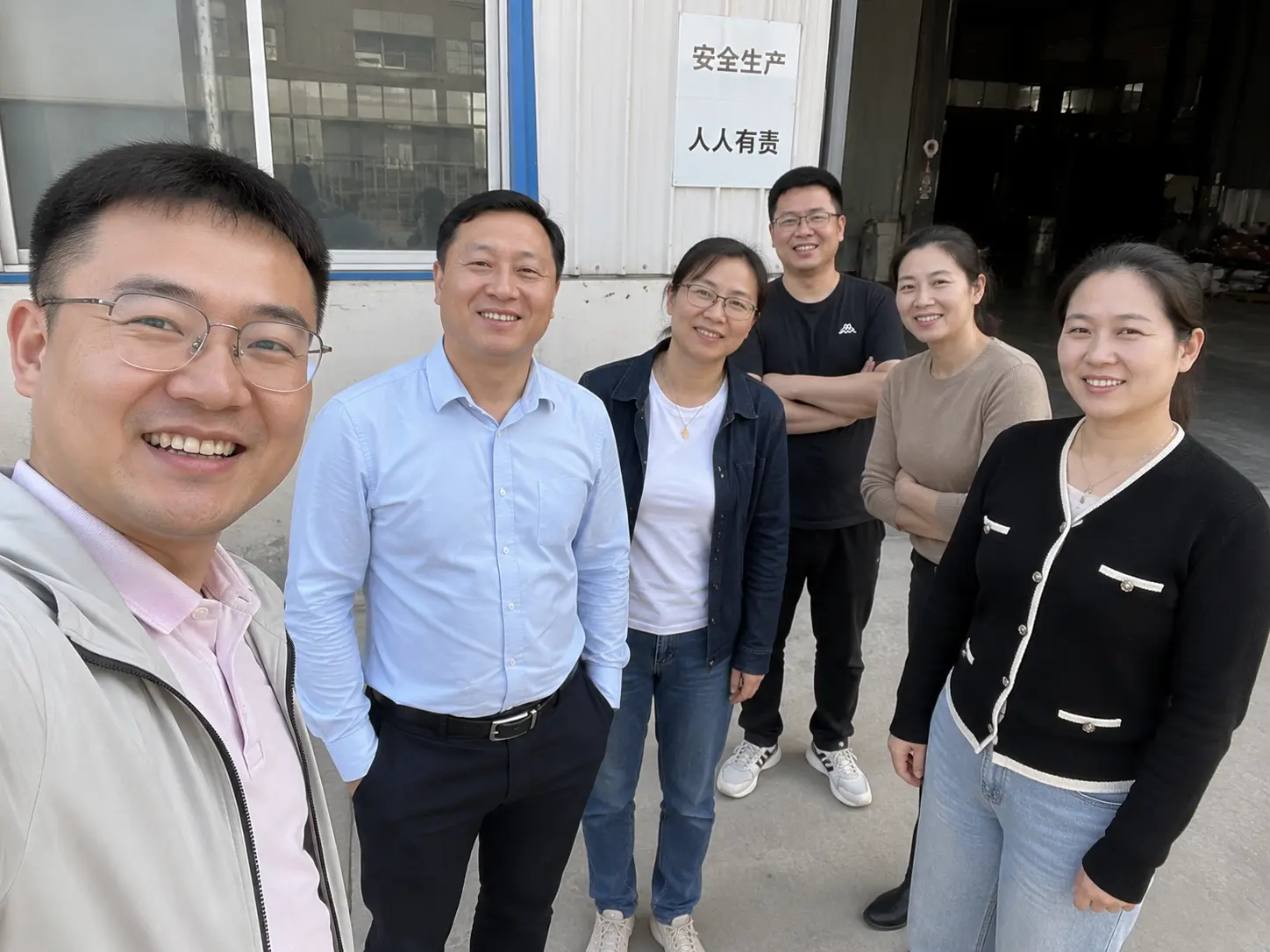
The People and Plant Behind Your Order
What "Factory-Direct" Actually Means
Direct Factory Relationships
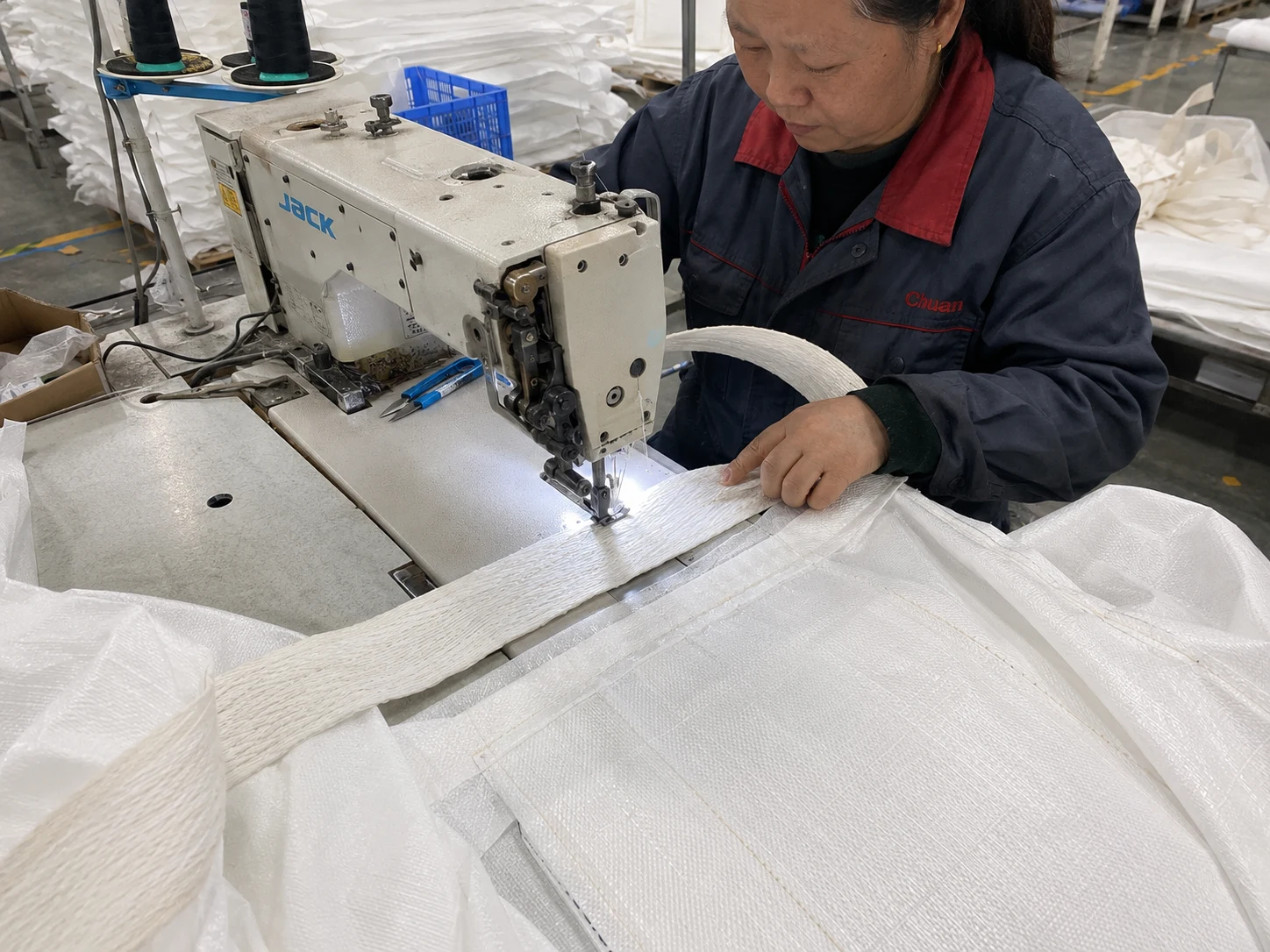
We work directly with our partner factories in Shandong — no trading company layer, no markup you can't see.
No Numbers We Can't Document
We would rather quote you a range and confirm it against your spec than publish a precise figure we cannot back with mill paperwork. A number you cannot verify is worth nothing to you at the negotiating table.
Built for Importers
We speak the language of import logistics — FOB/CIF/DDP, container loading plans, export documentation — not just bag specifications.
Verification Built Into the Order
Third-party inspection through SGS, TUV, Intertek or your own agent can be arranged for your order. Tell us what verification your process requires and we build it into the production schedule.
After You Send a Spec
Five steps, in this order. Nothing here depends on you knowing bag terminology in advance — the first step is a description of your product, not a product code.
- 01
You send the spec
Product, fill weight, bag dimensions if you have them, and whether the cargo is food contact, dangerous goods or an ignitable dust. Those four facts drive everything downstream.
- 02
We reply with a spec sheet
Fabric weight, construction, loop type, safety factor, liner and print — written down, so you are comparing like for like against any other quote you hold.
- 03
Sample sign-off
For a construction you have not run before, confirm it on a physical bag first. Fabric hand feel, seam finish and print position are faster to settle on a sample than in email.
- 04
Pre-shipment inspection
Yours, a third party's, or both. This is the last point where a fabric weight shortfall or a weak seam costs a delay instead of a claim.
- 05
Export documents
Commercial invoice, packing list, bill of lading and certificate of origin where required — plus test reports or UN certification when the cargo calls for them.
How Every Order Is Checked
Bag quality mostly fails invisibly — a slightly light fabric roll, an undertested seam — until the bag is loaded and shipped. Here is where we insist on checks before that happens.
Incoming Fabric Check
Every roll of woven PP fabric is checked for GSM (fabric weight) and weave density against your order specification before cutting begins.
In-Process Batch Testing
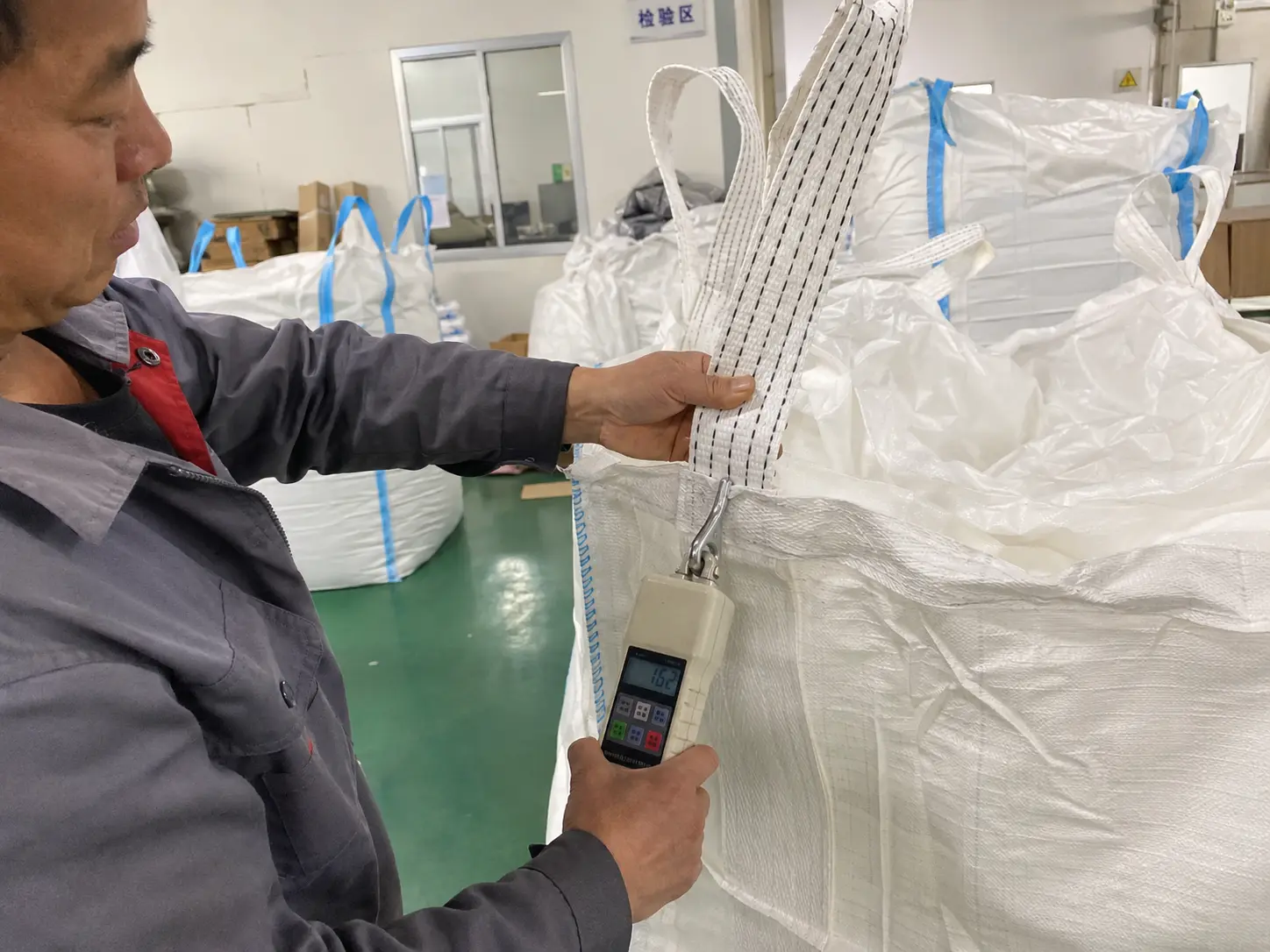
Bags are pulled from each production batch for tensile and seam testing, so a defect in one batch is caught before the full run ships.
Load & Cyclic Testing
Finished bags are tested to the safety factor on your order — 5:1 single-trip or 6:1 multi-trip — following the ISO 21898:2024 cyclic top lift protocol.
Batch Tagging & Traceability
Each bag is tagged with production date, batch number and origin, so any quality issue can be traced back to its exact manufacturing run.
China's national FIBC standard, GB/T 10454-2025, took effect on March 1, 2026, tightening dimensional tolerances and formally requiring anti-static performance for qualifying bag classes. We build to this standard alongside ISO 21898:2024 top lift testing and IEC 61340-4-4, not just the minimum a buyer happens to ask for.
None of this replaces your own checks. If you want to see what a buyer-side inspection covers before you book one, our guides to pre-shipment sampling and QC and to auditing an FIBC manufacturer lay out exactly what to ask for — including from us.
Working With Us
How do I verify a Chinese bulk bag supplier before my first order?
Verification comes from documents tied to your batch, not from company descriptions. Ask for GSM, tensile and UV test reports referencing your production run, check that every bag carries a batch number and production date, and book a third-party inspection through SGS, Intertek, TUV or your own agent before the container is sealed.
What are your MOQ and lead times?
Both depend on the specification. Fabric weight, construction, liner, print colours and certification requirements all change the production setup, so a single published number would be misleading. Send us the spec and we confirm minimum quantity and lead time in writing before you commit to anything.
What payment terms are normal for FIBC orders from China?
The industry norm is 30% deposit with 70% against a copy bill of lading, with letters of credit more common on larger orders. Terms are agreed per order rather than fixed in advance. Be cautious with any supplier asking for full payment up front on a first order.
Can I get samples before placing a full order?
Yes, and you should for any construction you have not run before. A sample settles fabric hand feel, seam finish, loop position and print placement far faster than email. Once the sample is signed off it becomes the reference standard for the production run.
What documents come with an export shipment?
A standard FIBC export shipment carries a commercial invoice, packing list, bill of lading and, where the destination requires it, a certificate of origin. Cargo-specific paperwork is added on top: test reports for a technical spec, UN certification for dangerous goods, food contact declarations for food grade bags.
What happens if bags arrive with a defect?
Batch tagging is what makes this solvable. Every bag carries a production date and batch number, so a defect can be traced to the exact run rather than argued over. Pre-shipment inspection is the point at which that problem costs you a delay instead of a claim against a landed container.
Final Thoughts
Sourcing bulk bags from a country you have never visited comes down to one question: can you check the work? Test reports tied to your batch, a batch number on every bag, and your own inspector in the yard before the container is sealed — those are the things that hold up when something goes wrong. Ask us for them. Ask any supplier for them.
Tell Us What You're Sourcing
Send the product you are packing, target fill weight, quantity you have in mind, destination port, and whether the cargo is food contact or dangerous goods. That is enough for us to come back with a full spec sheet and price.
Get in Touch