Food Grade Bulk Bags
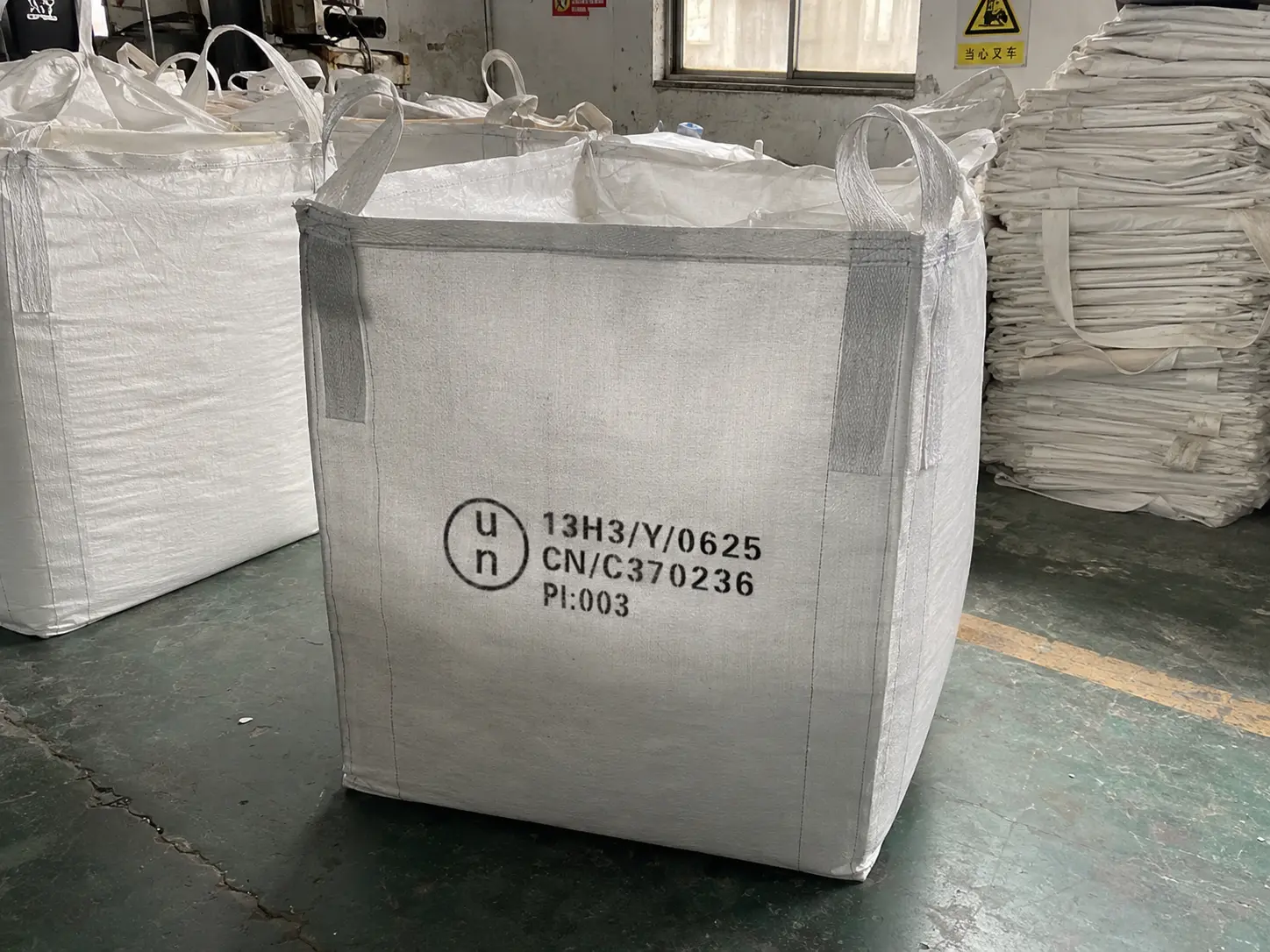
Food grade bulk bags — food grade FIBCs, or food grade FIBC bulk bags on some spec sheets — are manufactured in controlled, clean-room conditions with liners designed to meet FDA food-contact requirements, for products such as grain, sugar, starch and animal feed. They differ from standard FIBCs in production environment, liner material and traceability documentation, not just fabric.
- Clean-area assembly
- FDA food-contact liners
- Batch traceability
Why Choose Food Grade Bulk Bags
Made where contamination is controlled
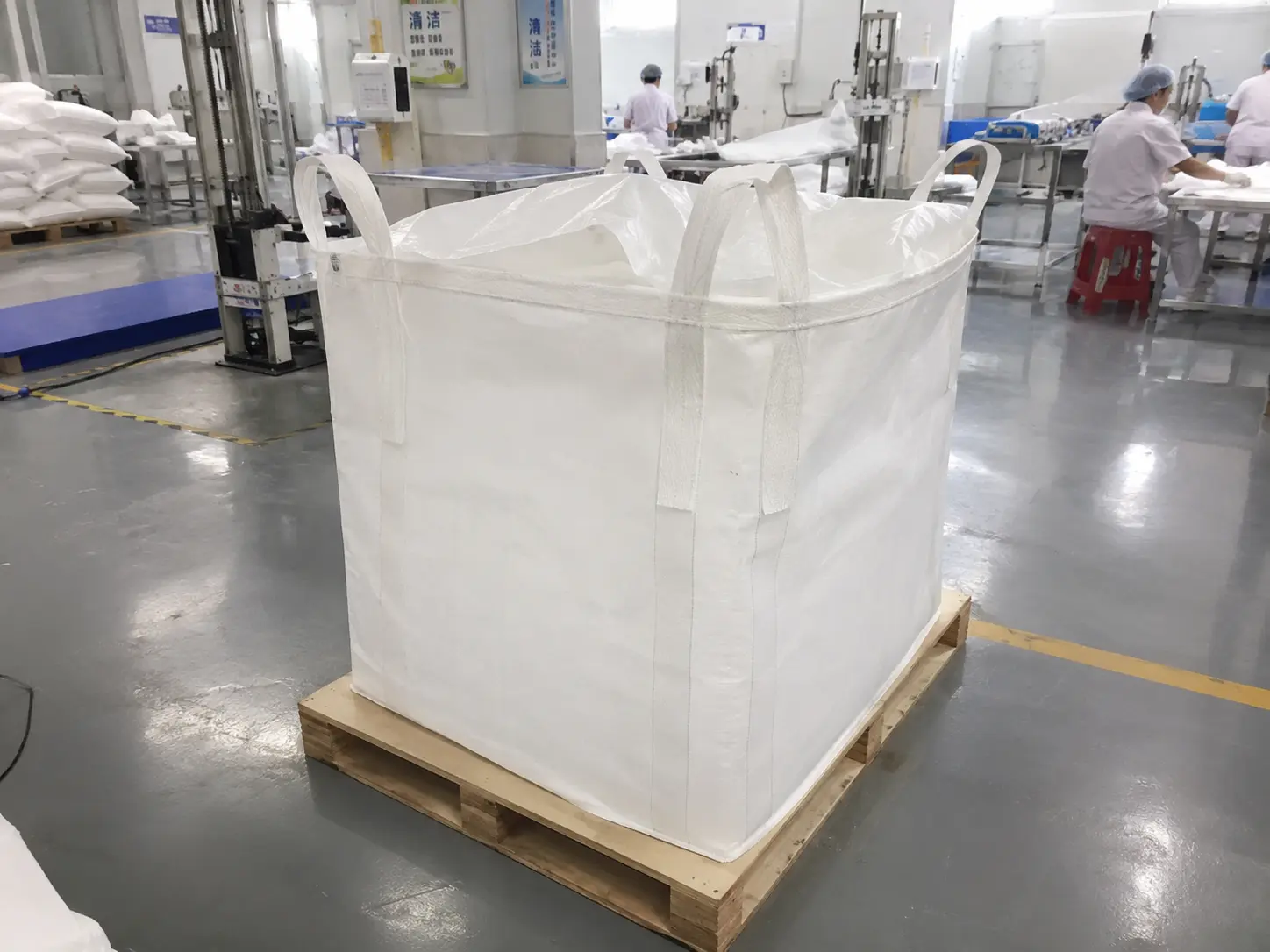
Cutting, sewing and liner fitting happen in a designated clean area, separate from general bag production, with controlled contamination limits.
Liners made for food contact
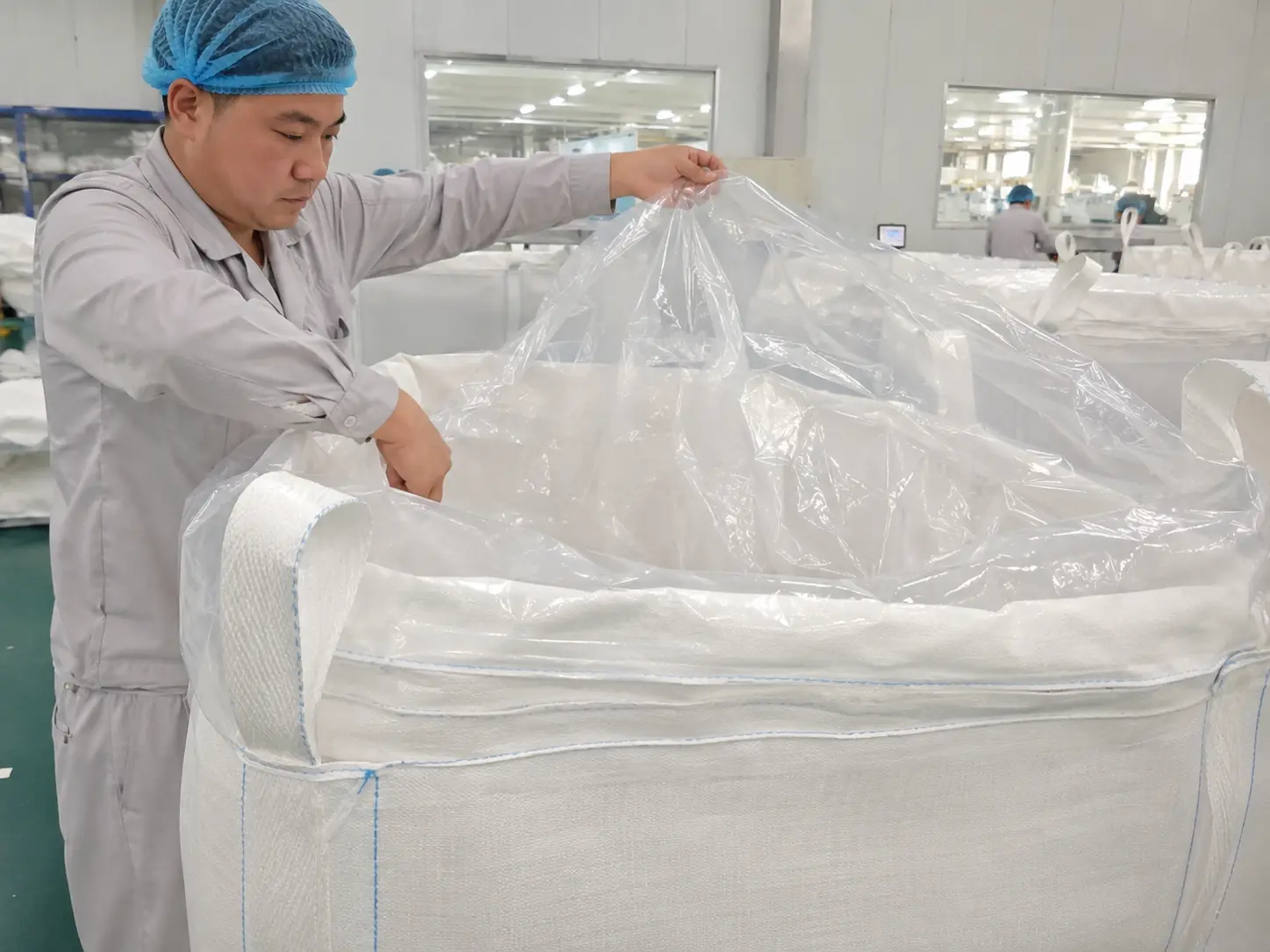
The product touches the liner, not the woven fabric, so liners are made from resin that meets FDA food-contact requirements — loose or form-fit.
Every bag traceable
Each bag carries a batch number and production date, so a quality question traces back to one production run instead of a whole shipment.
Documents matched to your market
FDA food-contact declarations for the US, EU documentation for Europe, BRCGS where your buyer requires it — confirmed against your order before production.
What Makes a Bag Food Grade
Food grade bulk bags — food grade FIBCs or food grade FIBC bags on many spec sheets — use the same woven polypropylene as a standard bag. The difference is where and how they are made, and what actually touches your product.
- A clean production area
- Assembly away from general production, with hair covers, clean workwear and pest control, so foreign matter stays out of the bag.
- A food-contact liner
- The PE liner is the product-contact surface, so its resin compliance matters more than the fabric’s.
- Contamination checks
- Common controls include vacuum cleaning, light-table inspection for loose threads and metal detection. Confirm which apply to your order.
- Traceability built in
- Batch tags are applied at assembly, not added afterward, so every bag links to its production record.
Key Features
Loose or form-fit liner
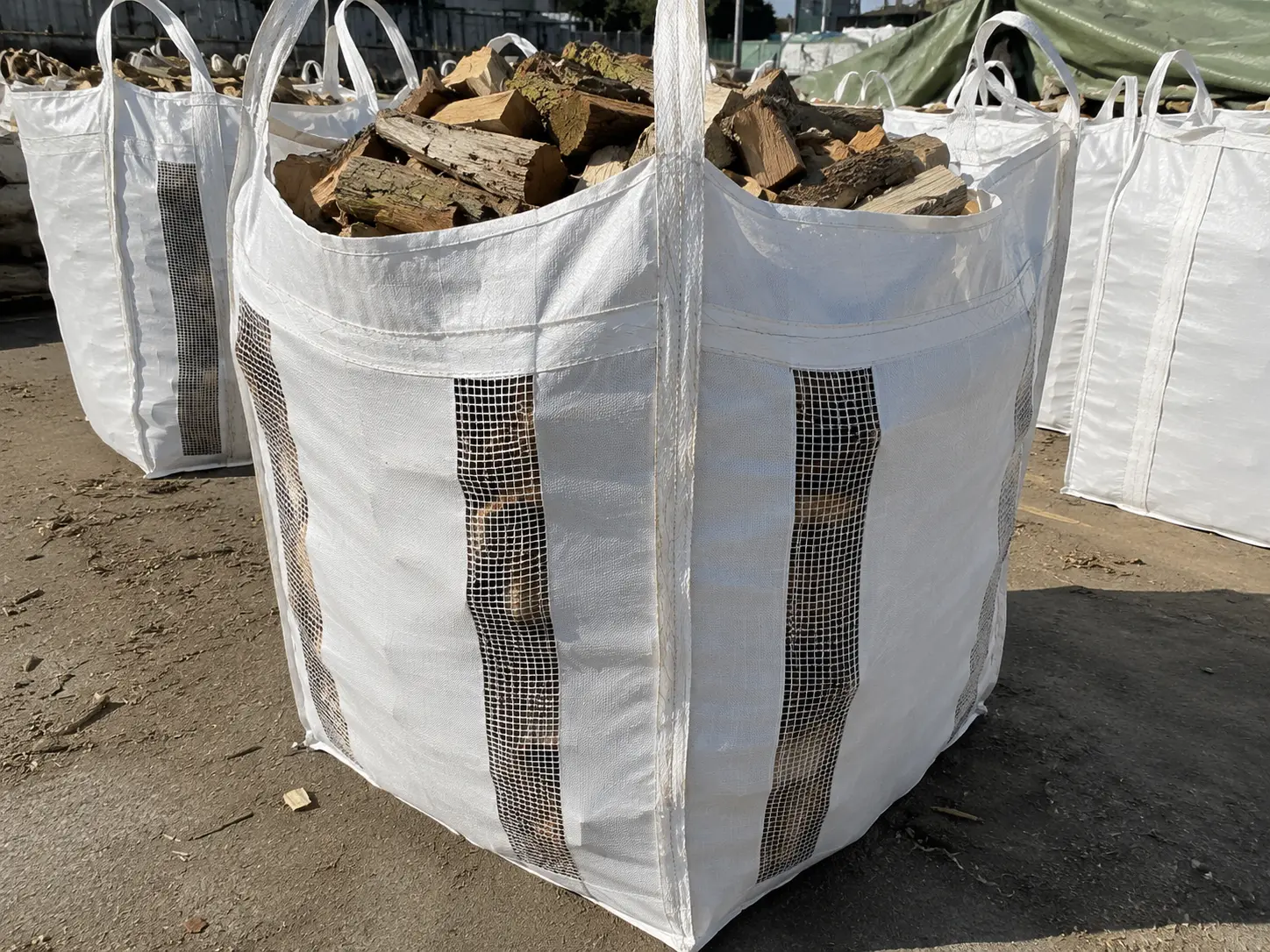
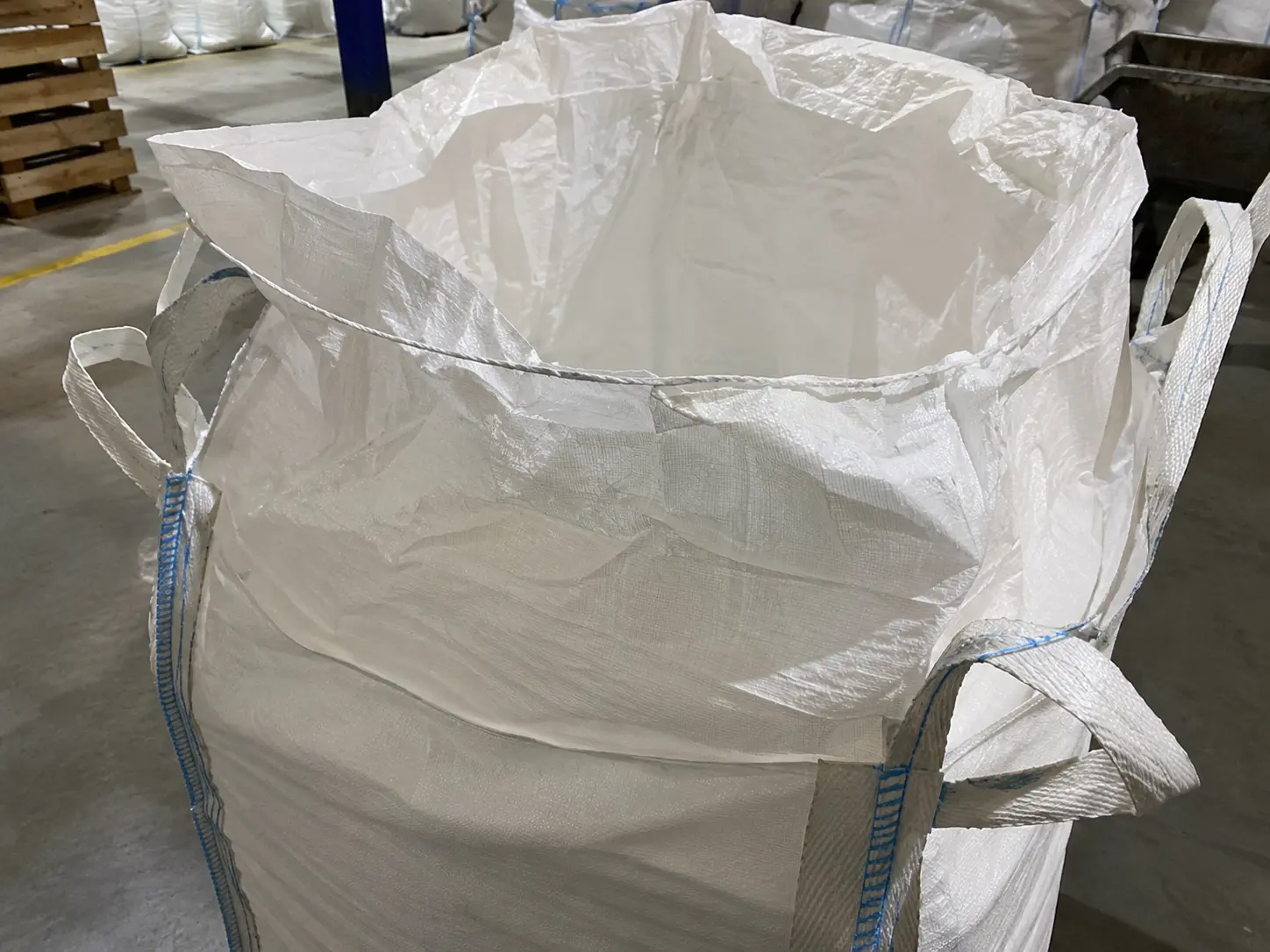
Loose liners for easy filling; form-fit liners sewn in for tighter fill and cleaner discharge.
Closed filling and discharge
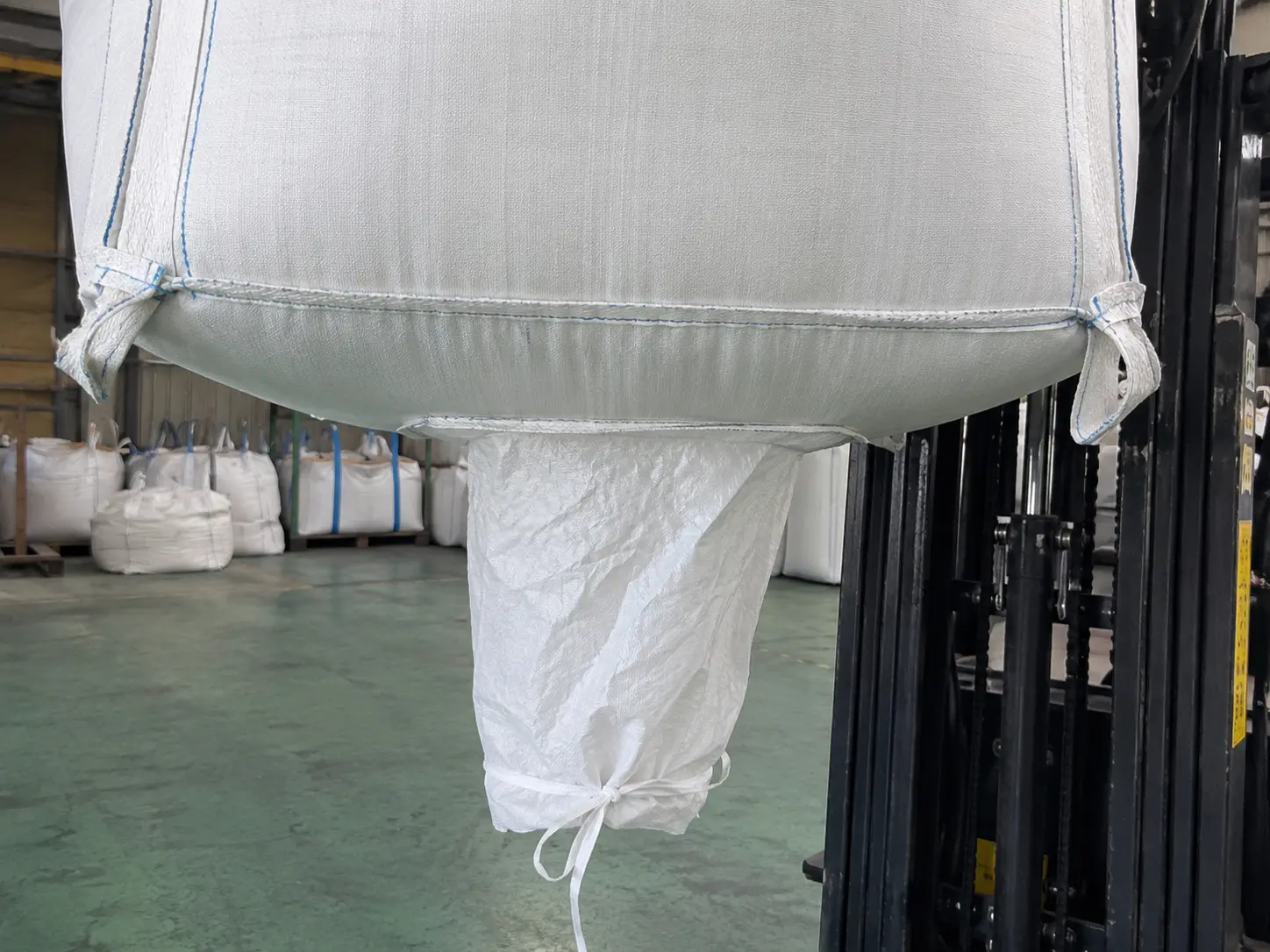
Spout top and spout bottom keep the product enclosed from filling line to process inlet.
Food-safe printing
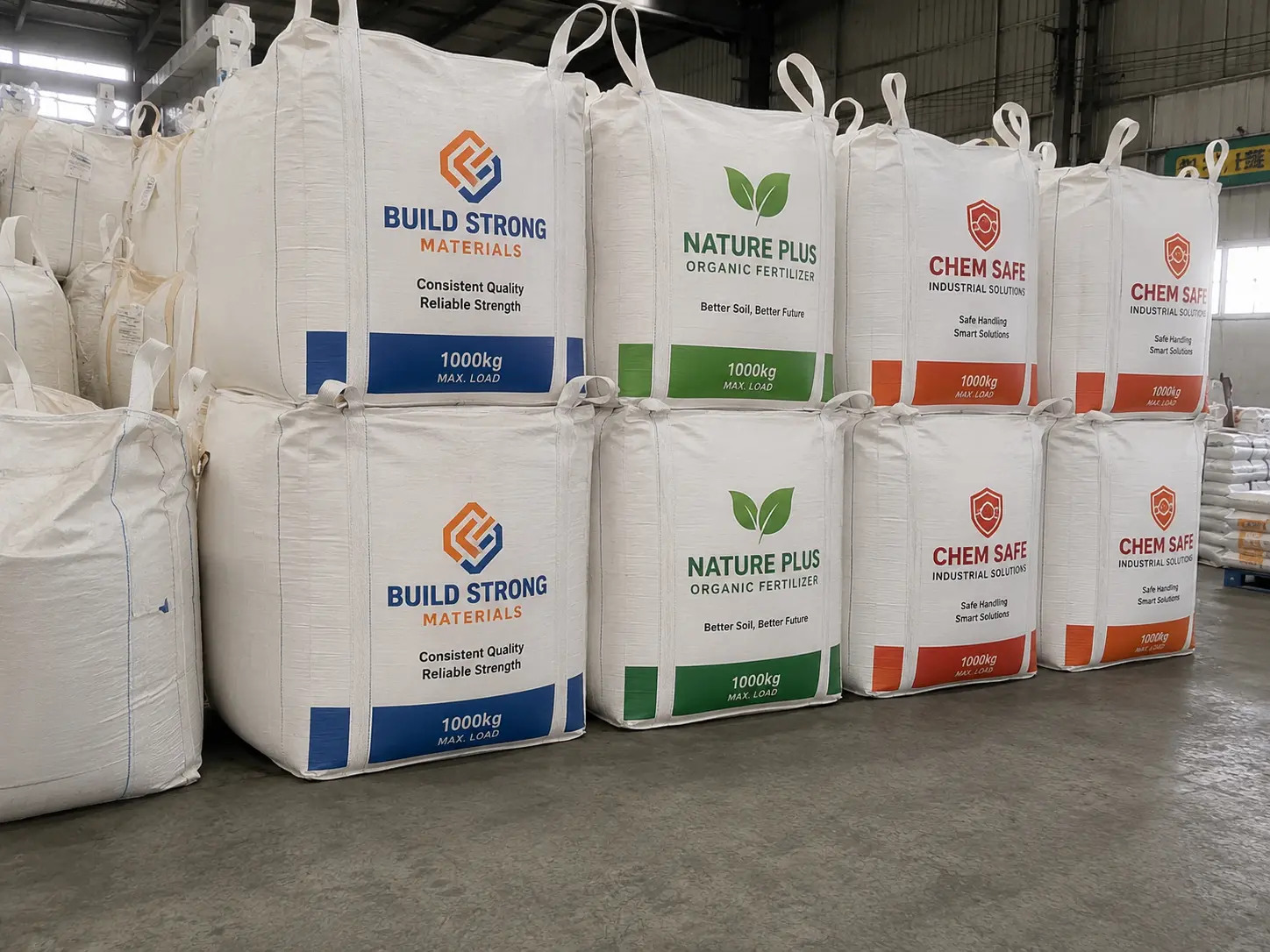
1–2 color printing with inks suitable for food packaging.
Anti-static option
Type B or Type C fabric for combustible food powders such as flour, sugar and starch.
Single-trip by default
Food-contact bags are normally used once; reuse needs a controlled, verifiable cleaning process.
Documentation pack
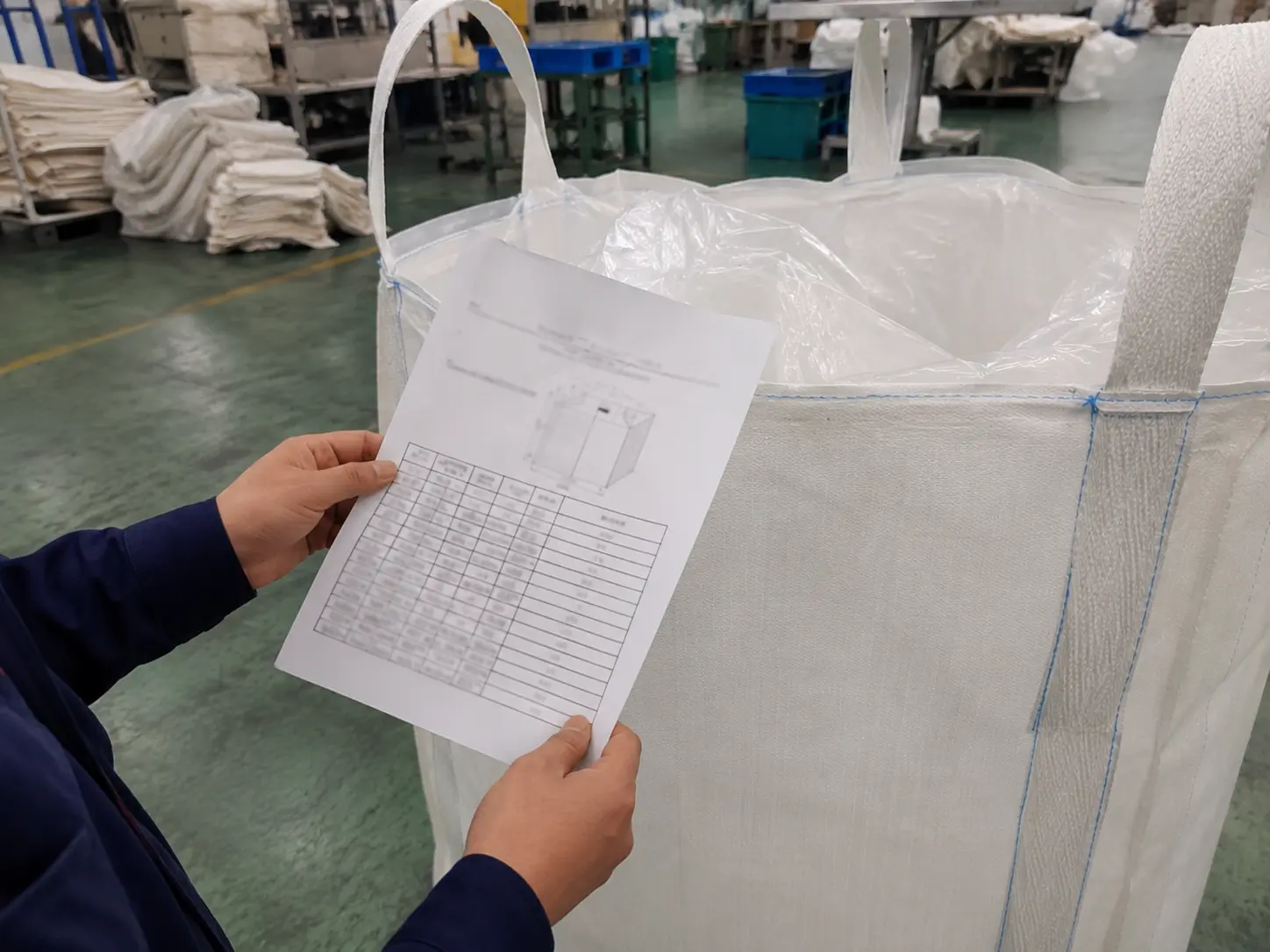
Food-contact declarations and batch records assembled for your buyer’s audit.
Spec Sheet
Construction
The outer fabric is woven the same way as a standard Type A bag, but assembly happens in a designated clean-room area with controlled contamination limits, separate from general production lines. Liners are either heat-sealed loose inserts — easier for bulk filling — or form-fit liners sewn to the inner wall for tighter product protection and more precise filling. Every batch is tagged with a production date and batch number at the point of assembly, not added afterward.
Food Grade vs Standard, Pharma and Anti-Static Food Bags
| Food Grade | Standard Type A | Pharma Grade | Food Grade + Anti-Static | |
|---|---|---|---|---|
| Production area | Clean area, controlled contamination | Standard factory floor | Classified cleanroom under GMP | Clean area, controlled contamination |
| Liner | FDA food-contact PE, standard | Optional | Pharma-contact liner, often double containment | Food-contact liner compatible with the static class |
| Documentation | Food-contact declaration, batch records | Basic | Full GMP documentation chain | Food-contact declaration plus IEC 61340-4-4 report |
| Static protection | None unless specified | None | As specified | Type B or Type C |
| Typical use | Grain, sugar, starch, feed | Minerals, construction materials | Pharmaceutical raw materials | Flour, sugar and starch powders |
What You Can Change
- Loose or form-fit liner
- 1–2 color food-safe ink printing
- BRC/FDA documentation package on request
- Custom liner thickness for moisture-sensitive products
Where Food Grade Bulk Bags Are Used
Grain, rice and cereals
Dried grain needs sealing, not airflow — a lined bag keeps moisture and pests out during storage and export.
Bulk bags for grainGreen coffee beans
Moisture and condensation are the risk in transit; liner choice matters as much as the bag.
Bulk bags for coffeeSugar, starch and flour
Hygroscopic and often combustible as dust — specify moisture protection and check whether a static class is needed.
Anti-static optionsAnimal feed and additives
Feed plants audit traceability as closely as food plants; batch tags and liner documentation carry across.
Pharmaceutical raw materials
Often need a classified cleanroom and full GMP documentation — a step above food grade.
Pharma-grade FIBCProblems a Correctly Specified Bag Solves
ProblemAn audit fails on traceability
FixBatch number and production date on every bag, linked to the production record, so you can show which run a bag came from.
What makes a bag food gradeProblemYour buyer asks for a certificate the supplier cannot produce
FixThe target standard — FDA, EU or BRCGS — is fixed before the spec, and the documents are confirmed before production.
BRC, FDA or EU?ProblemForeign matter found in the product
FixClean-area assembly, loose-thread inspection and a food-contact liner keep fabric fibers and dust away from the product.
ProblemMoisture damage to a hygroscopic ingredient
FixA form-fit or heat-sealed liner, chosen for the product and route, rather than a standard loose liner.
FIBC liner typesOptions at a Glance
How We Spec Your Bag
- 01
Tell us the product
Material, bulk density, target fill weight, and how the bag is filled and emptied.
- 02
We match the spec
Static class, fabric weight, safety factor, loops, top and bottom, liner and printing.
- 03
Sample and approve
A pre-production sample for your own fill test. Production starts only on your written approval.
- 04
Production and QC
Batch-tagged production and load-test reports. Third-party inspection is welcome before shipment.
- 05
Loading and documents
Loading plan, photos at loading and the full export document set.
Checked Before It Ships
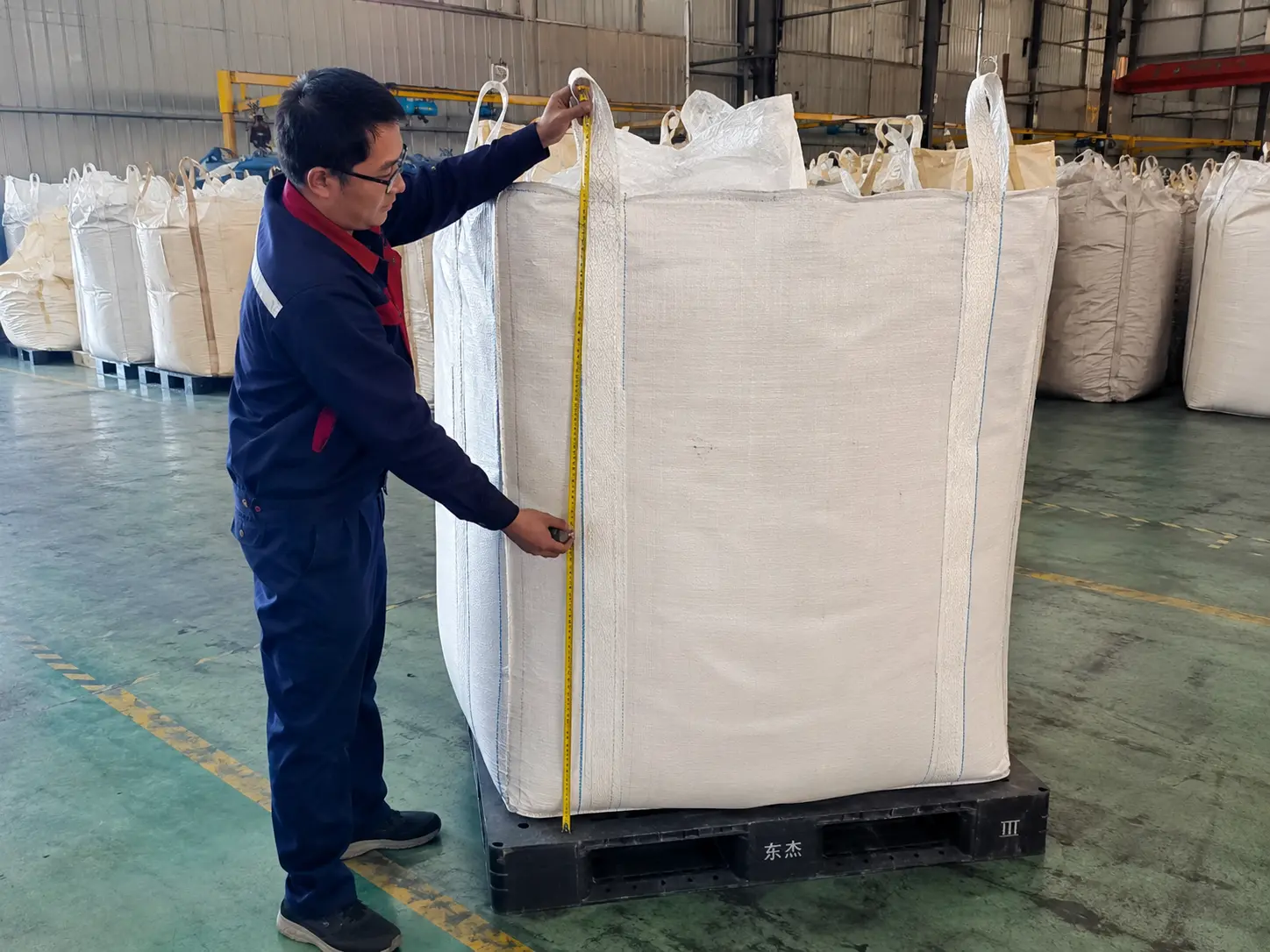
- Incoming fabric checked for weight and tensile strength before cutting
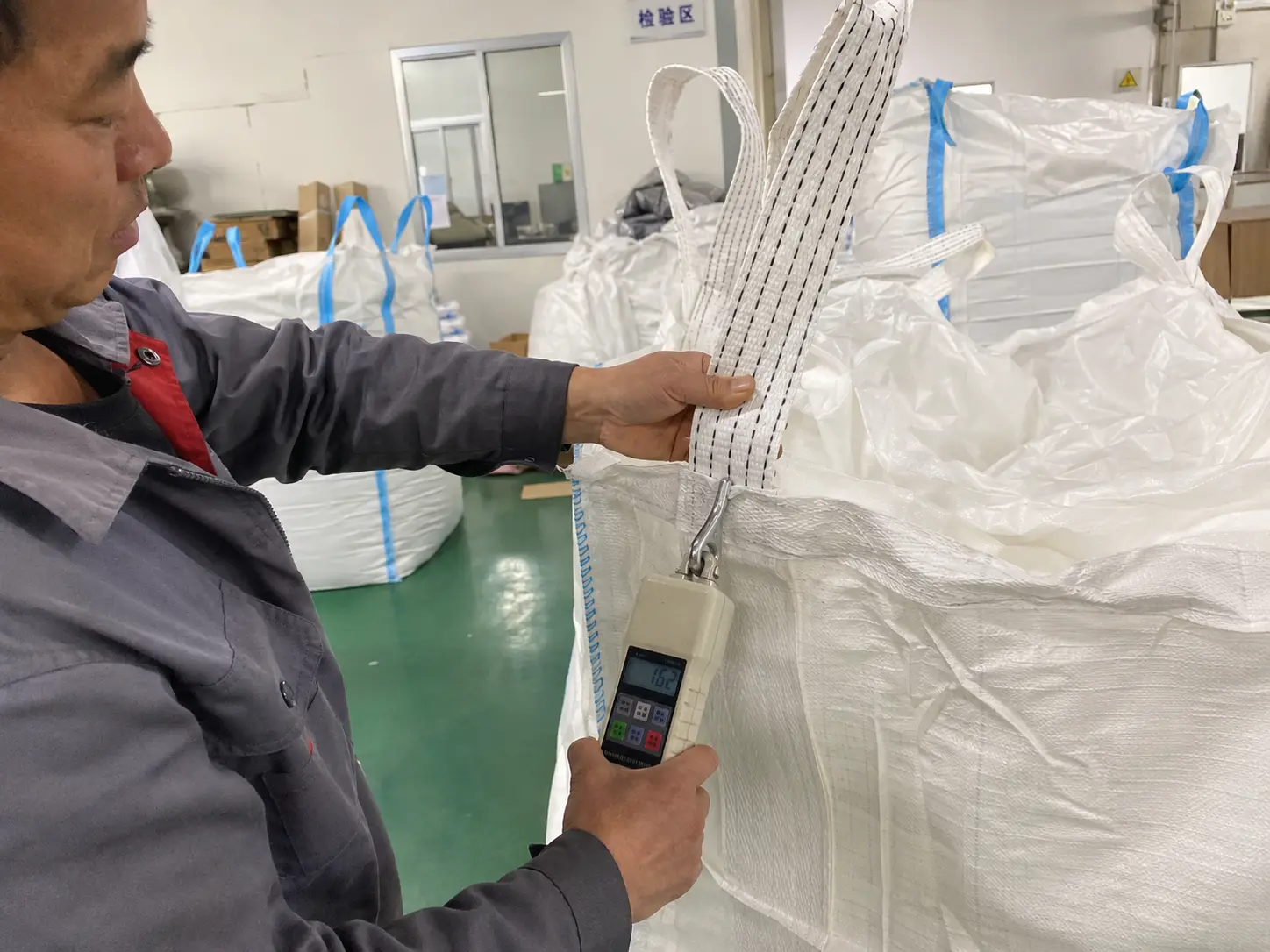
- Load testing on new specifications, to the safety factor on the label
- Every bag tagged with batch number and production date for traceability
- Pre-shipment inspection by a third party or your own inspector on request
What This Bag Is Tested To
- FDA food-contact material requirements (liner material)
- ISO 21898:2024 structural testing baseline
- BRC/EU food packaging documentation available on request
From Our Sourcing Desk
Food grade is a claim about the production process and liner material, not the outer fabric — a supplier can weave the exact same PP fabric for a food-grade bag and a standard bag. Ask specifically what changes: clean-room handling procedures, liner resin certification, and batch traceability documentation. If your buyer requires BRC or a specific FDA CFR citation, confirm it in writing before production, since not every "food grade" claim maps to the same certification. Send us your product and destination market and we will confirm what documentation your order actually needs.
Common Questions
What makes a bulk bag food grade?
A food grade bulk bag is produced in a controlled, clean-room environment and fitted with a liner made from FDA-compliant, food-contact material. Standard FIBCs are not food grade unless both the production process and liner meet these requirements.
Do food grade bulk bags need a liner?
Most food grade applications use a liner to prevent direct contact between the product and the outer woven fabric. Loose liners and form-fit liners are both available depending on your filling equipment.
Can you provide FDA or BRC documentation?
Our partner factories can supply food-contact liner compliance documentation on request. Tell us your product and target market so we can confirm which certification your buyer requires.
How is batch traceability handled for food grade bags?
Each production batch is tagged with a batch number, production date and origin information, allowing your quality team to trace any bag back to its exact manufacturing run — a standard buyer requirement for food and feed-grade packaging audits.
Can a food grade bag also be anti-static?
Yes. Food grade covers the production environment and liner material; static protection covers ignition risk. They are independent specs that combine — a fine, combustible food powder may need both a food-contact liner and Type B or C construction.
Is a food grade bag enough for pharmaceutical ingredients?
Not always. Pharmaceutical raw materials often require classified cleanroom production and a full GMP documentation chain, which sits above food grade requirements. Tell us the material and your regulatory framework so we can confirm which standard applies.
Can food grade bulk bags be reused?
Only if they were built as multi-trip bags and cleaned under a controlled, verifiable process. Residue from a previous load is a cross-contamination risk that visual inspection alone cannot rule out, which is why most food-contact operations treat these bags as single-use.