Pharma-Grade FIBC: Why Food Grade Isn't Close Enough
Cleanroom classification, a full GMP documentation chain and often two-way containment — pharma grade is a different category, not food grade with extras.
PackTonne Sourcing Desk · · 6 min read
Pharmaceutical-grade FIBC sits above food grade in stringency — cleanroom production at a specific classification, GMP-specific documentation and traceability, often tighter weave density for dust containment, and virgin material requirements rather than the recycled-content allowances seen elsewhere in the industry. This isn’t food grade with extras; it’s a separate sourcing conversation with its own verification.
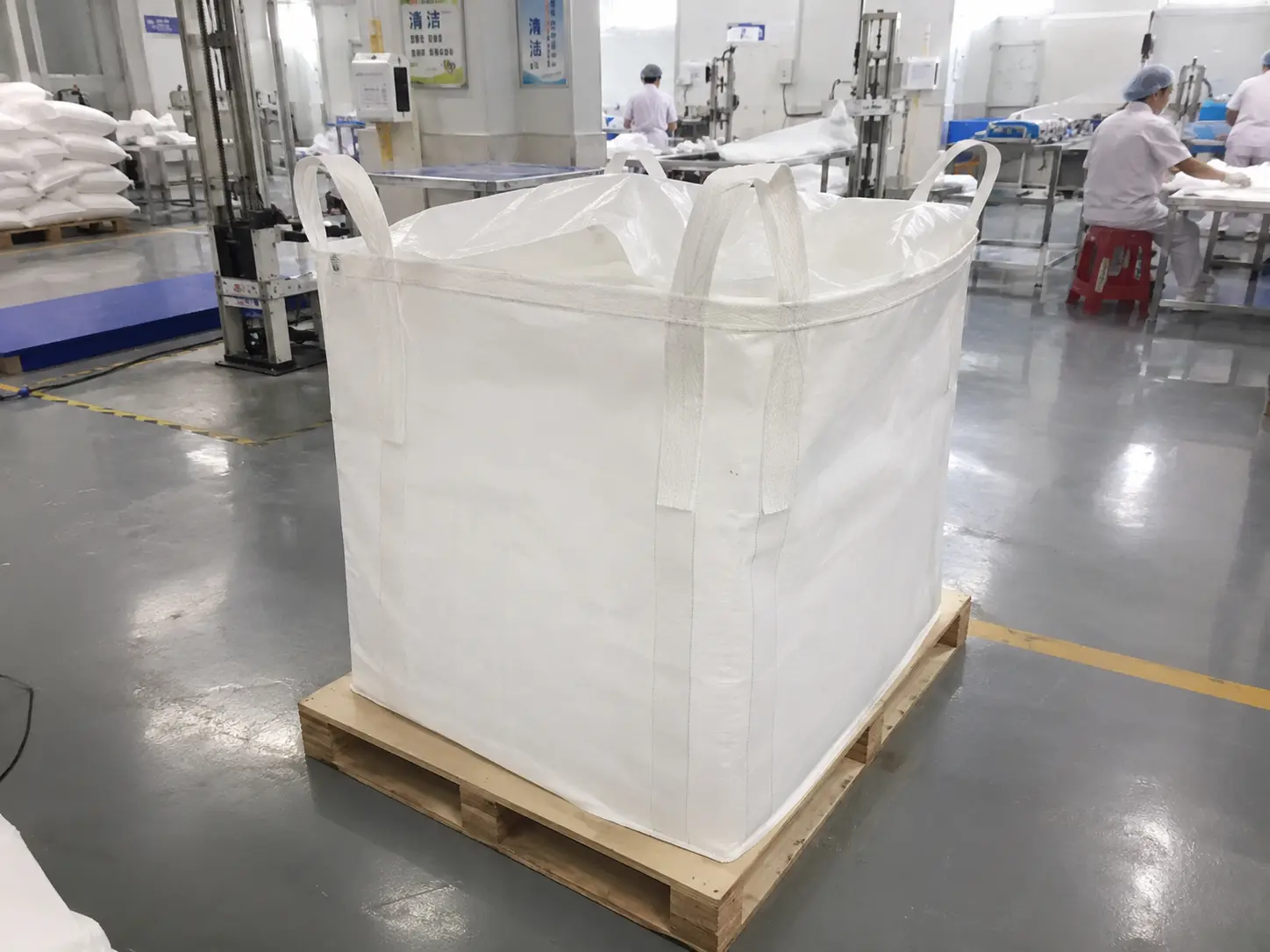
Pharma Grade vs Food Grade at a Glance
| Factor | Food grade | Pharmaceutical grade |
|---|---|---|
| Production environment | Clean, contamination-managed | Classified cleanroom (typically ISO Class 7/8) |
| Documentation | Liner compliance, batch traceability | Full GMP documentation chain |
| Material | Standard PP, recycled content sometimes acceptable | Virgin PP typically required |
| Containment direction | Protects product from contamination | Often two-way — product purity and worker/environment protection |
| Regulatory framework | FDA-relevant liner and process requirements | GMP, often referencing FDA and EU Pharmacopeia together |
Cleanroom Production Classification
Pharma-grade FIBC production commonly takes place in facilities classified around ISO Class 7 or 8, a specific standard regulating airborne particle concentration in the manufacturing environment — a more precisely defined bar than food grade’s general “clean production environment” language. Ask any supplier claiming pharma-grade capability for their specific cleanroom classification, not just a general assurance of cleanliness; the classification number is a verifiable, specific claim in a way “clean facility” isn’t.
GMP Documentation and Traceability
GMP compliance for pharmaceutical FIBC extends beyond the production environment into raw material sourcing, component traceability, and documented quality processes at every production step — every material and step needs to align with documented GMP principles, not just the finished bag’s visible characteristics. This documentation chain is considerably more extensive than food grade’s batch traceability requirements, reflecting pharmaceutical manufacturing’s broader regulatory framework.
Two-Way Containment: Protecting Product and People
Food grade packaging is primarily concerned with protecting the product from external contamination — a one-directional concern. Pharmaceutical raw materials, particularly potent active pharmaceutical ingredients, sometimes require containment that works the other direction too: protecting workers and the surrounding environment from exposure to the material itself. This two-way containment consideration is a meaningfully different design problem than food grade’s contamination-prevention focus, and it’s worth confirming explicitly with your supplier whether your specific material needs this bidirectional protection.
Virgin Material Requirements
Pharmaceutical raw material packaging typically requires virgin polypropylene rather than recycled content, given the purity standards involved — a stricter position than the recycled-content allowances built into general industrial standards like GB/T 10454-2025, which permits recycled content under specific conditions for general-purpose FIBC. If sustainability commitments and pharmaceutical purity requirements both matter to your sourcing, understand that they can pull in different directions for this specific product category.
Weave Density and Dust Control
Pharma-grade fabric commonly uses higher weave density than standard construction, limiting dust generation and powder leakage more tightly than general-purpose fabric — supporting both product containment and the cleaning requirements that come with GMP facility standards. This connects to the two-way containment consideration above: tighter weave keeps fine material from escaping in either direction, which matters for both product integrity and operator safety depending on the specific material.
We work directly with partner factories in Shandong; pharma-grade production requires specific cleanroom and GMP capability that varies by facility, so ask us for the specific certification and documentation status of a given factory relevant to your order rather than a general capability claim.
Common Mistakes When Sourcing Pharma-Grade FIBC
- Treating “pharma grade” as a marketing term rather than a specific technical bar. Push for cleanroom classification, GMP documentation, and material traceability specifics.
- Assuming food grade construction automatically satisfies pharmaceutical requirements. The GMP documentation chain and often the containment direction are meaningfully different from food grade’s scope.
- Not confirming whether your material needs two-way containment. Potent active ingredients may need worker/environment protection that a standard product-containment bag doesn’t address.
- Overlooking the virgin material requirement when balancing sustainability goals. Recycled content that’s appropriate for general industrial FIBC may not be appropriate for pharmaceutical raw material packaging.
- Accepting a general capability claim instead of facility-specific documentation. Cleanroom classification and GMP compliance vary by specific factory, not by supplier brand alone.
Why the Distinction From Food Grade Matters for Sourcing Conversations
Treating pharma grade as “food grade plus a bit more” undersells how different the sourcing conversation actually is — cleanroom classification, GMP documentation depth, and containment direction are all specific technical requirements that need their own verification, not an assumption that a food-grade-capable supplier automatically extends to pharmaceutical requirements. If your material is genuinely pharmaceutical-grade, treat the sourcing question as its own category from the start rather than starting from a food grade conversation and adding requirements incrementally.
Decision Checklist
- Does your material need one-way or two-way containment? Confirm whether worker/environment protection matters, not just product purity.
- Have you confirmed your supplier’s specific cleanroom classification? Ask for the ISO class number, not a general “cleanroom” claim.
- Do you need the full GMP documentation chain, or would food grade suffice? Confirm your actual regulatory requirement before assuming pharma grade is necessary.
- Does your material require virgin PP specifically? Confirm this against any sustainability commitments that might otherwise favor recycled content.
- Have you requested specific documentation, not a general “pharma grade” claim? Cleanroom classification, GMP records, and material traceability should all be verifiable.
Final Thoughts
The most common sourcing mistake here is starting from a food grade conversation and adding requirements. Pharma grade begins from a different place — a classified cleanroom, a documentation chain that traces every material and step, and containment that may need to work in both directions. Tell us your material, its potency band and your regulatory framework, and we’ll confirm what a given factory can genuinely support.
Before You Request a Quote
Send us your material and regulatory requirements, and we’ll confirm what’s needed:
- Active ingredient or raw material type, and potency/containment considerations
- Required regulatory framework (GMP, FDA, EU Pharmacopeia)
- One-way or two-way containment need
- Target capacity and any additional certification requirements
Request a quote and we’ll confirm cleanroom, documentation, and material requirements against your specific pharmaceutical application.
Common Questions
What's the difference between pharmaceutical-grade and food grade FIBC bags?
Pharma grade sits above food grade in stringency: cleanroom production at a specific ISO classification, GMP-specific documentation and traceability, often tighter weave density for dust containment, and virgin (non-recycled) material requirements. Food grade addresses food-contact safety; pharma grade addresses a broader GMP compliance framework.
What cleanroom classification is typical for pharma-grade FIBC production?
Production commonly takes place in facilities classified around ISO Class 7 or 8, which regulate airborne particle concentration in the manufacturing environment. Ask your supplier for their specific classification rather than accepting a general 'cleanroom' claim.
Why does pharma-grade FIBC need two-way containment?
Beyond protecting the product from contamination, pharmaceutical raw materials — particularly potent active ingredients — sometimes need containment that also protects workers and the environment from exposure to the material itself. This is a different consideration than food grade's primarily one-directional contamination protection.
Does pharma-grade FIBC require virgin (non-recycled) material?
Typically yes — pharmaceutical raw material packaging generally requires virgin polypropylene rather than recycled content, given the purity requirements involved. This is a stricter position than the recycled-content allowances seen in general industrial FIBC standards.
What documentation should I ask for with a pharma-grade FIBC claim?
Ask for the specific cleanroom classification, GMP compliance documentation tied to the manufacturing process, material traceability records, and any specific regulatory framework referenced (GMP, FDA, EU Pharmacopeia). A general 'pharma grade' claim without this documentation isn't verifiable.
Does my API's potency classification change the bag spec?
It can, significantly. Higher-potency compounds push toward tighter containment, more rigorous dust control and sometimes engineered transfer systems rather than standard discharge. Share the occupational exposure band alongside the material name so containment gets specified against the actual hazard.
Can a food grade factory produce pharma-grade bags on request?
Not without the cleanroom classification and GMP documentation systems already in place — those are facility capabilities, not order options. A factory can genuinely hold food grade capability and still be unable to supply pharma grade. Verify the classification directly rather than accepting an upgrade offer at face value.
More in Standards & Compliance
All Standards & Compliance guides- FIBC Safety Labels: An Unreadable Tag Means Stop WorkA bag whose label you can't read is a bag with unknown specifications. Here's what has to be on it, and why a faded tag stops the job.
- GB/T 10454-2025: What Changed in China's FIBC StandardEffective March 2026, GB/T 10454-2025 replaces two older standards and is the first to formally separate single-trip from multi-trip requirements.
- ISO 21898 FIBC Testing: Six Tests, Not One Pass/FailISO 21898 is a suite — lift, drop, stacking, righting, tear and UV aging — each catching a failure mode the others miss. Here's what it checks.
- BRC, FDA or EU? Match Food Certification to Your MarketBRCGS for UK/EU retail, FDA for the US, EU 1935/2004 for direct EU sale. They aren't interchangeable — here's which one your buyer actually needs.