Bulk Bag Pre-Shipment QC: How Many Bags to Actually Check
How many bags to pull, what to check on each, and how defects get classified — pre-shipment QC is a method, not a supplier's reassurance.
PackTonne Sourcing Desk · · 6 min read
Pre-shipment QC is a sampling methodology question, not just a factory’s word that everything checked out. It comes down to three things: how many bags get pulled from the lot for inspection, what specifically gets checked on each sampled bag, and how defects get classified and weighed against an acceptance threshold. Get those three right and one shipment is verifiable; get them wrong and an inspection report means very little. Broader supplier vetting is covered in our audit checklist.
Defect Classification at a Glance
| Classification | Definition | Example | Typical impact on lot acceptance |
|---|---|---|---|
| Critical | Makes the bag unsafe or unusable | Structural stitching failure at a loop | Very low tolerance — often zero acceptable |
| Major | Significantly affects function or saleability | Fabric weight noticeably below spec | Low tolerance threshold |
| Minor | Cosmetic or small deviation | Slight print misalignment | Higher tolerance threshold |
What AQL Sampling Actually Means
AQL (Acceptable Quality Level) sampling is an international framework for inspecting a statistically representative portion of a production lot rather than every single unit, using standardized sample size tables tied to total lot size and a chosen inspection level. The system also separates defects into critical, major, and minor categories, each with its own acceptable threshold — a lot might fail on a small number of critical defects even while passing comfortably on minor ones. Work with your inspector or inspection service to set the specific sample size and AQL level appropriate to your order size and risk tolerance, rather than assuming a single fixed number applies to every shipment.
What to Physically Check During Inspection
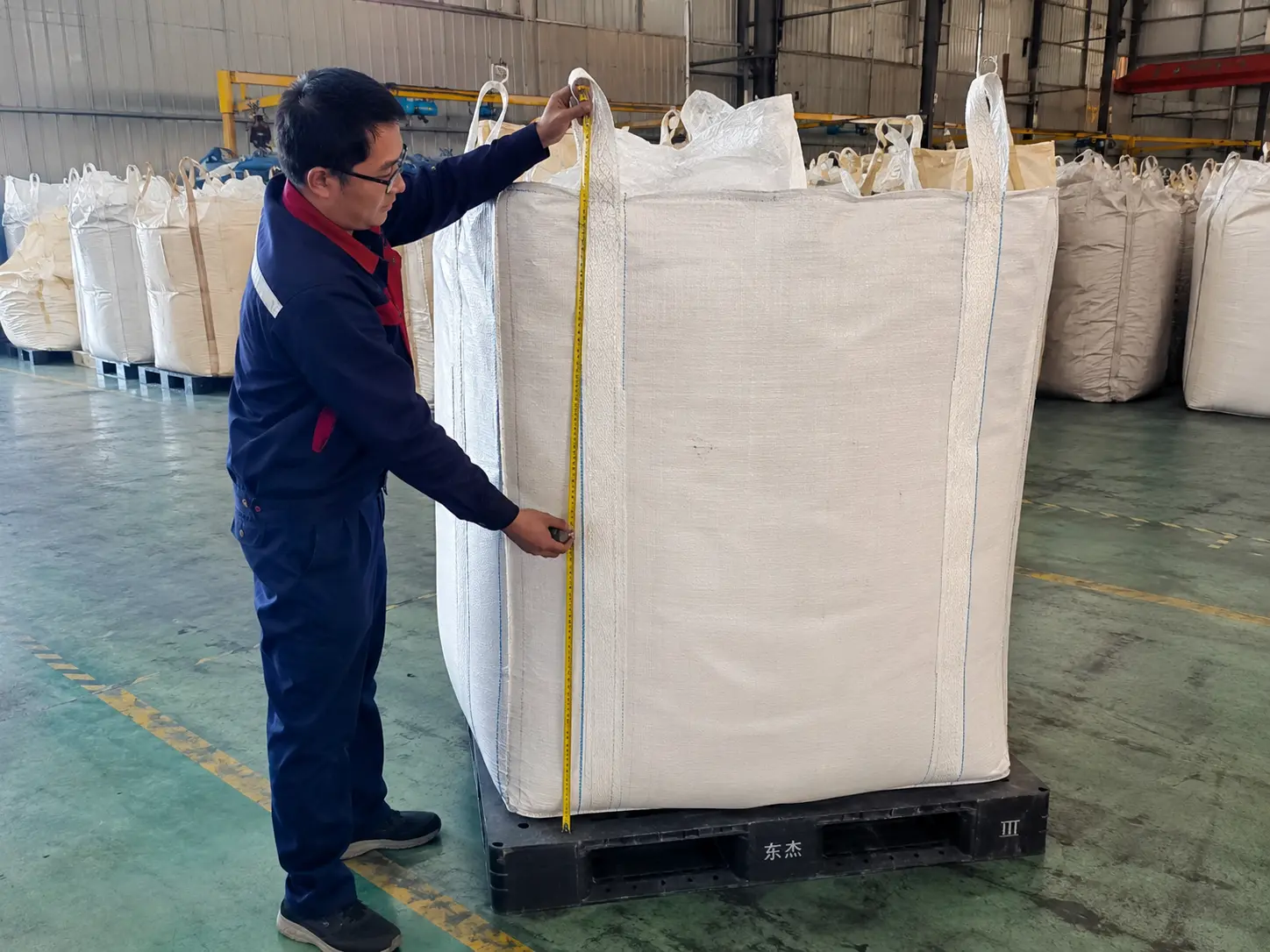
A real inspection goes beyond a visual glance at the bag’s exterior. Check stitching integrity specifically at the loops and base seams, where load stress concentrates. Verify fabric weight consistency — a spot check against the specified GSM catches a supplier substituting lighter fabric than ordered. Measure dimensions against spec rather than assuming they match. If a liner is specified, confirm it’s present, properly fitted, and of the correct material. If bags are printed, check registration and color accuracy against approved artwork. Each of these is a distinct check — a bag can pass one and fail another.
Functional Testing During Sampling
Beyond visual and dimensional checks, a pull test on sampled bags verifies the safety factor construction actually holds under load, rather than relying solely on the supplier’s own test reports for the batch. This is more involved than a visual inspection and typically requires either specialized equipment on-site or working with an inspection service equipped to perform it — but for safety-factor-critical orders, it’s the check that most directly verifies the bag performs as specified rather than just looking correct.
Documentation to Collect During Inspection
A thorough inspection generates its own documentation: photos of sampled bags (including any defects found), measurements recorded against spec, and a written summary of pass/fail results by defect category. This inspection record is separate from — but should be cross-referenced against — the factory’s own batch test reports and traceability labels. Keep this documentation on file; it’s what you’d reference if a quality dispute arises after the shipment arrives.
In-Process vs Pre-Shipment Inspection
In-process inspection during production catches problems early enough to correct before the full run completes — catching a stitching issue at 20% through production is far cheaper to fix than discovering it in a finished lot ready to ship. Pre-shipment inspection is the final gate before loading, and while it’s later in the process, it’s still meaningfully cheaper to catch an issue here than after a container arrives at destination. Larger or higher-risk orders often justify both stages; smaller or lower-risk orders may reasonably rely on pre-shipment inspection alone.
Common Mistakes in Pre-Shipment QC
- Accepting a supplier’s self-reported pass without independent sampling. Self-reported QC has an inherent conflict of interest an independent sample doesn’t.
- Inspecting only visually without a functional pull test. A bag can look correct while its actual load-bearing performance falls short of spec.
- Using the same AQL level and sample size for every order regardless of risk. A safety-critical or high-value order justifies tighter sampling than a low-risk commodity order.
- Skipping in-process inspection on large runs. Waiting until the full lot is complete to find a defect means the whole run may already share the same flaw.
- Not retaining inspection documentation. Without a record, there’s no reference point if a quality dispute comes up after the goods arrive at destination.
Sampling Doesn’t Replace Supplier Vetting
Good sampling and inspection practice on a single order doesn’t substitute for the broader supplier vetting covered in our audit checklist — a supplier with weak batch traceability or vague certification claims is a risk that a single good inspection result doesn’t fully offset. Think of supplier vetting as verifying the relationship is sound, and sampling QC as verifying this specific shipment meets spec; both matter, and neither is a complete substitute for the other.
Decision Checklist
- What AQL level and sample size fits your order size and risk tolerance? Set this with your inspector rather than assuming a default.
- Are you checking function (pull test) or just visual and dimensional spec? Safety-factor-critical orders benefit from functional testing, not visual inspection alone.
- Does your order size justify in-process inspection, not just pre-shipment? Larger or higher-risk runs benefit from catching issues earlier.
- Are you using a third-party inspector, or relying on the factory’s self-reported QC? Independent verification matters more as order size and risk increase.
- Are you keeping inspection documentation on file? This is your reference point if a dispute arises after the shipment arrives.
Final Thoughts
Sampling turns a shipment from something you hope is right into something you can defend a decision about. It doesn’t need to be elaborate — an agreed AQL level, a defined defect classification, and a documented result is enough to make one lot genuinely verifiable. Tell us your order size and risk tolerance and we’ll set up an inspection plan proportionate to both.
Before You Request a Quote
Tell us your order size and risk tolerance and we’ll discuss the right inspection approach:
- Target order volume
- Whether the product is safety-critical, food grade, or hazardous
- Preference for third-party inspection (SGS, Intertek, or similar)
- In-process inspection interest, if your order size justifies it
Request a quote and we’ll confirm a sampling and inspection plan that fits your specific order.
Common Questions
What is AQL sampling and why does it matter for bulk bags?
AQL (Acceptable Quality Level) is an international sampling standard that defines how many units from a production lot get inspected and how many defects are acceptable before the lot fails. Rather than inspecting every single bag, it gives a statistically defensible way to judge the whole lot from a representative sample.
What's the difference between a critical, major, and minor defect?
A critical defect makes the bag unsafe or unusable for its intended purpose — a structural stitching failure, for example. A major defect significantly affects function or saleability without being an immediate safety issue. A minor defect is cosmetic or a small deviation that doesn't affect performance. Each classification typically has a different acceptable threshold in a sampling plan.
Should I inspect during production or only before shipment?
Both serve different purposes. In-process inspection during production catches issues early enough to correct them before the full run is complete. Pre-shipment inspection is the final check before goods load onto a container — catching a problem here still beats finding it after arrival, but earlier catches are cheaper to fix.
What should a physical bag inspection actually check?
Stitching integrity at loops and seams, fabric weight consistency, dimensional accuracy against spec, liner fit if applicable, print registration if printed, and a functional pull test on sampled units — not just a visual glance at the exterior.
Can I do pre-shipment inspection myself, or do I need a third party?
Either is possible, but a third-party inspector (SGS, Intertek, or similar) provides independent verification a factory's own self-reported QC can't — particularly valuable when you can't travel to inspect in person or when the order size justifies the added cost.
Who pays for third-party pre-shipment inspection?
Typically the buyer, since it's your verification rather than the supplier's. Some suppliers absorb it on large orders as a commercial gesture. Either way, the inspector should be engaged by and reporting to you — an inspection arranged and paid for entirely by the factory carries less weight.
What happens if a lot fails inspection?
That depends on what you agreed in advance, which is why it belongs in the order terms rather than being negotiated after a failure. Common outcomes are rework, sorting at the factory's cost, partial acceptance with a discount, or rejection. Define the remedy before production starts.
More in Buying & Importing
All Buying & Importing guides- Inspected Used Bulk Bags: Why a 5:1 Bag Can't Be ReusedInspected is not a standard — it covers everything from a visual glance to light-table and loop-pull testing. No inspection makes a single-trip bag reusable.
- FIBC Tariffs: Why the Factory Quote Isn't Your Real CostFIBC imports can carry standard tariffs plus trade remedy duties on top. Here's the landed-cost framework, and where to verify the current rate.
- HS Code for FIBC Bags: Why 6305.32 Isn't EnoughFIBC bags sit under HS 6305.32 internationally, but your country extends that into a longer code. Here's how classification actually works.
- FIBC Manufacturer Audit: 5 Checks Before You OrderFive things a supplier audit should verify — traceability, test reports, certification specifics, spec match and inspection access. No factory visit needed.