Inspected Used Bulk Bags: Why a 5:1 Bag Can't Be Reused
Inspected is not a standard — it covers everything from a visual glance to light-table and loop-pull testing. No inspection makes a single-trip bag reusable.
PackTonne Sourcing Desk · · 8 min read
“Inspected” is not a standard. It appears on used bulk bag listings from suppliers running a documented light-table and load-testing regime, and from suppliers who glanced at the bag while sorting it — the word costs the same either way. Before you compare prices between two lots of inspected bags, it is worth knowing what the term can and cannot cover, and one thing it can never fix.
The Thing Inspection Cannot Change
A bag built to a 5:1 safety factor was engineered for one filled trip. That ratio is the whole design basis: tested to roughly five times its safe working load, with the margin sized for a single use. Nothing in a reconditioning process changes that. Cleaning, replacing web ties and swapping a faded label restore appearance and replace consumables; they do not add engineered margin that was never built in.
Only bags manufactured to 6:1 multi-trip construction are candidates for reuse at all. So the first question to a used-bag supplier is not how thoroughly they inspect. It is what the bags were originally built to — and if that answer is unavailable, the inspection question is moot.
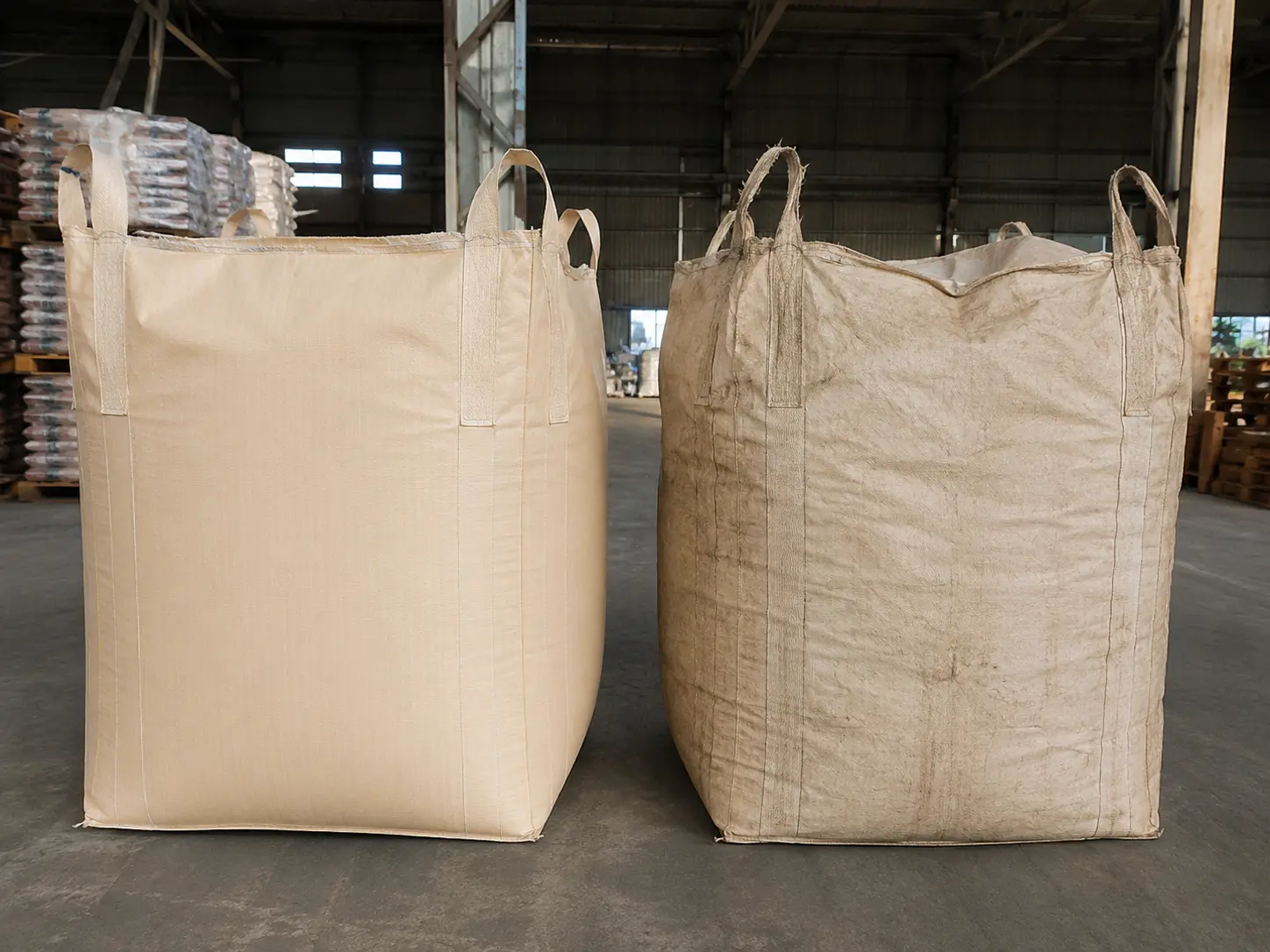
This catches buyers out because a used 5:1 bag can look perfect. Single-trip construction does not fail visibly after one use; it simply has nothing left in reserve.
What a Real Inspection Regime Includes
Where bags are genuinely 6:1 and the process is serious, the regime has recognisable parts:
| Step | What it catches | Skipped when |
|---|---|---|
| Visual sort | Cuts, abrasion, broken stitching, damaged loops, mould, staining | Almost never — this is the minimum everyone does |
| Light table | Micro-punctures, fabric thinning, weakened seams, UV degradation | Often — it needs equipment and time |
| Cleaning | Dry residue, surface contamination | Rarely skipped, but methods vary widely |
| Loop pull and seam checks | Attachment strength at the point most loads fail | Frequently |
| Sample top-lift testing | Whether the batch still performs to rating | Frequently |
| Component replacement | Perished ties, cord-locks, illegible labels, old liners | Varies by price point |
The light table is the row worth asking about. The empty bag is drawn over a brightly back-lit glass surface so light passes through the fabric from the inside, and damage that is invisible in a warehouse — pinholes, thin patches from abrasion, degraded areas from UV exposure — shows as bright spots. It is the difference between checking a bag looks fine and checking it is fine.
Loop pull and sample top-lift testing matter for the same reason seam and stitching quality matters on new bags: bags fail at attachment points, not usually in the middle of a panel.
Prior Contents Beat Visible Cleanliness
The most consequential fact about a used bag is what was in it, and that is the fact least visible on inspection. A bag that held an inert mineral and a bag that held a solvent-wetted intermediate can look identical after cleaning.
Cleaning methods handle different problems:
- Dry cleaning — vacuuming or brushing, for loose dry residue on non-hazardous product
- Pressure washing — for stubborn deposits, at the cost of driving water into the weave
- Manual cleaning with agents — targeted, and only as good as the agent choice
None of them reliably remove a product that has migrated into the weave or into a coating layer. So the question to ask is not “how was it cleaned” but “what was in it, and can you show me that for this batch”. A supplier who cannot answer the second question has sold you an unknown, however clean it looks.
That is also why used bags do not belong in food, feed or pharmaceutical service. Those chains require documented production conditions and traceability that a bag with an unverifiable history cannot supply, which is a separate argument from whether the bag is physically sound.
What the Paperwork Should Say
A used-bag inspection record is worth asking for, and worth reading for what it omits:
- Original safety factor — 5:1 or 6:1. If this is missing, stop here.
- Prior contents for the batch, not a general category
- Which inspection steps were applied — specifically whether light-table screening was included
- Sample size and results of any loop pull or top-lift testing
- Which components were replaced and which were reused as-is
The gap between a good and a bad used-bag supplier shows in item 1 and item 3. Everyone claims inspection; far fewer can name the original construction rating and the screening method for a specific batch.
Where Used Bags Genuinely Make Sense
None of this argues against buying used. For non-regulated, non-hazardous materials — aggregates, scrap, non-food minerals, waste streams — a properly reconditioned 6:1 bag at a fraction of new cost is sound economics, and it keeps serviceable bags out of the recycling stream for another cycle.
The judgement is about matching the unknown to the consequence. Where a contamination event or a dropped load costs you a cleanup and a replacement, used bags are reasonable. Where it costs you a product recall, a regulatory finding or an injury, the saving is not the relevant number. Our new versus used comparison works through where that line usually falls.
Your Verification Checklist
- What safety factor were these bags originally built to? No answer, or a 5:1 answer, ends the conversation.
- Was light-table screening part of the process for this batch, or only a visual sort?
- Can the supplier state the prior contents for this specific batch rather than in general?
- Was any load testing done, on what sample size, with what result?
- What is the consequence at your site if one bag in the lot fails? That number, not the price difference, decides whether used is appropriate.
Final Thoughts
Used bags are a legitimate purchase made risky by a vague word. Ask what “inspected” covered, ask what the bags were built to, and ask what was in them before — three questions that take a minute and separate a real reconditioning operation from a sorting shed. If the answers are documented, the economics are usually good. If they are not, you are buying the appearance of diligence rather than the thing itself.
If you are weighing used against new for a specific product, send us the material, the fill weight and how many trips you need from a bag. We will tell you honestly when new 6:1 construction is the cheaper answer over the life of the order, and when it is not.
Common Questions
Does inspected mean the same thing from every supplier?
No. There is no shared definition. It can mean a visual glance during sorting, or a documented regime with light-table screening, loop pull tests, seam checks and sample top-lift testing on each batch. Ask which of those were done and what the records show, because the word alone carries no information.
Can a 5:1 single-trip bag be reconditioned and reused?
No. The safety factor was designed for one filled trip, so there is no engineered margin left for a second. Reconditioning restores appearance and replaces components, but it cannot change what the bag was built to. Only bags manufactured to 6:1 multi-trip construction are candidates for reuse.
What is light table inspection?
The empty bag is pulled over a brightly back-lit glass table so light passes through the fabric from inside. Micro-punctures, thinning from abrasion, weakened seams and UV degradation show up as bright spots that are invisible under normal light. It is the single most useful screening step in a used-bag operation.
How do I know what was previously in a used bag?
You need documentation, not assurance. A reconditioner should be able to state the prior contents for the batch. Without that record, treat the bag as unsuitable for food, feed, pharmaceutical or any application where contamination carries consequences, regardless of how clean it looks.
Does cleaning remove chemical contamination?
Not reliably. Vacuuming and brushing remove dry residue and pressure washing removes stubborn deposits, but a product that has migrated into the weave or the coating is a different problem. This is why prior contents matter more than visible cleanliness when you are assessing suitability.
What should a used bag inspection certificate actually list?
Batch identity, prior contents, the inspection methods applied, the sample size and results of any load testing, which components were replaced, and the safety factor the bag was originally built to. If a document omits the original safety factor, it is not telling you whether the bag should be reused at all.
Are used bags ever appropriate for food or pharmaceutical products?
As a general rule, no. Food and pharmaceutical supply chains require documented, controlled production and full traceability, which a bag with an unverifiable service history cannot provide. Used bags belong with non-regulated, non-hazardous materials where a contamination event is recoverable.
More in Buying & Importing
All Buying & Importing guides- FIBC Tariffs: Why the Factory Quote Isn't Your Real CostFIBC imports can carry standard tariffs plus trade remedy duties on top. Here's the landed-cost framework, and where to verify the current rate.
- HS Code for FIBC Bags: Why 6305.32 Isn't EnoughFIBC bags sit under HS 6305.32 internationally, but your country extends that into a longer code. Here's how classification actually works.
- Bulk Bag Pre-Shipment QC: How Many Bags to Actually CheckHow many bags to pull, what to check on each, and how defects get classified — pre-shipment QC is a method, not a supplier's reassurance.
- FIBC Manufacturer Audit: 5 Checks Before You OrderFive things a supplier audit should verify — traceability, test reports, certification specifics, spec match and inspection access. No factory visit needed.