Bulk Bags for Cement: Why Moisture Means Total Loss
Cement doesn't degrade with moisture — it hydrates and hardens into an unusable mass. That changes how coating and liner get specified.
PackTonne Sourcing Desk · · 6 min read
Cement’s biggest packaging risk is moisture — it undergoes a hydration reaction on contact with water or sustained humidity, hardening into an unusable mass rather than just clumping or losing quality the way many other bulk products do. Whether a quote calls them cement bulk bags, cement super sacks or a cement jumbo bag, this is what separates a working spec from a failed shipment. It makes coating and liner choice matter more for cement than for almost any other product shipped in FIBC bags. A moisture breach in a cement bag isn’t a quality complaint — it is the whole bag written off.
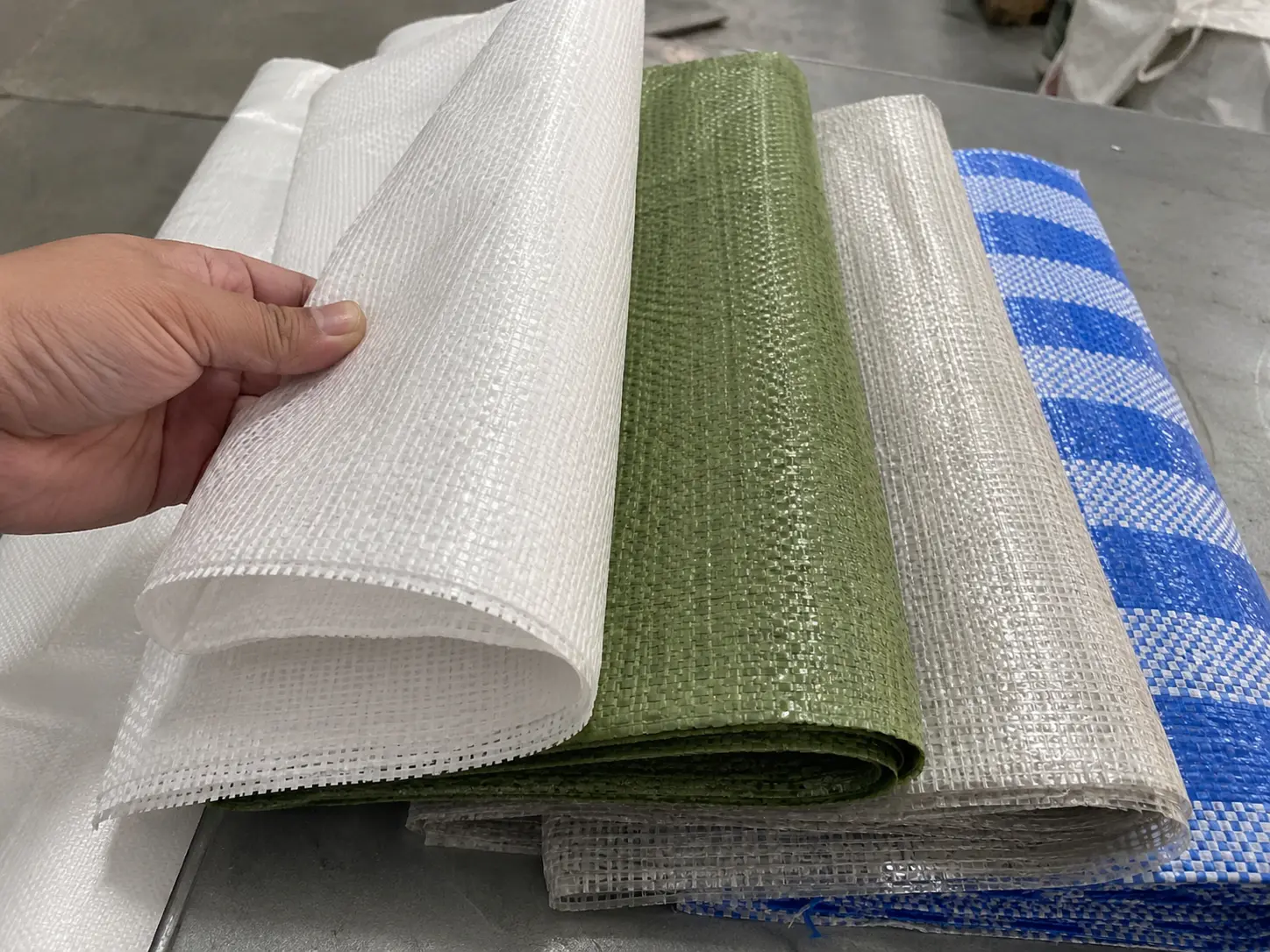
Cement-Specific Spec Considerations
| Factor | Why it matters for cement | Typical approach |
|---|---|---|
| Moisture protection | Hydration reaction destroys product on exposure | Coating plus liner, not either alone |
| Fabric weight | Cement blended with sand/aggregate is abrasive | Heavier GSM than a non-abrasive product of the same weight |
| Fill style | Automated plant filling common | Spout top for controlled, lower-dust fill |
| Discharge style | Depends on downstream equipment | Spout bottom for mixer feed; flat bottom for manual use |
| Dust | Fine particle, generates dust during handling | Controlled fill/discharge reduces exposure |
Why Cement’s Moisture Sensitivity Is a Different Kind of Risk
Most moisture-sensitive bulk products degrade gradually with exposure — clumping, reduced flowability, quality loss that’s disappointing but not total. Cement is different: the hydration reaction that occurs on contact with water is the same chemical process that makes concrete set, meaning moisture-exposed cement effectively cures into a hardened, unusable mass rather than degrading gradually. This is why moisture protection for cement deserves more attention than a generic “keep it dry” approach — a coating or liner failure isn’t a quality reduction, it’s a total loss of the affected product.
Coating Plus Liner: Common Practice for Cement
Given how destructive moisture exposure is for cement specifically, combining coating and a liner is common practice rather than relying on either alone — coating closes gaps in the outer weave, while an independent inner liner provides a second barrier that doesn’t depend on the coating holding up perfectly across the bag’s full surface and handling life. This redundancy costs more than either treatment alone, but for a product where a single moisture breach can void an entire bag’s contents, it’s a cost most cement shippers accept as necessary rather than optional.
Fabric Weight: Accounting for Abrasiveness
Cement is frequently blended or handled alongside sand and aggregate, both of which are more abrasive on fabric than fine powders alone — a fabric weight chosen purely to meet the target load’s safety factor may not hold up as well against this abrasive wear over repeated handling and transport. Specifying a heavier GSM than the load weight alone would suggest is common practice for cement and cement-blend products, trading some cost for better wear resistance across the bag’s actual handling conditions.
Fill and Discharge Style for Cement Operations
Spout top construction fits well with automated or semi-automated cement plant filling lines, supporting a controlled, lower-dust fill that a wide-open duffle top doesn’t offer as effectively. Discharge style depends on what’s downstream: spout bottom suits bags feeding directly into a mixer or process line, while flat bottom fits operations where cement is dumped or scooped manually rather than fed into equipment.
FIBC vs Paper Valve Bags for Cement
Paper multi-wall valve bags remain common for smaller-volume, manual-handling cement operations without bulk material handling equipment on site — they’re simple, familiar, and don’t require forklift or crane infrastructure. FIBC bags handle far more volume per unit, resist moisture more reliably with proper coating and liner, and fold flat for efficient empty-container logistics, making them the better fit for higher-volume, mechanized operations. The choice often comes down to existing handling infrastructure as much as bag performance — an operation already set up for palletized bag handling has less reason to switch, while one scaling up production volume often finds FIBC’s per-unit efficiency compelling.
Common Mistakes When Packaging Cement in FIBC
- Relying on coating alone without a liner. Given cement’s total-loss failure mode on moisture exposure, single-layer protection carries more risk than the cost savings usually justify.
- Choosing fabric weight based on load weight alone. Cement blends with sand or aggregate need extra margin for abrasive wear, not just tensile capacity for the target weight.
- Using duffle top on a high-volume automated line. Spout top’s dust control and filling speed advantages matter more at scale than the modest cost difference.
- Assuming any coated bag is equally moisture-resistant. Coating quality and whether it’s one-side or two-side matters — confirm the specific spec rather than accepting a generic “coated” claim.
- Sticking with paper valve bags purely out of habit as volume scales up. Revisit the FIBC-versus-valve-bag comparison as your operation’s volume and handling infrastructure change.
Storage Conditions Matter as Much as the Bag Itself
Even a well-specified coated-and-lined FIBC has limits — cement bags stored in genuinely wet conditions, stacked directly on damp ground, or exposed to standing water will eventually see moisture find its way in regardless of packaging quality. Proper storage — off the ground, under cover, in a reasonably dry environment — works together with bag spec rather than substituting for it. Treat packaging and storage practice as a combined system for protecting a product this sensitive to moisture, not two separate, independent safeguards.
Decision Checklist
- Have you specified both coating and liner, not just one? Cement’s hydration risk generally justifies the redundancy.
- Is your fabric weight chosen to handle abrasion, not just target load? Sand or aggregate blending increases wear beyond what load weight alone suggests.
- Does your fill process benefit from spout top’s dust control? Relevant for automated or semi-automated plant lines.
- Does your discharge feed directly into equipment, or get dumped/scooped? This determines spout versus flat bottom.
- Does your current volume and handling infrastructure favor FIBC over paper valve bags? Higher volume and existing bulk handling equipment both point toward FIBC.
Final Thoughts
Cement is the product where under-specifying protection is least forgivable, because the failure mode is total rather than partial. Coating plus liner isn’t over-engineering here — it’s the redundancy that matches a product which can’t be salvaged once water reaches it. Tell us your blend, storage conditions and handling volume and we’ll spec the barrier that fits.
Before You Request a Quote
Send us your cement packaging details and we’ll confirm the right spec:
- Cement type — plain, blended with sand/aggregate, or other
- Target capacity and typical storage/transit duration
- Fill and discharge equipment at your facility
- Current volume and whether you’re using paper valve bags today
Request a quote and we’ll confirm coating, liner, fabric weight, and fill/discharge style against your actual cement operation.
Common Questions
Why does cement need more moisture protection than other bulk products?
Cement undergoes a hydration reaction when it contacts water or sustained humidity, causing it to harden and become unusable — unlike many bulk products where moisture exposure just causes clumping or quality reduction, cement moisture exposure can effectively destroy the product entirely.
Should cement bags use coating, a liner, or both?
For cement, combining coating and a liner is common practice rather than relying on either alone — coating closes gaps in the outer fabric weave, while a liner adds an independent inner barrier. Given how destructive moisture exposure is for cement specifically, the added protection from both is often worth the cost.
What fill and discharge style is typical for cement FIBC bags?
Spout top is common for cement, since it supports controlled, lower-dust filling at automated or semi-automated plant lines, and spout bottom or flat bottom discharge depends on whether the bag feeds directly into mixing equipment or is dumped and scooped.
Are FIBC bags better than paper valve bags for cement?
It depends on volume and handling infrastructure. FIBC bags handle much larger volumes per unit, resist moisture better with coating and liner, and fold flat when empty; paper valve bags remain common for smaller-volume, manual-handling operations without bulk material handling equipment. Higher-volume, mechanized operations generally favor FIBC.
Does cement's abrasiveness affect FIBC fabric weight choice?
Yes, particularly for cement blended with sand or aggregate — a heavier GSM fabric holds up better against abrasive wear during repeated handling than a lighter fabric chosen purely for the target load weight.
Does cement need a different bag than mortar or grout mixes?
The moisture logic is the same, since all three hydrate. Blended products containing sand or aggregate add abrasion, which pushes fabric weight higher than plain cement would require. Specify by both the hydration risk and the abrasiveness of the actual blend.
How long can cement sit in a bulk bag before it becomes a concern?
That depends far more on storage conditions than on elapsed time. Well-sealed bags kept dry and off the ground hold for extended periods; the same bags stored on damp ground or under intermittent rain can fail much sooner. Manage the storage environment as carefully as the bag spec.
More in Applications
All Applications guides- Hemp Super Sacks: You're Buying Volume, Not StrengthDried hemp biomass is so light a super sack fills at under a fifth of its rating. Size the bag for volume, and seal it only once drying has finished.
- Super Sack Cofferdams: The Bag Holds Weight, Not WaterA super sack cofferdam is a mass structure, not a seal. Woven polypropylene seeps, so the bag supplies ballast and a separate membrane has to stop the water.
- Bulk Bags for Coffee Beans: The 12% Moisture ProblemGreen coffee is not a dry cargo. It ships in a narrow moisture band, and the real threat in a container is condensation putting water back into the bean.
- Dewatering Bulk Bags: The One FIBC Built to Let Water OutEvery other bulk bag keeps moisture away from the product. A dewatering bag does the opposite — and specifying it with coated fabric guarantees it will fail.