Dewatering Bulk Bags: The One FIBC Built to Let Water Out
Every other bulk bag keeps moisture away from the product. A dewatering bag does the opposite — and specifying it with coated fabric guarantees it will fail.
PackTonne Sourcing Desk · · 8 min read
Every other bulk bag in a catalogue is trying to keep water away from the product. A dewatering bag is built to do the opposite: hold the solids and let the liquid run out through the fabric. That inversion catches out buyers who arrive with dry-bulk FIBC habits, because almost every instinct that produces a good cement or fertilizer bag produces a useless dewatering bag.
What a Dewatering Bag Actually Does
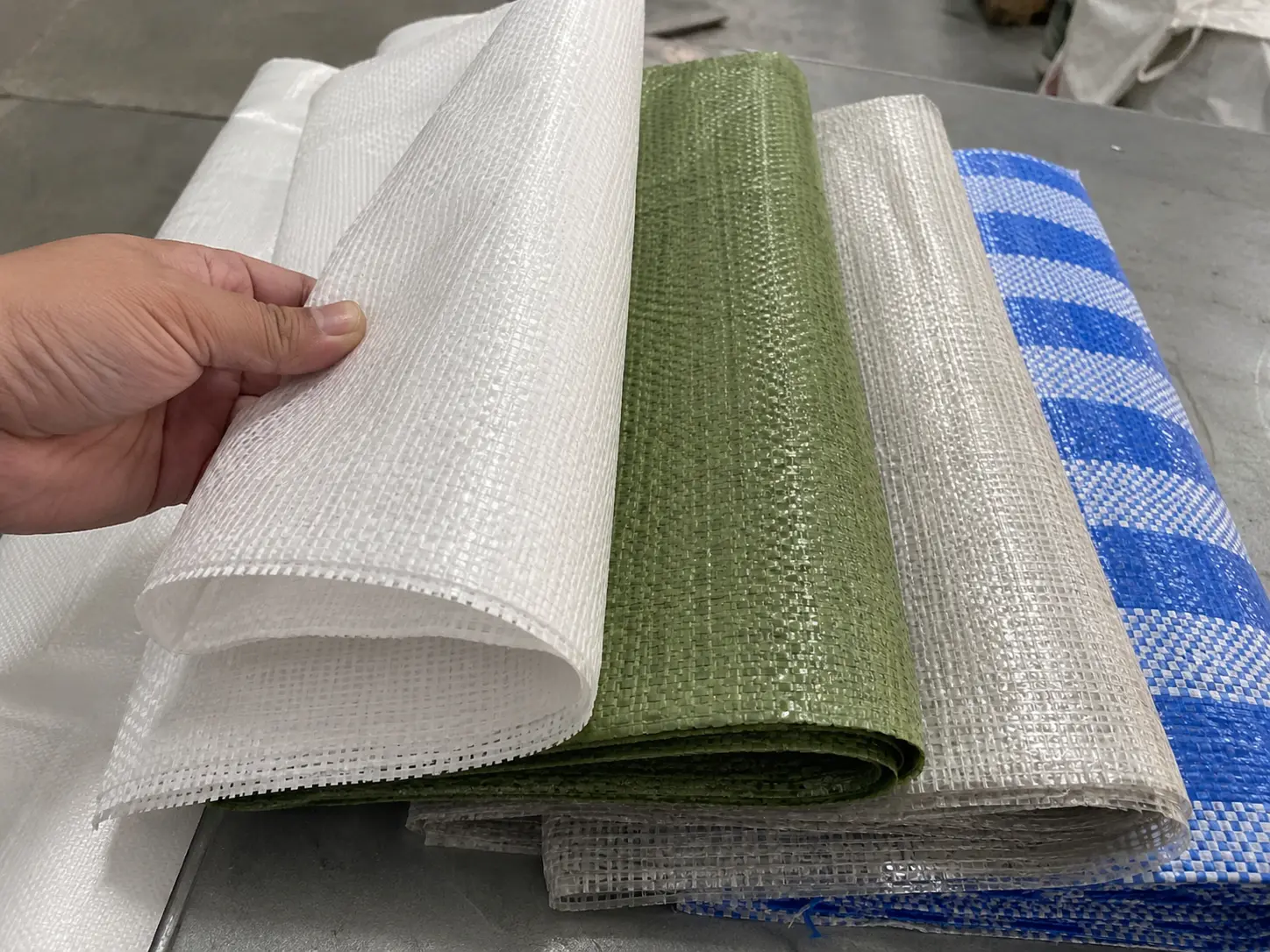
A dewatering bag is an FIBC woven from deliberately permeable uncoated polypropylene, sized so liquid passes through the weave while solids are retained. The rest of the construction is ordinary: lifting loops, a fill opening, and often a full-open discharge bottom so the drained solids can be dropped out in one movement. Four-panel bodies are common, because flat walls drain more evenly than a bag that bulges.
It is filtration equipment that happens to be shaped like a bulk bag. Typical applications run to sludge from wastewater treatment, slurry from concrete cutting and surface preparation, water clarification, and collection of washed product. In all of them the bag is doing a separation job, not a containment one.
Permeability vs Retention Is the Only Real Trade-off
The fabric has one job with two conflicting requirements: pass liquid quickly, and hold onto solids. Every dewatering fabric sits somewhere on that line, and the position is chosen by the particle you must retain, not by how fast you would like the water gone.
- Too open — water leaves fast, and your fines leave with it. The effluent carries solids you were supposed to capture, which turns a packaging decision into a discharge compliance problem.
- Too tight — fines migrate into the weave and plug it. The surface seals, drainage stops while the bag is still full, and no additional dwell time brings it back. This is filter blinding, and it is not recoverable in the field.
Specify from the smallest particle that matters to you. Flow rate is then whatever that retention level permits, which is why “how fast does it drain” is the wrong opening question to put to a supplier.
Where Standard FIBC Instincts Go Wrong
Three habits carried over from dry bulk packaging cause most of the failures.
Coating. A coated fabric is a moisture barrier, which is precisely the property you are trying not to have. Coating a dewatering bag makes it a very expensive bucket.
Liners. A polyethylene liner is a sealed inner bag. It defeats the fabric completely, and it is easy to add by reflex when the product is described as wet.
Sizing by dry weight. Dry-bulk sizing starts from bulk density and target fill weight. A dewatering bag is lifted while full of liquid, so the governing figure is the wet weight at the first lift.
That last one is a safety issue rather than a performance one, and it deserves its own section.
Rate the Bag for Wet Weight, Not Drained Weight
The load a dewatering bag carries changes over its working cycle, and the heaviest moment usually comes first. A bag filled with slurry is carrying the solids plus all the water that has not yet passed through the fabric. If the safe working load was calculated from the mass of dry residue you expect to be left behind, the bag is under-rated for the lift that actually happens.
Two practical consequences:
- Give your supplier the wet fill weight and the point in the cycle at which the bag will be moved. If it is lifted immediately after filling, that is the design case.
- Where the bag is filled in place and only moved once drained, say so explicitly — that is a genuinely different specification and it costs less.
Neither answer is guessable from the product name, and no supplier can infer it from a volume figure. You can check what your dimensions imply for wet load in the bag calculator by entering the density of the slurry rather than the dry solids.
How It Compares to the Rest of the Range
| Standard uncoated | Coated | Ventilated | Dewatering | |
|---|---|---|---|---|
| Design intent | Contain dry solids | Block moisture | Pass air | Pass liquid |
| Fabric | Woven PP, strength-led | Woven PP + coating | Woven PP with mesh panels or vent strips | Woven PP, permeability-led |
| Liquid passes through | Slowly, unpredictably | No | Partially | By design |
| Typical cargo | Grain, resin, minerals | Cement, fertilizer | Firewood, produce | Sludge, slurry, wet solids |
| Governing spec | GSM and safety factor | Coating and liner | Vent ratio | Retention vs flow rate |
| Load at first lift | Equals final load | Equals final load | Equals final load | Higher than final load |
Ventilated bags are the closest relative and still a different product. Ventilation moves air to stop a respiring crop sweating; dewatering moves bulk liquid out of a saturated solid. A vented bag will not dewater sludge, and a dewatering bag left in a warehouse full of onions will not keep them dry. At the opposite extreme, a super sack cofferdam has to overcome the same permeability, with a membrane doing the sealing the fabric cannot.
A Note on Fabric Weight Units
US suppliers usually quote dewatering fabric in ounces per square yard — 8 oz is a figure you will see often — while spec sheets written to international standards use grams per square metre. Eight ounces per square yard works out at roughly 270 gsm, which is heavy relative to the 140–210 gsm range common in dry-bulk FIBCs. That extra weight is there for repeated handling of a saturated load, not for a higher rated capacity, so do not read it as a strength upgrade.
If you are comparing a US quote against an Asian one, convert before you conclude that one is heavier duty than the other. The spec sheet guide covers the other fields where the same unit mismatch causes false comparisons.
Your Decision Checklist
- What is the smallest particle you need to retain? That number, not the drainage rate, selects the fabric.
- What does the bag weigh at the moment it is first lifted? Size the safe working load from that figure and say so on the enquiry.
- Is the bag moved while saturated, or filled in place and lifted only after draining? The two are different specifications at different prices.
- Are the retained solids inert, or are they classified? Contaminated sludge changes both the disposal route and whether reuse is possible at all.
- Where does the drained liquid go, and is that discharge permitted? Settle this before ordering — it is the constraint most likely to stop the operation, and it has nothing to do with the bag.
Final Thoughts
Dewatering is the one application where the usual FIBC reflexes work against you. No coating, no liner, and a fabric chosen for what it lets through rather than what it holds back. Tell us the solids, their particle size range, the wet fill weight and when the bag gets lifted, and the specification follows from those four facts — including whether a standard uncoated bag is honestly enough for your material.
Send the slurry description, particle size, wet weight per bag and your handling sequence. That is what we need to quote a permeability rather than a bag.
Common Questions
What is a dewatering bulk bag?
A dewatering bulk bag is an FIBC woven from deliberately permeable uncoated polypropylene, so liquid drains through the fabric while solids stay inside. Construction is otherwise conventional — lifting loops, a fill top, sometimes a full-open discharge bottom — but the fabric is chosen for flow rate rather than for keeping moisture out.
Can I use a standard bulk bag for dewatering?
Only by accident, and not reliably. A standard uncoated bag passes some water, but its weave is specified for strength and fines retention rather than drainage, so flow is slow and unpredictable. Coated or lined bags pass none at all, which is the failure people usually discover after the first fill.
How do I know what fabric permeability I need?
Work from the particle size of the solids you need to keep, not from the volume of water you need to lose. The fabric has to retain your smallest meaningful particle; flow rate is then whatever that retention level allows. Getting this backwards produces either a bag that leaks fines or one that blinds and stops draining.
Why does my dewatering bag stop draining partway through?
That is filter blinding. Fine particles migrate into the weave and plug it, so the surface seals and drainage slows to nothing even though the bag is still full. Fabric that is slightly too tight for your solids is the usual cause, and no amount of extra dwell time recovers it.
What safe working load should a dewatering bag be rated for?
Rate it for the wet weight at the moment of lifting, not the drained weight. A bag holding slurry can weigh substantially more before drainage than after, and the lift that matters is often the first one. Sizing to the dry residue is the single most dangerous mistake in this application.
Can dewatering bags be reused?
Some are built for it, with heavier fabric and multi-trip construction, and they are commonly reused where the solids are inert and non-hazardous. Reuse depends on whether the fabric can be cleaned back to its original flow rate — a bag that stays partly blinded after washing is finished as a filter even if it is structurally sound.
Where does the drained liquid go?
Into whatever containment you provide, which is a site design question rather than a bag question. Bags are typically staged over a sloped pad, a sump or a collection tank. Confirm the discharge is permitted for your effluent before the first bag is filled — that decision sits outside the packaging entirely.
More in Applications
All Applications guides- Sandbags for Flooding: Why Most Barriers Fail and How to Build One That HoldsSandbags slow floodwater, they do not stop it. See why barriers fail, how full to fill the bags, how to stack them and where the agency guidance disagrees.
- Hemp Super Sacks: You're Buying Volume, Not StrengthDried hemp biomass is so light a super sack fills at under a fifth of its rating. Size the bag for volume, and seal it only once drying has finished.
- Super Sack Cofferdams: The Bag Holds Weight, Not WaterA super sack cofferdam is a mass structure, not a seal. Woven polypropylene seeps, so the bag supplies ballast and a separate membrane has to stop the water.
- Bulk Bags for Coffee Beans: The 12% Moisture ProblemGreen coffee is not a dry cargo. It ships in a narrow moisture band, and the real threat in a container is condensation putting water back into the bean.