Coated vs Uncoated FIBC Fabric: Which Moisture Risk?
Coating seals the weave; a liner adds an independent inner barrier. Different mechanisms — here's when you need one, the other, or both.
PackTonne Sourcing Desk · · 6 min read
Coating and liners solve overlapping but different moisture problems, and knowing which one your product actually needs avoids paying for protection you don’t require. Coating laminates a thin polyethylene film onto the fabric surface, closing the small gaps in the weave. A liner is a separate inner film placed inside the bag. Some products need one, some need both, and plenty need neither — and paying for the wrong one is common.
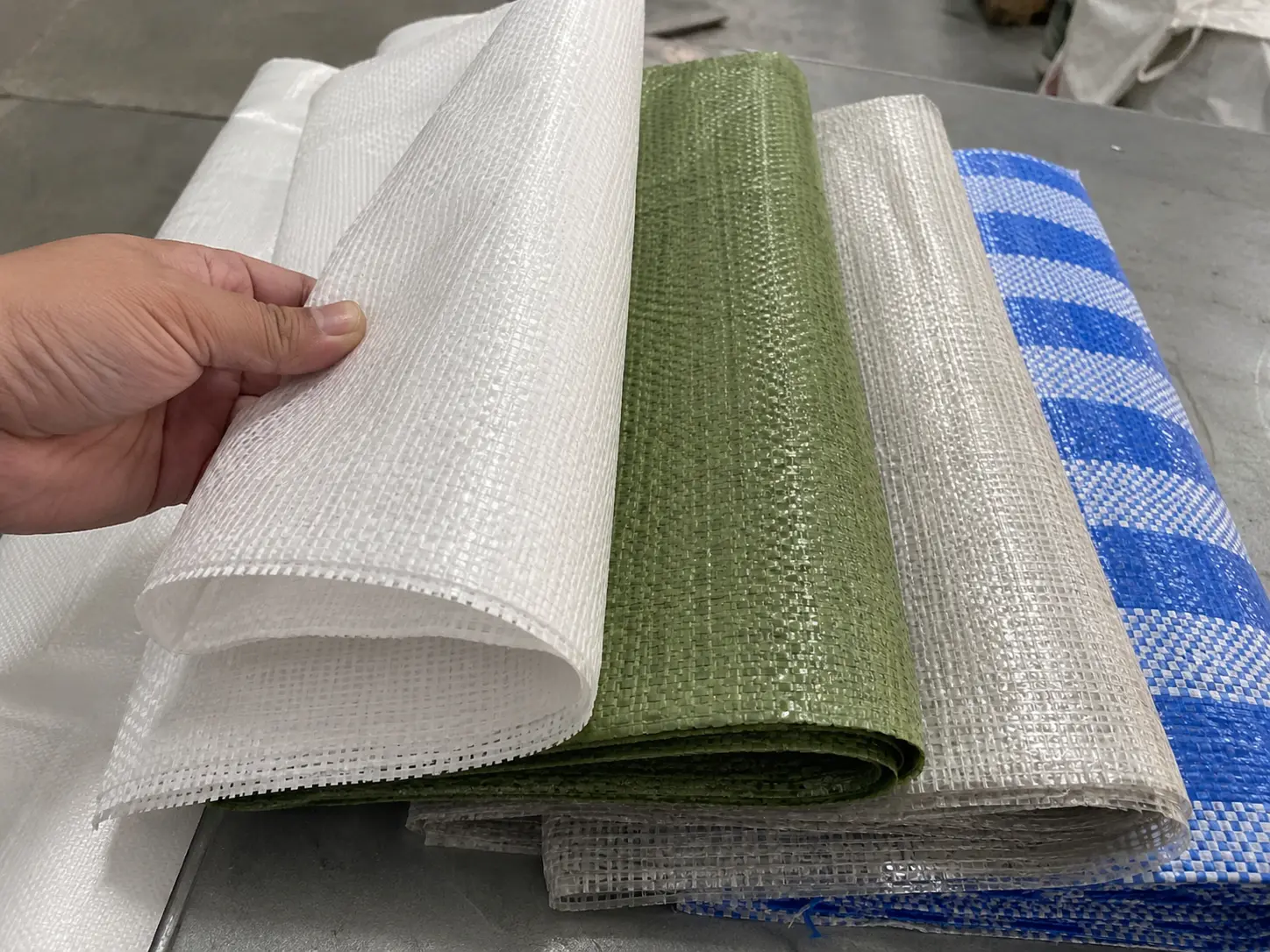
Coated vs Uncoated at a Glance
| Uncoated | Coated (one-side) | Coated (two-side) | |
|---|---|---|---|
| Moisture resistance | Basic — gaps in weave allow gradual transfer | Improved on the coated surface’s side | Improved on both sides |
| Cost | Baseline | Modest premium | Higher premium |
| Breathability | Full — open weave allows airflow | Reduced on coated side | Reduced both sides |
| Typical use | Non-hygroscopic minerals, aggregates | Products needing protection from one direction (internal or external) | Highly moisture-sensitive products |
What Coating Actually Does
Raw woven PP fabric is water-resistant in normal handling but not sealed — the weave has microscopic gaps between the woven tapes that let moisture pass through gradually under sustained exposure or humidity. A thin polyethylene film laminated onto the fabric surface closes those gaps, creating a real barrier the base weave alone doesn’t provide. This is a surface treatment layered onto the existing fabric — it doesn’t change the base GSM’s tensile strength or the bag’s rated capacity, just its moisture behavior. For why even a coated woven bag can still let water in, see is polypropylene waterproof.
One-Side vs Two-Side Coating: Direction Matters
Coating the inside surface primarily protects the product from moisture working through the weave from outside in, relevant when the bag sits in a humid warehouse or travels through variable weather before the product is used. Coating the outside surface protects against rain and external humidity during storage and transit reaching the product through the weave from that direction. Two-side coating covers both directions but costs more than either single-side option — the right choice depends on which direction your actual moisture risk comes from, not a default assumption that more coating is always better.
Coating vs Liner: Overlapping but Different Mechanisms
Coating treats the outer fabric directly, closing weave gaps at the source; a liner is an independent inner film that creates its own barrier regardless of what the outer fabric does. This is why some products need both: a liner alone still sits inside a fabric that can absorb ambient moisture over time, while coating alone doesn’t offer the added insurance of a liner’s independent seal if the outer coating develops a flaw. For genuinely moisture-critical products — see our liner types guide for the liner side of this decision — combining both gives more reliable protection than either alone, at a correspondingly higher cost.
UV Exposure and Coating
Coating formulations can include UV stabilizers that slow degradation from sustained sun exposure, relevant for bags stored outdoors before use or shipped on open decks rather than in enclosed containers. ISO 21898:2024’s updated guidance on UV aging verification reflects how much this matters for bags facing real outdoor exposure — if your bags will sit outside for any meaningful period, ask specifically whether the coating formulation includes UV stabilization, since not all coatings are formulated the same way on this point.
When Uncoated Is the Right Choice
Non-hygroscopic, moisture-insensitive products — sand, gravel, many construction aggregates, non-caking granular minerals — don’t benefit meaningfully from coating, since there’s no moisture-sensitivity risk to protect against in the first place. Paying for coating on these products adds cost without a corresponding benefit; uncoated fabric at the appropriate GSM and safety factor is the more economical and equally effective choice. At the far end of the same scale sits the dewatering bulk bag, woven to be permeable on purpose so liquid drains out through the fabric — coating it would defeat the entire point.
Cost and Durability Tradeoffs
Coating adds a modest premium over uncoated fabric of the same base spec, generally less than the cost jump from static protection or certification, but a real cost nonetheless. It also reduces breathability on the coated surface, which matters if your product benefits from some airflow even while needing moisture protection — a tradeoff worth discussing with your supplier if your product sits in that middle ground rather than clearly needing full sealing or full breathability.
Common Mistakes When Specifying Coating
- Assuming coating and liner are interchangeable. They protect through different mechanisms — coating treats the fabric surface, a liner is an independent inner barrier. Confusing the two can leave a real protection gap.
- Defaulting to two-side coating without checking which direction the risk comes from. One-side coating matched to the actual exposure direction is often sufficient and cheaper.
- Coating a product that doesn’t need moisture protection at all. Coating adds cost with no benefit for non-hygroscopic products — confirm the product’s actual sensitivity first.
- Assuming coating alone makes a bag suitable for prolonged outdoor storage. UV stabilization is a separate formulation question from basic moisture coating — ask specifically if that’s your use case.
- Not considering the breathability tradeoff for products in the middle ground. Some products benefit from partial airflow even while needing some moisture protection — a fully sealed two-side coating isn’t automatically the safest choice for every product.
How This Interacts With Fabric Weight and Safety Factor
Coating is a separate spec dimension from fabric weight (GSM) and safety factor — a coated bag isn’t automatically stronger or more abrasion-resistant than an uncoated one at the same GSM, since coating addresses moisture, not tensile strength. See our woven polypropylene guide for how GSM and safety factor are chosen independently of moisture protection needs. Specify all three — fabric weight, safety factor, and coating — as separate decisions rather than assuming one implies the others.
Decision Checklist
- Is your product hygroscopic or moisture-sensitive? If not, uncoated is likely the right and more economical choice.
- Does your moisture risk come from outside (transit/storage) or from the product itself? That determines outside coating, inside coating, or both.
- Is the product moisture-critical enough to need both coating and a liner? Combine them for genuinely sensitive products rather than relying on one alone.
- Will bags face real outdoor UV exposure? Confirm the coating formulation includes UV stabilization if so.
- Are you trading off some breathability your product might benefit from? Discuss this explicitly if your product isn’t clearly in the fully-sealed or fully-breathable category.
Final Thoughts
Coating and lining answer the same question — how does moisture get in — from opposite sides of the fabric. Once you know which direction your risk comes from, the choice usually makes itself, and for genuinely critical products the answer is both. Tell us what you’re packing and where it sits between filling and use, and we’ll specify the barrier that matches the actual exposure.
Before You Request a Quote
Send these details so we can confirm the right fabric treatment:
- Product moisture sensitivity and hygroscopicity
- Expected storage and transit conditions, including outdoor exposure
- Whether you also need a liner
- Target fabric weight and capacity
Request a quote and we’ll confirm coating spec against your actual product and exposure conditions.
Common Questions
What does coating do to FIBC fabric?
A thin polyethylene film laminated to the fabric surface closes the small gaps in the woven weave that raw fabric would otherwise let moisture pass through over time. It's a surface treatment, not a change to the base fabric's tensile strength or weight rating.
Is coated fabric the same as a liner?
No. Coating treats the outer fabric's surface directly; a liner is a separate inner film bag placed inside the FIBC. They address overlapping moisture concerns through different mechanisms, and some products need both, not just one.
Should I coat one side or both sides of the fabric?
Inside coating primarily protects the product from moisture working through the weave; outside coating protects against external rain and humidity during storage and transit. Two-side coating covers both directions but costs more — match the choice to which direction your actual risk comes from.
Does coating make a bag waterproof?
No single treatment makes an FIBC fully waterproof — coating significantly reduces moisture transfer through the weave but isn't a sealed barrier the way a liner with heat-sealed seams can be. For genuinely moisture-critical products, coating plus a liner is the more reliable combination. Which of the two you need depends on the product's own moisture threshold — [fertilizer caking and critical relative humidity](/blog/bulk-bags-for-fertilizer-caking-moisture-control/) works through that calculation on a hygroscopic product.
Is there a bag designed to let liquid through on purpose?
Yes — a dewatering bulk bag uses deliberately permeable uncoated fabric so liquid drains out while solids stay in. It is the opposite end of the same scale this comparison sits on, used for sludge, slurry and washed product rather than for anything that has to stay dry.
When is uncoated fabric the right choice?
For non-hygroscopic, moisture-insensitive products — many minerals, construction aggregates, non-caking granular materials — uncoated fabric is the more economical choice, since coating adds cost for protection the product doesn't need.
Does coating affect how well the bag folds for shipping?
Slightly. A coated fabric is marginally stiffer than uncoated at the same GSM, which can reduce how flat empty bags fold and marginally lower container count on floor-loaded shipments. The effect is small next to liner bulk, but worth knowing if empty-container logistics are tight.
Can coating be applied to anti-static or food grade bags?
Yes — coating addresses moisture, static class addresses ignition risk, and food grade addresses contamination. They are independent specs that combine freely. Confirm the coating formulation is compatible with any certification your bag carries, since certified designs are locked once tested.
More in Construction & Materials
All Construction & Materials guides- Is Polypropylene Food Safe? Why PP Resin Is Not the Same as a Food Grade BagFDA lets polypropylene be used in contact with food, but that covers the resin only. See what 21 CFR 177.1520 sets and what a food grade bulk bag also needs.
- What Is Polypropylene? 7 Properties That Explain Where It Is UsedPolypropylene is a lightweight, chemical-resistant thermoplastic that floats and melts near 160 °C. Seven properties explain its uses, from caps to bulk bags.
- Polypropylene Recycling: Why #5 Plastic Is Recyclable but Rarely RecycledPolypropylene is recyclable, yet most of it is not captured. See why access, sorting and degraded resin hold it back, and where your PP can actually go.
- Polypropylene Melting Point: Why 160 °C Is Not the Temperature a Bulk Bag Can TakePolypropylene melts at about 160–165 °C, but a bulk bag has lower limits: softening, shrinking tape and a PE liner. See the numbers and what to ask suppliers.