Polypropylene Recycling: Why #5 Plastic Is Recyclable but Rarely Recycled
Polypropylene is recyclable, yet most of it is not captured. See why access, sorting and degraded resin hold it back, and where your PP can actually go.
PackTonne Sourcing Desk · · 8 min read
Polypropylene is recyclable, but most of it is not recycled. The material can be melted and reformed, yet recycling it depends on local collection, sorting capacity and a market for the output. Resin code 5 only names the plastic. Whether your item becomes a new product depends on where you live and how clean it is.
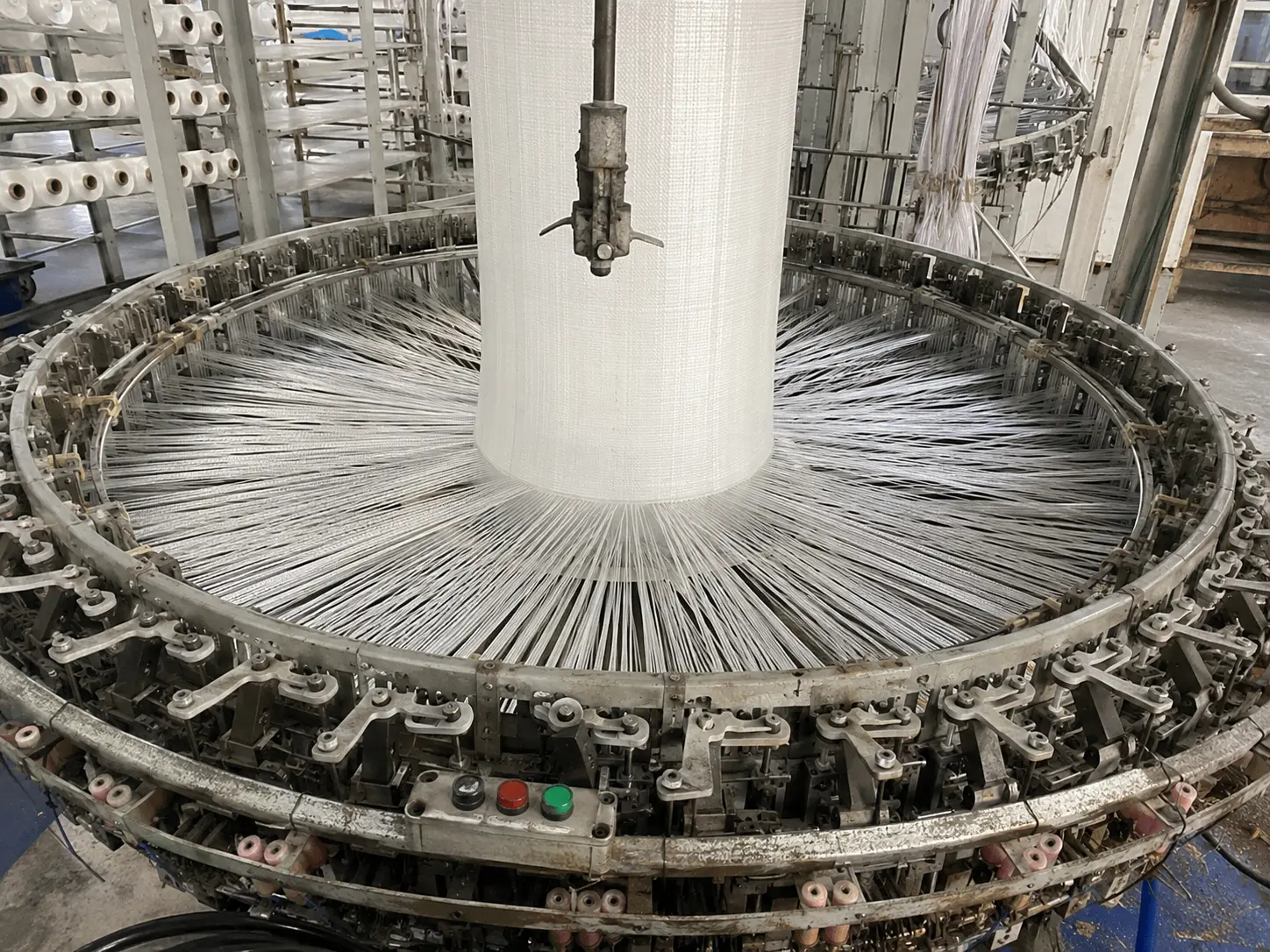
Can Polypropylene Be Recycled?
Yes, in the technical sense, but the answer depends on the system around the plastic. Polypropylene is a thermoplastic, so it can be melted and shaped again, as covered in our polypropylene versus polyethylene guide. Whether a particular item is recycled depends on whether it is collected, whether a plant can sort it and whether someone buys the result. For the material itself, see what polypropylene is.
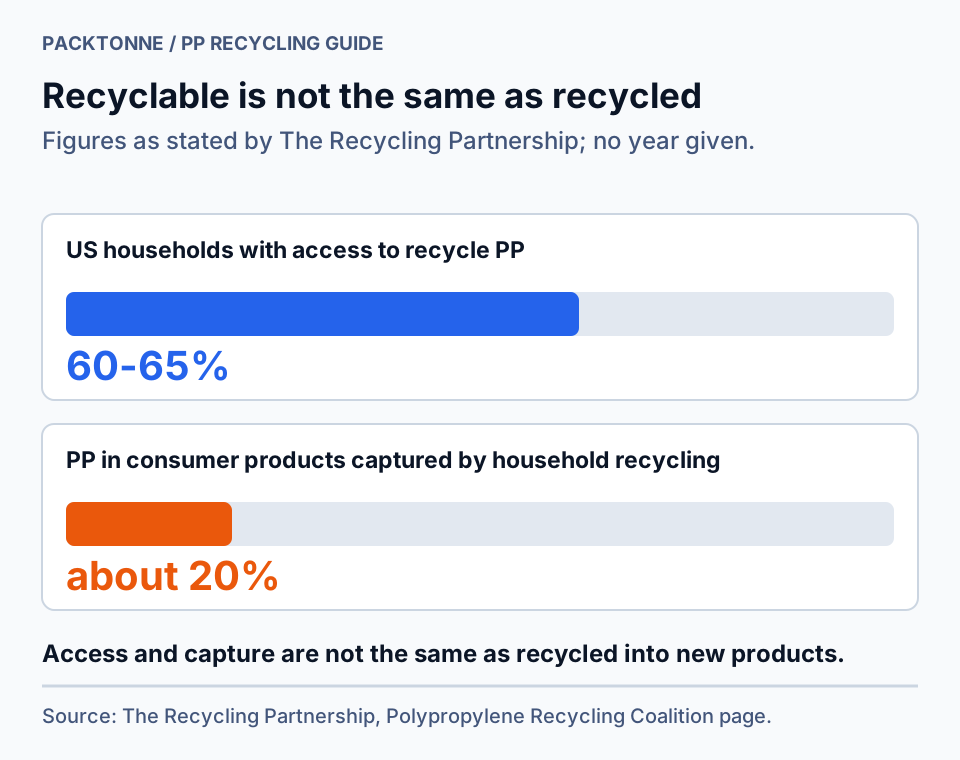
The Recycling Partnership, a US non-profit, says only 60–65% of US households have access to recycle polypropylene, and that about 20% of PP in consumer products is captured through household recycling. Its page gives no year for these figures.
Why #5 Plastic Is So Rarely Recycled
Four weak links explain most of the gap. Each one is separately fixable, but they add up.
| Weak link | What goes wrong | Source of the point |
|---|---|---|
| Access | Many households cannot put PP in a bin | The Recycling Partnership |
| Sorting | Plants need dedicated PP sorting capacity; one Texas facility had almost none in 2021 | The Recycling Partnership |
| Material quality | Dirt and degraded resin lower value; recycled PP often has weaker melt flow and thermal stability than new | Cleantech |
| End use | Food contact needs a case-by-case FDA opinion | FDA |
The Recycling Partnership launched a Polypropylene Recycling Coalition in 2020 to widen access and sorting. It reports that, as of March 2026, its work had added PP recycling access for about 48 million more residents and about 75 million pounds of PP captured a year. That is progress, but the figures above show the gap remains.
How Polypropylene Is Recycled
Mechanical recycling is the usual route, and it follows five stages. The Association of Plastic Recyclers describes the sequence on its site.
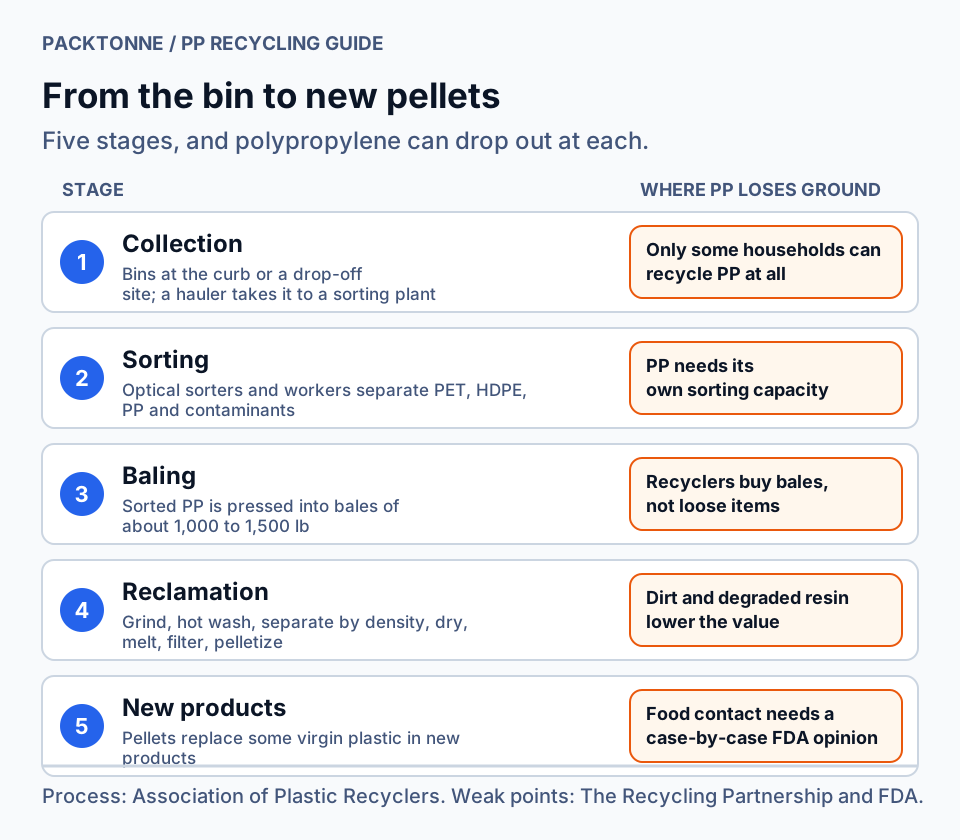
The Association of Plastic Recyclers describes it as collection, sorting at a recovery facility, baling into bales of roughly 1,000 to 1,500 pounds, reclamation and manufacturing. At the recycler, bales are opened and sorted again. The plastic is ground into flakes, washed in hot water with detergent, separated by density, dried, melted, filtered and pelletized. Food-contact material also goes through heat and vacuum decontamination.
Chemical recycling, which breaks plastic down to chemical feedstock, also exists. Its scale and cost remain debated, so this guide focuses on the mechanical route that handles most collected PP today.
Three Routes for Your Polypropylene
Where your PP goes depends on the quantity, the cleanliness and what your area accepts. The chart is a starting point, because rules differ by town.
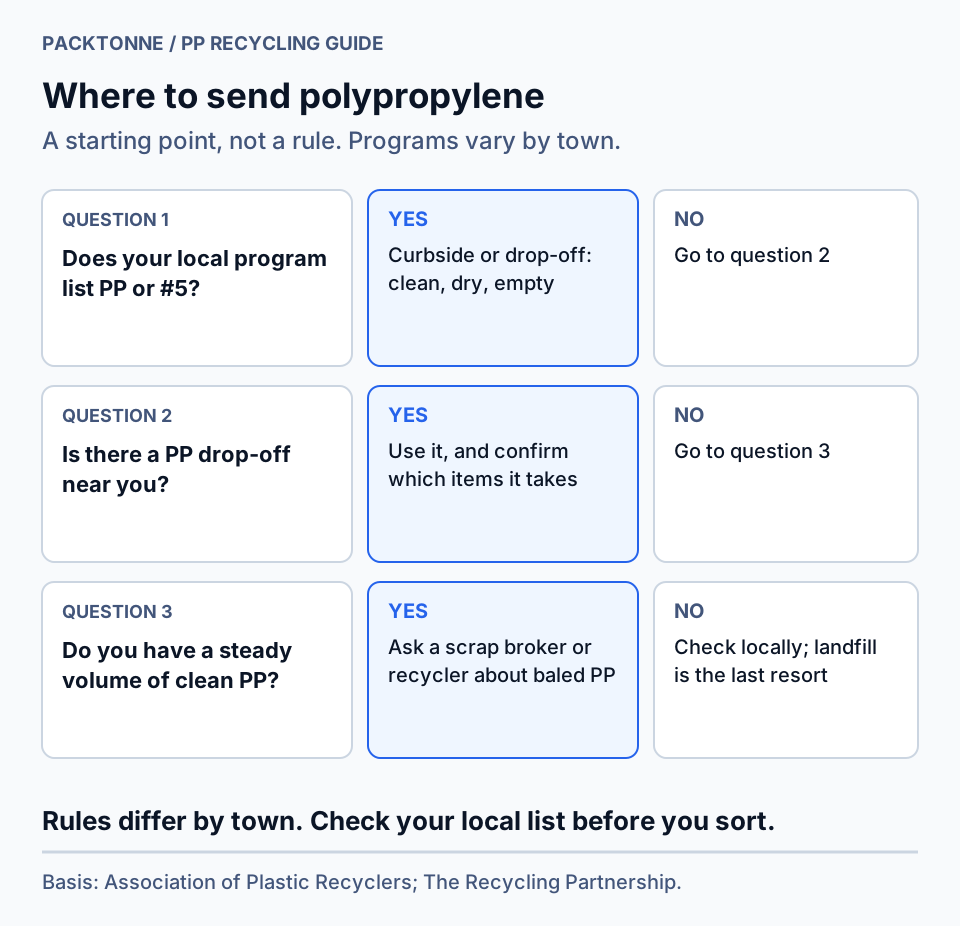
| Route | Suits | Limits |
|---|---|---|
| Curbside | Household PP your program lists | Acceptance varies; items must be clean |
| Drop-off | PP your curbside program refuses | Which items it takes depends on the site |
| Industrial or commercial | Steady volumes of clean PP, such as offcuts or empty bags | Buyers want baled, uncontaminated lots |
What Recycled Polypropylene Can Become
Recycled PP goes into many new products, but food packaging is the tightest use. FDA reviews each proposed use of recycled plastic case by case. Its page on recycled plastics says it gives opinions on specific recycling processes and that each favorable opinion applies to a particular process. Trade press, including a report on NEXTLOOPP, describes favorable opinions for several recycled-PP processes. Treat each one as specific to the named process and feedstock.
For non-food uses, the limit is mostly property and price. Recycled grades vary, so ask for the data sheet of the specific grade.
A Bulk Bag Is a Polypropylene Recycling Case
A woven bulk bag is a clear example of recyclable polypropylene. The fabric is PP tape, as explained in what woven polypropylene is. At end of life it can be recycled if it is empty, clean and dry, and if a buyer takes it. A PE liner, labels and product residue count as contamination. Our guide to FIBC recycling covers grading and baling, and where to sell used super sacks covers the options before recycling.
Your PP Recycling Checklist
- If you cannot find PP or resin code 5 on your local program’s list, you should treat it as not accepted until you confirm.
- If the item is dirty, wet or full of residue, you should clean it first or expect it to be rejected.
- If you have a steady volume of clean PP, you should ask a scrap broker or recycler about baled lots.
- If you need recycled PP for food contact, you should ask the supplier for the specific FDA opinion and the conditions it covers.
- If recycled content matters, you should ask for the grade’s data sheet, not a general statement.
Final Thoughts
Polypropylene can be recycled, and what stops it is the system around it: access, sorting and the quality of what comes out. Check local rules before you sort. For businesses, a mono-material design with a clean, dry end-of-life makes recycling much easier. Keep that in mind when you specify bags.
Before You Request a Quote
If you are specifying bags and want to plan for end of life, send us these details:
- The product the bags will carry
- Whether you plan to reuse, return or recycle the bags
- Liner and print requirements
- Monthly bag volume and destination
We will check them against a Type A construction and tell you what to confirm.
Common Questions
Is polypropylene recyclable?
Yes, polypropylene is a thermoplastic that can be melted and reformed. Whether a given item is actually recycled depends on local collection, sorting and markets. Check your local program's list for PP or resin code 5 before you put anything in a bin, because acceptance differs by town and by item.
What does the number 5 on plastic mean?
The number 5 in the triangle is the resin identification code for polypropylene. It names the plastic, not the destination. A 5 does not mean your local program accepts the item, and it does not mean the item contains recycled content. Look up your local accepted-materials list.
Can recycled polypropylene be used for food packaging?
Only through a case-by-case FDA review. FDA gives opinions on specific recycling processes and their sources, rather than approving recycled plastic in general, and each opinion applies to that process. Trade press reports favorable opinions for several recycled-PP processes. Do not assume another recycler's resin is covered.
Why is polypropylene hard to recycle?
Several links in the chain are weak. Not every household can recycle PP, sorting plants need dedicated capacity for it, and dirt or degraded resin lowers the value of what comes out. An industry article also notes that recycled PP often has weaker melt flow and thermal stability than new resin. Each problem is solvable, but they stack.
How is polypropylene recycled?
Mechanical recycling is the usual route. Sorted PP is baled, then ground into flakes, washed in hot water with detergent, separated by density, dried, melted, filtered and pelletized. The pellets can replace some virgin plastic in new products. Chemical recycling also exists, but its scale and economics remain debated.
Can a woven polypropylene bag be recycled?
Yes, if it is empty, clean and dry, and a buyer takes it. Woven bag fabric is polypropylene, but a PE liner, labels and residue count as contamination. Bulk bags usually go to recyclers as baled lots rather than through household bins. Our guide to FIBC recycling covers grading and baling.
Is recycled polypropylene as strong as new?
Not always. An industry article reports that recycled PP often has weaker melt flow rate, molecular weight and thermal stability than virgin resin, because of contamination or degradation during processing. Suitability depends on the grade and the application, so ask the supplier for the data sheet of the specific recycled grade.
More in Construction & Materials
All Construction & Materials guides- Is Polypropylene Food Safe? Why PP Resin Is Not the Same as a Food Grade BagFDA lets polypropylene be used in contact with food, but that covers the resin only. See what 21 CFR 177.1520 sets and what a food grade bulk bag also needs.
- What Is Polypropylene? 7 Properties That Explain Where It Is UsedPolypropylene is a lightweight, chemical-resistant thermoplastic that floats and melts near 160 °C. Seven properties explain its uses, from caps to bulk bags.
- Polypropylene Melting Point: Why 160 °C Is Not the Temperature a Bulk Bag Can TakePolypropylene melts at about 160–165 °C, but a bulk bag has lower limits: softening, shrinking tape and a PE liner. See the numbers and what to ask suppliers.
- Polypropylene vs Polyethylene: 10 Differences That Decide Which to UsePP is stiffer, lighter and handles heat to about 160 °C; PE stays tough in the cold and heat-seals easily. Ten differences, the grades of each, and how to choose.