Where to Sell Used Super Sacks (and the 5 Checks That Decide the Price)
Selling used super sacks? Buyers price on previous contents, cleanliness, rating, volume and storage. See who buys, why bags get rejected and what to send.
PackTonne Sourcing Desk · · 8 min read
Where to sell used super sacks depends on what each bag held and what shape it is in, not how old it is. Reconditioners and resale marketplaces want sound multi-trip bags with known contents. Recyclers want empty, clean bales. Nobody wants a bag with unknown residue. Sort first, then pick the buyer.
Who Buys Used Super Sacks
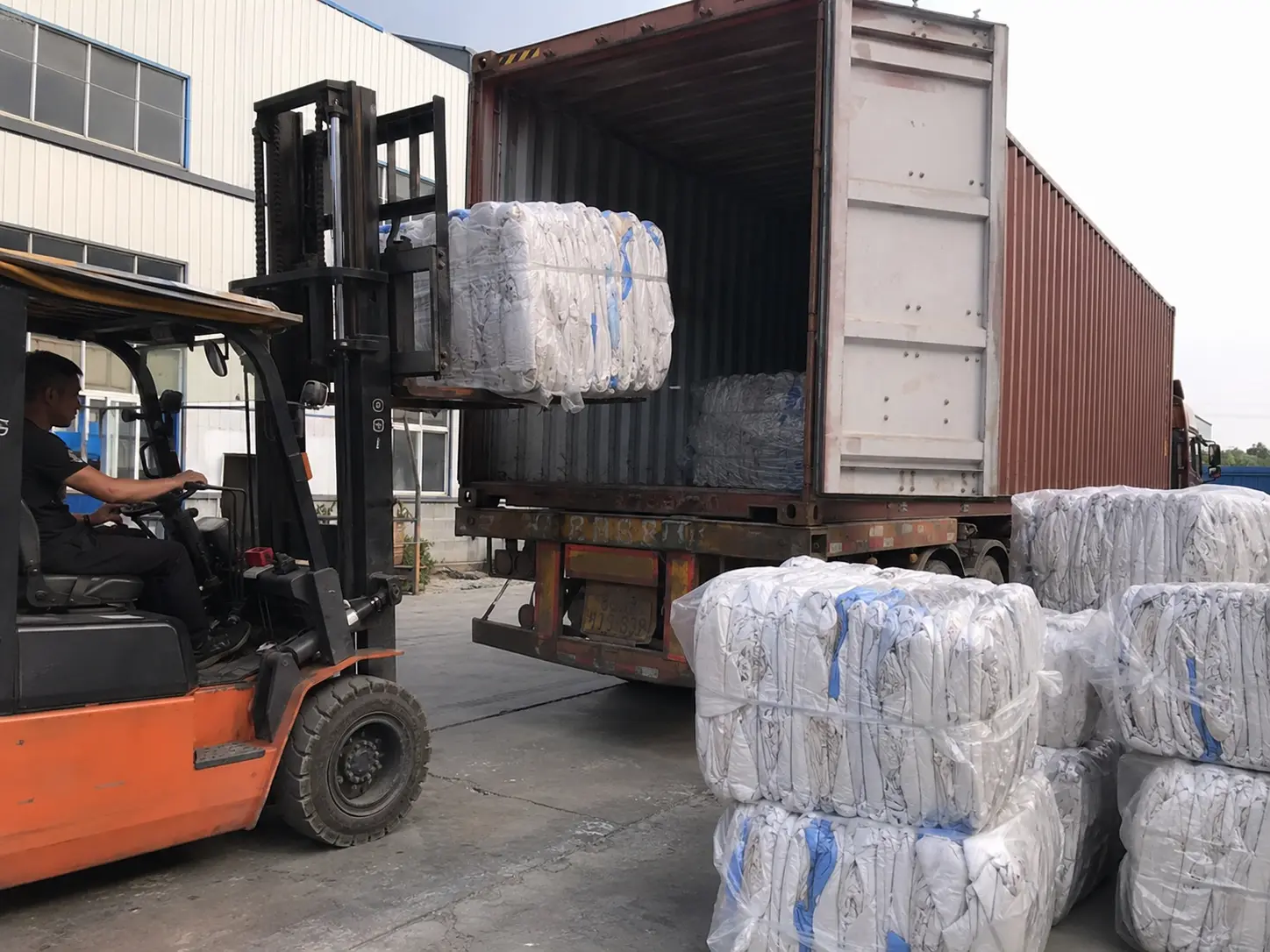
Four kinds of buyer take used super sacks, and each wants a different bag.
| Buyer | What they want | What they do with it |
|---|---|---|
| Reconditioner | Sound 6:1 multi-trip bags, known non-hazardous contents | Clean, inspect, re-liner and resell |
| Resale marketplace or broker | Graded, photographed lots | List the bags for reuse buyers |
| Direct user | Compatible bags for a dry product they already handle | Refill the bag as received |
| Recycler or scrap broker | Empty, residue-free, usually baled bags | Shred, wash and reprocess the polypropylene |
Marketplaces show how the split works in practice. Repackify’s grading guide sorts bags into New, Used (1x), Multi-Use and Baled/Recycle, and describes the last grade as emptied bags free of residue that go to polypropylene recycling. Container Exchanger invites sellers to post a sale ad or answer a want ad, and notes that prior contents are not always fully traceable, so used bags are generally not considered for food contact.
Sort the Bags Before You Call Anyone
Three questions decide the route, and the first “no” ends the conversation.
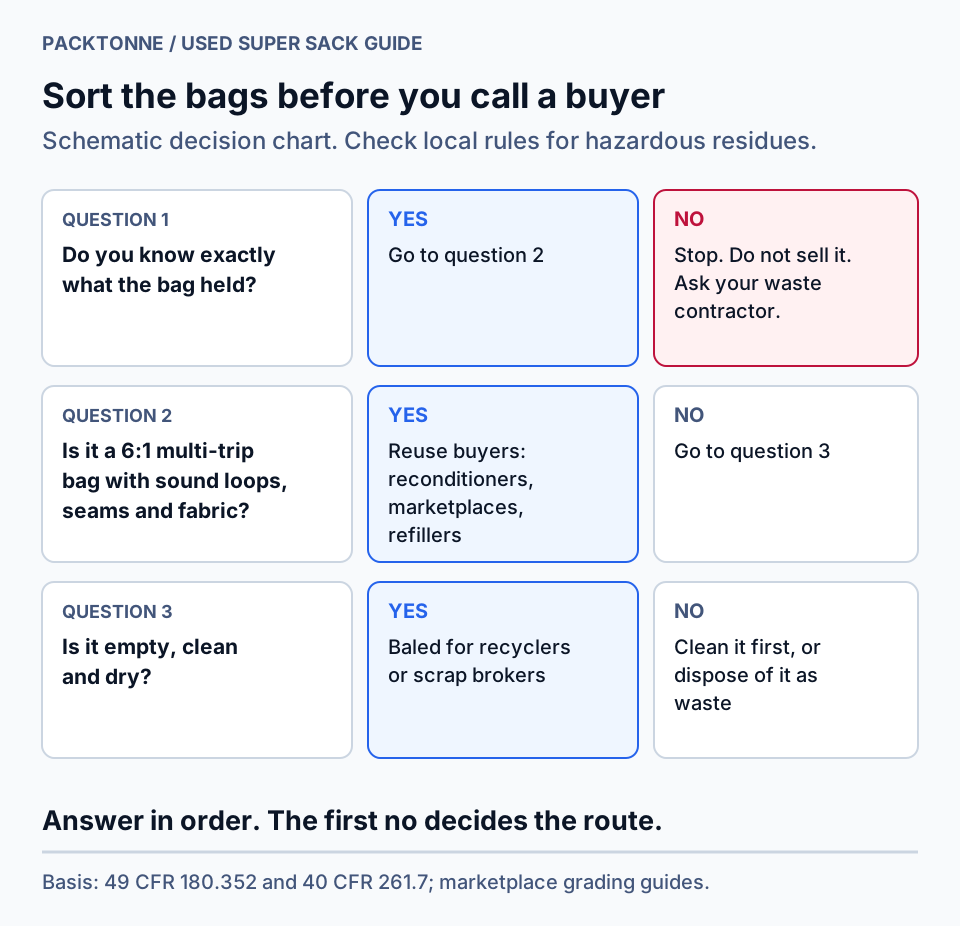
A bag with unknown or hazardous contents is not a sales lead. A bag with a 6:1 multi-trip label and sound structure is a reuse candidate. Everything else is recycling material, provided it is empty, clean and dry. The 5:1 versus 6:1 safety factor decides which side a bag falls on, and inspected used bags explains why no inspection turns a single-trip bag into a reusable one.
The 5 Checks That Decide the Price
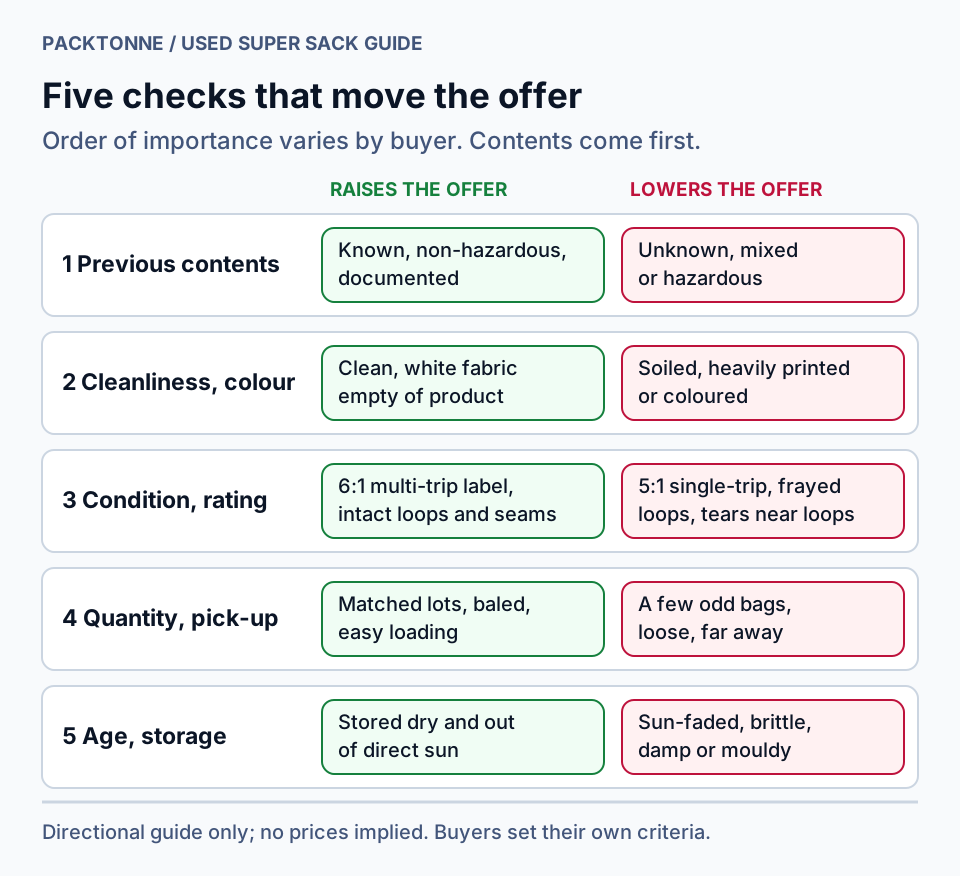
Buyers weigh five things, and they do not weigh them equally. Contents come first.
1. Previous Contents
Known contents decide whether a reuse buyer will talk to you at all. A buyer who plans to refill the bag needs to know it will be compatible with their product. Keep the delivery notes or safety data sheets for what the bag carried, and note whether it held food, minerals, chemicals or something else. A bag that held food-grade material helps only if you can document it.
2. Cleanliness and Colour
Recyclers price on cleanliness and colour. Clean white fabric is worth more than soiled or heavily printed fabric, because the reprocessed pellet stays light. The A, B and C convention is covered in our FIBC recycling guide, so this guide does not repeat it.
3. Condition and Rating
Reuse buyers want a 6:1 multi-trip rating on the label and intact loops, seams and fabric. A USDA Forest Service guide to reusing heavy-duty FIBCs lists discard triggers such as frayed or damaged lifting straps and tears or holes within 3 inches of the straps. It is an older document written for one use, so treat it as an example of the logic rather than a current standard.
UN-marked bags add a regulatory layer. Under 49 CFR 180.352, the person filling a flexible IBC must inspect it before each reuse, and the repair provision excludes flexible IBCs. A damaged UN-marked bag cannot simply be patched and returned to hazardous-materials service under that section. Our marking codes guide explains what the 13H codes mean, and the repair guide covers what can be patched on ordinary bags.
4. Quantity, Baling and Pick-Up
Volume and logistics decide whether a buyer bothers. Used bags are bulky and mostly air, so a few loose bags rarely justify a truck. Matched lots, baled and ready to load, are easier to price. Small or odd lots usually sell better through a marketplace or a broker who consolidates loads.
5. Age and Storage
Sun and moisture age a bag faster than the calendar does. The USDA guide also lists severe sun discolouration and hardened, brittle fabric as reasons to discard. Bags stacked on damp ground or left in direct sun lose value quickly, which is the same mechanism described in our UV resistance guide. Store empties dry and covered until the buyer collects.
Why Buyers Turn Bags Away
Buyers reject bags for five reasons, and only one is usually fixable before sale.
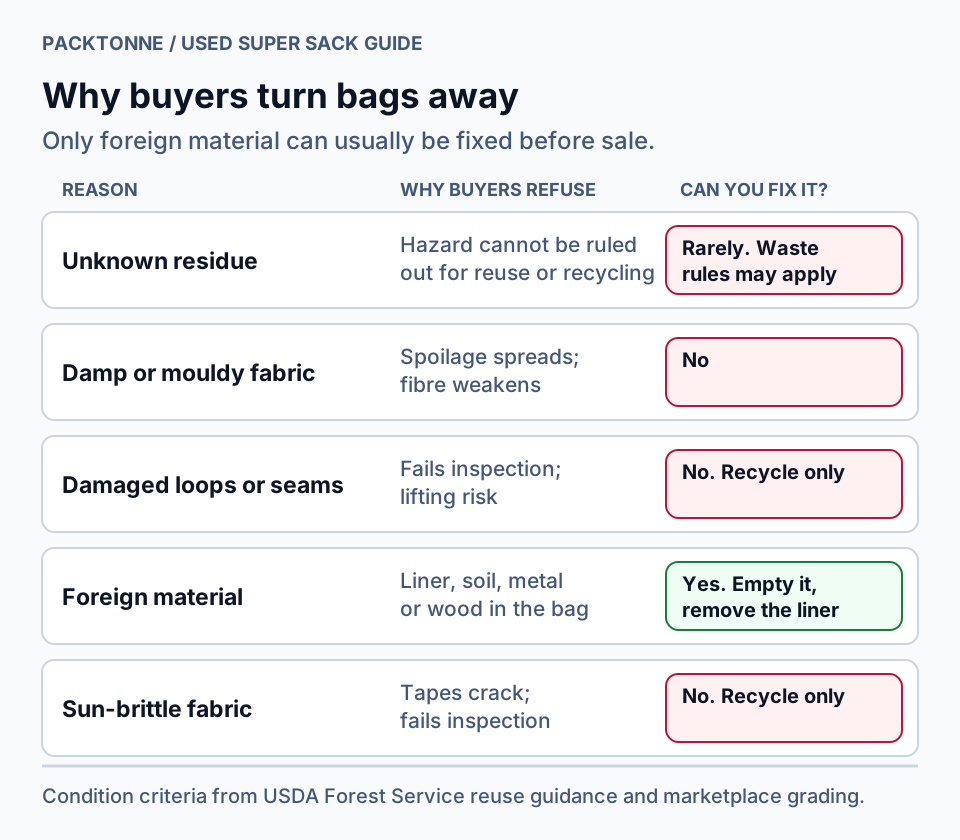
Residue is the one that matters legally. Whether a bag counts as empty depends on what it held. For hazardous waste residues, EPA’s empty-container rule sets limits, and state rules can be stricter. If you are unsure, ask your waste contractor or state agency before the bag leaves your site.
Liners count as contamination. A PE liner is a different plastic from the woven polypropylene body. Pull it out before sale. For reuse, 49 CFR 173.35 requires a required inner liner to be replaced before each reuse of an IBC, and our liner guide covers the types.
Damp, mouldy, sun-brittle or structurally damaged bags go to recycling at best. Do not argue the point with a reuse buyer; their inspection will find it.
What to Send a Buyer Before They Quote
A complete first message gets a quote faster than a phone call. Include:
- Quantity and sizes, and whether the bags are loose or baled
- A photo of the label showing safe working load and safety factor
- Previous contents and how long the bags held them
- Photos of loops, seams, base and the inside of the bag
- Storage history: indoors or outdoors, how long, any wet periods
- Location and loading access: dock, forklift, trailer height
Without the label photo and the contents, an honest buyer can only quote the recycling price.
How to Dispose of Bulk Bags Nobody Will Buy
Bags that cannot be sold go to recycling, and landfill is the last resort. Empty the bag, remove the liner, bale it if you have the equipment, and ask a polypropylene recycler or waste broker to collect. If you generate bags steadily, consolidate several weeks of volume so the load is worth moving. The end-of-life guide walks through the three routes, and the new versus used guide reads the same standards from the buyer’s side.
Decision Checklist
- If you cannot say what the bag held, you do not sell it until someone can.
- If the label does not read 6:1 multi-trip, you offer it to recyclers, not reuse buyers.
- If the liner is still in, you take it out before anyone sees the bags.
- If you have fewer than a pallet of bags, you list them on a marketplace instead of calling recyclers.
- If you cannot photograph the label, loops and seams, you cannot expect a firm quote.
Final Thoughts
The resale value of a super sack is decided at purchase, not at disposal. White fabric, modest print, a known product and a multi-trip rating all keep options open later. If you already know a bag will be reused or recycled, tell your supplier before you order, so the construction matches the plan.
Before You Request a Quote
If you are buying bags and want the exit planned in advance, send us these details:
- The product the bags will carry and the filling weight
- Monthly bag volume
- Whether you plan to reuse, return or recycle the bags
- Print requirements, if any
- Delivery destination
We will tell you which construction and fabric colour fit that plan.
Common Questions
Where can I sell used super sacks near me?
Start with reuse marketplaces and local bag users, then try recyclers and scrap brokers. Marketplaces such as Repackify and Container Exchanger let sellers list used bags and search by location. For bags that cannot be reused, ask polypropylene recyclers or waste brokers in your region whether they accept baled bags. Get at least two quotes and send the same photos and details to each.
Can I sell super sacks that held chemicals?
Only if you can document the contents and they were non-hazardous, or the bag is empty and clean enough for the buyer's route. If the previous contents were hazardous, ask your waste contractor before offering the bag to anyone. EPA's empty-container rule, 40 CFR 261.7, sets residue limits for hazardous waste containers, and state rules can be stricter than the federal rule.
How much are used super sacks worth?
Value depends on grade, and reuse bags are worth more than recycling bales. On Repackify, baled and recycle-grade listings average about a third of the price of used once-only listings. Those are asking prices on one marketplace and they change, so treat them as direction only. Quotes from two or three buyers will tell you more than any published average.
Do buyers take super sacks with the liner still inside?
Remove the liner before you offer the bags. A PE liner is a different plastic from the woven polypropylene body, and recyclers treat leftover liner as contamination. Reuse buyers fit a fresh liner anyway. For UN-marked bags, 49 CFR 173.35 requires a required inner liner to be replaced before each reuse.
Can I resell a bag that was only used once?
You can if the label shows a 6:1 multi-trip rating and the loops, seams and fabric are sound. A 5:1 single-trip bag is built for one fill and one discharge, so it belongs in recycling rather than resale. Check the sewn-in label first. If the rating is missing or unreadable, most reuse buyers will not take the bag.
Does printing or colour stop a bag from selling?
Printing and colour rarely stop a sale, but they lower the price for recycling. Recyclers prefer clean white fabric because the reprocessed pellet stays light. Reuse buyers care more about rating and condition than appearance. If you plan to sell bags later, a white base fabric with modest print keeps more options open.
Can I sell used bags back to the factory that made them?
Do not assume you can. Suppliers of new bags do not usually take used ones back as a standard offer. If take-back or reconditioning matters to your supply chain, ask before you order and get the arrangement in writing, including who pays freight and what condition the bags must be in.
More in Handling & Equipment
All Handling & Equipment guides- Bulk Bag Dispenser: 5 Bag Specs That Decide Whether the Hopper WorksA bulk bag dispenser only works when the bag fits it. Check the spout, body size, loops, closure and liner before you buy, or expect slow, messy emptying.
- Bulk Bag Filling: Why Most Filler Problems Start With the BagBags that lean, leak dust or won't seat on the hooks are usually a spec problem, not a machine fault. Check loops, spout, size, static type and liner first.
- Super Sacks on Pallets: When You Need One and How to ChooseChoosing super sacks on pallets? Check filled bag size, deck support, load ratings and fork access. A pallet's static capacity alone cannot confirm suitability.
- Bulk Bag Unloaders: Why the Bag Spec Matters More Than the FrameMost bulk bag unloader problems start at the bag, not the frame: loops that hang the spout short of the clamp, spouts too narrow for the valve, liners that drag.