Bulk Bag Unloaders: Why the Bag Spec Matters More Than the Frame
Most bulk bag unloader problems start at the bag, not the frame: loops that hang the spout short of the clamp, spouts too narrow for the valve, liners that drag.
PackTonne Sourcing Desk · · 7 min read
A bulk bag unloader is a steel frame that holds a filled bag over a hopper or conveyor while it empties. The frame is rarely what goes wrong. Most unloader problems start at the bag: loops that hang the spout short of the clamp, a spout too narrow for the valve, a liner that drags into the discharge, a gross weight the frame was never rated for. Choose the unloader by how the bag reaches it, then write the bag spec to fit.
Four Ways a Bag Gets Into an Unloader
Bulk bag unloaders differ mainly in how the filled bag is lifted into the frame, and that choice sets the headroom, equipment and throughput the station needs.
| Loading method | How the bag gets there | What the site needs | Suits |
|---|---|---|---|
| Forklift-loaded | Bag hung on a lifting frame or on the forks, then set into the unloader | A forklift at the station | Low to medium bag counts per shift |
| Hoist and trolley | Electric hoist on an overhead beam carries the bag from floor to hopper | The tallest frame of the four, plus power | Frequent bag changes, no forklift at the line |
| Low headroom | Short frame that lifts the bag the minimum distance | Limited ceiling height | Mezzanines and retrofits into existing buildings |
| Portable or half-frame | Frame on casters, or a partial frame over a mobile conveyor | Floor space to move it | One unit serving several discharge points |
At the simple end sit the “big bag dispensers” sold for feed and fertilizer: a hopper frame with a slide gate, no dust control and no flow aids. They work for free-flowing granules and very little else. Every type above also comes in a range of capacities, commonly built for bag weights between 2,000 and 4,000 lb.
What Each Unloader Type Demands From the Bag
The bag has to fit the unloader in four places — loops, spout, rating and liner — and a mismatch in any one of them stops the line.
| Bag feature | What it must match | What happens if it doesn’t |
|---|---|---|
| Loop length | Hook or lifting-frame height | Spout hangs short of the clamp, or the bag bottom rests on the paddles |
| Spout diameter and length | Spout clamp, iris valve or dust collar | Spout won’t seal, or is too short to pass through the valve and tie off |
| Safe working load | Your fill weight | Bag loaded past what it was tested for |
| Liner | Spout interface | Liner pulled into the discharge, blocking the valve |
Loops. Loop length sets how high the bag hangs. On a fixed frame the hooks don’t move, so a loop a few inches longer than the frame was set up for lowers the whole bag. Cross-corner loops suit most hoist and forklift frames; single- and two-loop bags need a frame built for them. The loop types guide covers the options.
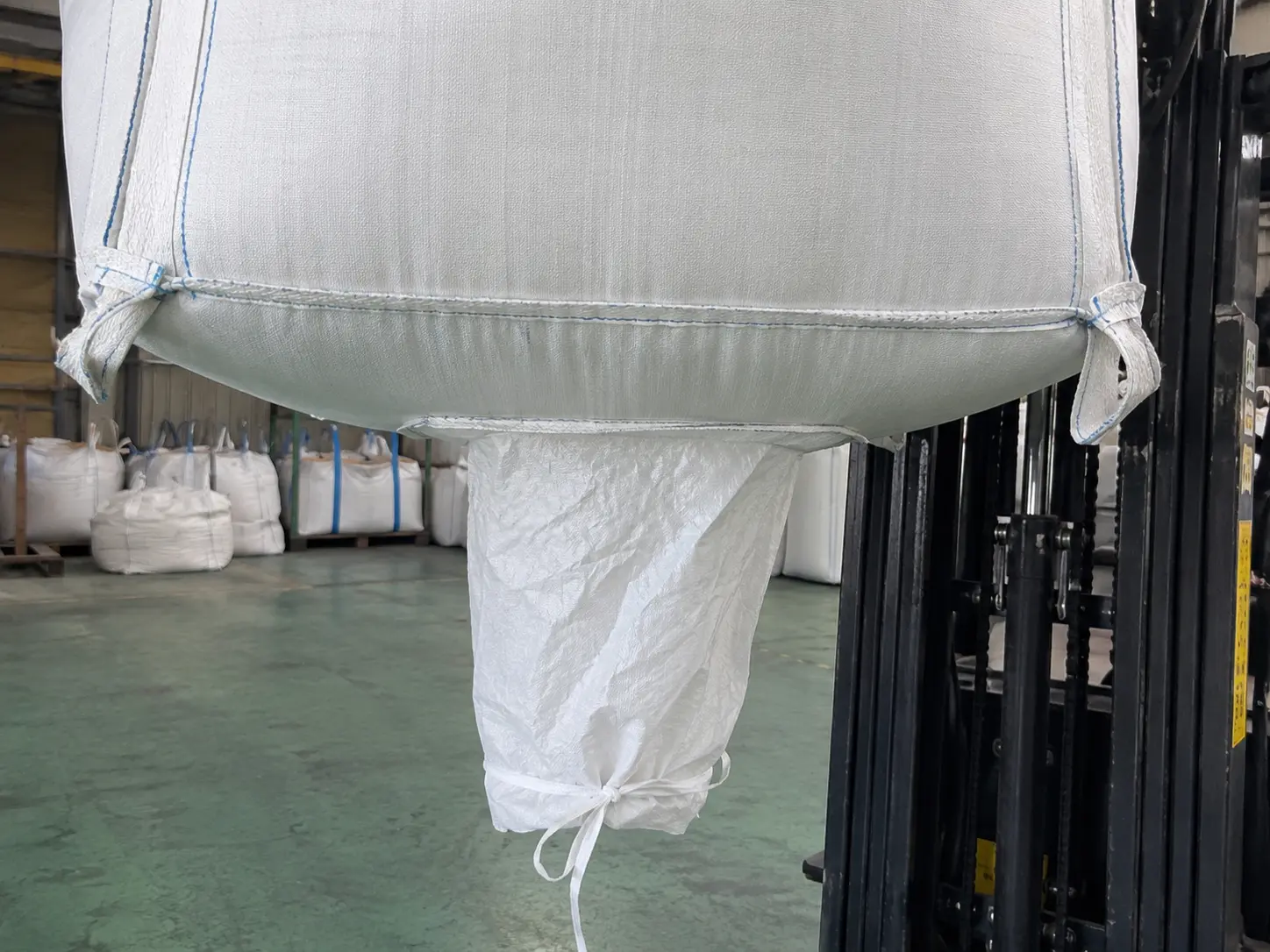
Spout. Spout diameter has to match the clamp or valve, and spout length has to reach through it with enough left over to tie off. A spout sized for one plant’s valve can be too short for another’s, so give the bag supplier the unloader’s spout interface dimensions, not just “spout bottom”. The filling and discharge options article compares spout, flat and full-open bottoms.
Rating. The frame’s rating covers the gross weight hanging in it; the bag’s safe working load covers the product inside. They are two separate checks.
Liner. A loose liner can be drawn into the spout as the bag empties. Liners with their own discharge spout, tied into the bag’s spout, stay in place — see the liner types for how each is fitted.
Flow Aids: When Massagers and Vibrators Earn Their Cost
Flow aids are worth paying for when the product bridges or packs in the bag, not as a default option on every unloader.
| Product behavior | Typical flow aid |
|---|---|
| Free-flowing pellets and granules | None — gravity is enough |
| Fine powder that bridges over the spout | Massage paddles on the bag bottom |
| Powder that settles and packs during transport | Paddles plus a vibrator on the hopper |
| Product that has set solid in storage | A bag conditioner that breaks it up before discharge |
Massage paddles press on the bottom corners of the bag and push product toward the spout, so the bag bottom has to flex under them rather than hold a rigid shape. A conditioner fixes caked product at the unloader, but the cause is usually moisture getting into the bag. Hygroscopic products such as fertilizer blends that cake are better protected with coating or a liner at the bag stage than broken up at the discharge end.
Buying a Used Bulk Bag Unloader: What to Measure First
A used bulk bag unloader is only a bargain if its dimensions match the bags you already buy. Used frames are widely available through equipment dealers, and they are simple steel structures, so condition is rarely the issue. Fit is. Measure these before you pay:
- Rated capacity from the frame’s rating plate, against your heaviest gross bag weight
- Clear height under the hook or lifting frame, and total frame height against your ceiling
- Spout interface — clamp or valve type and diameter
- Hopper outlet against the conveyor or process inlet it must feed
- Lifting frame — check it is included; it is often the missing part
- Hoist capacity and inspection records, on hoist-and-trolley frames
Where the Unloader Ends: Valves, Hoppers and Conveying
The unloader hands the product to a hopper, screw conveyor or pneumatic line, and that interface decides dust and discharge rate more than the frame does. Iris and pinch valves let you stop flow partway through a bag, but only if the spout is long enough to pass through them. Dust collars and bridging are covered in the discharge station guide, and operator safety at the spout in how to empty a bulk bag safely.
Your Unloader and Bag Checklist
- How will the bag reach the frame — forklift, hoist, or neither? That choice picks the unloader type.
- Do you know the frame’s hook height and its spout interface diameter? Send both to your bag supplier.
- Does your product bridge, rat-hole or cake in storage? If not, you can skip the massagers.
- Are your bags lined? Then specify a liner with its own spout, tied into the discharge.
- Buying used? Measure clear height, spout interface and rated capacity before you pay, not after delivery.
Final Thoughts
An unloader frame is steel, and steel is forgiving. The bag is where the fit happens. Pick the loading method that suits your building and your forklift traffic, then write the bag spec — loops, spout, rating, liner — to that unloader’s dimensions. Get that order right and the frame rarely needs anything else.
Before You Request a Quote
Send us the unloader make and model, or just its hook height and spout interface diameter, along with your product and fill weight. We will spec loops, spout and liner to fit that frame, starting from our Type A bulk bags.
Common Questions
What is a bulk bag unloader?
A bulk bag unloader, also called a bulk bag discharger or super sack unloader, is a frame that holds a filled bulk bag over a hopper, conveyor or process line while its bottom spout empties it. Most add dust control at the spout, and many add massagers or vibrators to keep difficult products flowing.
What is the difference between a bulk bag unloader and a discharge station?
The terms overlap. An unloader usually means the complete frame that lifts and holds the bag, while a discharge station often means the lower section — spout interface, dust containment and hopper — where the bag actually empties. Many systems are sold as one unit covering both.
How do I know if my bags will fit an existing unloader?
Compare three pairs of numbers: the unloader's hook or lifting-frame height against your loop length, its spout clamp or valve diameter against your spout diameter, and its rated capacity against your heaviest bag's gross weight. If one pair doesn't match, changing the bag spec is usually cheaper than modifying the frame.
Do I need a massager on my bulk bag unloader?
Only if your product bridges, rat-holes or packs down in the bag. Free-flowing pellets and granules empty by gravity alone. Fine powders, sticky or hygroscopic products, and anything that settles hard during transport are where massage paddles and vibrators pay for themselves.
Can I use lined bulk bags in an unloader?
Yes, as long as the liner is controlled at the discharge. A loose liner can be pulled into the spout as the bag empties and block the valve. A liner with its own discharge spout, tied or sealed into the bag's spout, keeps the liner where it belongs.
Is a used bulk bag unloader worth buying?
Often, if its dimensions match your bags and your building. Check clear height under the hook, spout interface diameter, rated capacity and whether the bag-lifting frame is included before you pay. A frame that only works with non-standard bags adds cost to every bag order that follows.
What capacity bulk bag unloader do I need?
Rate the frame for the heaviest bag you will ever hang in it, including bag and liner weight, not the average fill. Frames are commonly built for bag weights between 2,000 and 4,000 lb. The bag's own safe working load is a separate figure and must cover the product it carries.
More in Handling & Equipment
All Handling & Equipment guides- Bulk Bag Stands: How to Fill a Super Sack Without a MachineA bulk bag stand holds the empty bag open and square. It cannot weigh the fill — and a bag shovelled to the brim with sand can be well over its rating.
- Super Sack Racks: Why the Bag Spec Decides Which Rack WorksRack vendors sell capacity and stack height. What they rarely mention is the bag — its filled footprint, shape and bottom decide whether any rack works.
- How to Empty a Bulk Bag Safely: Plan for the Flow StoppingDischarge methods get chosen for how material flows when everything works. The injuries happen in the next ten minutes, when it stops and someone intervenes.
- FIBC Spreader Bars: The Cheapest Way to Save LoopsBare forklift tines abrade lifting loops every cycle. A proper spreader bar spreads the load and protects the loops — here's what to look for.