FIBC Discharge Stations: Match the Bag to the Equipment
The station and the bag have to be specified together. Here's what a discharge station does, and how bridging and dust control factor in.
PackTonne Sourcing Desk · · 6 min read
A discharge station is the equipment your bag’s discharge spout actually connects to — the purchase side of emptying a bulk bag safely, and the downstream complement to your filling equipment, supporting a filled bag above a process inlet and controlling how material flows out. Matching your bag’s discharge style to the right unloading equipment matters as much as choosing the discharge style itself, since the two need to work together as one system. Buy either one in isolation and you find out at commissioning whether they actually fit.
What a Discharge Station Actually Does
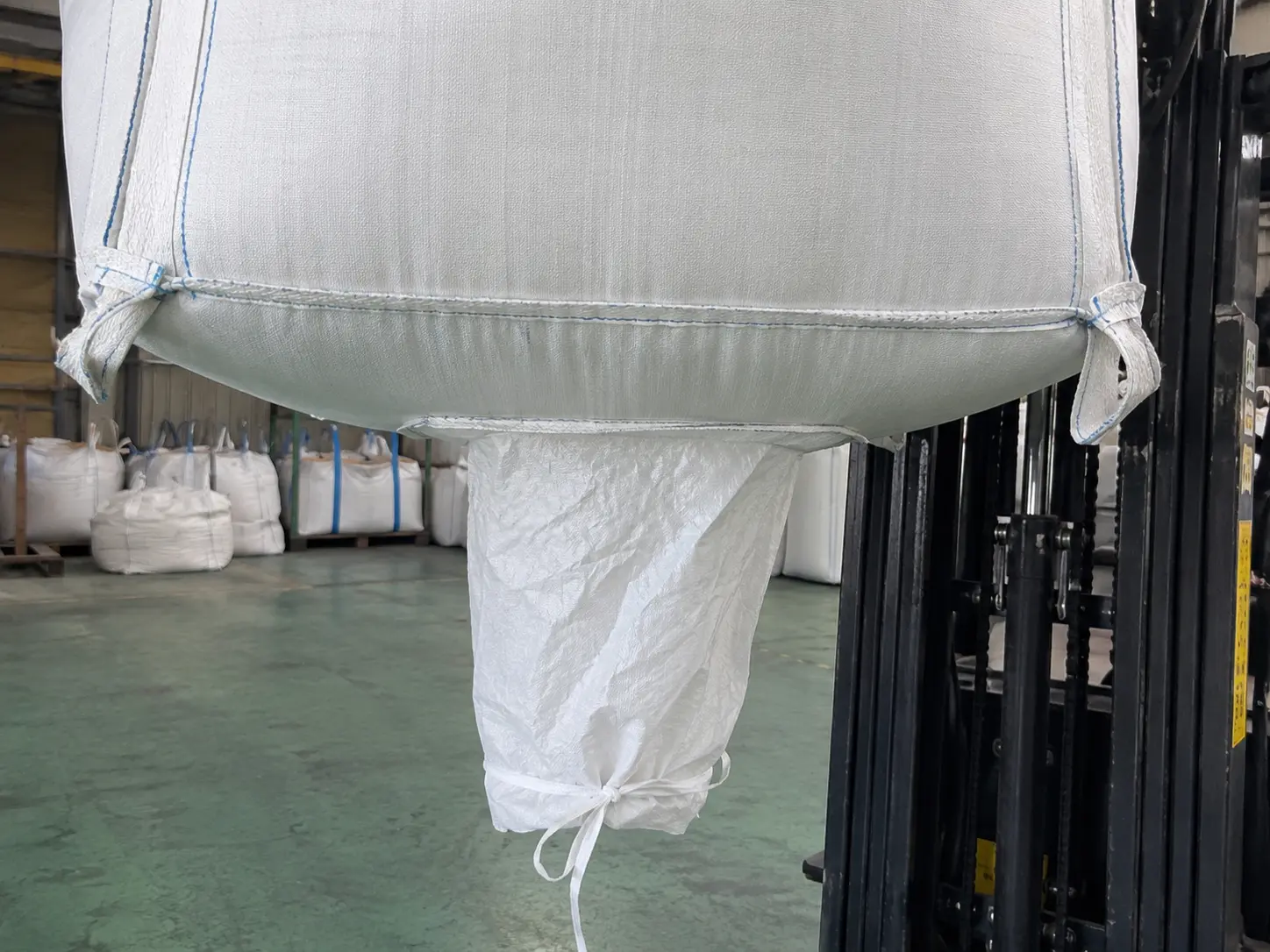
A discharge station supports a filled FIBC above a downstream process inlet, aligns and secures the connection to the bag’s discharge point, then controls material flow and contains dust throughout the unloading sequence — a purpose-built system rather than just a frame to hang a bag from. The bag gets lifted into position, its outlet aligns with the station’s discharge interface, the connection is secured, and material releases under control rather than all at once.
Matching Bag Discharge Style to Station Type
Bag discharge style and station design need to be specified together, not as independent decisions — a spout bottom bag needs a station built to interface with and control flow through a discharge spout, while a flat bottom bag intended for cutting or manual dumping doesn’t use that same controlled-connection equipment at all. If you’re investing in discharge station equipment, confirm your bag spec matches what the station is designed to handle before finalizing either purchase — the wrong combination means equipment that doesn’t actually interface with your bags correctly.
Bridging: When Material Won’t Flow on Its Own
Bridging occurs when material forms a stable arch inside the bag above the discharge point, stopping free flow even though the bag still holds product — common with fine, cohesive, or moisture-sensitive powders that pack together rather than flowing loosely. Discharge stations built for bridging-prone materials commonly include a vibrator or massaging device that agitates the bag enough to break up the arch and restore flow, a feature worth specifying explicitly if your product has any tendency to bridge rather than assuming standard gravity discharge will always work.
Dust Containment During Unloading
A well-designed discharge station contains dust and particulates through the unloading sequence by controlling the connection between the bag’s spout and the downstream interface, rather than leaving an open transfer point where fine material escapes into the surrounding air. This matters for both product loss — fine, valuable material escaping as dust is product you paid for and didn’t get to use — and workplace dust exposure, which is a real operational consideration independent of the product’s own hazard classification.
Capacity and Frame Considerations
Discharge station frames are generally built to accommodate the common FIBC capacity range already covered elsewhere on this site — roughly 500 to 3000 kg — but confirm your specific station’s rated capacity against your bag’s actual filled weight rather than assuming compatibility. A station rated for a lighter bag range won’t safely support a heavier one, regardless of how the bag’s own safety factor is rated.
Common Mistakes When Specifying Discharge Equipment
- Buying discharge equipment and bags independently without confirming compatibility. Discharge style and station design need to be matched before either purchase is finalized.
- Assuming standard gravity discharge works for any product. Bridging-prone materials need vibration or massaging capability specified explicitly, not discovered as a problem after installation.
- Underestimating dust containment needs. Fine or valuable product escaping as dust is both a yield loss and a workplace exposure question worth addressing upfront.
- Not confirming station capacity against actual bag filled weight. A mismatch here is a safety issue, not just an inconvenience.
- Treating discharge equipment as a one-time purchase disconnected from bag spec changes. If you switch bag suppliers or specs later, reconfirm compatibility rather than assuming it still holds.
Discharge Equipment and Bag Spec Are One System
It’s worth stepping back to see the full picture: your bag’s discharge style, fill/discharge equipment on both ends of the process, and product flow characteristics all need to work together as one coordinated system rather than being specified in isolation. A well-chosen bag discharge style paired with mismatched equipment — or well-designed equipment paired with the wrong bag spec — both produce the same practical problem: a process that doesn’t actually discharge cleanly and efficiently, regardless of how good either individual component is on its own.
Decision Checklist
- Does your discharge station match your bag’s actual discharge style? Spout bottom and flat bottom bags need fundamentally different equipment.
- Is your product prone to bridging? Confirm whether your station includes vibration or massaging capability if so.
- Does dust containment matter for your product or workplace? A properly designed station addresses both product loss and exposure concerns.
- Is your station’s rated capacity confirmed against your bag’s actual filled weight? Don’t assume compatibility without checking.
- Are you specifying bag and discharge equipment together, or as separate decisions made independently? Coordinating both avoids a mismatch discovered after purchase.
Final Thoughts
Discharge is the point where bag spec and plant equipment either fit or don’t, and it’s usually discovered late. Specify the spout dimensions, the station interface and the product’s flow behaviour as one set of decisions rather than three. Send us your discharge setup and material characteristics and we’ll confirm the bag side matches what’s already installed.
Before You Request a Quote
Tell us about your discharge process and we’ll confirm the right bag spec to match:
- Discharge equipment type, if already in place, or planned equipment
- Product flow characteristics — free-flowing or prone to bridging
- Target capacity and discharge style needs
- Dust sensitivity of the product or workplace
Request a quote and we’ll confirm bag discharge style compatible with your actual unloading equipment.
Common Questions
What is an FIBC discharge station?
It's the equipment that supports a filled bulk bag above a downstream process inlet, aligns and secures the connection to the bag's discharge spout, and controls material flow and dust containment during unloading — the downstream complement to your filling equipment.
Does the bag's discharge style need to match the discharge station?
Yes — a spout bottom bag needs a station built to interface with a discharge spout, while a flat bottom bag intended for cutting or dumping doesn't use the same controlled-connection equipment at all. Confirm bag discharge style and station compatibility together, not as separate decisions.
What is bridging, and why does it matter for discharge equipment?
Bridging is when material forms a stable arch inside the bag that stops it from flowing freely to the discharge point, common with fine, cohesive, or moisture-sensitive powders. Discharge stations for bridging-prone materials often include a vibrator or massaging device to break up the arch and keep material flowing.
How does a discharge station help with dust control?
A well-designed station contains dust and particulates throughout the unloading sequence by controlling the connection between the bag's spout and the downstream interface, rather than leaving an open transfer point exposed to the surrounding air — relevant for both product loss and workplace dust exposure.
Do I need a discharge station, or can I just cut the bag open?
It depends on your process and product. Manual cutting and dumping works for lower-volume, less dust-sensitive operations, while automated or high-volume lines feeding directly into process equipment generally benefit from a proper discharge station's controlled, repeatable unloading.
Can one discharge station handle different bag sizes?
Within a range, yes — most frames accommodate a span of bag dimensions rather than one exact size. The limits are frame height, rated capacity and how the spout interface aligns. If you run several bag sizes, confirm the full range against the station before standardizing on either.
What causes bridging and can bag design reduce it?
Bridging comes from the material's cohesion and moisture more than the bag, but design helps at the margin — a wider discharge spout and a conical base geometry both encourage flow. For genuinely cohesive products, plan for agitation at the station rather than expecting the bag alone to solve it.
More in Handling & Equipment
All Handling & Equipment guides- Bulk Bag Unloaders: Why the Bag Spec Matters More Than the FrameMost bulk bag unloader problems start at the bag, not the frame: loops that hang the spout short of the clamp, spouts too narrow for the valve, liners that drag.
- Bulk Bag Stands: How to Fill a Super Sack Without a MachineA bulk bag stand holds the empty bag open and square. It cannot weigh the fill — and a bag shovelled to the brim with sand can be well over its rating.
- Super Sack Racks: Why the Bag Spec Decides Which Rack WorksRack vendors sell capacity and stack height. What they rarely mention is the bag — its filled footprint, shape and bottom decide whether any rack works.
- How to Empty a Bulk Bag Safely: Plan for the Flow StoppingDischarge methods get chosen for how material flows when everything works. The injuries happen in the next ten minutes, when it stops and someone intervenes.