Bulk Bag Stands: How to Fill a Super Sack Without a Machine
A bulk bag stand holds the empty bag open and square. It cannot weigh the fill — and a bag shovelled to the brim with sand can be well over its rating.
PackTonne Sourcing Desk · · 7 min read
Filling a bulk bag by hand looks like the easy half of the job, and it is where a surprising number of problems start. An empty bag will not stay open or square on its own, so it fills lopsided and leans. And manual filling has no scale — the bag gets filled by eye, usually to the top, which with sand or gravel means well past its safe working load before anyone has noticed.
Why an Empty Bag Needs a Stand
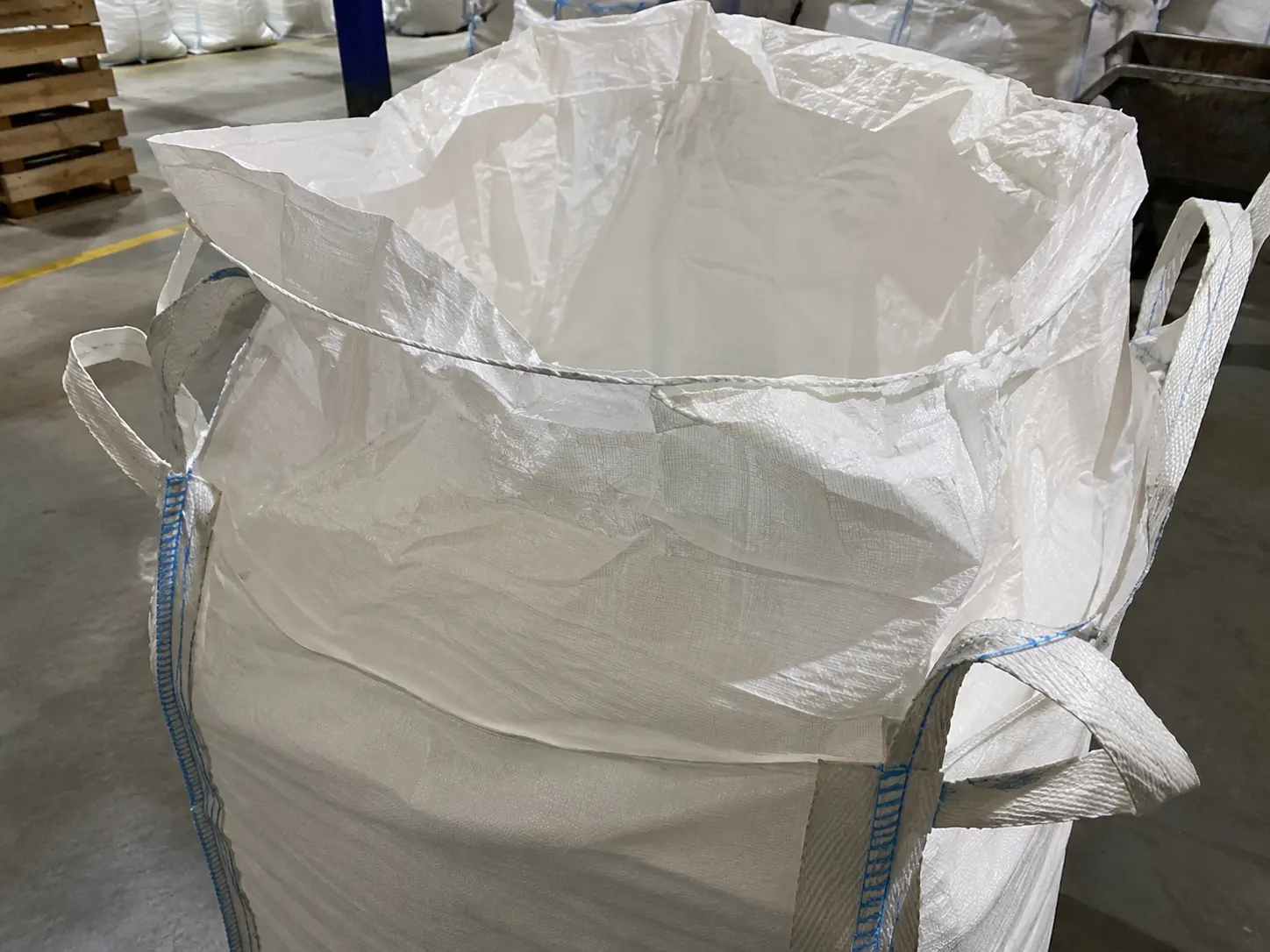
An empty FIBC is a fabric box with no rigidity. Stood on the floor, the walls fold inward, the opening narrows and the first shovels of material land off-centre. The bag then fills lopsided, leans as it gets heavier, and ends up either under-filled on one side or tipping before it is full.
The usual workaround is a second person holding the bag open — which puts their hands at the fill point, next to a shovel or a loader bucket.
A bulk bag stand, also sold as a super sack holder or filling frame, solves this by holding the bag open from the corners. The four lifting loops hook over the frame’s posts, the base rests on the floor or a pallet, and the bag fills to its intended square shape without anyone holding it. Most are built around the standard footprint of roughly 90 cm or 35–38 inches square, so check the frame against the bags you actually buy.
Four Ways to Fill Without a Filling Machine
| Shovel into a stand | Bucket loader into a stand | Hopper or chute over a stand | Filling machine (for comparison) | |
|---|---|---|---|---|
| Speed | Slow | Fast | Moderate | Fast |
| Weight control | None | None | None | Load cell |
| Fill evenness | Good if done in layers | Uneven without care | Good | Good |
| Risk of fabric damage | Low | Bucket edge and impact | Low | Low |
| Dust exposure | High | High | Moderate | Low with a seal |
| Typical user | Small sites, occasional bags | Construction, landscaping, recycling | Regular small-batch filling | Production lines |
The row that matters is weight control. Every manual method fills by volume and judgement, which is fine for light material and a problem for heavy material — the subject of the next section.
The Stand Holds the Shape, Not the Weight
A stand makes a bag fill neatly. It does nothing to stop it being overfilled, and overfilling is the most common way a manually filled bag fails.
Take a standard 90 × 90 × 110 cm bag with a 1,000 kg safe working load, which encloses 0.891 m³:
| Material | Typical bulk density | Weight if filled to the top | Against a 1,000 kg SWL |
|---|---|---|---|
| Light compost or bark | around 0.4 t/m³ | 356 kg | 36% |
| Dry sand | around 1.5 t/m³ | 1,337 kg | 134% — over |
| Gravel or aggregate | around 1.7 t/m³ | 1,515 kg | 151% — over |
Material like sand and gravel is exactly what gets filled by hand on construction and landscaping sites, and damp sand is heavier than dry. A bag shovelled to the brim can be a third to a half over its rating, then lifted by four loops that were sized for the rated load.
Three ways to prevent it:
- Calculate the safe fill volume first. Divide the rated load by the bulk density. Our bag calculator does this and shows the percentage of SWL as you change the height.
- Mark a fill line on the stand or the bag at the height that volume reaches, so the operator has something to stop at.
- Use a smaller bag for dense material. A mini bulk bag sized to the load fills to the top and stays within its rating, which is far easier to get right than a line halfway up a large bag.
If you only fill occasionally, weigh one test bag on a platform scale or a forklift with a load indicator. One weighed bag tells you where your fill line really is.
Filling Well: Layers, Settling and the Bucket Edge
Fill in stages. Material dumped in one go traps air pockets that settle out in transit. The bag arrives shorter than it left, the top goes slack, and a settled, uneven load is more likely to lean in storage or on a truck. Filling in two or three stages and letting each settle — a few light taps on the sides help — gives a firmer, squarer bag.
Mind the bucket. With a loader, lower the bucket into the opening before tipping instead of dropping material from height. Impact loads stress the base seams, and the bucket’s cutting edge is the thing most likely to tear the top panel or catch a loop. Keep the loops hooked clear of the bucket’s path.
Keep the load centred. Off-centre filling produces a bag that sits unevenly on its base and lifts at an angle. A stand does most of this for you; aim the material at the middle rather than letting it build against one wall.
Plan for dust. Shovelling and tipping dry material into an open bag is dusty work. Suitable respiratory protection matters more here than on a machine line, where the fill is enclosed.
The Right Bag for Manual Filling
An open top or duffle top is the natural choice, because both give a wide opening for a shovel, bucket or chute. A spout top is designed to seal around a filling nozzle and is awkward to fill by hand. Bear in mind that an open top has no closure at all; if the load needs covering in transit or storage, choose a duffle top, and specify how it will be tied — closure choice decides whether the bag can be opened easily at the other end.
Getting the Filled Bag Out
Close the top before the bag leaves the stand. Then either lift the stand and bag together, where the stand is built for forklift handling, or lift the bag out vertically using all four loops — ideally with a spreader bar or fork attachment that keeps the loops upright. Never drag a filled bag out of a frame and never lift it by two loops; both load the fabric in ways its rating does not cover.
The other end of this process has its own hazards, covered in our guide to emptying a bulk bag safely. Most of them are easier to avoid if the bag was filled square, to the right weight and closed properly in the first place.
Your Manual Filling Checklist
- Do you know the bulk density of what you are filling? Without it, you cannot know when to stop.
- Is there a marked fill line, or a weighed test bag, telling the operator where the safe fill point is?
- Is the bag held open by a stand rather than a person?
- With a loader, is the bucket lowered into the opening rather than tipped from height?
- Is the top closed and the bag lifted by all four loops when it comes out of the stand?
Final Thoughts
A stand turns manual filling from a two-person, awkward job into a safe one-person job, and it gets you a square bag. What it cannot do is tell you when the bag is heavy enough. On sand and gravel, that number arrives long before the bag looks full, so decide it in advance and mark it where the operator can see it.
If you fill bags by hand, send us the material, how you fill and the weight you want per bag. We will recommend a bag size and top style that fill to the top within their rating — which is easier to get right on site than a line halfway up the wall.
Common Questions
What is a bulk bag stand?
A steel frame that holds an empty bulk bag open and upright while it is filled, usually by hooking the four lifting loops over the corners of the frame with the base of the bag resting on the floor or a pallet. It replaces the person who would otherwise be holding the bag open at the fill point.
Can I fill a bulk bag without a stand?
You can, but the bag will not stay open or square on its own. It folds inward, fills lopsided and leans, and someone usually ends up holding it open with their hands near the fill point. For more than the occasional bag, a stand pays for itself in safety and in bags that fill to their intended shape.
How do I know when to stop filling a bulk bag by hand?
Work it out before you start, because nothing on a stand tells you. Divide the bag's rated load by your material's bulk density to get the volume you can safely fill, then mark a fill line or weigh one test bag. With sand or gravel, the safe fill point is well below the top of the bag.
Can I fill a super sack to the top with sand?
Usually not within its rating. A standard 90 × 90 × 110 cm bag holds about 0.891 m³. At a typical dry sand density of around 1.5 t/m³ that is roughly 1,337 kg — about a third over a 1,000 kg safe working load — and damp sand is heavier still. Fill to a marked line or use a smaller bag.
Is a bucket loader safe for filling bulk bags?
Yes, with care about impact and edges. Lower the bucket into the opening before tipping rather than dropping material from height, keep the bucket edge clear of the top panel and loops, and fill in stages. Most bag damage during loader filling comes from the bucket, not from the material.
Which top style is best for filling by hand?
An open top or a duffle top. Both give a wide opening for a shovel, bucket or chute. A spout top is designed to seal around a filling nozzle and is awkward to fill manually. An open top has no closure at all, so choose a duffle top if the load needs covering afterwards.
How do I get a filled bag out of the stand?
Either lift the stand and bag together, if the stand is designed for forklift handling, or lift the bag out vertically using all four loops. Never drag a filled bag out of a frame or lift it by two loops, and close the top before it leaves the stand.
More in Handling & Equipment
All Handling & Equipment guides- Bulk Bag Unloaders: Why the Bag Spec Matters More Than the FrameMost bulk bag unloader problems start at the bag, not the frame: loops that hang the spout short of the clamp, spouts too narrow for the valve, liners that drag.
- Super Sack Racks: Why the Bag Spec Decides Which Rack WorksRack vendors sell capacity and stack height. What they rarely mention is the bag — its filled footprint, shape and bottom decide whether any rack works.
- How to Empty a Bulk Bag Safely: Plan for the Flow StoppingDischarge methods get chosen for how material flows when everything works. The injuries happen in the next ten minutes, when it stops and someone intervenes.
- FIBC Spreader Bars: The Cheapest Way to Save LoopsBare forklift tines abrade lifting loops every cycle. A proper spreader bar spreads the load and protects the loops — here's what to look for.