Bulk Bag Dispenser: 5 Bag Specs That Decide Whether the Hopper Works
A bulk bag dispenser only works when the bag fits it. Check the spout, body size, loops, closure and liner before you buy, or expect slow, messy emptying.
PackTonne Sourcing Desk · · 8 min read
A bulk bag dispenser works only when the bag fits it. The hopper holds the bag and a gate or the bag’s own spout controls the flow. There is no massager and no sealed connection to rescue a poor match. Check five bag specifications before you buy: the bottom spout, the body size, the loops, the closure and the liner.
Dispenser or Unloader: What Each One Does
A dispenser is the simple end of bag emptying equipment, and an unloader is the full system.
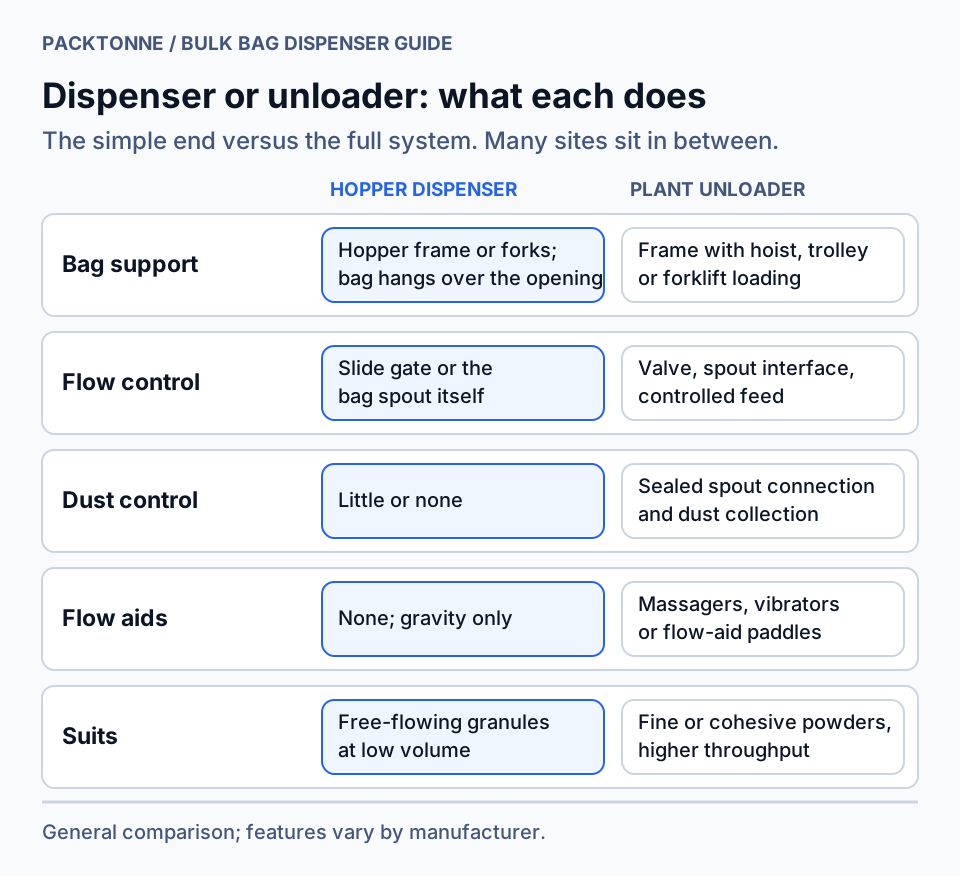
A dispenser holds the bag over an opening and lets gravity move the product. That works for free-flowing granules at modest volume. A plant unloader adds a lifting method, a sealed spout connection, dust collection and flow aids, which suits fine or cohesive powders and higher throughput. Our guide to bulk bag unloaders covers the four ways a bag gets into one, and the discharge station guide covers station design.
Many sites sit between the two. Whichever you buy, the bag is the variable you control at purchase.
Five Bag Specs at the Hopper
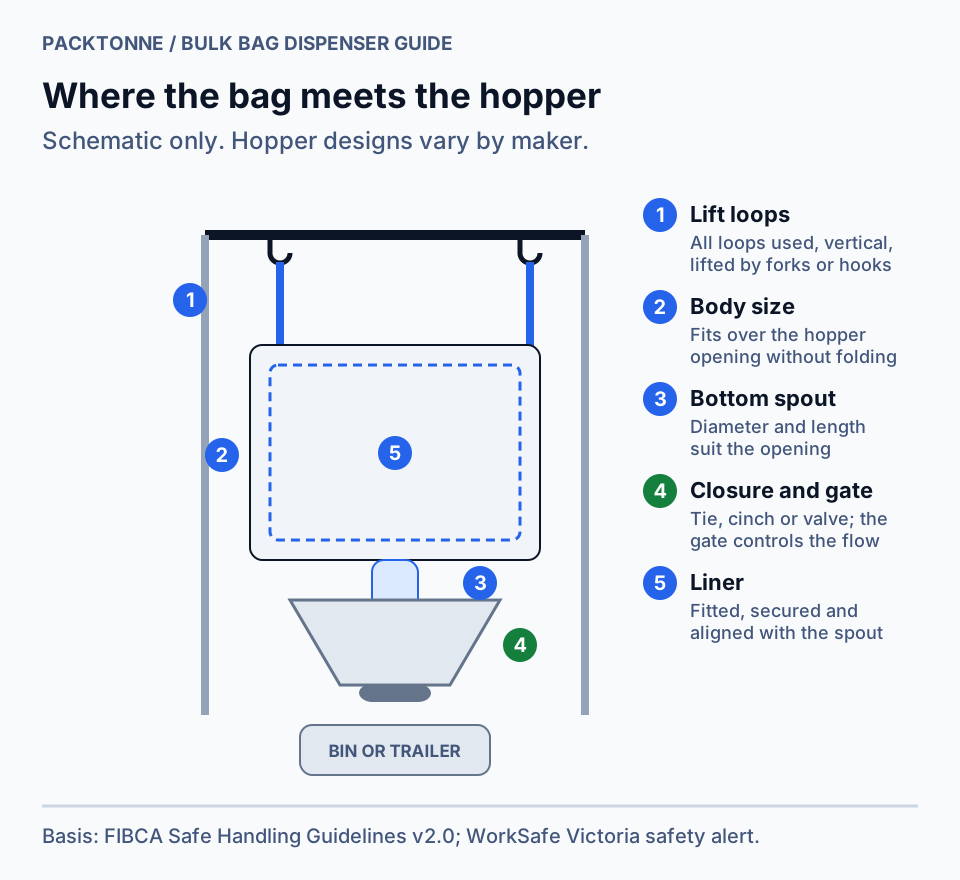
Five specifications decide whether a bag and a hopper work together.
| Spec | What to confirm | If it is wrong |
|---|---|---|
| Bottom spout | Diameter and length suit the hopper opening | Flow chokes, or the spout will not reach |
| Body size | Width, depth and height fit over the opening | The bag folds or hangs unevenly |
| Loops | Number, height and type suit your lifting device | Bag hangs crooked, loops take uneven load |
| Closure | Tie, cinch or valve allows opening and retying | Hard to throttle or stop the flow |
| Liner | Fitted, secured and aligned with the spout | Liner blocks the outlet or traps product |
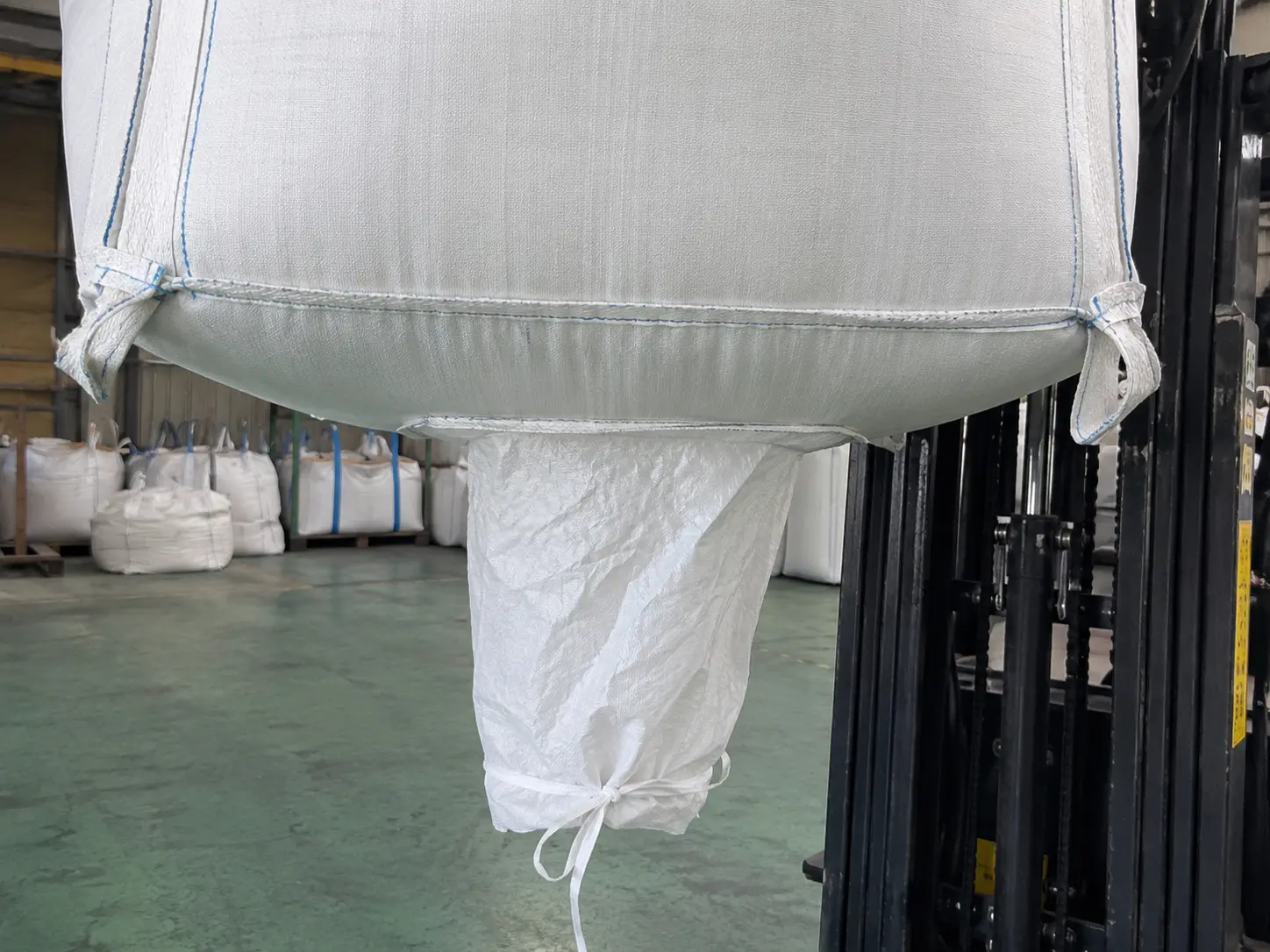
The Bottom Spout Is the Only Way Out
The bottom spout decides how product leaves the bag, and the hopper decides whether it can. Give the equipment maker your bag’s spout diameter and length, and ask for the opening it expects. A spout much wider than the opening folds and chokes. A spout that is too short may not reach it.
Bottom style matters as much as size. A spout bottom lets you tie, cinch or valve the outlet. A flat bottom has no spout, so the equipment must open it by piercing or cutting, and hand-cutting brings risks we cover in our guide to how to empty a bulk bag safely. The top and bottom style guide compares the options.
The “dispenser valve” people search for is usually the slide gate under the hopper or a valve on the spout. Either way, the bag’s closure has to work with it. Our unloader guide explains spout valves.
Body Size and the Hopper Opening
The bag body has to sit over the hopper opening without folding into it. A body that overhangs a small opening bunches fabric around the spout and can pinch product. A body much smaller than the frame hangs unevenly. Send the filled dimensions, not the flat-folded size, because a bag grows rounder once it is full.
Baffle bags hold a squarer body, which helps a bag sit over a rectangular opening. If your bags bulge, see our baffle bag guide and the baffle bags page.
Loops, Lifting and Staying Clear
Loops carry the whole weight, and how you lift them matters more than any hopper feature. FIBCA’s Safe Handling Guidelines (version 2.0, July 2017) say to never suspend a bag using fewer loops than provided, never gather loops onto one hook unless the bag is designed for it, and use handling devices designed for FIBCs with safety latches. Edges the loops rest on should be rounded to a radius of at least 5 mm.
The consequences are real. A WorkSafe Victoria alert describes a farmer fatally crushed when lifting loops failed on a bag suspended from a telehandler’s tines. It lists loops resting directly on sharp-edged tines and exceeding the safe working limit among the hazards, and recommends purpose-built lifting devices and keeping people out from under suspended bags. Choose loops that suit your lifting device, and see the loop types guide for the differences.
Liners and the Last Few Kilograms
A liner can help or hurt in a dispenser, depending on how it is fitted. A liner that is secured and lined up with the spout lets product leave cleanly. A loose liner can fold into the outlet or trap product. Ask your bag supplier how the liner is attached at the spout, and read our liner guide for the types.
Some heel stays in every bag, and a dispenser has no massager to chase it. Ask the supplier what to expect for your product rather than assuming the bag will empty fully. Bridging is the common cause when it does not.
Which Products Suit a Dispenser
A dispenser suits free-flowing granules and pellets, and little else. Feed pellets, fertilizer prills and clean seed are typical, and our guides to fertilizer and grain cover how those products behave in the bag. Fine powders, damp or caking material and anything that dusts need an unloader with flow aids and a sealed connection.
If your product cakes or arches, no hopper fixes that. Pick the equipment around the product, then specify the bag.
Your Pre-Purchase Checklist
- If you cannot give the hopper maker your bag’s spout diameter and length, you cannot judge the fit.
- If the bag is a flat bottom, you need equipment that opens it safely, or you should change the bag.
- If your loops do not suit your lifting device, change the loops or the device before the first lift.
- If the product is fine, damp or cakes easily, you should look at an unloader instead.
- If the bag has a liner, you need to know how it is secured and aligned with the spout.
Final Thoughts
A dispenser is the cheapest way to empty a bulk bag, and the cheap part only holds if the bag matches it. Match the spout, body size, loops, closure and liner to the hopper and the product, and the equipment does its simple job. Get one of them wrong and no hopper feature will make up for it.
Before You Request a Quote
If you are specifying bags for a dispenser or hopper, send us these details and we will confirm the bag parameters:
- Hopper opening size and gate type
- Lifting device: forklift, telehandler, hoist or frame
- Product, flow behaviour and moisture
- Bag weight and monthly volume
- Liner requirement
We will check them against a Type A or baffle construction and tell you what to change.
Common Questions
What is a bulk bag dispenser?
A bulk bag dispenser is a hopper or frame that holds a filled bulk bag over an outlet and lets the product flow out by gravity, usually through a slide gate or the bag's own spout. It is the simple end of bag emptying equipment. It has little or no dust control and no flow aids, so it suits free-flowing material at modest volume.
What is the difference between a bulk bag dispenser and an unloader?
A dispenser holds the bag and lets gravity do the work. An unloader adds a frame with a lifting method, a sealed spout connection, dust collection and often flow aids such as massagers. The choice depends on how well your product flows, how much dust you can accept and how many bags you empty per shift.
Which bag spec matters most for a dispenser?
The bottom spout matters most, because it is the only path out. Its diameter and length must suit the hopper opening, and its closure must let you open, throttle and retie it safely. After the spout, check that the body fits over the opening, that the loops suit your lifting device, and whether a liner will line up with the spout.
Can I use a flat-bottom bag in a bulk bag dispenser?
Only if the equipment is built to open a flat bottom, for example by piercing or cutting, and the supplier confirms it. A flat-bottom bag has no spout to connect or tie off. Cutting a bag by hand brings its own risks, covered in our guide to emptying a bulk bag safely. If you want controlled flow, choose a spout bottom.
Why won't my bulk bag empty completely in the hopper?
Product can arch over the outlet, cling to the fabric or sit in the corners of the bag. Bridging is common with fine or damp material, and a dispenser has no massagers to break it. Check the product's flow behaviour, the spout size and the liner fit before blaming the hopper. Some heel is normal; ask the supplier what to expect.
Is it safe to hang a bulk bag on forklift tines over a hopper?
Not directly on the tines. A WorkSafe Victoria alert on a fatal incident lists loops resting on sharp-edged tines among the hazards, and recommends purpose-built lifting devices. FIBCA says to use handling devices designed for FIBCs, with safety latches, and edges rounded to at least a 5 mm radius. Keep people out from under any suspended bag.
Do I need a liner for a bulk bag dispenser?
Only if the product needs one, for moisture, contamination or fine powder. A liner can also complicate emptying if it is not secured or aligned with the spout. Ask your bag supplier about a liner type that is attached at the spout, and test it on your hopper. Our liner guide covers the types.
More in Handling & Equipment
All Handling & Equipment guides- Bulk Bag Filling: Why Most Filler Problems Start With the BagBags that lean, leak dust or won't seat on the hooks are usually a spec problem, not a machine fault. Check loops, spout, size, static type and liner first.
- Where to Sell Used Super Sacks (and the 5 Checks That Decide the Price)Selling used super sacks? Buyers price on previous contents, cleanliness, rating, volume and storage. See who buys, why bags get rejected and what to send.
- Super Sacks on Pallets: When You Need One and How to ChooseChoosing super sacks on pallets? Check filled bag size, deck support, load ratings and fork access. A pallet's static capacity alone cannot confirm suitability.
- Bulk Bag Unloaders: Why the Bag Spec Matters More Than the FrameMost bulk bag unloader problems start at the bag, not the frame: loops that hang the spout short of the clamp, spouts too narrow for the valve, liners that drag.