Bulk Bag Filling: Why Most Filler Problems Start With the Bag
Bags that lean, leak dust or won't seat on the hooks are usually a spec problem, not a machine fault. Check loops, spout, size, static type and liner first.
PackTonne Sourcing Desk · · 9 min read
Bulk bag filling problems usually start with the bag specification, not the machine. A bag that leans, leaks dust at the spout or will not seat on the hooks is often the wrong match for the filler, the product or the environment. Check loops, fill spout, body size, rating, static type and liner against the filler before you adjust the equipment.
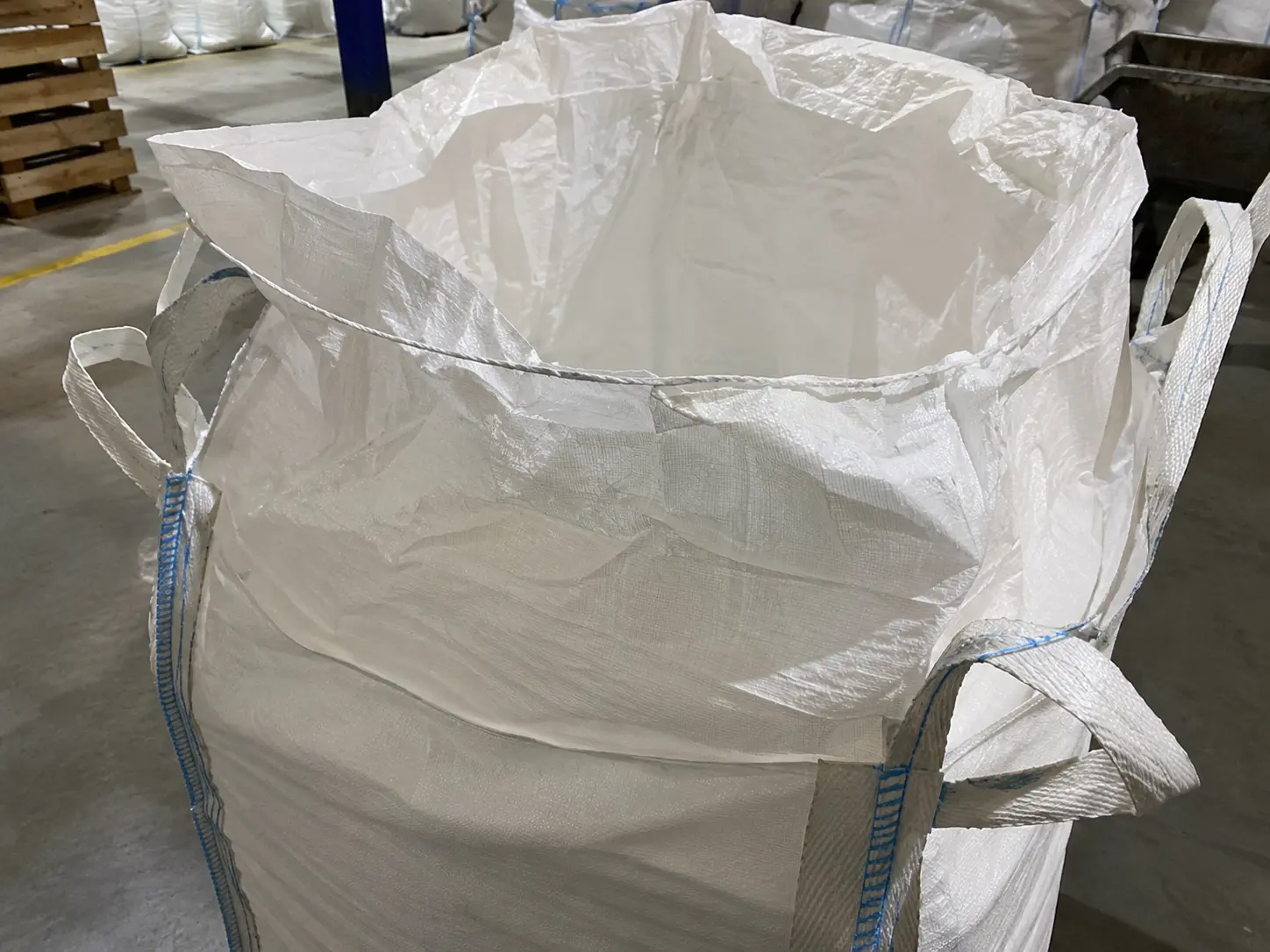
Filler Problems and the Bag Spec Behind Them
Each common filling symptom points to a short list of bag specifications.
| Symptom on the line | Bag-side cause to check | What to ask the bag supplier |
|---|---|---|
| Bag leans or has a rounded top | Filled height beyond the height-to-width limit, air left inside, loose body shape | Filled dimensions, baffle option, safe working load |
| Dust at the spout | Spout too wide or too short for the outlet, weak seal or closure | Spout diameter, length and closure style |
| Hooks will not seat, loops twist | Loop height or count does not suit the frame | Loop type, height and number |
| Bag fills short of target weight | Body volume too small for the product’s bulk density | Body size against bulk density |
| Static risk at the fill point | Wrong bag type, ground point not connected, liner not matched | Type A to D, ground point location, liner type |
The pattern matters more than any single row. The filler is a fixed piece of equipment, and the bag is the variable you control at purchase. Our discharge-end guide makes the same point about unloaders.
Where the Bag Meets the Filler
A bag and a filler share six contact points, and each one is a bag specification.
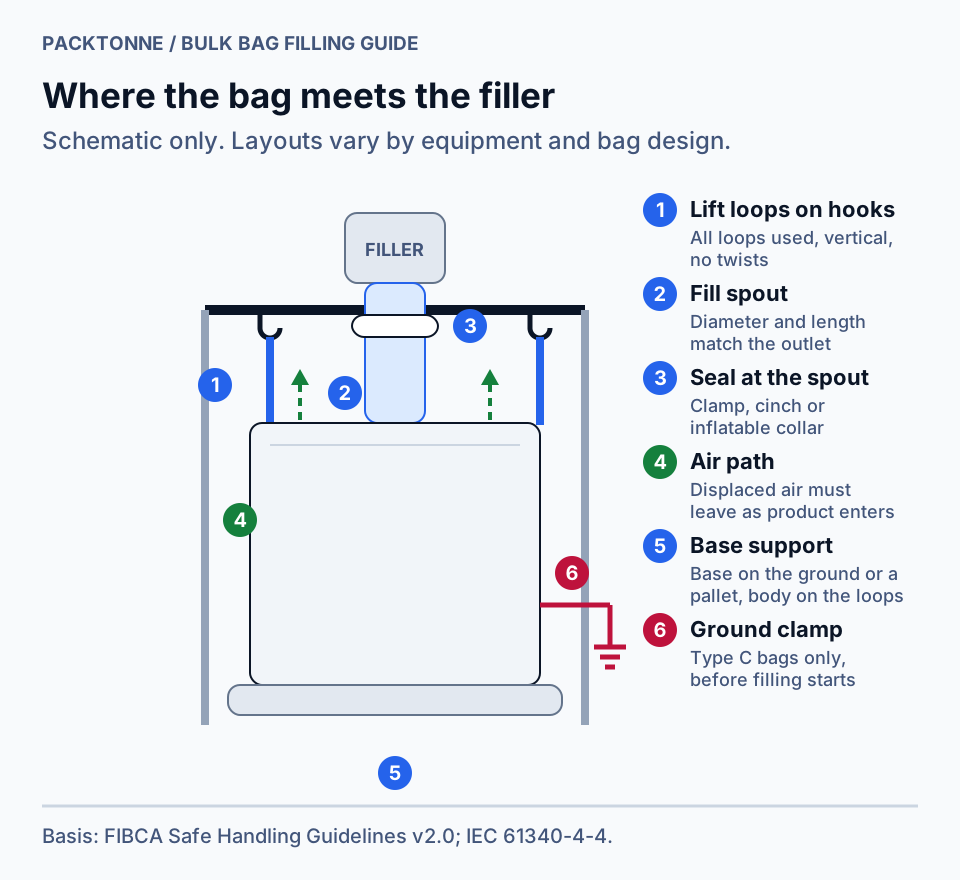
FIBCA’s Safe Handling Guidelines (version 2.0, July 2017) set the baseline. They say to verify the bottom discharge spout is closed correctly before filling, to close the fill spout or duffle per the manufacturer’s instructions, and to use handling devices designed for FIBCs with safety latches, rated for the filled weight. The republished guidance on Global-Pak’s site adds that the base is preferably supported by the ground or a pallet, with the body held by the top lift device. If you fill by hand without a machine, the bulk bag stand guide covers that setup instead.
Leaning and Rounded Tops: Height, Air and Baffles
A bag that crowns or leans is usually overfilled or too tall for its width. FIBCA gives a maximum height-to-width ratio of 2:1 as typical, and tells users not to fill to a level that harms stability or exceeds the safe working load.
The consequences show up after filling. A Michigan State University hazard alert from February 2026 describes a fatal case where overfilled, double-stacked bags had rounded tops, so the upper bag could not sit flat on the lower one. It recommends never exceeding the safe working load and keeping within the usual 2:1 limit.
Two bag-side options help. A baffle design holds the body square as the product settles, and baffle bags are worth specifying when a round-bodied bag bulges on your product. Vibration during or after filling can also improve stability, according to the guidance Global-Pak republishes, which is a machine feature but depends on a bag that tolerates it. Match the safety factor to the duty as well: 5:1 versus 6:1 decides how many cycles the bag is built for.
Hooks, Loops and Frames
A filling frame only works with loops of the right height, number and type. FIBCA’s rules are specific: never suspend a bag using fewer lift loops than provided, never gather loops onto one hook unless the bag is designed and approved for it, and keep handling-device edges rounded to a radius of at least 5 mm.
If your frame has four hooks, you need a four-loop bag with loops that hang vertically and do not twist. If the frame has a different layout, tell the bag supplier before ordering. The loop types guide shows how cross-corner, side-seam and single-loop bags differ.
Dust at the Spout: Diameter, Length and Seal
Dust at the fill spout comes from a poor match between the bag’s spout and the filler outlet. BFM, a maker of flexible connectors, notes in a vendor blog post that the seal between bag neck and filling head is rarely airtight, that clamps cannot seal every bag size, and that a neck much larger than the filling head creates extra folds and leak paths. Treat it as a supplier’s view, but the geometry is straightforward.
Tell the bag supplier the outlet diameter and the sealing method the filler uses. A tied-off duffle suits a simple fill. A spout top with the right diameter and length suits a clamp or collar and lower dust. The top and bottom style guide compares the options, and the closure types guide covers how to close the spout after filling.
Displaced air is the other half of the dust problem. Rapid filling pushes air out of the bag, and that air needs an exit route. Dust extraction at the filling head is the usual answer.
Static and Liners at the Fill Point
Static protection decides whether a bag is allowed at your fill point at all. FIBCA’s guidelines say bags should be tested and labelled to IEC 61340-4-4, and that Type C bags must be securely grounded before and during filling. Type B and D bags do not require grounding. Never begin filling a Type C bag with flammable or combustible material present until a secure ground is established, and never reconnect a detached ground cable once filling has started. Stop, and allow time for the charge to relax.
Liners add their own checks. FIBCA’s advice is to pre-inflate liners, extend them past the fill spout or duffle, tie them off within the spout and secure them so they cannot come out at discharge. Our guides to Type A to D static protection, IEC 61340-4-4 testing and PE liner types cover the detail. If your product needs Type C or D, the anti-static bags page lists the options.
Six Facts to Send Before You Buy a Filler
Give the filler supplier and the bag supplier the same six facts.
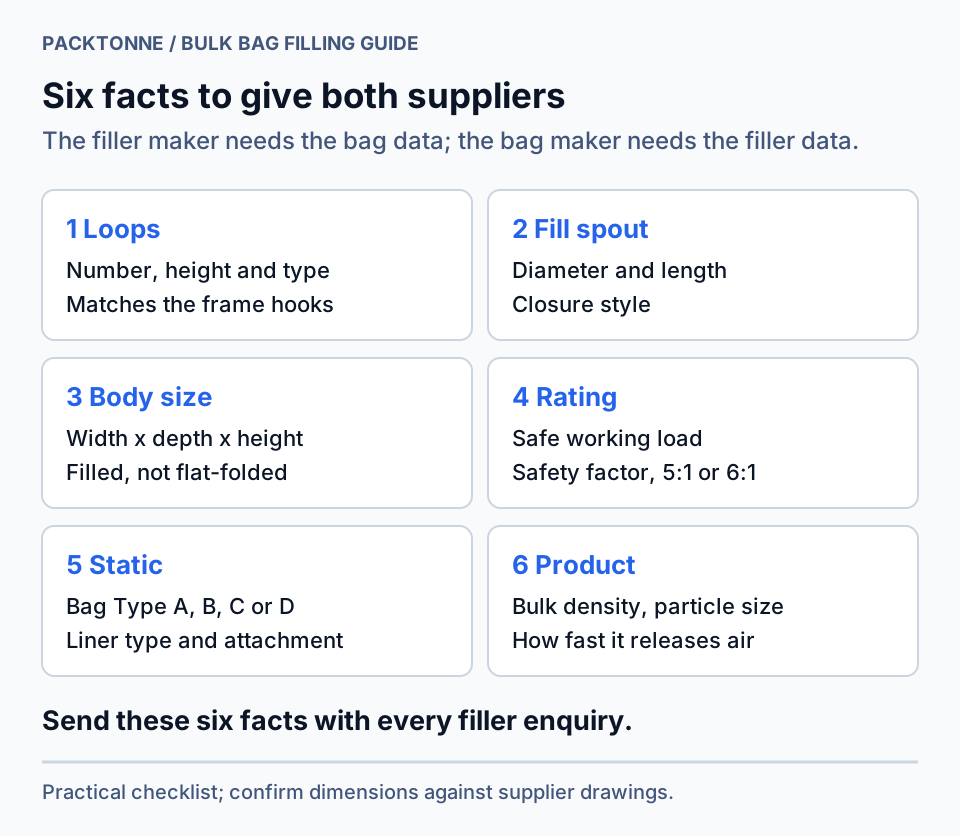
The sixth fact, the product, is the one buyers forget. Bulk density sets the body volume needed for the target weight, and a product that holds air will behave differently from one that flows freely. Ask the filler supplier how your product behaves, and pass the answer to the bag supplier.
Your Pre-Filling Checklist
- If you cannot name the loop height, count and type your frame expects, you cannot order a compatible bag.
- If the outlet diameter and sealing method are unknown, you cannot specify the spout.
- If the bag’s filled height is more than twice its width, you should expect leaning.
- If the fill point has flammable dust or solvents, you need the right bag type and a verified ground before filling.
- If the bag has a liner, you need to know how it is pre-inflated, extended and tied off.
Final Thoughts
A filler and a bag are one system, and the bag is the part you choose at purchase. Most filling problems disappear once the loops, spout, body size, rating, static type and liner are matched to the equipment and the product. Send the six facts to both suppliers first, and the machine settings become a much smaller problem.
Before You Request a Quote
If you are specifying bags for a filling line, send us these details and we will confirm the bag parameters:
- Filler type and the hook or frame layout
- Outlet diameter and the sealing method
- Product, bulk density and target filled weight
- Static protection requirement and fill environment
- Liner requirement
- Bags per week, and whether you fill by weight
We will check them against a Type A or anti-static construction and tell you what to change.
Common Questions
What bag specs matter most for a bulk bag filling station?
Six specs matter most: lift loop number, height and type; fill spout diameter, length and closure; body dimensions; safe working load and safety factor; static protection type and liner; and the product's bulk density. Send these to the filler supplier and the bag supplier together, so the machine and the bag are specified as one system.
How do I stop a bulk bag leaning or crowning after filling?
Keep the filled height within the bag's height-to-width limit, which FIBCA gives as typically 2:1, and never exceed the safe working load. Overfilling is a known cause of rounded tops that stop a bag sitting flat. If the bag still bulges, ask the supplier whether a baffle design or a different body size suits the product.
Why does my bulk bag leak dust at the spout while filling?
The seal between bag neck and filling head is rarely airtight, and it gets worse when the neck is much larger than the filler outlet, because extra fabric folds create leak paths. Check the spout diameter and length against the outlet, and how the neck is held. Dust extraction that gives displaced air an outlet also reduces leaks.
Can I fill any super sack on an automated filling machine?
Not safely. The bag's loops must suit the filler's hooks or frame, the spout must match the outlet, and the bag must be rated for the product and the filling environment. Loop height, loop count and spout size vary between designs, so confirm them before ordering rather than discovering a mismatch on the line.
Does a Type C bulk bag need grounding at the filling station?
Yes. FIBCA's handling guidelines say Type C bags must be securely grounded before and during filling, per the manufacturer's instructions. Never start filling a Type C bag with flammable or combustible materials present until a secure ground is established, and never reconnect a detached ground cable after filling has started.
Should I pre-inflate the liner before filling?
FIBCA guidance is to pre-inflate liners before filling, extend them past the fill spout or duffle, and tie them off within the spout per the manufacturer's closure instructions. Make sure the liner is attached or secured so it cannot come out during discharge. Check liner size against the bag body before ordering.
Do I need a filling machine, or is a bulk bag stand enough?
A stand is enough for low volumes and simple products, where the operator controls the fill by hand. A filling station suits repeated, weighed filling with dust control. The bag spec matters in both cases. Our guide to bulk bag stands covers manual filling, and this guide covers what a powered filler needs from the bag.
More in Handling & Equipment
All Handling & Equipment guides- Bulk Bag Dispenser: 5 Bag Specs That Decide Whether the Hopper WorksA bulk bag dispenser only works when the bag fits it. Check the spout, body size, loops, closure and liner before you buy, or expect slow, messy emptying.
- Where to Sell Used Super Sacks (and the 5 Checks That Decide the Price)Selling used super sacks? Buyers price on previous contents, cleanliness, rating, volume and storage. See who buys, why bags get rejected and what to send.
- Super Sacks on Pallets: When You Need One and How to ChooseChoosing super sacks on pallets? Check filled bag size, deck support, load ratings and fork access. A pallet's static capacity alone cannot confirm suitability.
- Bulk Bag Unloaders: Why the Bag Spec Matters More Than the FrameMost bulk bag unloader problems start at the bag, not the frame: loops that hang the spout short of the clamp, spouts too narrow for the valve, liners that drag.