Bulk Bag Closures: The Knot That Holds a Tonne Against It
Closure type is decided at the order stage and lived with at discharge. A drawstring carries the whole load against one knot, which is why it jams shut.
PackTonne Sourcing Desk · · 7 min read
The closure on a bulk bag is decided in a purchase order and lived with at the discharge point, usually by different people. It is one of the least discussed fields on a specification and one of the most reliable sources of complaint, because the standard option asks a single knot to hold a tonne of product for an entire voyage and then come undone easily on request.
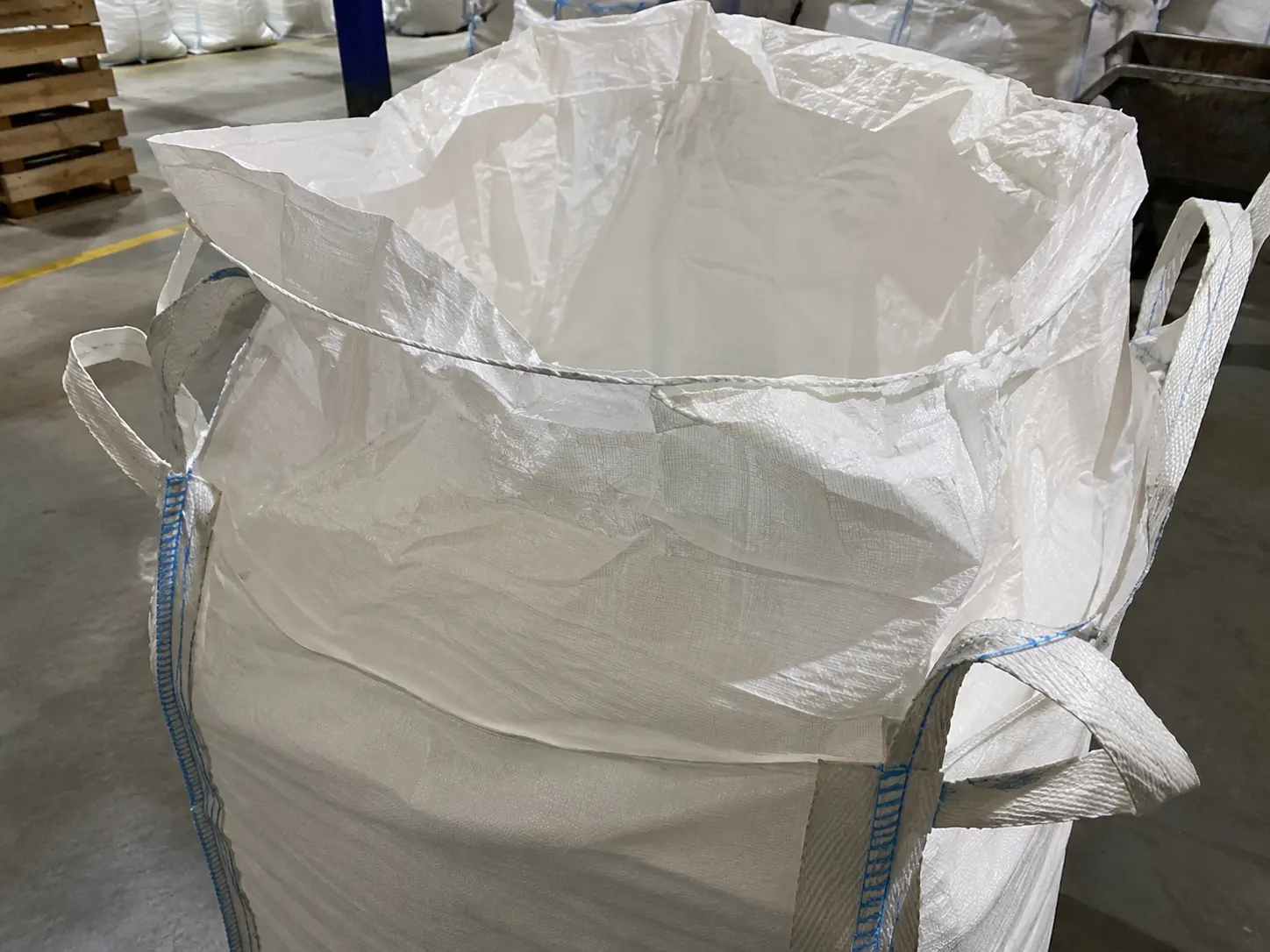
The Four Closures You Will Be Offered
| Tie / Irish closure | Drawstring | Heat-sealed cover | Adhesive or taped strip | |
|---|---|---|---|---|
| How it works | Neck gathered, tied with rope or webbing | Cord run through a hem, pulled and knotted | Fabric cover heat-fused over the spout | Adhesive strip bonded across the opening |
| Hardware needed | None | None | Sealing equipment at the factory | None at discharge |
| Opens under load | Poorly | Poorly | Peels away | Peels away |
| Dust containment | Low | Low | High | Moderate to high |
| Reusable | Yes | Yes | No | No |
| Added cost | None | Minimal | Moderate | Low |
The tie closure — also called an Irish closure, knot closure or loop closure — is the industry default. It needs no hardware, no equipment and no training, and on a bag that will be opened promptly by someone with room to work, it is entirely adequate.
Why the Default Jams
A tie or drawstring at the base of the bag sits directly under the product. From the moment the bag is filled, the full weight of the load presses down on the closure and against the knot, and it stays that way through handling, road transport, a container voyage and storage.
By the time someone tries to open it, three things have happened:
- The knot has compacted under sustained load and no longer has the slack it was tied with
- Fine product has migrated into the fabric folds, and the fabric grips itself
- The load above is still pressing down, so any slack you create closes again immediately
This is the specific failure that produces the behaviour our guide to emptying a bulk bag safely warns about. A knot that will not release invites someone to reach under a suspended load with a blade, which is the single most dangerous act in the whole discharge cycle. The closure choice made months earlier is what put them there.
The Other Failure: Closures That Open in Transit
Jamming shut is the common complaint. The expensive one is the opposite.
A bottom closure that works loose during transit empties the bag into the container. Nothing tears and no inspection catches it beforehand, because the bag was closed when it left — a tie that was pulled tight by hand, on fabric that then relaxed, under a load that shifted for three weeks. The result is a container floor covered in product, a cleaning bill, and a claim conversation about whether the bag or the packer was at fault.
What reduces it:
- A secondary restraint. A cable tie or second tie over the primary closure costs almost nothing and removes the single point of failure.
- Closing at the filling head, tight, by someone accountable for it. Closure quality is operator-dependent in a way the rest of the bag is not.
- A sealed or taped closure, which does not depend on tension holding at all.
- Checking the first container of a new spec. If closures are going to relax, it shows on the first long voyage rather than the tenth.
Tamper evidence is a related question for high-value or regulated cargo. A tie can be undone and retied with no trace; a heat-sealed cover or an adhesive strip cannot be reinstated once broken. Where chain of custody matters, that difference is the point of the closure rather than a side effect, and it belongs in the specification alongside the safety labelling that travels with the bag.
Closure Is a Dust Containment Decision Too
A gathered and tied spout is not a seal. The fabric is bunched into folds, and fine powder finds its way out of folds regardless of how tightly the tie is pulled. For anything at the powder end of the scale, the closure leaks more than the weave does.
Where dust containment matters — for a respirable powder, an expensive product, or a plant with housekeeping standards — a sealed or taped closure over the spout is the fix, and it is far more effective than upgrading fabric or adding a coating. A liner with its own sealed closure is the next step up, and for products that need a genuine barrier it is the real answer rather than anything done to the outer bag.
Closure and Bag Style Are Separate Fields
The top and bottom style — duffle top, spout top, open top, spout bottom, flat bottom — decides the shape of the openings. The closure decides how each opening is secured. They get conflated on quotes, and a quote that names only the style has left the closure to the factory default.
Two notes that follow from keeping them separate:
A duffle top is closed by tying the skirt, so its closure is a tie by construction. That keeps debris out. It is not a moisture or dust barrier, and specifying a duffle top because the product needs protection is a misread of what it does.
A spout bottom can carry any of the four closures. This is where the choice actually matters, because that is the opening someone will be standing near with a tonne overhead.
Your Specification Checklist
- Does your specification name a closure at all, for both the top and the bottom? If not, you are getting the factory default, which is a tie.
- Who opens the bottom closure, and are they doing it with the load suspended? If yes, a peel-away closure is worth the cost difference.
- Is your product fine enough to escape through gathered folds? If yes, the closure is your containment, not the fabric.
- Will the bag be reused? A heat-sealed closure is destroyed on opening, so multi-trip bags need a closure that can be redone.
- Has anyone at the receiving end been asked which closure they would prefer? They are the ones who will live with it, and they are almost never consulted.
Final Thoughts
Closure is a cheap field to specify and an expensive one to get wrong, because the cost lands on someone else months later and in a form that looks like an operator problem rather than a procurement one. If bags arrive at your site and the first thing anyone reaches for is a knife, the closure is the thing to change on the next order.
Tell us the product, whether the bottom closure will be opened under load, and how much dust containment you need. That is enough for us to specify closures on both openings instead of leaving them to a default.
Common Questions
What is an Irish closure on a bulk bag?
An Irish closure, also called a tie or knot closure, gathers the neck of the spout and ties it off with rope or webbing. It needs no hardware and no equipment, which is why it is the default on most bags. Its weakness shows at discharge, when the load has been pressing on the knot for the whole journey.
Why won't my bulk bag spout untie?
Because the product's weight has been bearing on the knot since it was filled. A drawstring or tie closure at the base of the bag carries the load directly against the tie, and after transit the knot compacts and the fabric grips itself. This is the failure that puts people under a suspended bag with a knife.
Is a heat-sealed closure better than a tie?
It is easier and safer to open, because a sealed fabric cover peels away rather than untying under load. It is also single use and adds cost at production. Where discharge happens under time pressure or overhead, that trade is usually worth making; for occasional low-risk discharge, a tie is fine.
Does the closure affect whether the bag is dust-tight?
It affects it more than the fabric does. A gathered and tied spout leaks fine powder at the folds no matter how well tied, while a sealed or taped closure over the spout gives a far better barrier. If dust containment matters, the closure is the first thing to specify, not the last.
Can I reuse a bag after a heat-sealed closure is opened?
Not with that closure. The seal is destroyed on opening, so a multi-trip bag intended for reuse should use a tie closure that can be redone, or accept that the closure is replaced each cycle. Confirm this before ordering multi-trip bags with sealed closures.
What closes the top of a duffle top bag?
The duffle skirt itself is gathered and tied, so the top closure is a tie by construction. That is fine for filling, but it means the top is not a barrier — a duffle top keeps debris out, not moisture or fine dust in. A liner handles anything more demanding.
Who decides the closure, the bag maker or us?
You do, at the order stage, and it is frequently left blank. If a specification does not name the closure, the factory uses its default, which is almost always a tie. Naming it costs nothing and prevents the most common discharge complaint.
More in Construction & Materials
All Construction & Materials guides- Net Baffle FIBC Bags: When Fabric Baffles Leave Corners EmptyA baffle bag that never fills its corners costs you the premium and the space. Net baffles let poor-flowing product reach corners that fabric panels block.
- FIBC Stitching: The Failure Point GSM Doesn't CoverBags usually fail at the seams, not through the fabric. Stitch pattern and thread spec matter as much as GSM — and get checked far less often.
- U-Panel vs Circular vs Four-Panel: Seams, Shape and CostCircular, U-panel and four-panel construction trade seam count against shape stability and cost. Here's which one suits your product and freight.
- UV Resistance in FIBC Bags: The Damage You Can't SeeUV breaks down the polymer itself, not just the color. A bag can look fine after months outdoors while having lost real tensile strength.