How to Empty a Bulk Bag Safely: Plan for the Flow Stopping
Discharge methods get chosen for how material flows when everything works. The injuries happen in the next ten minutes, when it stops and someone intervenes.
PackTonne Sourcing Desk · · 8 min read
Discharge methods get chosen for how the material behaves when everything works. That is the wrong criterion. Every method empties a free-flowing product acceptably; what separates them is what happens in the ten minutes after the flow stops, because that is when someone walks up to a suspended one-tonne load and decides to help it along.
The Four Ways Bags Actually Get Emptied
| Spout bottom over a frame | Full-open bottom | Splitting the bag | Vacuum transfer | |
|---|---|---|---|---|
| Flow control | Metered, can be stopped | All at once | All at once | Metered |
| Bag reusable | Yes | Yes | No | Yes |
| Dust exposure | Low with a seal | High | High | Lowest |
| Suits cohesive product | Poor without agitation | Moderate | Good | Poor |
| Way to intervene when it bridges | From outside | Limited | Not needed | From outside |
| Typical setting | Repeat production use | Bulk transfer to a pit | One-off, disposable bag | Fine or hazardous powder |
Choosing between them is usually framed as a throughput question. Read the second-to-last row instead. A method with no safe way to intervene is fine right up until the day it needs intervention.
For the equipment side of this — frame types, station capacity, dust containment and how bag fittings match a station — see our discharge station guide. This article is about the procedure rather than the purchase.
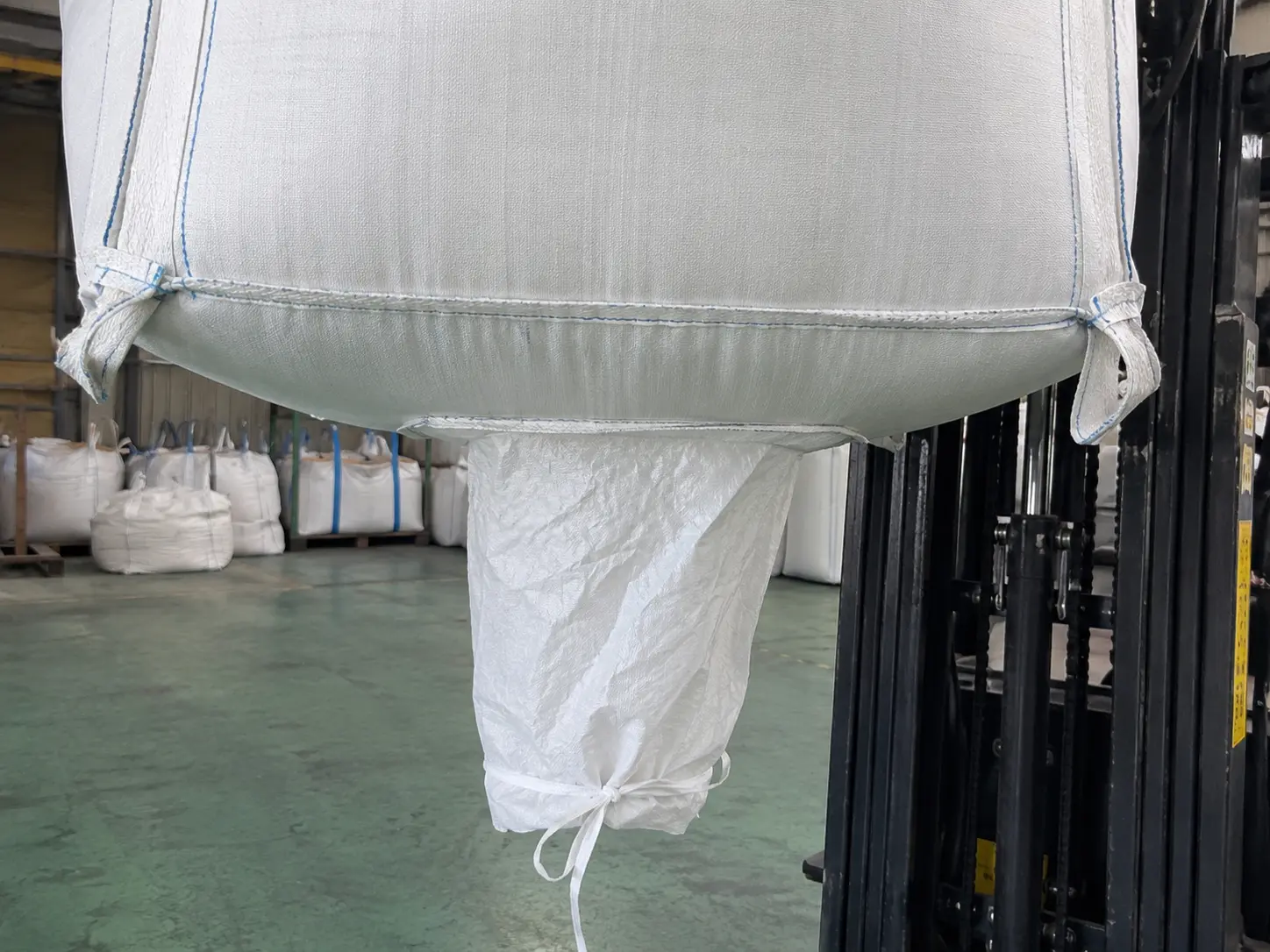
The bag itself constrains the choice before the site does. A bag built with a flat bottom cannot be spout-discharged no matter what station you own, and a duffle top gives you no controlled outlet at all — the top and bottom fitting options are decided at the order stage and set what discharge methods are available for the life of that bag. Buyers who specify fittings from the filling side alone routinely discover this on the receiving dock.
Bridging Is Where the Injuries Happen
Bridging is product forming a self-supporting arch above the outlet. The bag stays half full, nothing moves, and there is no warning before it happens. Cohesive powders, damp material and anything that has compacted during transit are the common candidates — and road or sea vibration makes compaction more likely, so a product that discharged cleanly at the packing plant can bridge on arrival.
What makes it dangerous is not the bridge. It is that the obvious fix is to get underneath and push.
Safe ways to break a bridge, all from outside the bag:
- Massage or agitation paddles on a discharge station, which is what they exist for
- A rubber mallet against the outside of the fabric, at the height of the arch
- Lowering the bag to take tension out of the fabric, then re-lifting
- Where the station allows it, a partial squeeze of the bag body between plates
A knot that will not release is usually a closure specified without thinking about discharge, which is fixable on the next order. Unsafe, and common: reaching up through the spout, poking upward with a bar while standing under the load, or cutting the fabric from below to release it. The arch collapses without warning and drops the full remaining mass at once.
Never Work Under a Suspended Bag
This is the one rule that decides the rest of the procedure, and it rules out more than people expect. If a method requires anyone to put a hand, head or shoulder under a hanging load at any point — including untying a spout, clearing a blockage, or checking whether the bag is empty — that method is not usable as designed.
Two practical consequences worth building into the layout:
- The spout must be reachable from outside the footprint of the bag. A spout that is tied off directly under the load forces someone into the drop zone on every cycle, which is a design problem rather than a training problem.
- The lift has to be stable enough to work near. A bag on forklift tines swings; a bag on a proper frame or spreader bar does not. If you are emptying bags regularly with a bare forklift, that is the first thing to change.
Cutting a Bag: Three Risks People Miss
Splitting a bag open is legitimate and fast for a disposable bag over a hopper. It carries risks that a spout discharge does not.
Static. Cutting generates charge, and the bag’s static class governs what that means. A Type C bag must be grounded before the cut and stay grounded; a Type D works without a connection but only within its rated limits. In a flammable dust or vapour atmosphere, cutting is not a casual operation — and no static class makes it one.
Contamination. A blade through woven polypropylene sheds fibres directly into the product below. For food, feed or pharmaceutical material that is a foreign-body issue, which is why food grade operations generally discharge through a spout rather than by cutting.
The cut location. Cut from outside the drop zone, on a bag whose load is supported, and never upward from underneath. A long-handled tool is worth having for exactly this.
The Last Few Kilograms
Residue clings to the fabric and the spout on every method, and more of it with cohesive powders or a coated interior. This is where procedure quietly breaks down: the bag is nearly empty, the remaining product is visible, and the incentive to reach in is at its highest precisely when the load above is least stable.
Decide in advance what you do with residue. For most non-critical products the answer is to accept it and move on. Where the material is valuable enough to recover, do it with the bag lowered and supported on the ground, not hanging. If the residue matters enough to justify climbing or reaching, it justifies a different discharge method instead.
Your Procedure Checklist
- Can every step be done from outside the footprint of the suspended bag? If any step needs someone underneath, the procedure needs changing, not the training.
- Do you have a way to break a bridge from outside? If not, your method only works while the product flows, which is not the same as working.
- Is the bag supported on a frame or spreader bar rather than swinging on bare tines? Stability is what makes working alongside the load reasonable at all.
- If bags get cut open, is the static class right for the atmosphere, and is fibre contamination acceptable for the product? Both answers must be yes before cutting is an option.
- What happens to the residue, and who decided that in advance? Improvising at the end of a cycle is the pattern behind most of these incidents.
Final Thoughts
The safest discharge setup is not the one that empties fastest. It is the one where the bad day — a bridged bag, a blocked spout, a load that will not release — has an answer that keeps everyone out from under a tonne of suspended product. Work out that answer before you need it, because the moment you need it is the moment people improvise. Much of it is settled earlier still, when the bag is filled square, to the right weight and closed properly.
If you are specifying bags for a discharge setup you already have, send us the fitting type on your station, the product and whether an anti-static class applies. We will match the bag to how you actually unload it rather than to a catalogue default.
Common Questions
What is the best way to empty a bulk bag?
The method that keeps people out from under a suspended load when the flow stops. For repeat use that means a spout bottom over a frame with a way to agitate the bag from outside. For one-off discharge of a disposable bag, splitting it over a hopper is faster. Both are safer than any method that needs someone underneath.
Why does material stop flowing partway through discharge?
Bridging. The product forms a self-supporting arch above the outlet and stops moving even though the bag is still half full. Cohesive powders, damp material and anything that has settled in transit are the usual candidates, and vibration in shipping makes it more likely rather than less.
Can I empty a bulk bag without a discharge station?
Yes, and most first-time importers do. A forklift with a spreader bar or a suitable lifting frame, plus a hopper or bin below, covers occasional discharge. What you lose is a safe way to break a bridge, so the method only holds up if your product flows reliably.
Is it safe to cut open a bulk bag?
Only from outside the drop zone, never from underneath, and never on a suspended bag someone is standing below. Cutting also raises two risks people miss: static discharge if the bag is a Type C or D in a flammable atmosphere, and contamination from cut fibres falling into food or pharmaceutical product.
How do I break a bridge safely?
From outside the bag, with the load supported and nobody underneath. Massage paddles on a discharge station, a rubber mallet on the outside of the fabric, or lowering and re-lifting the bag all work. Reaching in through the spout, or poking upward with a bar while standing under the load, is how the serious injuries happen.
How much product is normally left in the bag?
A residue clings to the fabric and the spout regardless of method, and it is larger with cohesive powders and coated fabric. Plan for it rather than chasing it — the last few kilograms are where people improvise, and improvising under a suspended bag is the pattern this whole procedure exists to prevent.
Do I need different procedures for anti-static bags?
Yes for grounding. A Type C bag must be connected to earth before discharge starts and stay connected until it finishes, every cycle. Type D needs no connection but should not be cleaned or covered in a way that masks the fabric. Cutting either type in a flammable atmosphere is a separate risk that grounding does not remove.
More in Handling & Equipment
All Handling & Equipment guides- Bulk Bag Unloaders: Why the Bag Spec Matters More Than the FrameMost bulk bag unloader problems start at the bag, not the frame: loops that hang the spout short of the clamp, spouts too narrow for the valve, liners that drag.
- Bulk Bag Stands: How to Fill a Super Sack Without a MachineA bulk bag stand holds the empty bag open and square. It cannot weigh the fill — and a bag shovelled to the brim with sand can be well over its rating.
- Super Sack Racks: Why the Bag Spec Decides Which Rack WorksRack vendors sell capacity and stack height. What they rarely mention is the bag — its filled footprint, shape and bottom decide whether any rack works.
- FIBC Spreader Bars: The Cheapest Way to Save LoopsBare forklift tines abrade lifting loops every cycle. A proper spreader bar spreads the load and protects the loops — here's what to look for.