Is Polypropylene Waterproof? Why a Woven PP Bag Still Lets Water In
Polypropylene absorbs almost no water, yet woven PP bulk bags still let rain and condensation in. Here are the four ways water gets in — and what stops each.
PackTonne Sourcing Desk · · 6 min read
Polypropylene is waterproof as a material: it absorbs almost no water and does not rot, swell or lose strength when wet. A woven polypropylene bulk bag is not waterproof. Water passes through the gaps between the woven tapes, the needle holes along every seam and the openings at the top and bottom — and it can form inside the bag as condensation. Whether your product stays dry depends on which of those routes you close. For the material’s other properties, see what polypropylene is.
The Material Is Waterproof; the Bag Is Not
Polypropylene absorbs almost no water — well under 0.1% of its own weight — because its polymer chains have nothing for water molecules to bond to. That is why polypropylene tape does not swell, rot or weaken in rain, and why a wet bag keeps its rated strength once it dries.
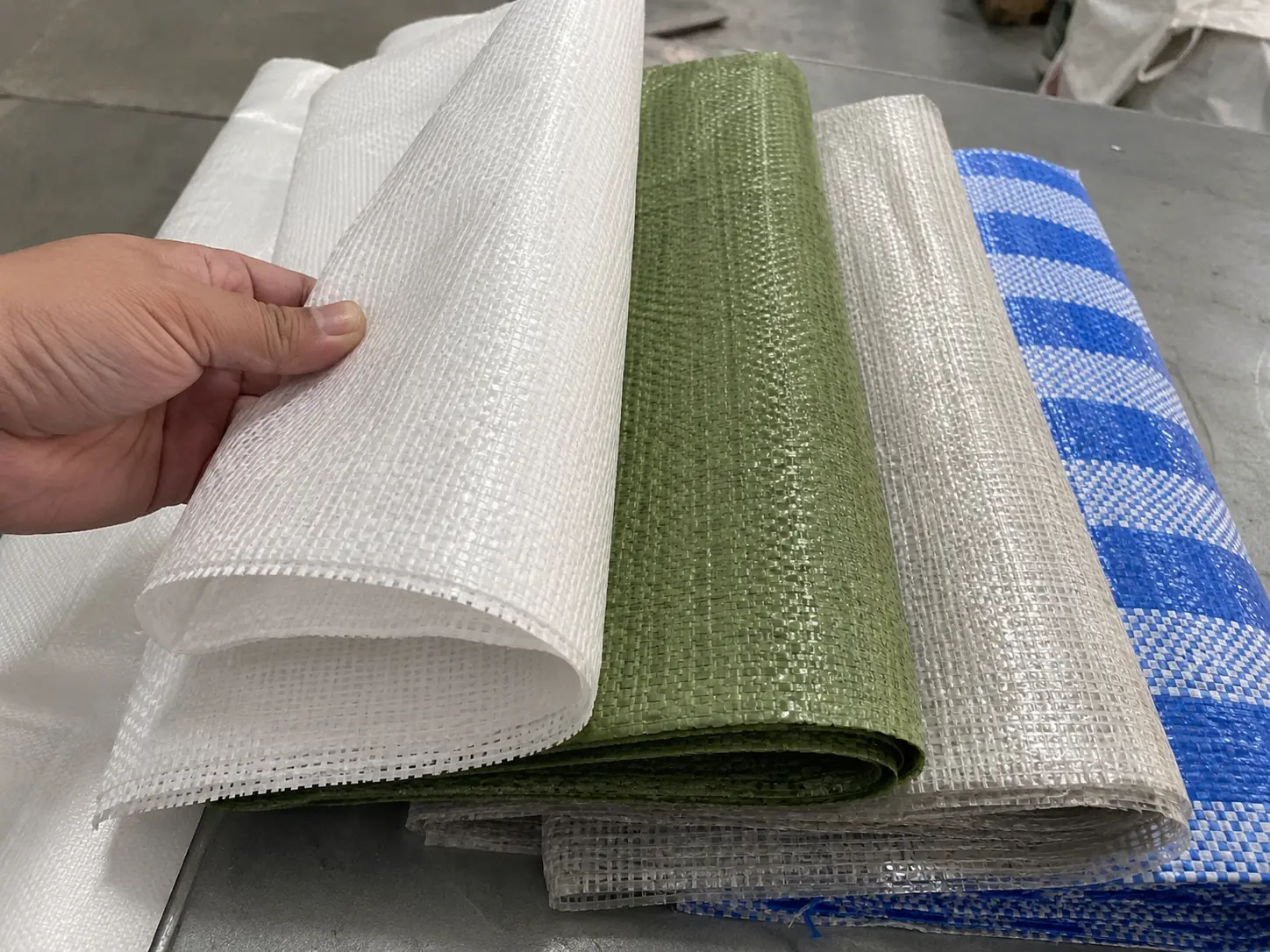
The problem is construction. A bulk bag is woven from flat tapes, and every point where the tapes cross leaves a small gap. Water that pools on the fabric, or drives against it in rain, works through those gaps. Woven polypropylene is water-resistant — it sheds light splashes and dries quickly — but it is not a barrier. The guide to woven polypropylene covers how the tape and weave are made.
| Polypropylene (the material) | Woven PP bulk bag | |
|---|---|---|
| Absorbs water | Almost none | The fabric no; the contents yes, if water gets in |
| Lets water through | No | Yes — through the weave, seams and openings |
| Strength when wet | Unchanged | Unchanged |
| Keeps the contents dry | — | Only with a coating, liner or cover |
Four Ways Water Gets Into a Bulk Bag
Water reaches the product through four routes, and each one needs a different fix.
| Route | When it happens | What stops it |
|---|---|---|
| Gaps in the weave | Rain, standing water, wet ground | Coated fabric, or a liner |
| Needle holes along the seams | Driving rain; water pooling on the top panel | Sift-proof seams, or a liner |
| Top and bottom openings | Rain on an open duffle; a loosely tied spout | Tight closures and a cover |
| Condensation inside | Temperature swings in containers and yards | Dry product going in, a liner, desiccants |
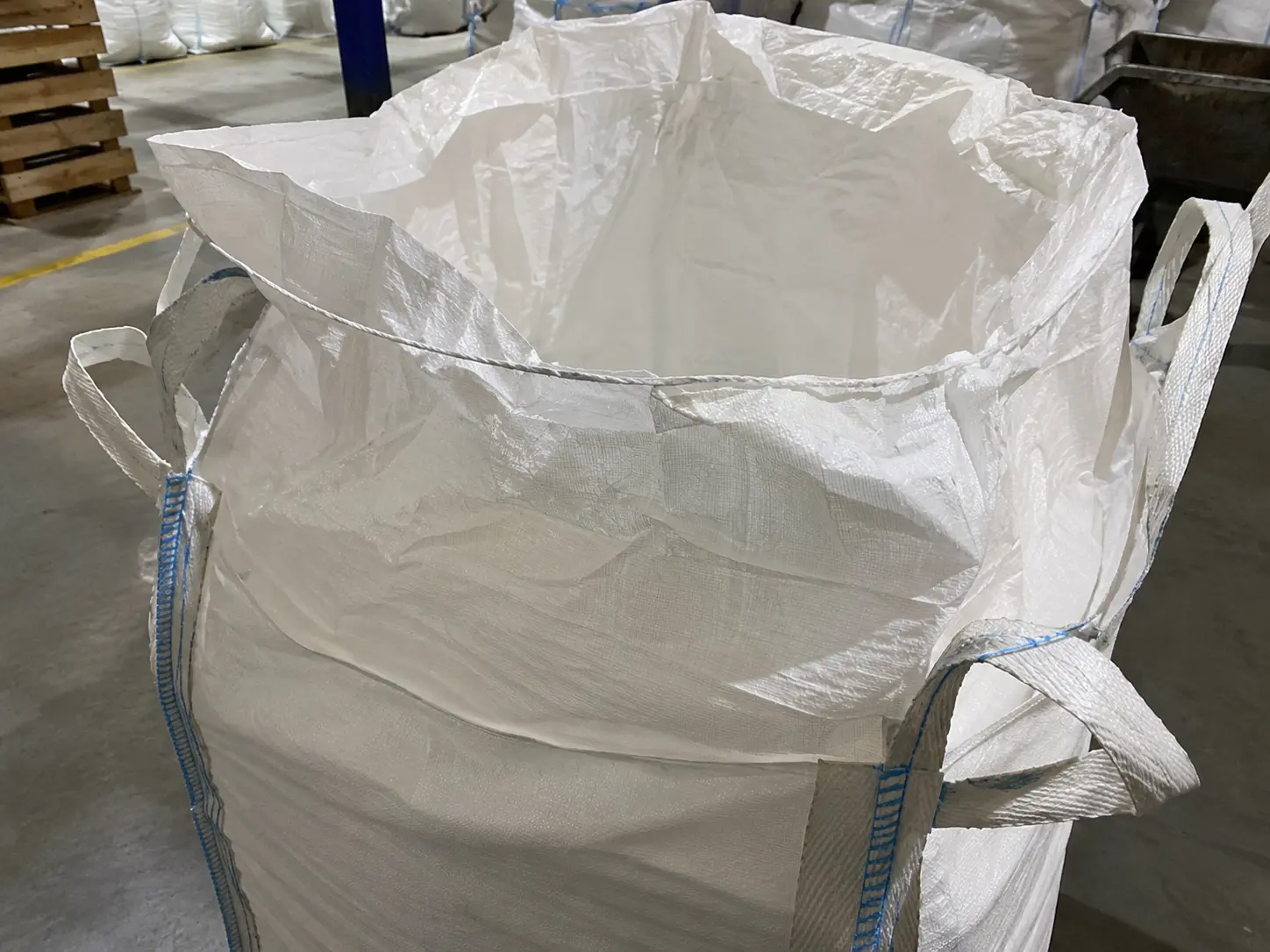
The first three are rain problems, and a roof solves most of them. Openings are the easiest to overlook: a gathered duffle top forms folds that collect water, and a spout tied loosely at filling lets it run straight into the product.
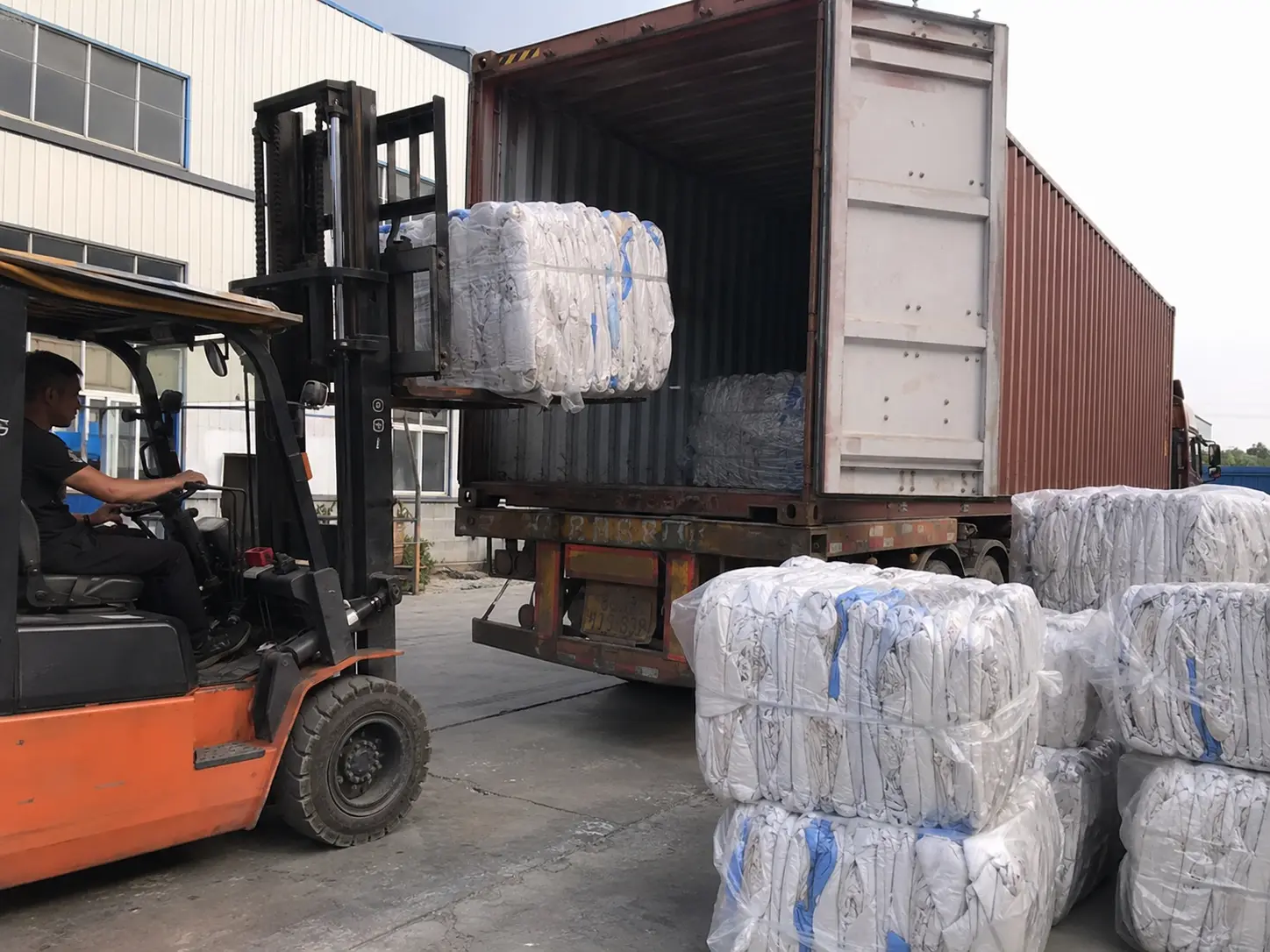
Condensation is the route buyers miss. Moisture in the product and in the air inside a shipping container condenses on the cold steel roof overnight and drips back onto the cargo — so-called container rain. A coated bag sheds those drops, but no bag stops water that forms inside its own liner from a product that went in damp. The coffee bean guide works through this for one of the most sensitive cargoes.
Coating, Liner or Both: Matching Protection to the Risk
A coating reduces water coming through the fabric, a liner gives the product a sealed barrier, and hygroscopic products usually need both.
| Product or risk | Build to specify | Why |
|---|---|---|
| Dry, stable product stored under cover | Uncoated fabric | Nothing to protect against |
| Product that must not get damp in transit | Coated fabric | Closes the weave against splashes and dripping condensation |
| Fine or hygroscopic powder | PE liner, sealed or tied | A continuous barrier the weave cannot give |
| Cement, fertilizer, sugar on long routes | Coated fabric plus liner | Two layers for products that set, cake or dissolve |
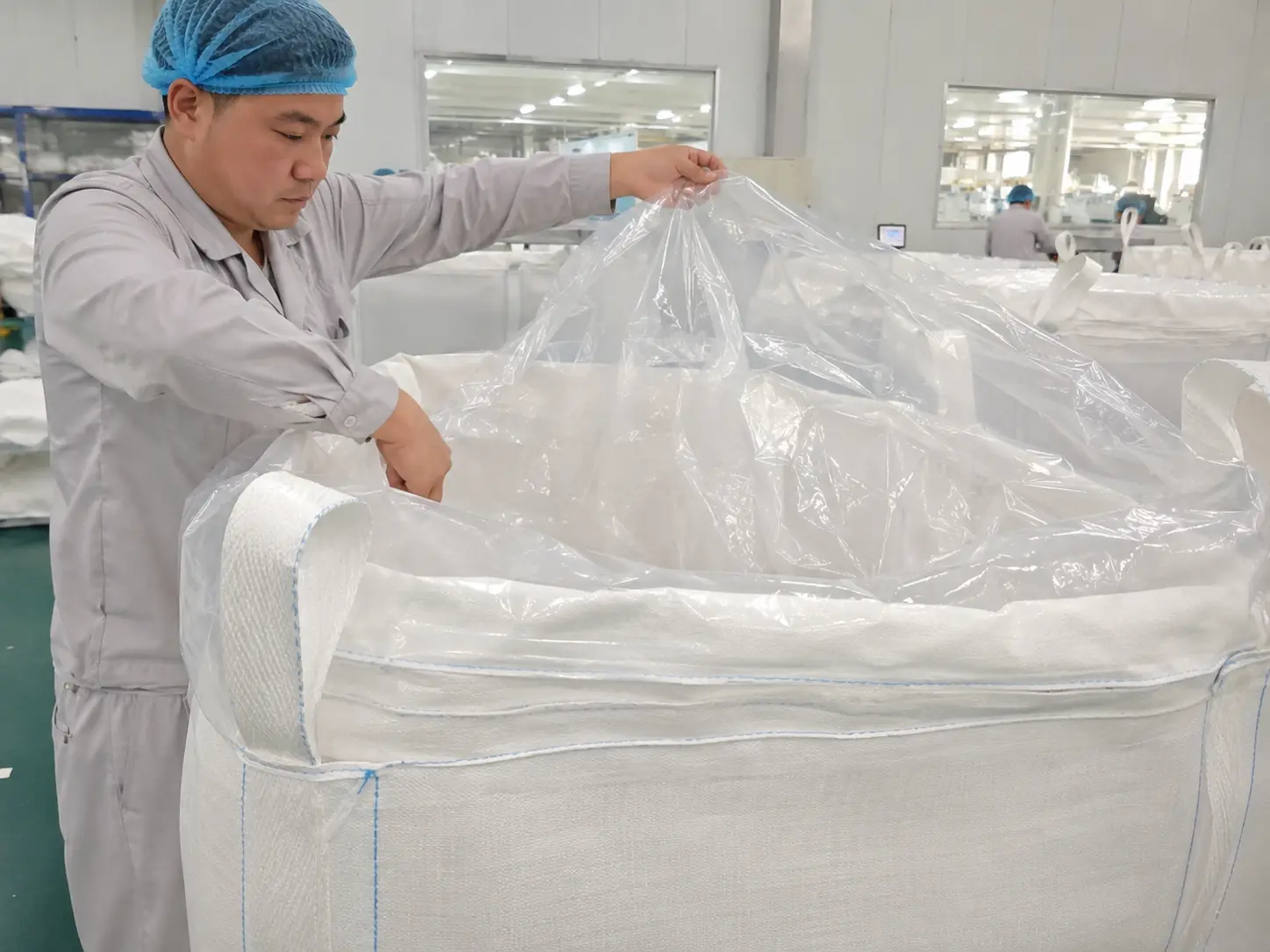
Coating is a thin polypropylene film laminated onto the woven fabric. It narrows the gaps but does not seal the seams, needle holes or closures — the coated vs uncoated fabric comparison explains where each type of coating stops working. A liner is a separate polyethylene bag inside the FIBC, and it is the only part of the build that behaves like a true moisture barrier, provided it is heat-sealed or tied at the top and spout. The liner types guide compares loose, form-fit and baffle liners.
Storing Bulk Bags Outdoors
Outdoor storage adds rain from above and water from below, so a bag needs a cover and something between it and the ground, whatever its fabric.
- Cover the top. A rain hood or tarpaulin over the stack keeps water out of duffle folds and off the top seams.
- Lift it off the ground. Pallets keep the base out of puddles and runoff, where water would otherwise sit against the fabric for days.
- Specify UV stabilizer. Sunlight, not rain, is what weakens polypropylene over months outdoors. The storage guide covers stacking and UV exposure in more detail.
- Don’t seal what needs to breathe. Firewood and fresh produce still give off moisture. They go in ventilated bulk bags, and wrapping them tightly traps the very moisture the vents are there to release.
When You Actually Need a Waterproof Container
If the product must stay dry while exposed to rain with no cover at all, a woven polypropylene bag is the wrong container. PVC-coated reusable bulk bags exist for that job, at a much higher cost per bag and with cleaning between uses. For liquids, slurries or wet processes, a rigid container is the better answer — the FIBC vs IBC tote comparison sets out where each one fits.
Your Water Protection Checklist
- Is your product hygroscopic, or only sensitive to getting wet? Hygroscopic products need a liner, not just a coating.
- Will the bags cross climate zones in a container? Plan for condensation, not only for rain.
- Where will filled bags wait — under a roof or in the open? Open storage needs a cover and pallets whatever the bag spec.
- Is the product fully dry when it goes in? No bag removes moisture that is already inside.
- Does the product need to breathe? If so, choose ventilated construction, not a sealed one.
Final Thoughts
Polypropylene will never be the weak point — it shrugs off water. The weave, the seams, the openings and the air inside the container are where moisture gets through. Work out which of those routes your product actually faces, close them with the right coating, liner or storage, and a woven polypropylene bag will keep it as dry as it needs to be.
Before You Request a Quote
Tell us the product, whether it is hygroscopic, how it travels and where filled bags will be stored. We will specify the fabric, coating and liner to match, starting from our Type A bulk bags.
Common Questions
Is polypropylene waterproof?
Polypropylene as a material is waterproof: it absorbs almost no water and does not rot or lose strength when wet. Woven polypropylene fabric is only water-resistant, because water passes through the gaps between the woven tapes. A bulk bag needs a coating, a liner or a cover to keep its contents dry.
Are super sacks waterproof?
No. Super sacks and other bulk bags are woven from polypropylene tape, so water can pass through the weave, the seam needle holes and the top and bottom openings. A coated fabric reduces water entry, a sealed PE liner gives the product a barrier, and a rain cover protects bags stored outdoors.
Does polypropylene absorb water?
Almost none — well under 0.1% of its own weight. That is why polypropylene tape does not swell or weaken in rain and why a wet bulk bag keeps its rated strength. The contents can still get wet, because water travels through the fabric's weave rather than into the fibers.
Can I store bulk bags outside in the rain?
Filled bags can be stored outside for limited periods if they are covered, kept on pallets off wet ground and made with UV-stabilized fabric. Uncovered, rain collects in the folds of a duffle top and soaks through the weave. Sunlight, not rain, is what weakens polypropylene over months outdoors.
Will a coated bulk bag keep my product dry?
It will keep out splashes and dripping condensation, but it is not a sealed barrier. Water can still enter at seams, needle holes and closures. For hygroscopic products such as cement, fertilizer or sugar, use a PE liner as well, sealed or tied at the top and spout.
What is container rain and how does it affect bulk bags?
Container rain is condensation that forms on a shipping container's steel roof when temperatures drop, then drips back onto the cargo. Coated fabric sheds the drops, but moisture released by a damp product condenses inside its own liner. Ship product dry and plan for temperature swings on the route.
Is non-woven polypropylene waterproof?
Non-woven polypropylene is water-resistant rather than waterproof: its bonded fibers leave fine pores that let water through under pressure or prolonged contact. Bulk bags use woven polypropylene for strength, and rely on coatings and liners, not the fabric type, for moisture protection.
More in Construction & Materials
All Construction & Materials guides- Is Polypropylene Food Safe? Why PP Resin Is Not the Same as a Food Grade BagFDA lets polypropylene be used in contact with food, but that covers the resin only. See what 21 CFR 177.1520 sets and what a food grade bulk bag also needs.
- What Is Polypropylene? 7 Properties That Explain Where It Is UsedPolypropylene is a lightweight, chemical-resistant thermoplastic that floats and melts near 160 °C. Seven properties explain its uses, from caps to bulk bags.
- Polypropylene Recycling: Why #5 Plastic Is Recyclable but Rarely RecycledPolypropylene is recyclable, yet most of it is not captured. See why access, sorting and degraded resin hold it back, and where your PP can actually go.
- Polypropylene Melting Point: Why 160 °C Is Not the Temperature a Bulk Bag Can TakePolypropylene melts at about 160–165 °C, but a bulk bag has lower limits: softening, shrinking tape and a PE liner. See the numbers and what to ask suppliers.