FIBC Specifications: The 8 Fields That Decide What You Get
Eight fields on a bulk bag spec sheet decide what you actually receive. Miss any one and you're comparing supplier quotes on incomplete information.
PackTonne Sourcing Desk · · 6 min read
A usable FIBC spec sheet has eight fields: capacity and dimensions, fabric weight (GSM), safety factor, static protection class, liner and coating, certification, fill/discharge style, and loop type. Each one controls something specific — skip one and you’re comparing quotes on incomplete information. Getting all eight in writing is what turns three quotes into a real comparison. Asian and Middle Eastern suppliers usually head the same document a jumbo bag specification rather than an FIBC spec sheet; the fields underneath are identical, so compare field by field rather than by document title.
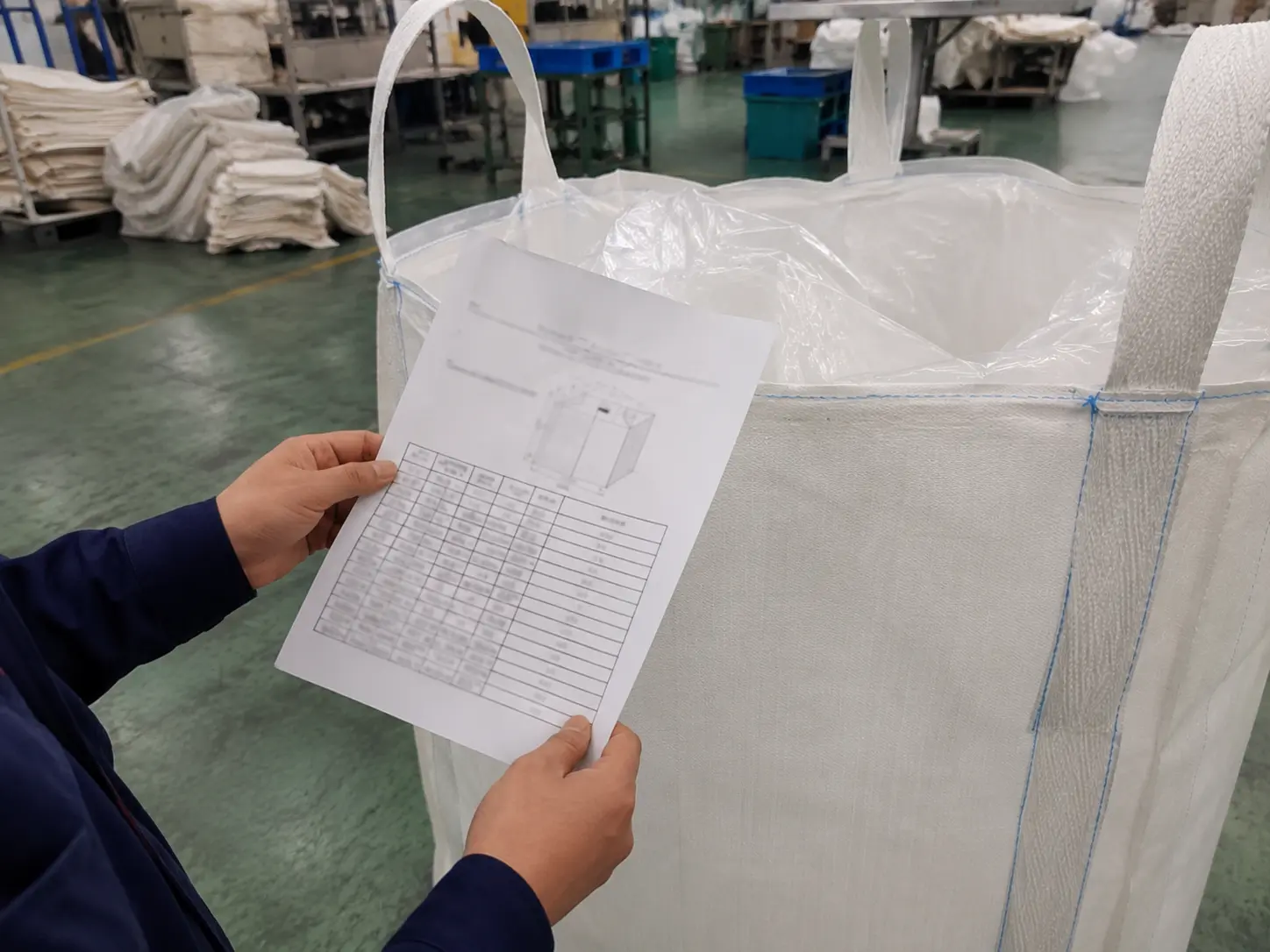
The Eight Fields That Matter
| Field | What it controls | Where to go deeper |
|---|---|---|
| Capacity & dimensions | How much product fits, and the bag’s footprint | Dimensions guide |
| Fabric weight (GSM) | Base strength and abrasion resistance | Woven polypropylene guide |
| Safety factor | Single-trip (5:1) vs multi-trip (6:1) rating | — |
| Static protection class | Type A/B/C/D ignition risk match | Static protection guide |
| Liner & coating | Moisture and contamination barrier | Food grade requirements |
| Certification | UN 13H marking, food grade compliance | Types of FIBC bags |
| Fill/discharge style | Duffle, spout or open top; spout or flat bottom | Filling & discharge guide |
| Loop type | Lifting method and handling equipment fit | — |
Capacity and Dimensions Set the Volume
Capacity and dimensions together define how much product the bag physically holds — and they’re linked to your product’s bulk density, not a fixed size chart. A spec sheet listing only weight capacity without dimensions, or dimensions without confirming whether loop height is included, leaves room for mismatched expectations once bags arrive. If your product’s density is unusual — much lighter or heavier than a typical mineral or granular product — flag it early, since the standard 90×90×110 cm reference point may not fit your actual volume needs.
Fabric Weight Is the Base Cost and Strength Driver
GSM (grams per square meter) is where most of a bag’s base cost and strength lives. Standard FIBC fabric runs 140–210 g/m², and the right number depends on load, abrasiveness, and safety factor together — not GSM in isolation. Two bags at different prices with the same stated capacity are almost always differing on GSM.
Safety Factor Is the Field Buyers Skip Most
Safety factor — 5:1 for single-trip use, 6:1 for multi-trip — gets overlooked more than any other field, because capacity and price dominate the conversation. If you’re planning to reuse bags and the spec sheet doesn’t confirm 6:1 construction, you may be looking at a bag rated for one trip only. Always confirm this explicitly rather than assuming it from the price.
Static Protection Class Is a Safety Field, Not a Quality Tier
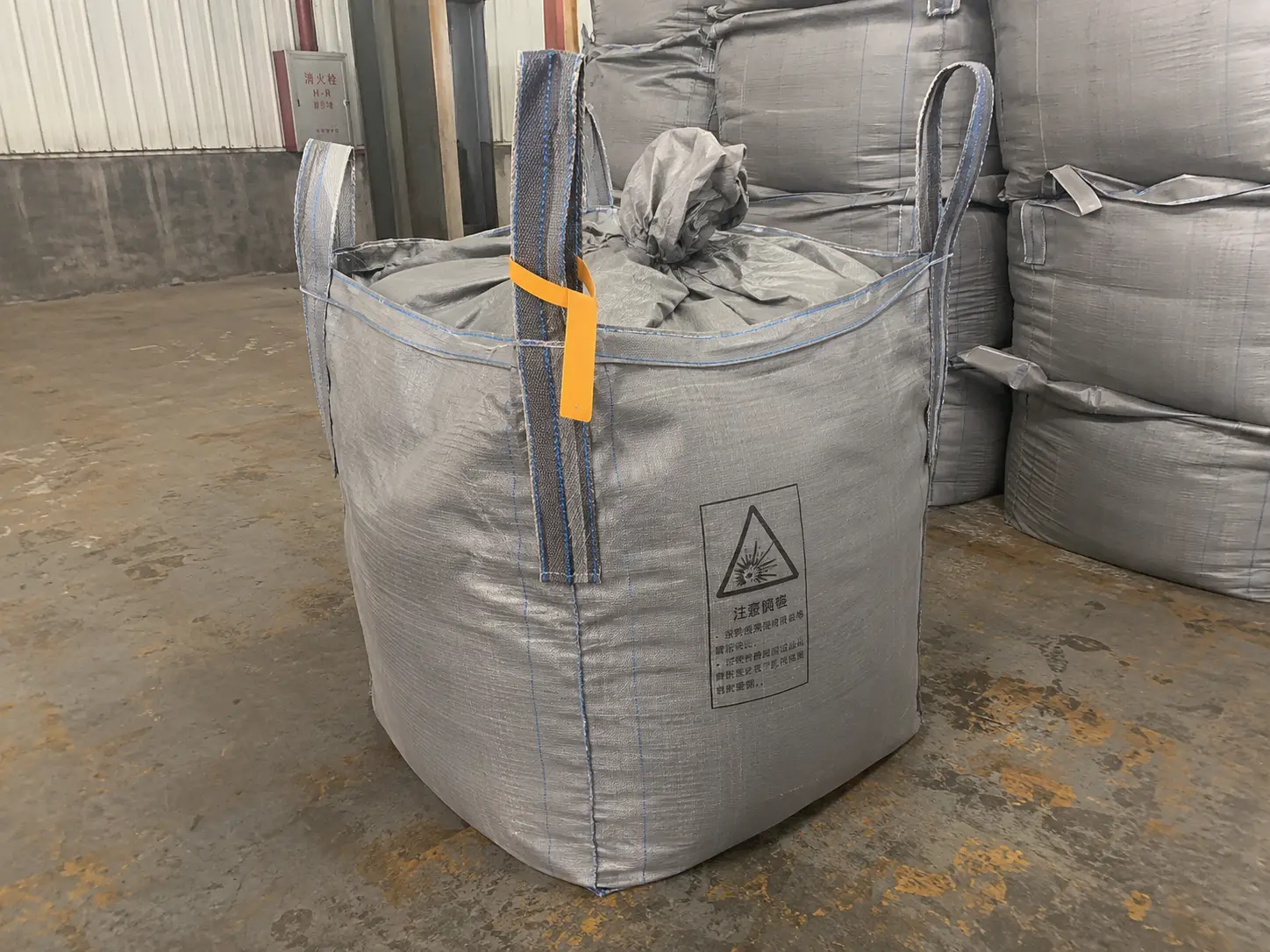
Type A, B, C or D describes ignition risk match, not overall build quality. A spec sheet should state the letter explicitly, along with grounding requirements if it’s Type C — a supplier who just writes “anti-static” without a letter hasn’t specified enough to verify against your product’s actual risk.
Liner, Coating and Certification Cover Compliance
Liner material and coating determine moisture and contamination protection; certification — UN 13H marking or food grade compliance — confirms the bag meets a specific regulatory bar. These fields matter most for hazardous goods and food-contact products, where a missing or vague entry isn’t just an inconvenience, it’s a compliance gap. Ask for the specific standard or marking code, not a general “certified” claim.
Fill/Discharge Style and Loop Type Affect Handling, Not Just Convenience
Fill and discharge style (duffle, spout, open top; spout or flat bottom) and loop type (four-corner, side-seam, single) determine how the bag actually works with your filling equipment, forklifts, and process lines. These fields are easy to treat as preference rather than spec, but the wrong style can slow a line or require equipment changes you didn’t budget for.
How to Read a Quote Against the Spec Sheet
A complete quote restates all eight fields against the price, line by line — not just a single number next to “1 ton bag.” If a quote skips fields the spec sheet asked for, that’s a gap worth flagging before you compare it against another supplier’s number, since an incomplete quote is easier to underprice by leaving out a cost driver like certification or static class.
A quick example: two suppliers quote $1.20 and $1.45 per bag for the same stated 1-ton capacity. The cheaper quote turns out to specify 140 g/m² fabric at 5:1 safety factor with no liner; the other specifies 180 g/m² at 6:1 with a form-fit liner. They’re not competing quotes for the same product — they’re quotes for two different bags that happen to share a capacity number. Without the full spec sheet, that price gap looks like margin. With it, the gap is explained by three separate line items.
Red Flags in a Vague Spec Sheet
- “Heavy duty” without a GSM number
- “Anti-static” without a Type letter
- “Certified” without a specific standard or marking code
- Capacity listed with no dimensions, or dimensions with no stated loop height
- No mention of safety factor or trip rating
Final Thoughts
A spec sheet is only useful if it’s yours. Build the eight fields once, send the same document to every supplier, and the quotes that come back become genuinely comparable instead of separately plausible. If you’d rather start from a working draft than a blank page, send what you know about your product and we’ll fill in the rest.
Before You Request a Quote
Fill in these eight fields yourself before contacting a supplier, and ask them to quote against your list rather than their own format:
- Target capacity and dimensions
- Product bulk density
- Safety factor — single-trip or multi-trip
- Static protection class, if needed
- Liner, coating, and certification requirements
- Fill and discharge style
- Loop type
- Order quantity
Request a quote with your filled-in spec sheet and we’ll confirm every field before production, not after.
Common Questions
What information should be on an FIBC spec sheet?
Eight fields cover it: capacity and dimensions, fabric weight (GSM), safety factor, static protection class, liner and coating, certification, fill/discharge style, and loop type. A spec sheet missing several of these isn't complete enough to compare against another supplier's quote.
What's the most commonly overlooked field on a spec sheet?
Safety factor. Buyers often check capacity and fabric weight but skip confirming whether the bag is rated 5:1 for single-trip use or 6:1 for multi-trip — a gap that matters if you're planning to reuse bags and the supplier quoted single-trip construction.
Why do two spec sheets with the same GSM have different prices?
GSM alone doesn't set the price — safety factor, static protection class, liner, certification, and printing all stack on top of fabric weight. Two bags at the same GSM can differ significantly in price if one includes certification or anti-static construction and the other doesn't.
How do I compare spec sheets from suppliers who format them differently?
Build your own checklist from the eight core fields and ask every supplier to fill it in the same format, rather than trying to reconcile their different layouts. A supplier unwilling to answer in your format is a signal worth noting.
What should I do if a supplier's spec sheet is missing information?
Ask directly for the missing fields before requesting a price. A supplier who can't specify GSM, safety factor, or static class in writing hasn't given you enough to compare fairly against another quote, regardless of how competitive the price looks.
Should I ask for a spec sheet before or after requesting a price?
Before. A price quoted without an agreed spec is a number attached to an unknown bag, which makes supplier comparison meaningless. Send your own eight-field spec first and ask each supplier to quote against it — that way any price difference reflects a real difference you can see.
What if suppliers use different units or terms on their spec sheets?
Normalize them yourself before comparing. GSM versus ounces per square yard, centimeters versus inches, and differing loop terminology all show up across suppliers. Converting everything into one format takes a few minutes and prevents a comparison that looks close but isn't.
More in Construction & Materials
All Construction & Materials guides- Bulk Bag Closures: The Knot That Holds a Tonne Against ItClosure type is decided at the order stage and lived with at discharge. A drawstring carries the whole load against one knot, which is why it jams shut.
- Net Baffle FIBC Bags: When Fabric Baffles Leave Corners EmptyA baffle bag that never fills its corners costs you the premium and the space. Net baffles let poor-flowing product reach corners that fabric panels block.
- FIBC Stitching: The Failure Point GSM Doesn't CoverBags usually fail at the seams, not through the fabric. Stitch pattern and thread spec matter as much as GSM — and get checked far less often.
- U-Panel vs Circular vs Four-Panel: Seams, Shape and CostCircular, U-panel and four-panel construction trade seam count against shape stability and cost. Here's which one suits your product and freight.