U-Panel vs Circular vs Four-Panel: Seams, Shape and Cost
Circular, U-panel and four-panel construction trade seam count against shape stability and cost. Here's which one suits your product and freight.
PackTonne Sourcing Desk · · 6 min read
An FIBC’s body fabric gets assembled three common ways: circular (woven as one seamless tube), U-panel (one piece plus two side panels), and four-panel (four separate pieces sewn together). Fewer seams mean lower cost and lower leak risk; more panels mean better shape stability when the bag is filled. Quotes from Asian factories often name these as a U panel jumbo bag or a circular jumbo bag, which describes the same body construction under a different regional term. None of the three is universally better — the right one depends on your product and how much shape control actually matters for your loading and stacking plan.
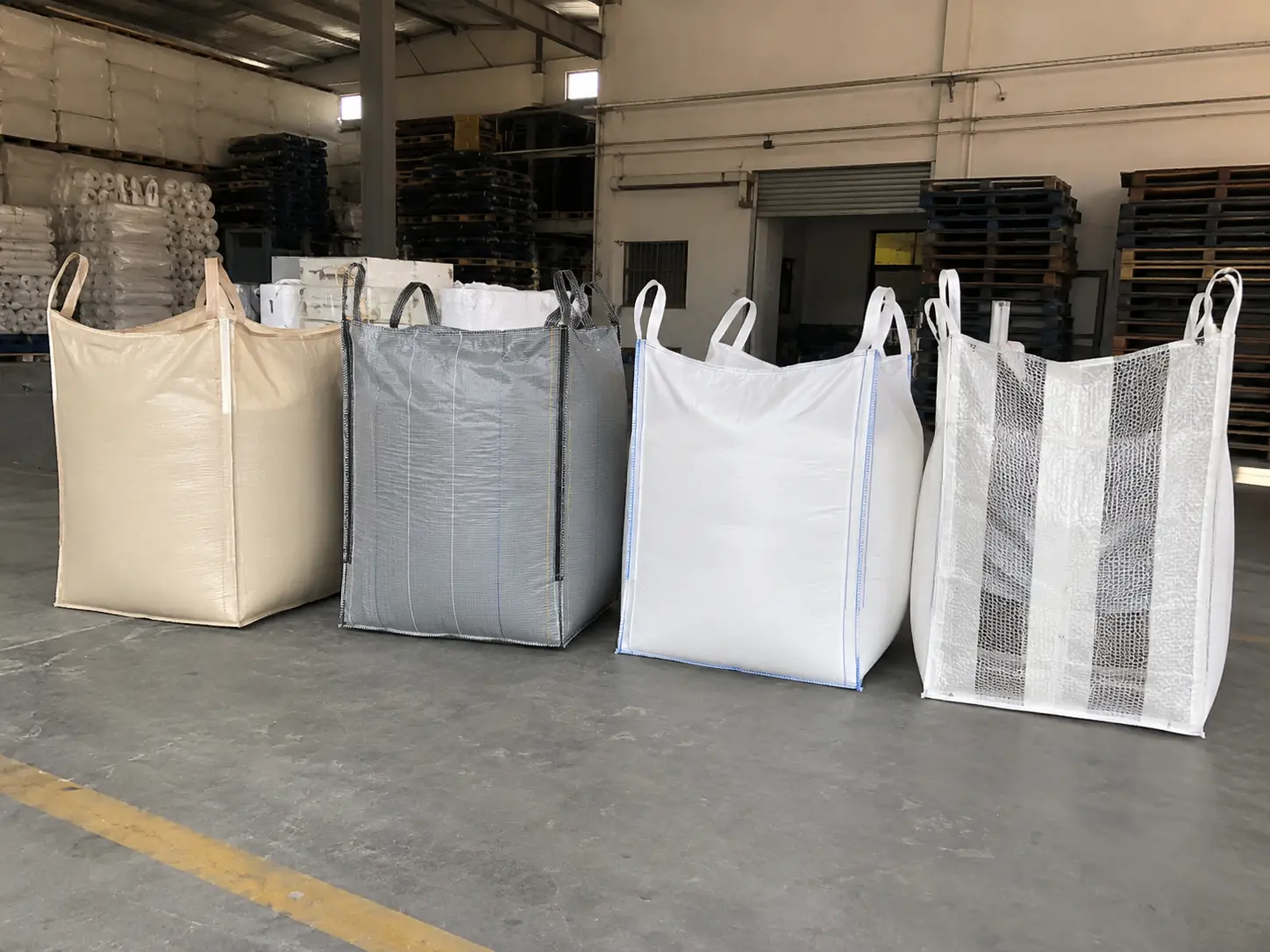
The Three Constructions at a Glance
| Construction | Body pieces | Vertical seams | Shape when filled | Relative cost |
|---|---|---|---|---|
| Circular | 1 (woven as a seamless tube) | None | Tends to bulge outward (“barrel” shape) | Lowest |
| U-panel | 3 (one U-shaped piece + 2 side panels) | 2 | Moderate shape stability | Moderate |
| Four-panel | 4 separate pieces | 4 | Best shape stability among the three | Highest |
Circular Construction: Fewest Seams, Lowest Cost
Circular FIBCs are woven as one continuous tube on a circular loom, so the body has no vertical side seams at all — stitching is only needed at the top and base. Fewer seams mean less sewing labor, lower material waste, and fewer potential leak points, which is why circular construction is generally the lowest-cost option among the three. The tradeoff is shape: without corner structure to resist fill pressure, a circular bag tends to bulge or “barrel” outward rather than holding a square profile, which can waste space when stacking on a pallet or loading a container.
U-Panel Construction: A Practical Middle Ground
U-panel bags use one piece of fabric that wraps around to form the base and two opposite sides — the “U” — with two additional panels sewn in on the remaining two sides. This gives noticeably better load distribution and shape stability than circular construction, at a moderate step up in cost from the extra cutting and sewing involved. U-panel is a common middle-ground choice when some shape control matters but full four-panel construction isn’t necessary for the application.
Four-Panel Construction: Best Shape Stability
Four-panel bags assemble the body from four separate fabric pieces, one per side, sewn together at four vertical seams. This is the most shape-stable of the three constructions, holding a squarer profile under fill pressure than either circular or U-panel — useful when container and pallet utilization is a real cost factor, similar to the case made for baffle construction. It’s also the highest-cost option among the three, given the additional fabric cutting and seam count.
How This Relates to Baffle Construction
Panel count and baffle construction are two independent decisions, not the same thing — baffle panels are internal fabric strips added across the corners specifically to control shape, and they can be added to circular, U-panel, or four-panel bodies alike. A circular bag with baffles added can hold a reasonably square shape despite having no vertical seams in its base construction; a four-panel bag without baffles still bulges somewhat at the panel seams under fill pressure, just less than a circular bag would. Don’t assume panel count alone solves the shape question — check whether baffles are included separately if squared stacking matters to your operation.
Which Construction Fits Your Product
Dense, heavy commodities like sand, gravel, and many minerals often do fine with circular construction, since the practical downside of a rounder filled shape is limited relative to the cost savings — these products don’t typically need precise container geometry to justify a pricier construction. Lighter products, or shipments where container and pallet utilization directly affects freight cost, more often favor U-panel or four-panel construction, with or without baffles added, to make better use of available space. Fine powders prone to sifting also benefit from fewer seams — circular’s lack of vertical seams reduces the number of potential leak points compared to four-panel’s four seams.
Common Mistakes When Choosing Construction Type
- Assuming panel count alone determines shape. Baffle construction, not panel count, is the more direct lever for shape control — check whether baffles are included separately.
- Defaulting to four-panel for every product regardless of value. For dense, low-value commodities, the extra cost rarely pays back in a meaningful way.
- Choosing circular for a fine, sifting-prone powder without checking seam sealing. Fewer seams help, but seam quality at the top and base still matters as much as panel count.
- Comparing quotes at the same capacity without noting construction type. A cheaper quote may reflect circular construction rather than a pricing difference on the same spec.
- Overlooking that construction type is independent of static protection, food grade, and certification. These are all separate spec dimensions that combine with whichever base construction you choose.
Seam Count Also Affects Sewing Quality Consistency
Fewer seams generally means fewer opportunities for a stitching defect to occur, simply because there’s less total seam length across the bag. This is a secondary consideration behind cost and shape, but it’s part of why circular construction is often the default recommendation for high-volume, price-sensitive orders where consistent quality across a large batch matters as much as any single bag’s performance. Four-panel construction’s additional seams place more weight on a factory’s stitching consistency — worth confirming as part of your supplier audit if you’re specifying four-panel construction at scale.
Decision Checklist
- Does your product’s value or freight cost justify paying for better shape stability? If not, circular’s lower cost is the practical default.
- Is your product fine or prone to sifting through seams? Fewer seams (circular) reduces leak risk versus four-panel’s additional seam count.
- Does container or pallet utilization matter enough to justify the cost step-up? U-panel or four-panel, especially combined with baffles, addresses this more directly than circular alone.
- Are you already adding baffle panels? If so, panel count matters less for shape control specifically, since baffles address that separately.
- Have you compared quotes accounting for construction type, not just capacity? Two quotes at the same capacity can differ meaningfully in price based on panel construction alone.
Final Thoughts
Panel construction is the quietest line on a spec sheet and one of the more common reasons two quotes differ. Circular keeps cost and seam count down; four-panel buys shape stability you only need if freight or stacking geometry is actually costing you. Send us your product and how the bags get loaded, and we’ll recommend the construction that matches — not the one that sounds most robust.
Before You Request a Quote
Send us these details and we’ll confirm the right construction:
- Product type and whether it’s fine, sifting-prone, or coarse
- How much container/pallet utilization matters for your freight costs
- Whether you’re also considering baffle construction
- Target capacity and dimensions
Request a quote and we’ll confirm circular, U-panel, or four-panel construction against your actual product and logistics needs.
Common Questions
What's the main difference between U-panel, circular, and four-panel FIBC construction?
It's how the body fabric is assembled. Circular is woven as one seamless tube with no vertical side seams. U-panel uses one piece forming the base and two sides plus two additional side panels. Four-panel uses four separate fabric pieces sewn together. Fewer seams means lower leak risk and cost; more panels means better shape stability when filled.
Which construction is cheapest?
Circular is generally the lowest-cost option because it uses the least fabric cutting and sewing — it's woven as a continuous tube with seams only at the top and base, not down the sides.
Why do U-panel and four-panel bags hold their shape better than circular bags?
The additional panels sewn into U-panel and four-panel construction create corner structure that resists the outward bulging a circular tube naturally does under fill pressure. Circular bags can barrel out into a rounder shape unless combined with baffle panels.
Can circular bags have baffles added?
Yes — baffle panels are a separate construction feature from the base body panel count, and can be added to circular, U-panel, or four-panel bags to control shape. Panel construction and baffle construction are independent decisions.
Which construction is best for dense, heavy commodities like sand or minerals?
Circular construction is often the practical choice for dense commodities where a rounder filled shape has limited practical downside and the lower cost matters more than perfect stacking geometry. Lighter or irregularly shaped products where container utilization matters more often favor U-panel or four-panel construction instead.
Does panel construction affect the bag's rated capacity?
Not directly. Rated capacity comes from fabric weight, safety factor and stitching quality at the load-bearing points. Panel construction affects shape, seam count and cost, and it changes where stitching sits — but a circular and a four-panel bag can carry identical rated loads at the same GSM and safety factor.
Which construction leaks least with fine powders?
Circular, generally, because it has no vertical side seams — fewer seams means fewer potential leak paths. That said, seam quality at the top and base still matters as much as panel count, and a well-sewn four-panel bag can outperform a poorly sewn circular one.
More in Construction & Materials
All Construction & Materials guides- Is Polypropylene Food Safe? Why PP Resin Is Not the Same as a Food Grade BagFDA lets polypropylene be used in contact with food, but that covers the resin only. See what 21 CFR 177.1520 sets and what a food grade bulk bag also needs.
- What Is Polypropylene? 7 Properties That Explain Where It Is UsedPolypropylene is a lightweight, chemical-resistant thermoplastic that floats and melts near 160 °C. Seven properties explain its uses, from caps to bulk bags.
- Polypropylene Recycling: Why #5 Plastic Is Recyclable but Rarely RecycledPolypropylene is recyclable, yet most of it is not captured. See why access, sorting and degraded resin hold it back, and where your PP can actually go.
- Polypropylene Melting Point: Why 160 °C Is Not the Temperature a Bulk Bag Can TakePolypropylene melts at about 160–165 °C, but a bulk bag has lower limits: softening, shrinking tape and a PE liner. See the numbers and what to ask suppliers.