Hemp Super Sacks: You're Buying Volume, Not Strength
Dried hemp biomass is so light a super sack fills at under a fifth of its rating. Size the bag for volume, and seal it only once drying has finished.
PackTonne Sourcing Desk · · 7 min read
Almost every question about bulk bags is a question about strength. Hemp is the exception. Dried, crushed hemp biomass is so light that a bag fills up long before it gets heavy — bag makers serving the industry quote around 350–400 lb in a 36 × 36 × 48 inch bag, less than a fifth of a typical 2,200 lb rating. With hemp you are buying volume, and the thing that decides whether the load survives is not its weight but its moisture.
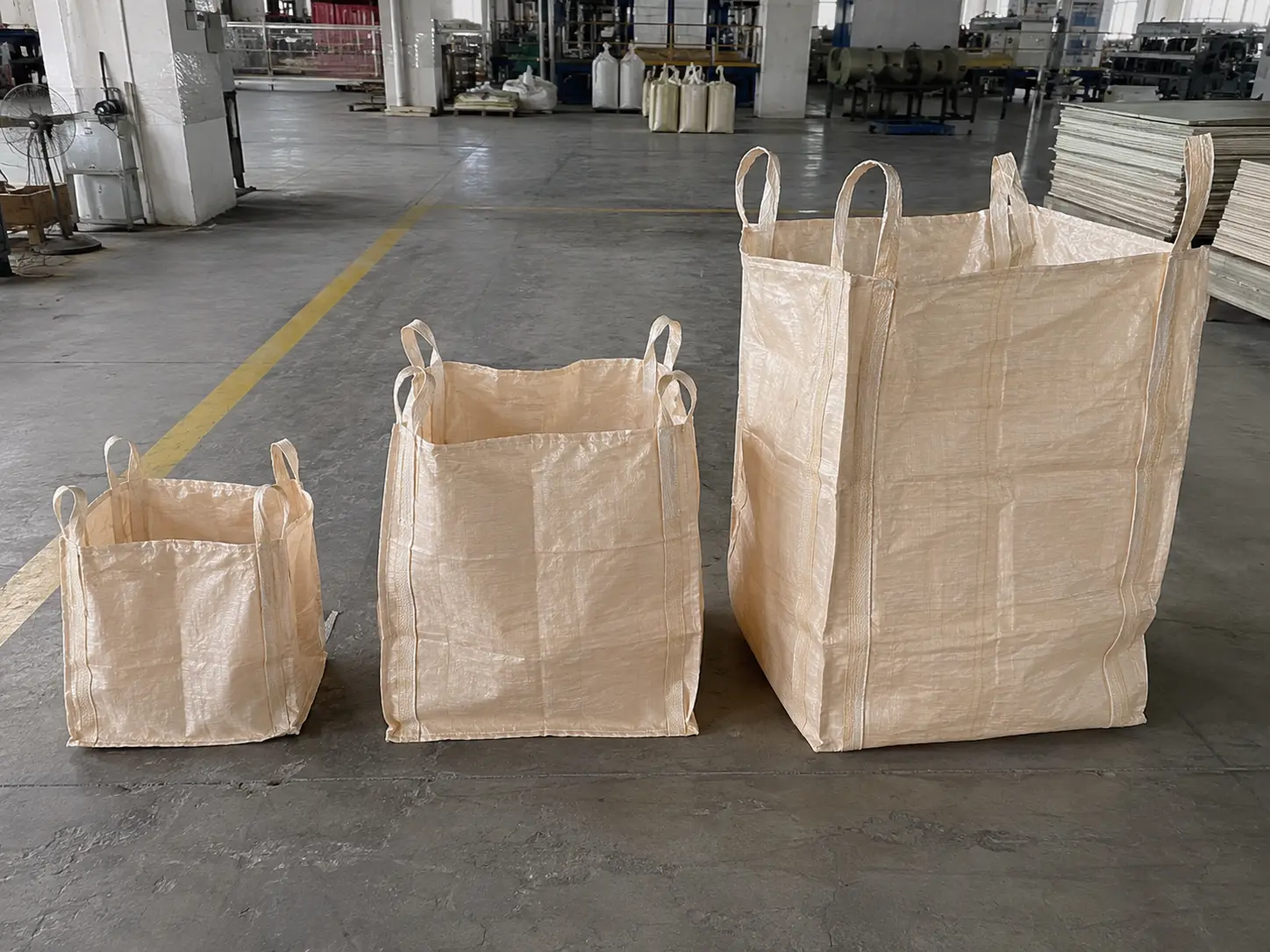
Hemp Runs Out of Volume, Not Strength
Put dried hemp biomass next to the other products that travel in bulk bags and the difference is stark:
| Product | Approximate bulk density | Filled bag against its rating |
|---|---|---|
| Ore concentrate | 2.5 t/m³ | Far over — needs a smaller bag |
| Sand | 1.5 t/m³ | Over when filled to the top |
| Grain | 0.75 t/m³ | Around two-thirds |
| Plastic resin | 0.6 t/m³ | Around half |
| Dried hemp biomass | around 0.16–0.18 t/m³ | Under a fifth |
The hemp figure comes from those published fill weights: 350–400 lb in a 36 × 36 × 48 inch bag, which encloses about 36 cubic feet, works out to roughly 10–11 lb per cubic foot. You can test your own material in the bag calculator — the percentage-of-rating figure will sit far below 100 even with the bag filled to the brim.
Three things follow from that.
A high rating buys nothing. The rating needs to cover the real filled weight plus normal handling. Paying for a heavy-duty construction built for dense minerals is paying for strength the load will never use.
Volume is where the value is. Larger, taller bodies carry more product per bag and per lift. It is the mirror image of dense cargo, where the answer is a smaller bag.
Containers fill by space, not weight. For dense product, a container hits its payload limit before the floor is full; the container loading guide covers that case. Hemp is the reverse. The container runs out of space long before it gets anywhere near its weight limit, so the bag dimensions that pack the container cube tightly matter more than anything printed on the rating label.
Getting More Into Each Bag
Because the bag runs out of volume first, anything that raises weight per bag pays directly.
Keep the shape square. Light, fluffy biomass in a tall plain bag bulges at the sides and leans as it settles, wasting space in the stack and in the container. Baffle bags hold a rectangular profile, so each bag packs tighter against its neighbours and the container cube fills with product rather than gaps.
Fill in stages. Crushed biomass traps a lot of air when it is tipped in all at once and then settles in transit, leaving the bag slack at the top. Filling in two or three stages and letting each settle — the same approach described in our guide to filling a bag on a stand — gets more material into the same body.
Match loop height to the handling. A taller body carries more, but only if the loops still suit the forklift or lifting frame at both ends. Confirm that before choosing the tallest bag the container will take.
Moisture Decides Everything Else
The failure that ruins a hemp load is not a torn bag. It is biomass that was bagged before it was dry enough, and then fermented.
Suppliers to the industry widely cite a moisture ceiling of around 13%. Above that, plant material can ferment, grow mould and heat up — and a bulk bag insulates the middle of the load, so heat and moisture stay where they are generated. The bag cannot fix any of this. It can only hold the material in whatever state it was packed.
That makes the measurement at the point of packing the most important number in the whole process. A harvest-day or early-drying reading tells you where the material was, not where it is when the bag is closed.
Breathable or Sealed: Resolving the Contradiction
Read enough guidance on hemp storage and you find two pieces of advice that seem to contradict each other:
- Use uncoated, breathable bags, because coated fabric traps moisture and invites mould.
- Use a sealed polyethylene liner, often flushed with nitrogen, to extend shelf life.
Both are right, for material in different states. The deciding question is whether drying has actually finished.
| State of the biomass | Right approach | What goes wrong otherwise |
|---|---|---|
| Still carrying moisture, short hold | Breathable uncoated bag | A sealed bag traps moisture — fermentation and mould |
| Fully dried, long storage | Sealed liner, optionally nitrogen-flushed | An open bag picks up humidity and oxidises over months |
| Uncertain | Measure before choosing | Guessing picks the wrong one of the two failures |
The nitrogen step displaces oxygen to slow oxidation during long storage. It only helps material that is already dry and properly sealed. Flushing and sealing biomass that is still wet preserves nothing; it closes the moisture in.
At the far breathable end, ventilated bags move the most air — but their open weave also lets fine leaf material and dust escape, so they suit coarse material still drying rather than processed biomass.
Where Static Protection Comes In
For ordinary storage and transport, hemp biomass does not usually call for an anti-static bag. It becomes a real question where bags are emptied close to solvent-based extraction, because fine organic dust near flammable vapour is an ignition risk. In that setting the static class should be chosen for the atmosphere at the discharge point — and a Type B bag is the wrong choice near solvent vapour, whatever its price.
Where the biomass is feedstock for a consumable product, ask the buyer early whether they need food-contact-grade liners and batch traceability. That requirement is set by the end use, not by the plant.
Your Hemp Bagging Checklist
- What is the moisture content at the point of packing — measured, not estimated?
- Is drying finished? If not, use a breathable bag; if so, a sealed liner is the better long-term choice.
- Is the bag sized for volume rather than rated load? With hemp, the rating is rarely the limit.
- Will bags be emptied near solvent-based extraction? If so, choose the static class for that atmosphere.
- Are bags of possibly damp material stacked tightly, where heat has nowhere to go?
Final Thoughts
Hemp inverts the usual bulk bag logic. Strength is almost never the problem; volume and moisture are. Size the bag to hold as much as your handling and transport allow, measure moisture at the moment of packing, and let that reading — not a general rule — decide between a breathable bag and a sealed liner.
Tell us how the biomass is processed, its moisture at packing, how long it will be stored and how it will be emptied. That is enough to recommend a body size and a breathable or sealed specification that match the material, rather than a heavy-duty bag it will never need.
Common Questions
How much hemp biomass fits in a super sack?
Bag makers serving the industry commonly quote around 350–400 lb of dried, crushed biomass in a 36 × 36 × 48 inch bag. The real figure depends on how finely the material is processed and how much it settles. It is a small fraction of the bag's rated load, because the bag fills up long before it gets heavy.
Should hemp biomass go in coated or uncoated bags?
It depends on whether drying has finished. Biomass that may still carry moisture should go in breathable uncoated bags, because a coated bag traps moisture and invites mould. Fully dried biomass heading into long storage is better sealed in a liner, since it will otherwise pick up moisture and oxidise.
What moisture content should hemp be before bagging?
A figure of around 13% or below is widely cited by suppliers to the industry, with higher moisture raising the risk of fermentation and mould. Measure it at the point of packing rather than relying on harvest-day readings, because biomass that is still drying keeps changing.
Why use nitrogen with a bulk bag liner?
Flushing a sealed liner with nitrogen displaces oxygen, which slows oxidation during long storage. It only makes sense for fully dried biomass in a properly sealed liner. Sealing and flushing biomass that is still wet does not preserve it — it traps the moisture that causes the problem.
Do hemp bags need a high weight rating?
No. The rating only needs to cover the actual filled weight plus normal handling, which for dried biomass is modest. A high rating buys strength the load will never use. The value in a hemp bag is its volume, so larger and taller bodies are usually where the money should go.
Can hemp biomass heat up in storage?
Yes, if it was bagged too wet. Plant material that ferments generates heat, and a bulk bag insulates the middle of the load. Check moisture before bagging, and avoid stacking bags of material that may still be drying tightly together, where heat has nowhere to go.
Do hemp bulk bags need static protection?
Usually not for storage. It becomes relevant where bags are emptied close to solvent-based extraction, since organic dust near flammable vapour is an ignition question. In that setting a Type B bag is the wrong choice; the static class should be chosen for the atmosphere at the discharge point.
More in Applications
All Applications guides- Super Sack Cofferdams: The Bag Holds Weight, Not WaterA super sack cofferdam is a mass structure, not a seal. Woven polypropylene seeps, so the bag supplies ballast and a separate membrane has to stop the water.
- Bulk Bags for Coffee Beans: The 12% Moisture ProblemGreen coffee is not a dry cargo. It ships in a narrow moisture band, and the real threat in a container is condensation putting water back into the bean.
- Dewatering Bulk Bags: The One FIBC Built to Let Water OutEvery other bulk bag keeps moisture away from the product. A dewatering bag does the opposite — and specifying it with coated fabric guarantees it will fail.
- Bulk Bags for Fertilizer: Why NPK Blends Cake Faster Than UreaFertilizer caking is set by critical relative humidity, not by bag quality. Blended NPK absorbs moisture at humidity levels where straight urea stays dry.