Jumbo Bag Loading in a Container: Weight Runs Out Before Space
Filled bulk bags of dense product hit a container's payload limit long before its floor is full. How to load, balance and secure them so nothing shifts.
PackTonne Sourcing Desk · · 7 min read
Most loading plans for filled bulk bags start from floor space: how many bags fit side by side. For anything denser than light powders, that is the wrong constraint. A container reaches its payload limit long before its floor is full, and the real planning questions are how that weight is distributed along the container and how every bag is stopped from moving for the next four weeks.
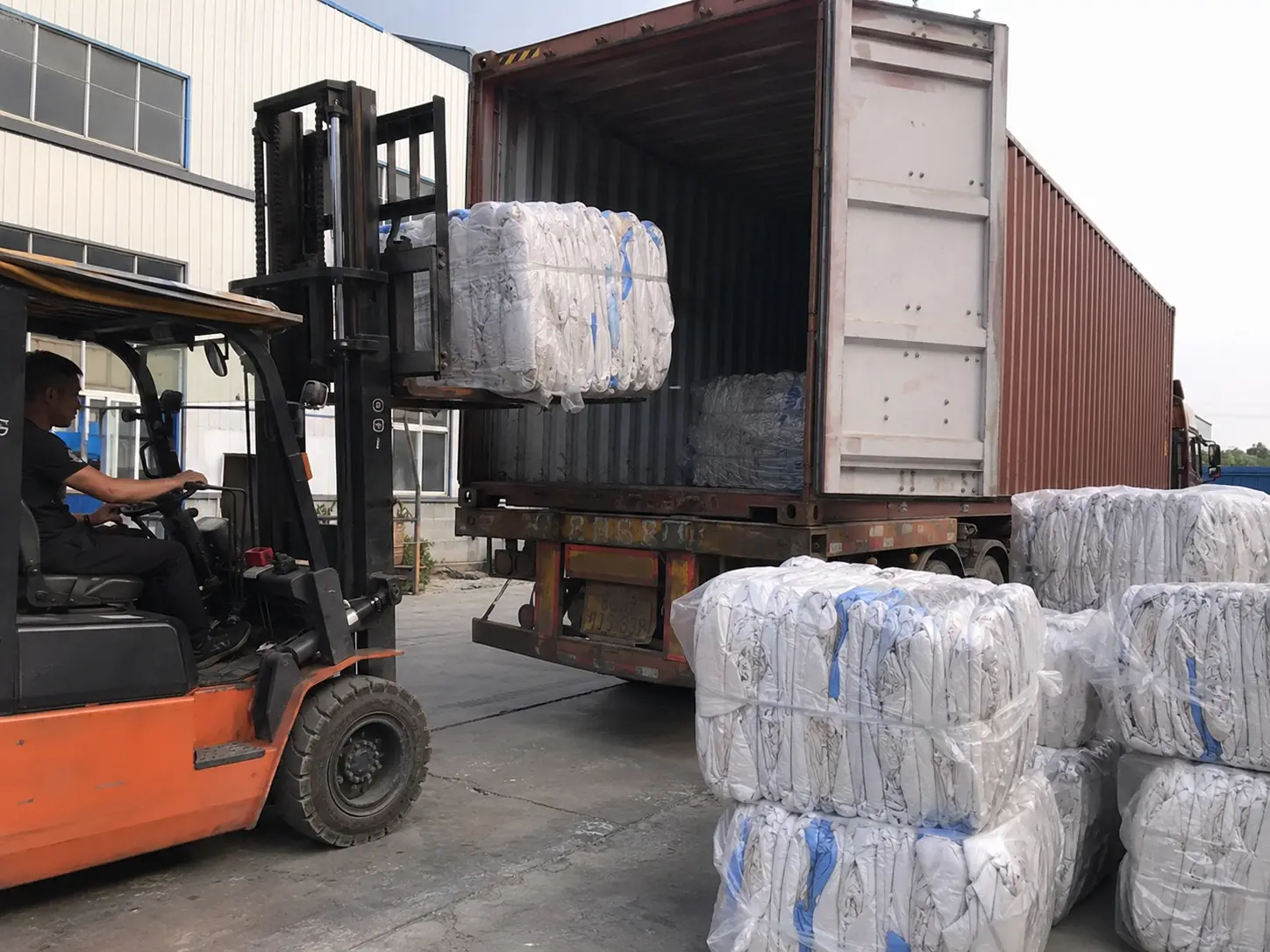
This is about shipping product in bulk bags. If you are importing empty bags, the question is different — see how many bulk bags fit in a 40ft container.
Weight Runs Out Before Space
Every container door carries its limits: maximum gross mass, tare, and the payload that is left for cargo. For dense product, that payload figure is the ceiling, and floor area is irrelevant well before it is used up.
A standard 1,000 kg bag of dense material occupies a footprint of under a square metre. Enough of them to reach payload may cover only part of the floor, which leaves the loader with a problem the bag count hides: a heavy load in a container that is mostly empty space, with nothing stopping it moving.
Two consequences follow:
- Plan from weight, not count. Divide the payload on the door by your filled bag weight. That number caps the load.
- For very dense product, smaller bags spread the same weight better. A mini bulk bag carries less each, so the same payload covers more floor and leaves smaller voids to fill.
Keep the Centre of Gravity in the Middle
International guidance on packing containers — the IMO/ILO/UNECE CTU Code — asks for cargo mass to be spread evenly, with the centre of gravity close to the middle of the container’s length and centred across its width. A load concentrated at one end overloads the chassis axles on the road leg and makes the container awkward to lift.
In practice that means distributing filled bags along the whole length of the floor rather than stuffing them from the front wall until the weight runs out. With a part-filled container, spacing bags across the length and bracing the gaps is better than a solid block at the front with empty floor behind it.
Floor Loaded or Palletised
Floor loading — bags set directly on the container floor — uses the container’s height better and avoids both pallet weight and pallet treatment, but it needs a forklift attachment or crane that lifts by the loops at both ends of the journey. Palletised loads are quicker to handle with ordinary forklifts and keep the base fabric off the floor, at the cost of pallet weight counted against the payload and the ISPM 15 requirement. For dense product that is weight-limited anyway, the choice mostly comes down to the handling equipment the receiver has.
Either way, lift every bag by all four loops. A forklift that catches two loops, or a hook that misses one, loads the bag unevenly at exactly the moment it is being swung into a tight space. A spreader bar or fork attachment keeps all four loops upright and the bag level.
Fill Every Void
Movement in transit damages bulk bags far more than their own weight does. A bag that can slide or rock rubs its base seams on the floor and neighbours, loosens its closure, and leans.
Stop it moving:
- Pack bags tight against each other and against the side walls. Baffle bags fill square and leave far smaller gaps than round-filled bags.
- Fill remaining voids with inflatable dunnage bags, timber blocking or other bracing, sized for the gap.
- Block the door end so nothing can move onto the doors. Cargo that ends up leaning against them falls out when the container is opened at destination.
- Use lashing points in the container floor and walls where bracing alone will not hold the load.
A tie closure that relaxes in transit empties a bag onto the floor, which is one more reason a load that does not move matters — and why the closure choice belongs in the shipping plan.
Before the Doors Close
Inspect the container. Holes, damaged floorboards, protruding nails and a door that does not seal all end up as damaged bags or wet product. Reject a container that fails rather than loading around the problem.
Protect the floor side of the load. Protruding nails and splinters cut base fabric under a full load. A slip sheet or floor protection is cheap insurance.
Treat pallets for export. Wood packaging in international trade generally has to meet ISPM 15 — heat-treated or fumigated and marked. Untreated pallets can be refused at the destination port.
Think about condensation. A sealed container crossing climate zones can drip condensate onto the load. For moisture-sensitive product, the same measures described for green coffee apply: barrier liners, desiccant and avoiding warm loading.
Declare the weight properly. Under SOLAS, every packed container needs a Verified Gross Mass before it is loaded onto a ship. That figure is built from the gross weight of bags, product, pallets and dunnage plus the container tare, so weigh rather than estimate.
Your Container Loading Checklist
- Have you planned the load from the payload on the container door rather than from floor space?
- Is the weight spread along the container’s length, with the centre of gravity near the middle?
- Is every void filled and the door end blocked so nothing can move?
- Are pallets ISPM 15 treated and marked, and is the container floor sound?
- Do you have a weighed gross figure for the VGM declaration rather than an estimate?
Final Thoughts
A container of filled bulk bags is rarely full; it is heavy. Plan from the weight limit, spread that weight along the floor, and treat every empty space as somewhere a bag can move to. Bags that cannot move arrive intact, and a load that was braced at the door end does not greet the receiver by falling out.
If you ship product in bulk bags, send us the product, its bulk density and your container size. We will suggest a bag size and construction that packs the payload evenly rather than leaving you to brace around the wrong bag.
Common Questions
How many filled jumbo bags fit in a container?
For dense products, fewer than the floor space suggests, because the container's payload limit is reached before the floor is full. Check the payload marked on the container door, divide by your filled bag weight, and that number caps the load regardless of how many bags would physically fit.
How do I stop bulk bags shifting inside a container?
Pack them tight against each other and fill every remaining void — with inflatable dunnage bags, timber blocking or other bracing — so nothing has room to move. Square-filling bags leave smaller gaps than round ones. Movement in transit is what damages bags, not the weight itself.
Can I stack filled bulk bags two high in a container?
Only if the bag construction, the product and the container height allow it, and only with a stable, square bottom layer. Many dense cargoes reach the payload limit on a single layer anyway. Where you do double-stack, the top layer is the one most likely to shift and lean on the doors.
Why is the load near the container doors a problem?
Because cargo that shifts in transit ends up leaning on the doors, and falls out when they are opened at destination. Leave the door end braced or blocked so bags cannot move onto the doors, and warn the receiver if a load has been stuffed tight to the door.
Do wooden pallets need treatment for export?
Yes, in most international trade. Wood packaging material generally has to meet ISPM 15, which means heat treatment or fumigation and a visible mark on the pallet. Untreated pallets can be refused or destroyed at the destination port, taking your delay with them.
What is VGM and does it apply to bulk bag shipments?
Verified Gross Mass is the declared total weight of a packed container, required under SOLAS before it can be loaded onto a ship. It applies to every container, including bulk bag loads. It is built from the gross weight of the cargo, dunnage and pallets plus the container's tare.
Should bulk bags be floor loaded or palletised in a container?
Floor loading uses the height better and avoids pallet weight and treatment, but needs a forklift attachment or crane at both ends. Palletised loads are faster to handle with ordinary forklifts. For dense product that is weight-limited anyway, the pallet choice is usually about handling, not capacity.
More in Sizes & Capacity
All Sizes & Capacity guides- Super Sack Dimensions: Why a Bag of Sand Only Fills 60% FullStandard super sack sizes in inches with the correct cubic feet for each — and why a 35×35×50 bag of sand hits its 2,200 lb rating at about 62% full.
- Mini Bulk Bags: Why Dense Products Need a Smaller BagThe reason to order a mini bulk bag is almost never a small order. It is density — a heavy product hits the safe working load long before the bag is full.
- Tare, Net and Gross Weight: The Three Numbers on a BagMixing up tare, net and gross weight causes freight billing errors and customs delays. Here's how the three numbers actually relate on a shipment.
- 1 Ton Bags: Why Rated Capacity Isn't the Breaking PointA 1 ton bag's rating is its safe working load — not its breaking point. Here's how SWL, safety factor and real breaking strength actually relate.