Tare, Net and Gross Weight: The Three Numbers on a Bag
Mixing up tare, net and gross weight causes freight billing errors and customs delays. Here's how the three numbers actually relate on a shipment.
PackTonne Sourcing Desk · · 6 min read
Tare, net, and gross weight are three distinct numbers that show up on a bulk bag shipment’s paperwork, and mixing them up causes real problems — freight billing errors, customs declaration mismatches, or a miscalculated total shipment weight. The relationship is simple: gross weight equals net weight plus tare weight. The arithmetic is trivial; knowing which number your carrier bills against and your customs form asks for is where it goes wrong.
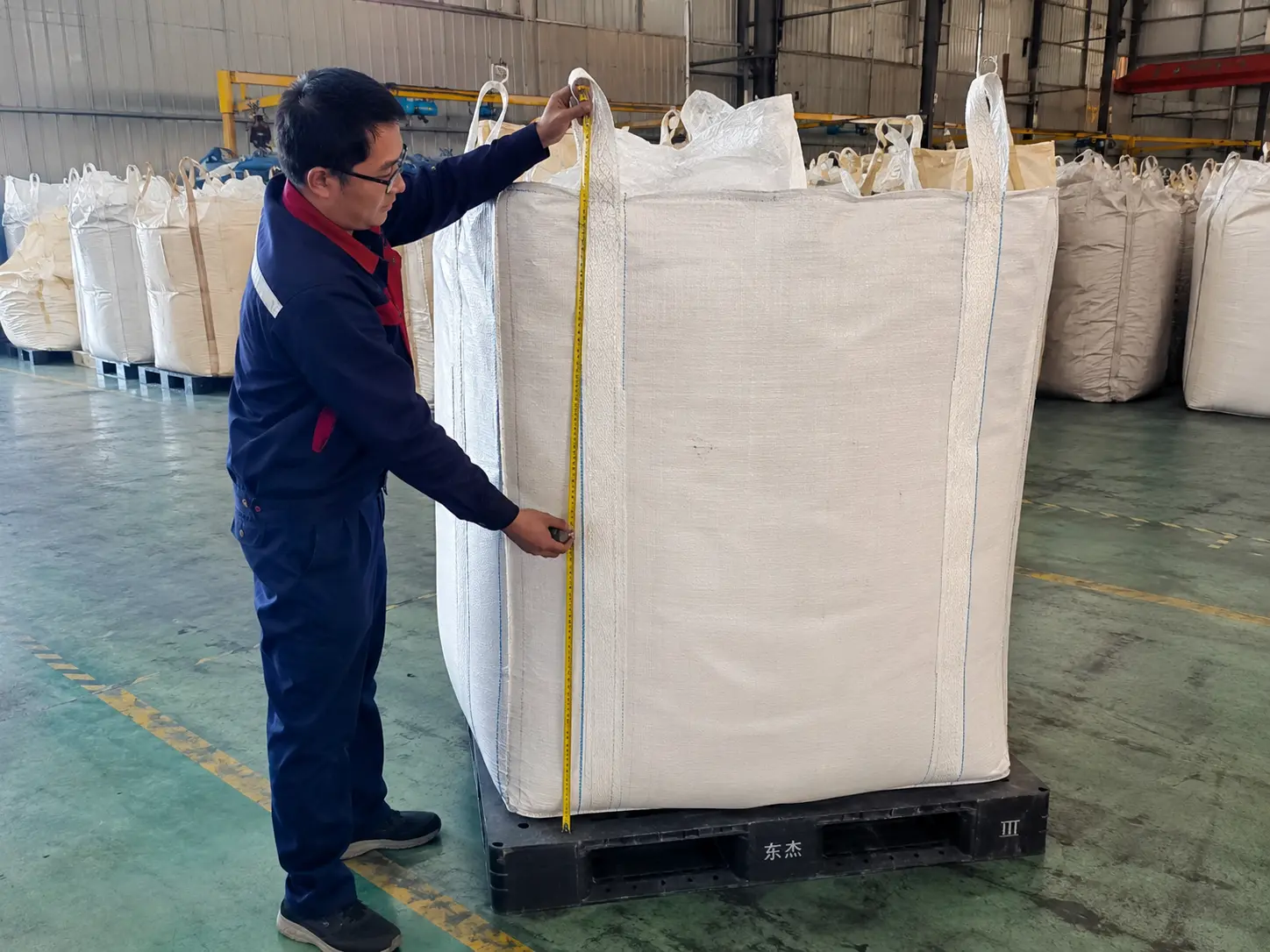
The Three Weight Terms
| Term | What it is | Typical use |
|---|---|---|
| Tare weight | The empty bag’s own weight — fabric, stitching, loops | Subtracted out to isolate product weight |
| Net weight | The product inside, on its own | What you’re actually buying/selling by weight |
| Gross weight | Net weight + tare weight — the full filled bag | What’s actually lifted, shipped, and often billed |
Why This Distinction Matters Beyond Arithmetic
Product pricing, freight billing, and customs declarations each care about a different one of these three numbers, and using the wrong one in the wrong context causes real problems. You’re typically buying and selling product by net weight, but freight carriers often bill by gross weight since that’s what actually gets lifted and shipped. Confusing the two — or forgetting tare weight exists at all — leads to underestimated freight costs or a customs declaration that doesn’t match what a shipment actually weighs when checked.
Tare Weight: A Small Number That Adds Up
An empty FIBC’s tare weight commonly falls in a range of roughly 1.5 to 4 kg depending on fabric weight, bag dimensions, and construction features — heavier GSM fabric needed for higher safety factors, additional panels from baffle or four-panel construction, a liner, and printing all add some weight individually. None of these add much to a single bag, but across a shipment of thousands of bags, cumulative tare weight becomes a real number worth accounting for in freight planning, not just a rounding error.
Freight Billing: Gross Weight Is What Actually Ships
Ocean and truck freight is commonly billed based on gross weight or volume, whichever governs the rate — meaning the bag’s own weight is part of what you’re paying to ship, not just the product inside. This is one more reason fabric weight and construction choices aren’t purely a product-cost decision; a heavier-GSM, multi-panel, printed, lined bag adds tare weight that compounds into real freight cost across a large shipment, on top of its higher per-bag price.
Customs Declarations: Accuracy Prevents Delays
Import documentation typically requires both net and gross weight figures, and a declaration that doesn’t reasonably match a shipment’s actual weight — even from an honest oversight like forgetting to add tare weight — can trigger additional customs scrutiny or delay at clearance. This is a paperwork accuracy issue distinct from the product’s admissibility itself, and it’s avoidable simply by confirming tare weight for your specific bag spec before finalizing shipping documentation.
What Actually Changes an FIBC’s Tare Weight
Fabric weight (GSM) is the biggest driver — a heavier fabric needed for a 6:1 multi-trip safety factor weighs more than a lighter single-trip 5:1 equivalent at the same dimensions. Construction type matters too: four-panel or baffle construction uses more fabric and stitching than circular construction at the same capacity. A liner, particularly a heavier-gauge one, and printing both add incremental weight. None of these should be surprising once you know what’s inside the tare weight number — it’s simply everything about the bag except the product.
How to Get an Accurate Tare Weight for Your Order
Our FIBC bag calculator estimates fabric area and fabric weight from your dimensions and GSM, which gets you within range of tare before anyone quotes you. For the real figure, ask your supplier for the specific tare weight of your exact spec — dimensions, GSM, construction type, liner, and any printing — rather than relying on a generic industry range for planning a real shipment. If you’re ordering a large volume, request this figure before finalizing freight budgeting, since a difference of even a few hundred grams per bag adds up meaningfully across thousands of units.
Common Mistakes With Weight Documentation
- Using net weight where gross weight is required, or vice versa. Check what your specific carrier and customs form actually ask for rather than assuming.
- Assuming tare weight is negligible enough to ignore. It’s small per bag, but cumulative tare weight across a large shipment is a real, calculable freight cost.
- Applying a generic tare weight figure to a custom spec. Baffles, liners, printing, and heavier fabric all shift tare weight away from a standard bag’s typical range.
- Declaring a round-number estimate instead of an actual calculated figure. Customs authorities can flag declarations that don’t hold up to a reasonable weight check.
- Not updating documentation when switching bag specs mid-relationship with a supplier. A change in fabric weight or construction changes tare weight, which should flow through to updated shipping paperwork.
Decision Checklist
- Are you quoting freight based on net weight or gross weight? Confirm which one your carrier actually bills against.
- Does your customs paperwork include an accurate gross weight, not just net? A mismatch causes delays regardless of product admissibility.
- Have you gotten the actual tare weight for your specific spec, not a generic range? Construction and fabric choices change this meaningfully.
- Are you factoring cumulative tare weight into freight cost comparisons between bag specs? A heavier construction choice has a freight cost, not just a per-bag price difference.
- Is your tare weight documented consistently across your shipment paperwork? Consistency avoids confusion during customs review.
Final Thoughts
Tare weight is small enough to feel ignorable and cumulative enough to matter — a few hundred grams per bag becomes real freight cost across thousands of units, and an inconsistent declaration becomes a customs delay. Get the actual figure for your exact spec rather than a generic range. Send us your construction details and we’ll provide the tare weight your documentation should carry.
Before You Request a Quote
Send us your spec and we’ll confirm the actual tare weight for your order:
- Target capacity, dimensions, and fabric weight (GSM)
- Construction type — circular, U-panel, four-panel, with or without baffles
- Liner requirement, if any
- Order volume, for total shipment weight planning
Request a quote and we’ll provide accurate tare weight figures for your exact spec, not a generic industry range.
Common Questions
What's the difference between tare weight, net weight, and gross weight for a bulk bag?
Tare weight is the empty bag's own weight. Net weight is the product inside, on its own. Gross weight is the two added together — what the filled bag actually weighs when lifted or shipped. Gross Weight = Net Weight + Tare Weight.
How much does an empty FIBC bag typically weigh?
Tare weight commonly falls in a range of roughly 1.5 to 4 kg (about 3 to 8 lbs) for standard bags, depending on fabric weight (GSM), size, and construction features like baffles or liners — heavier fabric and additional panels both add tare weight. Ask your supplier for the specific tare weight of your exact spec rather than assuming a generic figure.
Why does tare weight matter for freight costs?
Freight is often billed by gross weight — the full shipped weight including the bag itself — not just the product inside. Across a large shipment of many bags, cumulative tare weight adds real freight cost, which is why lighter-weight bags matter for shipping economics, not just per-bag price.
Why does tare weight matter for customs declarations?
Customs paperwork typically requires accurate net and gross weight declarations, and a mismatch between declared and actual weight — even an honest miscalculation from ignoring tare weight — can trigger delays or additional scrutiny at clearance. Getting this right avoids friction that has nothing to do with the product's admissibility.
What increases an FIBC's tare weight?
Heavier fabric (higher GSM, needed for higher safety factors), additional panels (baffle or four-panel construction versus circular), a liner, and printing all add some weight to the empty bag. None of these add much individually, but they compound across a large order's total shipped weight.
Does the pallet count toward tare weight?
It depends how your paperwork is structured. Tare weight for the bag itself covers fabric, stitching and loops; a pallet is usually declared separately as part of packing. Confirm with your forwarder which convention they use, since inconsistency between documents is what triggers customs questions.
How do I verify a supplier's stated tare weight?
Weigh a sample from the delivered batch. It's a simple check that takes minutes and catches a spec mismatch before it propagates through every shipping document you file. For large recurring orders, spot-checking tare weight per batch is worth building into your receiving process.
More in Sizes & Capacity
All Sizes & Capacity guides- How Many Bulk Bags Fit on a Truck? Floor Space and Weight Limits for a 53 Ft Dry VanA 53 ft dry van holds about 36 bulk bags in one layer on floor space, but weight can cap a load at 18 to 22. See how to work out both and load the lower number.
- Super Sack Dimensions: Why a Bag of Sand Only Fills 60% FullStandard super sack sizes in inches with the correct cubic feet for each — and why a 35×35×50 bag of sand hits its 2,200 lb rating at about 62% full.
- Jumbo Bag Loading in a Container: Weight Runs Out Before SpaceFilled bulk bags of dense product hit a container's payload limit long before its floor is full. How to load, balance and secure them so nothing shifts.
- Mini Bulk Bags: Why Dense Products Need a Smaller BagThe reason to order a mini bulk bag is almost never a small order. It is density — a heavy product hits the safe working load long before the bag is full.