Type B Bulk Bags: The Anti-Static Bag That Isn't Anti-Static
Type B bulk bags cap breakdown voltage below 6 kV, which stops propagating brush discharges but not brush discharges — the reason they fail near solvent vapour.
PackTonne Sourcing Desk · · 7 min read
Type B bulk bags are sold as the budget anti-static option, and that description is wrong in a way that matters. Type B fabric contains no conductive threads and dissipates nothing. It is ordinary woven polypropylene with one verified property: it breaks down below 6 kV. That single specification blocks the most violent discharge an FIBC can produce and leaves a second, weaker one entirely intact.
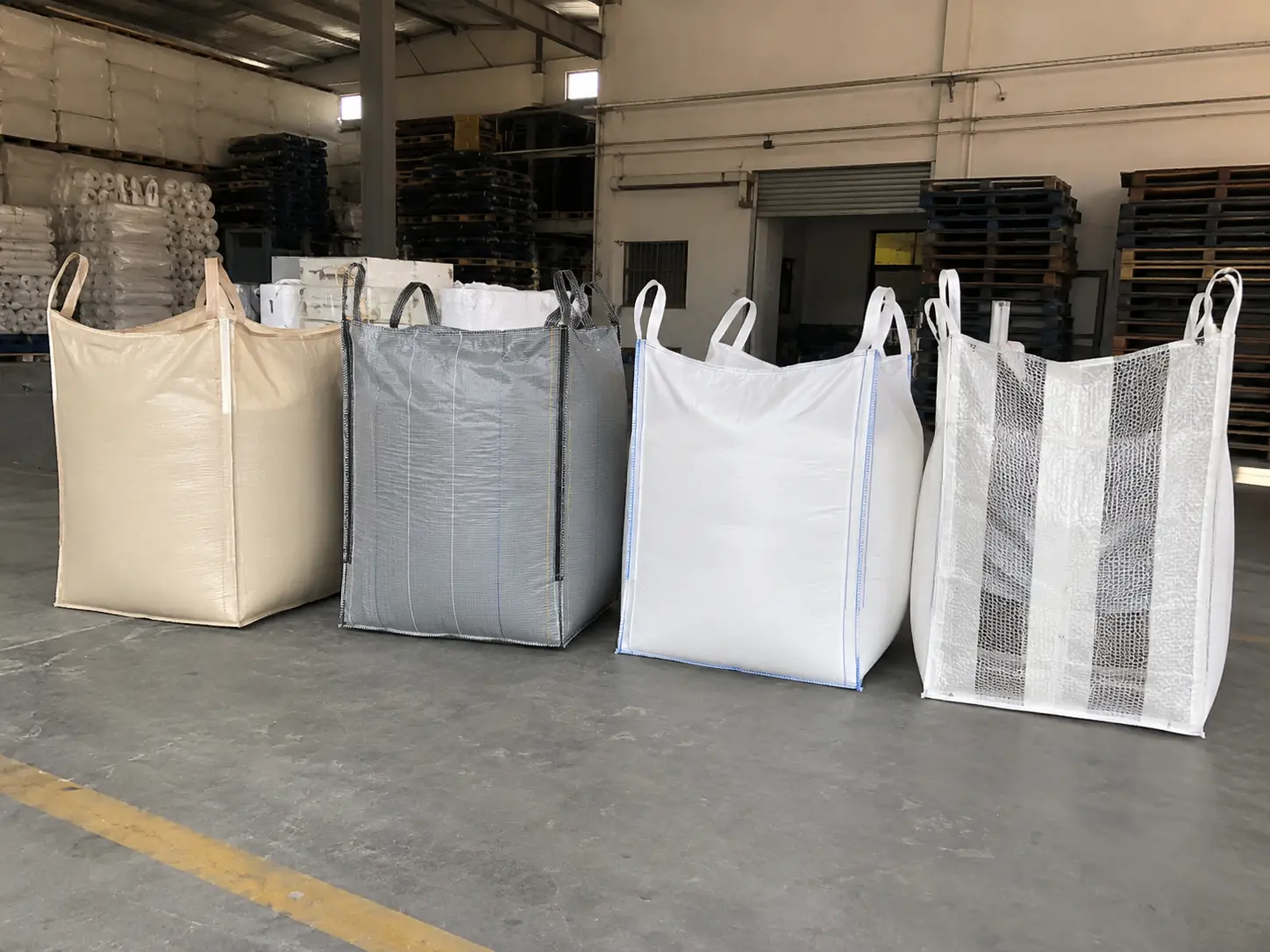
What Type B Actually Prevents
Type B suppresses propagating brush discharges, and nothing else. A propagating brush discharge occurs when charge builds up on both faces of a thin insulating fabric until it punches through — releasing energy measured in joules rather than millijoules, enough to ignite almost any dust cloud or vapour it reaches. Fabric with a breakdown voltage under 6 kV cannot hold the charge separation that mechanism needs. It gives way first, harmlessly, before the dangerous accumulation forms.
That is a real safety function. It is also a narrow one. The classification is defined by IEC 61340-4-4 static testing, which assigns Type B on this measured property alone.
The 6 kV Limit and What It Leaves Untouched
Ordinary brush discharges still happen on a Type B bag, at every fill and every discharge. Surface charge generated by product flowing against fabric has nowhere to go — no conductive path to ground, no dissipative weave to bleed it away. It accumulates and releases in brush discharges typically carrying 1 to 4 millijoules.
Whether that matters depends entirely on what is in the air:
- Dry powders with a minimum ignition energy above roughly 3 mJ — brush discharges sit below the ignition threshold, and Type B provides adequate margin
- Powders with MIE below 3 mJ — the margin disappears, and Type C or Type D becomes the requirement
- Any flammable gas or solvent vapour — ignition energies commonly fall under 1 mJ, an order of magnitude below what a brush discharge delivers
The MIE figure comes from your product’s safety data sheet. If it is not listed, that number needs to exist before a bag type is chosen, not after.
Type B vs Type A: A Narrow Upgrade
The gap between Type A and Type B is smaller than the price difference suggests. Type A bulk bags carry no static specification at all and belong with non-flammable products in atmospheres where nothing can ignite. Type B is the same fabric family with a tested ceiling on breakdown voltage.
Because construction is nearly identical, the cost gap is testing and documentation rather than materials. That is precisely why the upgrade gets made carelessly — it is cheap enough to feel like insurance, so buyers take it without confirming it addresses their actual hazard. A Type B bag in a solvent environment costs slightly more than Type A and protects against the same thing there: nothing.
Type B vs C vs D: Where the Line Sits
| Type A | Type B | Type C | Type D | |
|---|---|---|---|---|
| Conductive or dissipative elements | None | None | Interconnected conductive threads | Static-dissipative threads |
| Defining specification | No static requirement | Breakdown voltage < 6 kV | Resistance to groundable point | Charge dissipation without ground |
| Prevents propagating brush discharge | No | Yes | Yes | Yes |
| Prevents brush discharge | No | No | Yes | Yes |
| Grounding required | No | No | Yes, every cycle | No |
| Flammable dust, MIE > 3 mJ | No | Yes | Yes | Yes |
| Flammable dust, MIE < 3 mJ | No | No | Yes | Yes |
| Flammable vapour or gas present | No | No | Yes, grounded | Within rated limits |
If you are still mapping the four static protection classes against each other, that overview covers the full set. The row that decides most specifications here is “prevents brush discharge.” Type B is the only class that stops one discharge mechanism while leaving the other fully active — which is why it occupies a genuinely useful but easily overstated position. For the two classes above it, the trade-off shifts to grounding discipline, covered in Type C vs Type D.
Where Type B Fails
Solvent-adjacent operations are where Type B specifications go wrong most often. A powder that is perfectly safe in a Type B bag in one building becomes a hazard in another building where a solvent is used nearby, because the governing risk is no longer the powder’s own ignition energy — it is the vapour in the air around the filling head. Nothing about the bag changed. The atmosphere did.
Two specification traps compound this:
Coating. Type B status depends on the finished fabric breaking down below 6 kV. A coating applied to that fabric can push breakdown voltage above the threshold, removing the classification’s only mechanism while the bag continues to be labelled and sold as Type B.
Liners. A polyethylene liner introduces a second insulating surface that generates and holds its own charge. The bag’s Type B classification says nothing about the liner’s behaviour. Where a liner is required alongside static protection, the liner needs its own specification — conductive or dissipative — not an assumption that the outer bag covers it.
Your Decision Checklist
- Do you have a number for your product’s minimum ignition energy? If the SDS does not list one, stop here and get it — every other answer depends on it.
- Is there any flammable gas, solvent or vapour anywhere near the filling or discharge point? If yes, Type B is off the table regardless of what your powder’s MIE says.
- Is your MIE comfortably above 3 mJ, or sitting close to it? Close to the threshold is not a margin, and the cost step up to Type C or D is smaller than a re-specification after an incident.
- Does your bag need a coating or a liner? Both interact with Type B classification, and both need to be raised with your supplier before the spec is fixed, not after the sample arrives.
- Can you get an IEC 61340-4-4 report for the fabric batch you are actually buying? If a supplier can only produce a generic model certificate, you do not know what you are receiving.
Final Thoughts
Type B earns its place in a narrow band: dry flammable powders, reasonable ignition energy, no vapour in the air. Inside that band it is sensible and cheap. Outside it, the name does more work than the fabric does, and buyers pay a small premium for protection they do not have. If you send us your product’s MIE and a description of the atmosphere at your filling point, we will tell you which class fits — including when the honest answer is that Type A is enough.
Tell us the product, its minimum ignition energy, the site zone classification if you have one, and whether a liner or coating is involved. That is what we need to confirm a class and quote against anti-static bulk bags built to it.
Common Questions
Is a Type B bulk bag actually an anti-static bag?
No, and treating it as one is the most common Type B mistake. Type B fabric contains no conductive or dissipative threads and does not bleed off charge. It is standard woven polypropylene verified to break down below 6 kV, which suppresses one specific discharge type. Charge still accumulates on the surface.
What does the 6 kV breakdown voltage limit actually buy me?
It prevents propagating brush discharges — the most energetic discharge an FIBC can produce, capable of releasing several joules. Fabric that breaks down below 6 kV cannot sustain the charge separation those discharges require. Ordinary brush discharges, in the 1–4 mJ range, are unaffected and still occur.
Can I use Type B bags around solvents?
No. Flammable vapour and gas atmospheres typically ignite well below 1 mJ, and Type B does nothing to prevent brush discharges in that range. Solvent-adjacent filling and discharge points need grounded Type C, or Type D within its rated limits. This is the single hardest boundary in the classification.
Does adding a coating or liner affect Type B classification?
It can invalidate it. Type B status depends on the finished fabric breaking down below 6 kV, so a coating that raises breakdown voltage above that threshold removes the only protection the bag offered. A polyethylene liner introduces a separate charging surface that the bag's own classification does not cover.
Why does Type B cost barely more than Type A?
Because the construction is nearly identical. Type B is not a different fabric technology — it is standard woven polypropylene with a verified breakdown voltage, so the added cost is testing and documentation rather than conductive yarn. That small price gap is why buyers upgrade to it without checking whether it fits their hazard.
How do I prove a bag is genuinely Type B?
Ask for an IEC 61340-4-4 test report tied to the fabric batch in your order, not a generic certificate for the bag model. Breakdown voltage is a property of the specific fabric run. A report from a different production batch tells you what the factory can make, not what you are receiving.
What is the minimum ignition energy threshold for Type B use?
Industry practice puts Type B with dry powders whose minimum ignition energy exceeds roughly 3 mJ, in the absence of any flammable atmosphere. Below that figure, brush discharges become a credible ignition source and the classification no longer provides adequate margin. Get the MIE from your product's safety data sheet.
More in Static Protection
All Static Protection guides- IEC 61340-4-4: The Tests Behind Type B, C and D BagsEach static class has its own test and its own threshold. Here's what IEC 61340-4-4 actually measures for Type B, C and D construction.
- Type C vs Type D FIBC: When Grounding Discipline FailsType C needs grounding every cycle; Type D doesn't. Here's which holds up once real operators, turnover and time pressure enter the picture.
- Type A vs B vs C vs D FIBC: Which Static Class Do You Need?Static protection depends on what's near the bag during filling — flammable dust, solvent vapor, or nothing at all. Here's how to match the class to real risk.