Super Sack Cofferdams: The Bag Holds Weight, Not Water
A super sack cofferdam is a mass structure, not a seal. Woven polypropylene seeps, so the bag supplies ballast and a separate membrane has to stop the water.
PackTonne Sourcing Desk · · 8 min read
A super sack cofferdam is a mass structure, not a seal. Filled with sand, each bag adds a tonne or more of ballast that resists being pushed over or floated off — but woven polypropylene lets water through, and so do the joints between bags. The bag’s job is to hold weight in the right place. Stopping the water is a separate component’s job, and projects that miss that distinction find out at the first rise in water level.
How a Bulk Bag Cofferdam Actually Works
A cofferdam keeps water off a work area for the duration of a job. Built from bulk bags, it is a wall of sand-filled FIBCs placed side by side and, for greater depths, stacked — with an impermeable membrane draped over the wet face and anchored under the bags at the toe.
The two components divide the work cleanly:
- The bags provide mass and shape. Their weight resists the horizontal push of the water and keeps the wall from sliding or lifting.
- The membrane provides watertightness. A polyethylene or geomembrane sheet on the water side stops seepage through the fabric and through the gaps between bags.
Treat them as one system and specify both. A bag wall without a membrane leaks steadily; a membrane without enough ballast behind it moves.
Why the Fabric Leaks
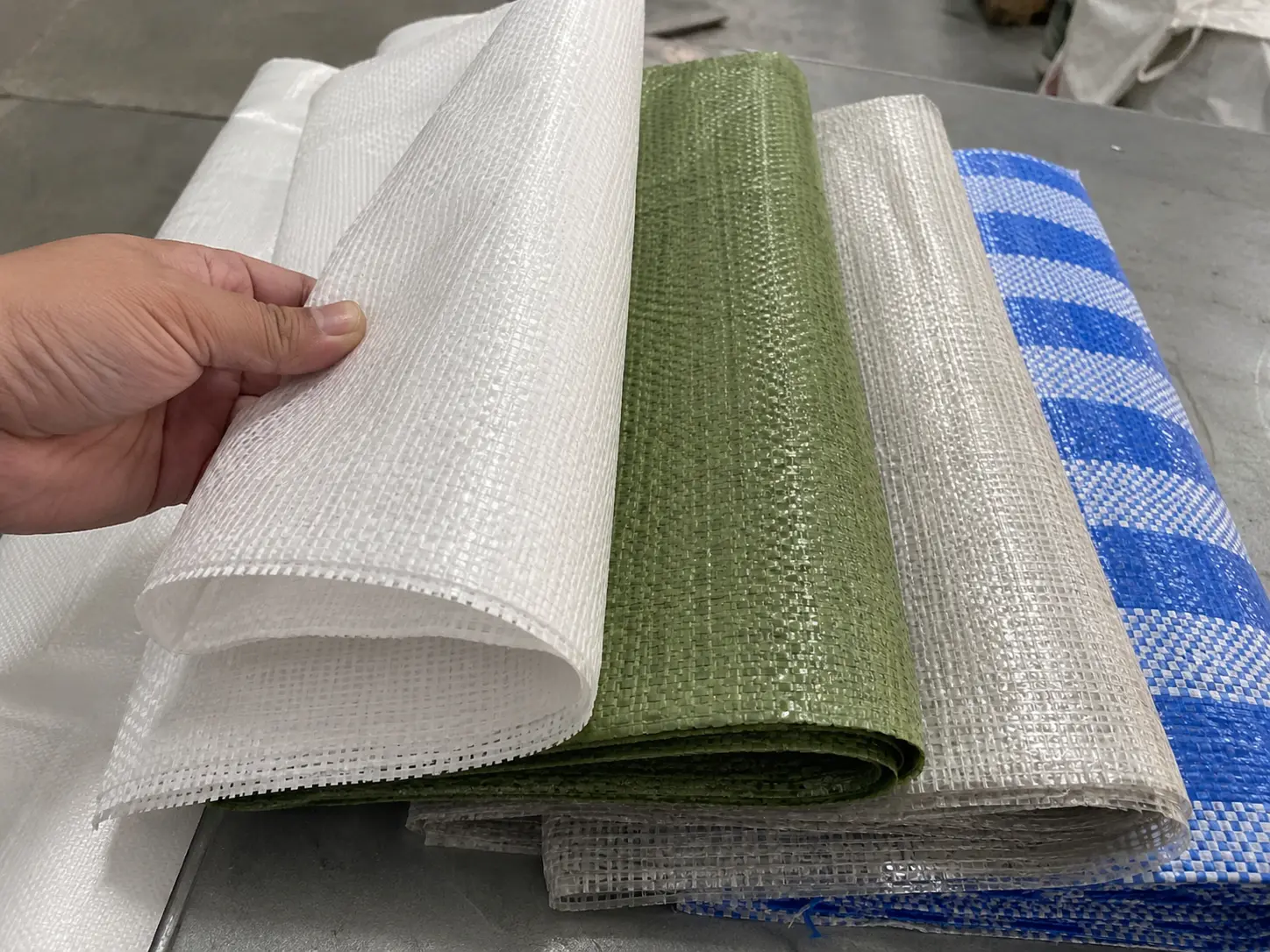
Woven polypropylene is permeable by design. It is a mesh of flat tapes, and water passes between them under pressure. Coating reduces this, but a coated fabric is still not a watertight structure once it is stacked, folded and pressed against neighbouring bags — and the joints between bags are the larger leakage path in any case.
This is the same property that makes a dewatering bulk bag work, used in reverse: there, the fabric is chosen to let water out on purpose. In a cofferdam you are fighting that tendency, which is why the membrane is not optional.
Seepage also finds the ground beneath the wall. On permeable soil, water can pass under the bags even when the membrane is intact, which is why how the membrane is anchored at the toe, and what the ground is made of, belong in the engineer’s brief rather than being settled on site.
Where Super Sacks Fit, and Where They Do Not
| Super sack wall + membrane | Small sandbag wall | Purpose-built rapid barrier | Sheet pile | |
|---|---|---|---|---|
| Deployment speed | Slow, one bag at a time | Slow, labour-heavy | Fast | Slow, specialist plant |
| Machinery needed | Loader, excavator or crane | None to light | Varies by system | Piling rig |
| Suits planned works | Yes | Small jobs | Yes | Yes |
| Suits emergency flood response | Poorly | Yes, at small scale | Yes | No |
| Removable and recoverable | Yes, heavy when wet | Yes, labour-heavy | Yes | Yes, specialist |
| Relative cost | Low to moderate | Low materials, high labour | Higher | High |
Super sacks earn their place on planned jobs where a machine is already on site: pipeline and cable crossings, culvert and bridge pier work, riverbank construction, site dewatering. They are a poor fit for rising-water emergencies, where the time to place each tonne-plus bag is exactly what you do not have. Competing barrier makers make that point about super sacks, and on the emergency case they are right.
Specifying the Bags
The engineering of the wall belongs to an engineer. The bag specification is where a buyer can still get it wrong.
Rate the bag for how it is placed. Bags filled in their final position carry the fill as a static load. Bags filled elsewhere and lifted into place need a safe working load that covers the lift — and damp sand is heavier than dry, so rate from the fill as it will actually be.
Prefer bags that fill square. Round-filled bags leave gaps between neighbours that water and fill work through, and they stack less stably. Baffle bags hold a rectangular profile, sit tighter against each other and give the membrane a flatter face to lie against.
Specify UV stabilisation for anything but a short job. A cofferdam can stand outdoors for months, and standard woven polypropylene loses tensile strength under sunlight long before it looks worn. The exposed faces are the ones that matter, and the ones that will be lifted when the job ends.
Skip the discharge spout. A cofferdam bag is filled once and emptied once, often by cutting it open at the end of the job, so a spout bottom adds cost and a weak point without doing anything useful. A flat bottom with an open or duffle top for on-site filling is the usual build — the top and bottom options explain how each behaves.
Plan the removal lift now. At the end of the job the bags are often full of wet sand, heavier than when they were placed, and some will have been in sun for months. The recovery lift is frequently the most demanding one the bag sees, and it is the one nobody sized for.
What Belongs to the Engineer
Retaining water is a structural problem. Water pressure on the wall increases with depth, and wall height, base width, stacking pattern, toe anchorage of the membrane and the effect of flow and ground conditions all follow from site-specific design. Anything retaining a meaningful depth of water, or protecting people working below water level, needs a civil or geotechnical engineer’s design.
What a bag supplier can usefully contribute is the other half: a bag that carries the fill it will be given, holds its shape in the stack, survives the deployment period in sunlight, and can be lifted out safely at the end.
Your Specification Checklist
- Is there an engineered design for the wall, including membrane detail? If not, that comes before any bag order.
- Will the bags be filled in place or filled and lifted? The answer sets the rating you need.
- What is the fill, and will it be wet? Rate the bag for the fill as it will actually be on the day of the heaviest lift.
- How long will the cofferdam stand, and in how much sun? More than a short deployment means UV-stabilised fabric.
- How will the bags come out? The recovery lift, wet and weathered, is the one to size for.
Final Thoughts
Bulk bags make good cofferdams when they are asked to do the part they are good at: carry weight in a stable, square stack on a planned job with a machine on hand. Ask them to hold water on their own, or to go up fast in an emergency, and they disappoint. Pair them with a membrane and an engineer’s design, and they are one of the cheaper ways to keep a work area dry.
Send us the fill material, how the bags will be placed and removed, and how long they will be exposed. That is enough to specify the fabric, construction and rating — the wall design stays with your engineer.
Common Questions
Can super sacks hold back water on their own?
Not reliably. Woven polypropylene is permeable, so water seeps through the fabric and between bags. A super sack wall works as ballast that holds a separate impermeable membrane in place on the wet face. Specify the bags and the membrane as two components rather than expecting the bag to seal.
What are super sack cofferdams used for?
Planned works where water needs to be kept off a work area for weeks or months: pipeline and cable crossings, bridge pier and culvert work, riverbank construction, and site dewatering. They suit jobs where machinery is already on site to place the bags and remove them afterwards.
Are super sacks good for emergency flood defence?
Usually not the first choice. Each filled bag weighs a tonne or more and needs a skid steer, excavator or crane to place, which is slow when water is rising. Purpose-built rapid barriers exist for that job. Super sacks earn their place where the deployment is planned rather than urgent.
What fill material goes in a cofferdam bag?
Usually sand or granular soil filled on site, which avoids moving loaded bags long distances. Cohesive clay is harder to fill and does not settle evenly. Whatever the fill, the bag must be rated for the load it will actually carry, including any lift into position after filling.
How long can a bulk bag cofferdam stay in place?
It depends on UV exposure more than on the water. Standard woven polypropylene loses strength under sunlight, and a cofferdam may sit outdoors for months. Specify UV-stabilised fabric for anything longer than a short deployment, and inspect exposed faces before removal.
Who designs a bulk bag cofferdam?
A civil or geotechnical engineer, for anything that retains a meaningful depth of water or protects people working below water level. Wall height, base width, stacking pattern and membrane detail all depend on water depth, ground conditions and flow, which no bag specification can settle on its own.
Why are baffle bags used for cofferdams?
Because they fill square. Round-filled bags leave gaps between them that water and fill material work through, and they stack less stably. Baffle construction holds a rectangular profile, so bags sit tighter against each other and the membrane lies flatter against the wall.
More in Applications
All Applications guides- Hemp Super Sacks: You're Buying Volume, Not StrengthDried hemp biomass is so light a super sack fills at under a fifth of its rating. Size the bag for volume, and seal it only once drying has finished.
- Bulk Bags for Coffee Beans: The 12% Moisture ProblemGreen coffee is not a dry cargo. It ships in a narrow moisture band, and the real threat in a container is condensation putting water back into the bean.
- Dewatering Bulk Bags: The One FIBC Built to Let Water OutEvery other bulk bag keeps moisture away from the product. A dewatering bag does the opposite — and specifying it with coated fabric guarantees it will fail.
- Bulk Bags for Fertilizer: Why NPK Blends Cake Faster Than UreaFertilizer caking is set by critical relative humidity, not by bag quality. Blended NPK absorbs moisture at humidity levels where straight urea stays dry.