FIBC for Chemicals: Why Physical Form Drives the Spec
Powder, granule or flake changes dust risk, liner needs and fill style more than the chemical's name does. Here's how to spec by form.
PackTonne Sourcing Desk · · 6 min read
Physical form — powder, granule, or flake — changes combustible dust risk, liner needs, and fill/discharge style more than the specific chemical’s identity does. Two different chemicals in powder form share similar concerns around static protection and sifting; the same chemical in granule versus flake form can need meaningfully different bag specs. Specify from the form first, then adjust for what the chemical itself demands.
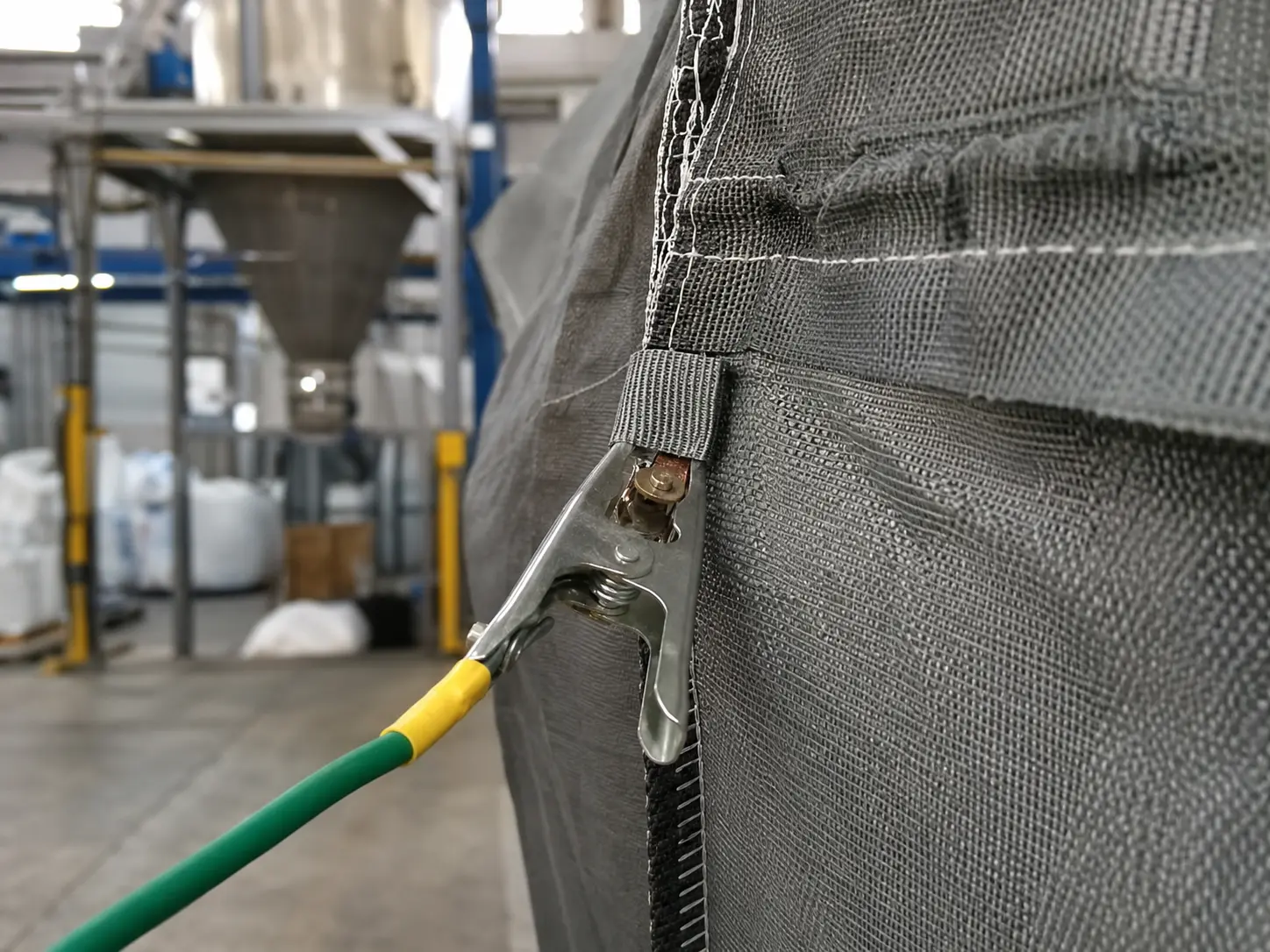
Chemical Forms at a Glance
| Form | Combustible dust risk | Sifting risk | Liner need | Fill/discharge fit |
|---|---|---|---|---|
| Powder | Highest — check MIE specifically | High — fine particles sift through weave | Usually form-fit liner | Spout top for dust control |
| Granule | Moderate, varies by product | Lower than powder | Loose-fit often sufficient | Flexible — most fill styles work |
| Flake | Varies, often lower than powder | Moderate — irregular shape | Puncture-resistant material matters | Depends on flake size and flow |
Powders: Highest Combustible Dust Risk
Fine chemical powders carry the highest combustible dust risk among the three forms, since particle size directly affects how easily a dust cloud can ignite — but this depends on the specific product’s minimum ignition energy (MIE), not powders as a category universally. Check the static protection class your specific powder needs based on its actual MIE and whether solvent vapor is present, rather than assuming all powders need the same static class. Powders also sift most easily through weave gaps and loose liner seams, making form-fit liner construction the more common choice for fine chemical powders.
Granules: Moderate Risk, More Flow-Friendly
Granular chemicals generally carry lower combustible dust risk than powders of the same substance, since larger particle size reduces surface area available for rapid ignition — though this still varies by specific product and needs its own MIE check rather than a blanket assumption. Granules also sift less readily than powders, often allowing a loose-fit liner where a fine powder would need form-fit construction. Fill and discharge style tends to be more flexible for granules, since they flow predictably through most spout or duffle configurations without the dust-control concerns fine powders raise.
Flakes: Irregular Shape, Different Density Math
Flakes pack less densely than powders or granules due to higher void space between irregular pieces, which changes the bulk density calculation used for sizing a bag — the same target weight in flake form typically needs more bag volume than the equivalent weight in granule or powder form. Flake edges can also be more abrasive to liner film than rounder granules, making liner material choice — particularly HDPE’s greater puncture resistance — a more relevant consideration than it would be for smoother granular products.
Matching Static Protection to Physical Form — Not Assuming It
The temptation is to assume powder equals anti-static and granule equals standard, but the actual driver is the specific product’s MIE and whether flammable vapor is present, not the form category alone. Some chemical powders aren’t combustible at all; some granular chemicals carry meaningful dust risk when handled in ways that generate fine dust during transfer. Always check the product’s safety data sheet for MIE rather than defaulting by form.
Matching Liner to Physical Form
Powders generally need finer sealing — form-fit construction and tighter attention to seam quality — because fine particles find any gap a loose liner leaves. Granules often tolerate loose-fit liners adequately given their lower sifting tendency. Flakes need liner material chosen for puncture resistance given their more abrasive edges, a different priority than powders’ sealing precision or granules’ general moisture protection. See our liner types guide for the full material and construction breakdown.
UN Certification: Driven by Hazard Class, Not Form
If your chemical carries a UN hazard classification, certified packaging is required regardless of whether it’s a powder, granule, or flake — physical form affects other specs like static protection and liner, but doesn’t change the certification requirement itself. Don’t assume a granular or flake chemical is automatically less regulated than the same chemical in powder form; check the hazard classification independently of physical form.
Common Mistakes When Specifying by Chemical Form
- Assuming powder always means anti-static, granule always means standard. MIE and vapor presence drive the real answer — check the specific product rather than defaulting by form.
- Sizing a flake product’s bag using powder or granule bulk density figures. Flakes’ higher void space means the same target weight needs more volume than denser forms.
- Choosing liner material based on form category alone rather than actual abrasiveness. Some granules are sharper than typical flakes, and vice versa — check the specific product.
- Assuming a lower-risk physical form means lower regulatory scrutiny. UN hazard classification doesn’t change based on whether the same chemical is powder, granule, or flake.
- Not accounting for dust generation during transfer, even for granular products. Some granules generate meaningful fine dust during pneumatic transfer or repeated handling, changing the risk profile from what the bulk form alone suggests.
When the Same Chemical Comes in Multiple Forms
Some chemical products are available in more than one physical form from the same manufacturer — a resin sold as both pellets and fine powder, for example — and buyers sometimes assume the packaging spec should carry over between forms since it’s “the same chemical.” It shouldn’t. Each form needs its own MIE check, liner assessment, and sizing calculation, because the physical form itself is what’s driving several of these decisions, not the chemical identity underneath it.
Decision Checklist
- What is the product’s actual MIE, regardless of form? This drives static protection needs more than powder/granule/flake categorization alone.
- Does the product sift easily through a loose weave or liner seam? Powders usually need form-fit liner; granules and flakes often don’t.
- Have you recalculated bag size for flake bulk density specifically? Flakes typically need more volume than powders or granules at the same target weight.
- Does the product need puncture-resistant liner material? Relevant for flakes with abrasive or sharp edges more than smoother granules.
- What’s the product’s UN hazard classification, independent of form? Certification needs follow hazard class, not physical form.
Final Thoughts
Chemical names tell a supplier what regulations apply. Physical form tells them what the bag actually has to do. Both matter, but form is the one buyers skip — and it drives static risk, liner sealing and sizing math alike. Send us the safety data sheet along with a plain description of particle size and flow behavior, and we’ll spec against both.
Before You Request a Quote
Send us these details so we can confirm the right spec:
- Product physical form and, if known, particle size
- Minimum ignition energy (MIE) from the safety data sheet
- UN hazard classification, if applicable
- Target capacity and moisture sensitivity
Request a quote with your product’s specific characteristics and we’ll confirm static protection, liner, and dimensions against your actual chemical form.
Common Questions
Does the physical form of a chemical matter more than what the chemical is?
For FIBC spec purposes, often yes. Two very different chemicals in powder form share similar combustible dust and sifting concerns, while the same chemical in granule form may need a completely different static and liner spec. Physical form drives several key decisions independent of the chemical's identity.
Do all chemical powders need anti-static bags?
Not necessarily — it depends on the powder's minimum ignition energy (MIE) and whether solvent vapor is present during handling, not on being a powder alone. Some chemical powders aren't combustible at all and need no static protection; check the specific product's MIE rather than assuming by form.
Why do flakes need different bag specs than powders or granules?
Flakes have irregular shapes and higher void space than granules or powders, which changes bulk density calculations for sizing, and their edges can be more abrasive to liners than rounder granules — both factors that affect bag dimensions and liner material choice.
Can granular chemicals use a lighter liner than powders?
Often yes, since granules are less prone to sifting through liner seams or weave gaps than fine powders, but this depends on the specific granule size and the chemical's moisture sensitivity — don't assume lighter liner spec without checking both factors.
Do hazardous chemicals always need UN certified bags regardless of physical form?
Yes — UN certification requirements are driven by the chemical's hazard classification, not its physical form. A UN-classified hazardous chemical needs certified packaging whether it's a powder, granule, or flake; physical form affects other specs like static protection and liner, not the certification requirement itself.
What if my chemical ships in more than one physical form?
Spec each form separately. A resin sold as both pellets and fine powder needs its own MIE check, liner assessment and sizing calculation for each — the form drives several decisions independently of the chemical identity underneath. Carrying one spec across both forms is a common and avoidable mistake.
What makes a bulk bag chemical grade?
There is no formal chemical grade standard, unlike food grade where FDA and BRCGS set testable requirements. Chemical grade is a loose trade term covering whatever the product actually needs — usually a static class matched to the MIE, a liner matched to particle size, and UN certification where the hazard class demands it. Ask a supplier what they mean by it.
Does particle size affect which liner thickness I need?
Yes, in two directions. Fine powders need tighter sealing to prevent sifting through seams; coarse or sharp-edged material needs thicker, more puncture-resistant film. A mid-range granule often needs the least liner of the three — confirm which risk actually applies to your particle profile.
More in Applications
All Applications guides- Hemp Super Sacks: You're Buying Volume, Not StrengthDried hemp biomass is so light a super sack fills at under a fifth of its rating. Size the bag for volume, and seal it only once drying has finished.
- Super Sack Cofferdams: The Bag Holds Weight, Not WaterA super sack cofferdam is a mass structure, not a seal. Woven polypropylene seeps, so the bag supplies ballast and a separate membrane has to stop the water.
- Bulk Bags for Coffee Beans: The 12% Moisture ProblemGreen coffee is not a dry cargo. It ships in a narrow moisture band, and the real threat in a container is condensation putting water back into the bean.
- Dewatering Bulk Bags: The One FIBC Built to Let Water OutEvery other bulk bag keeps moisture away from the product. A dewatering bag does the opposite — and specifying it with coated fabric guarantees it will fail.