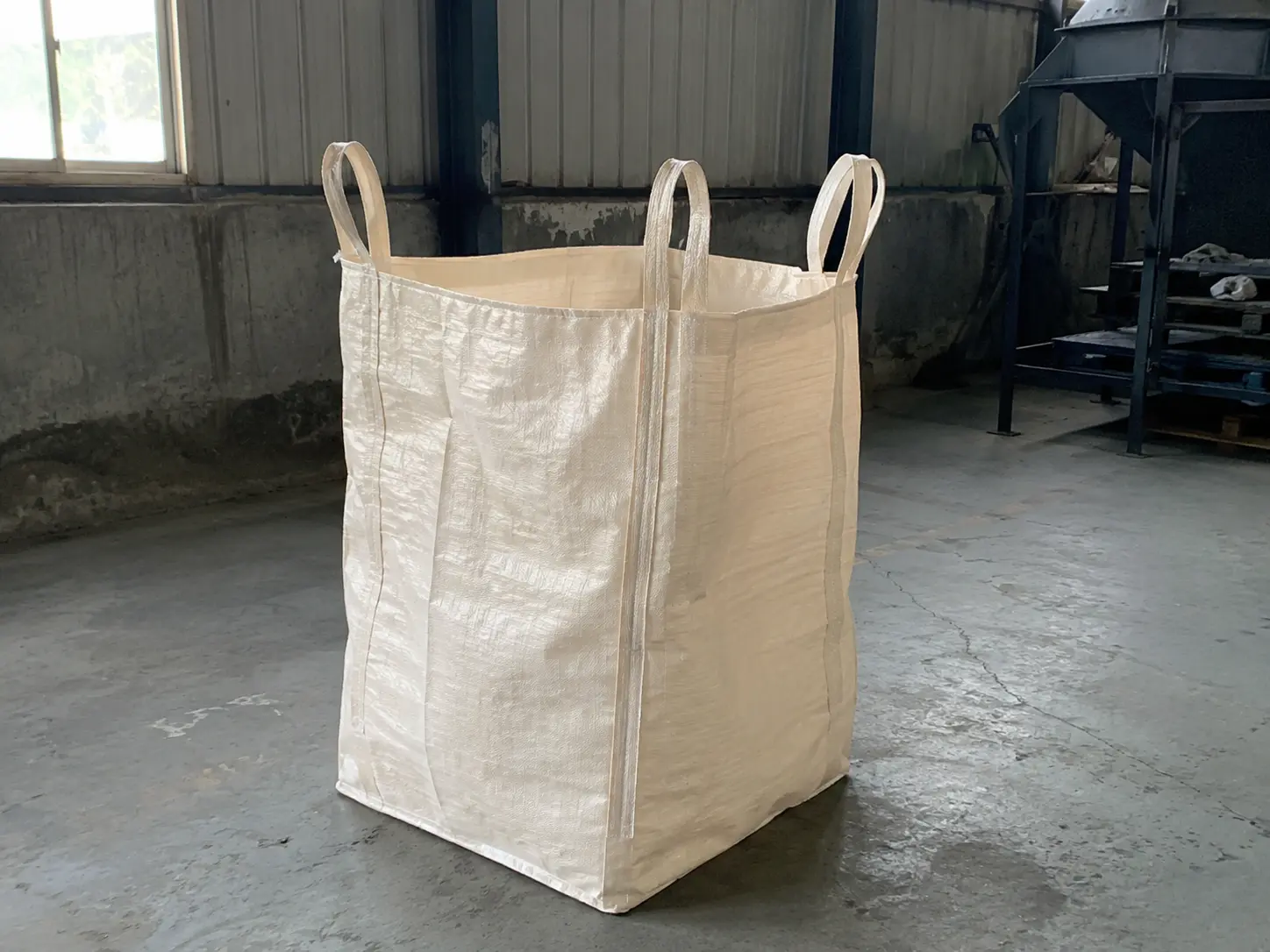
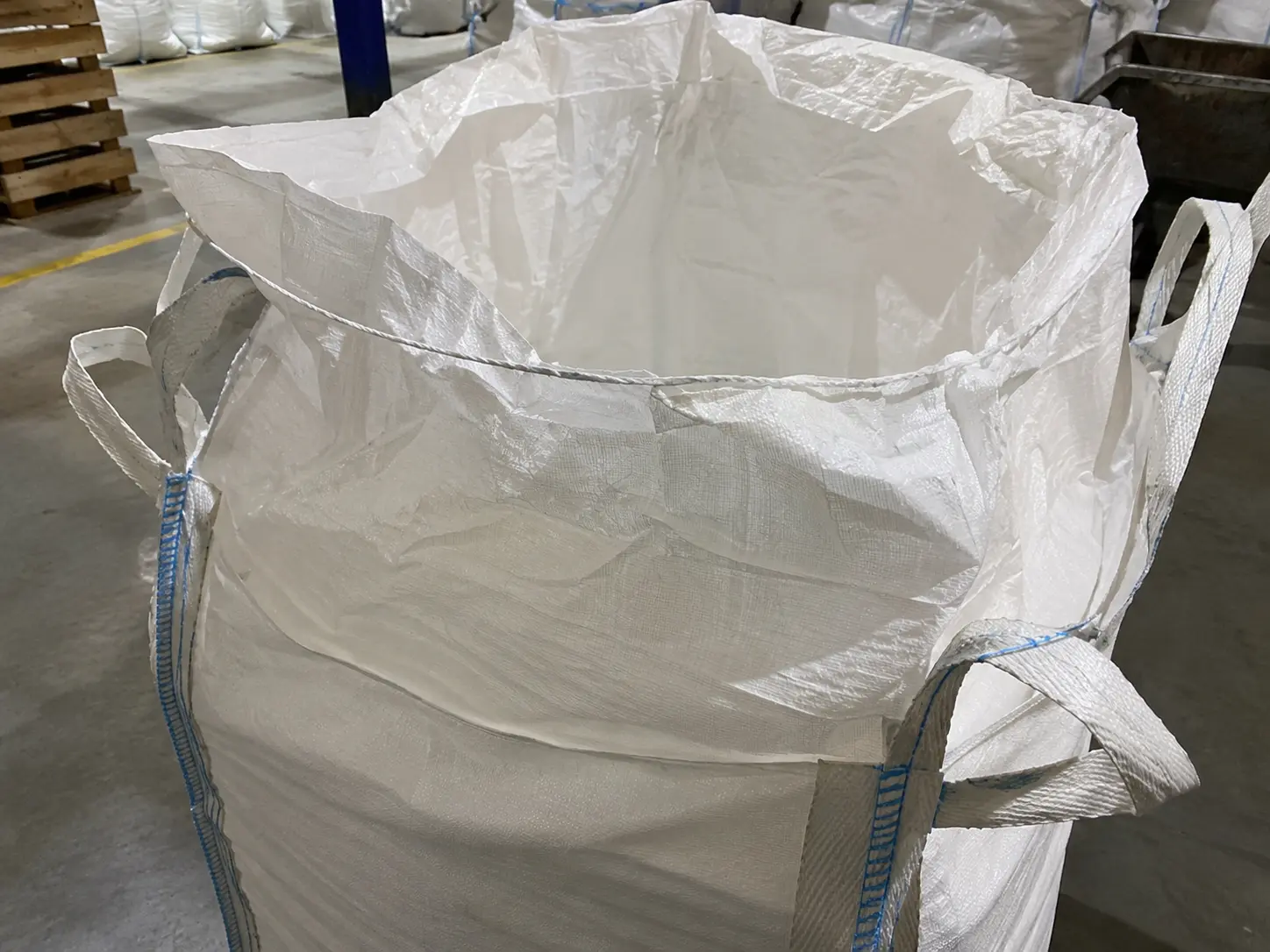
Spout Top & Spout Bottom Bulk Bags
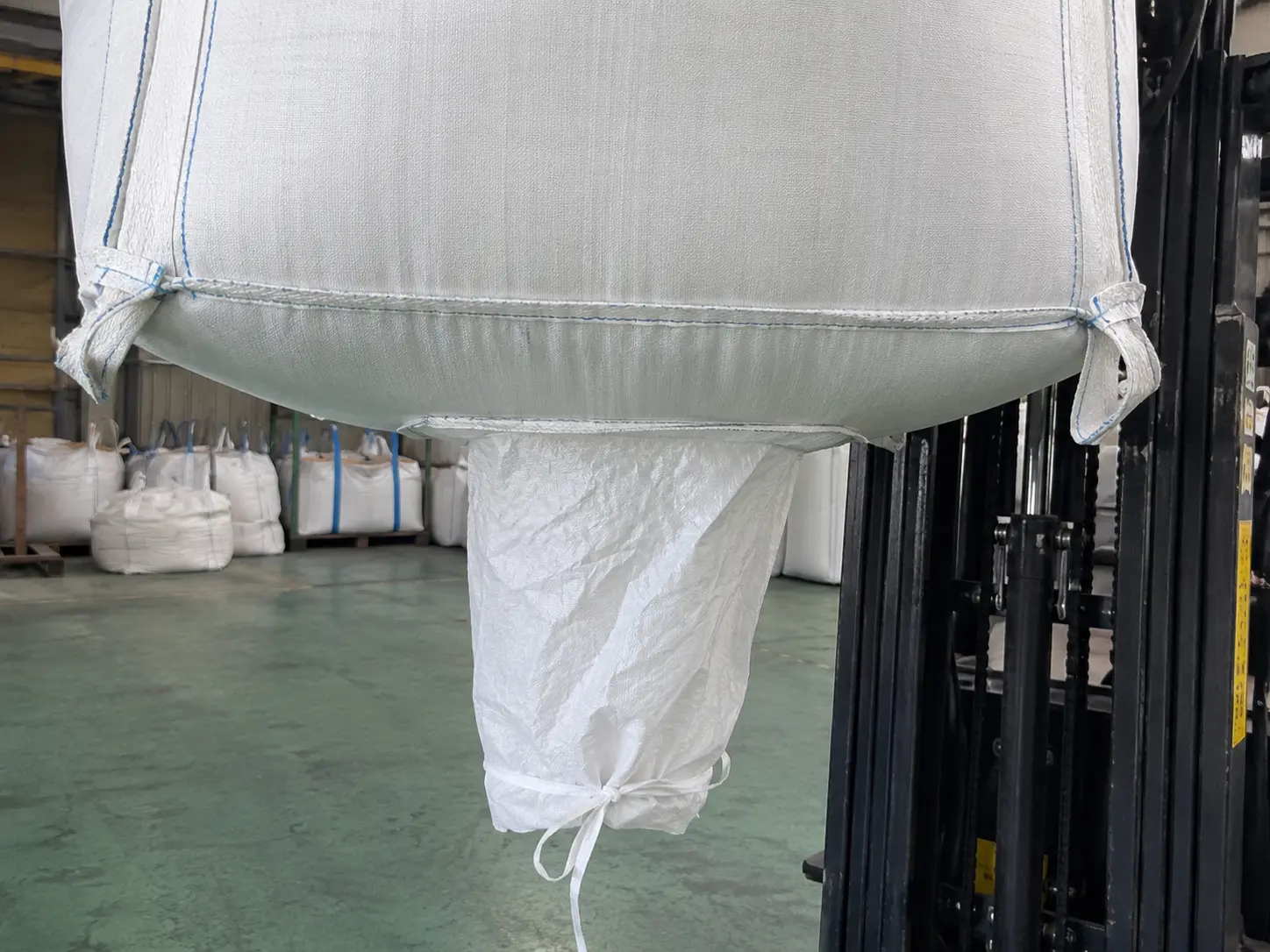
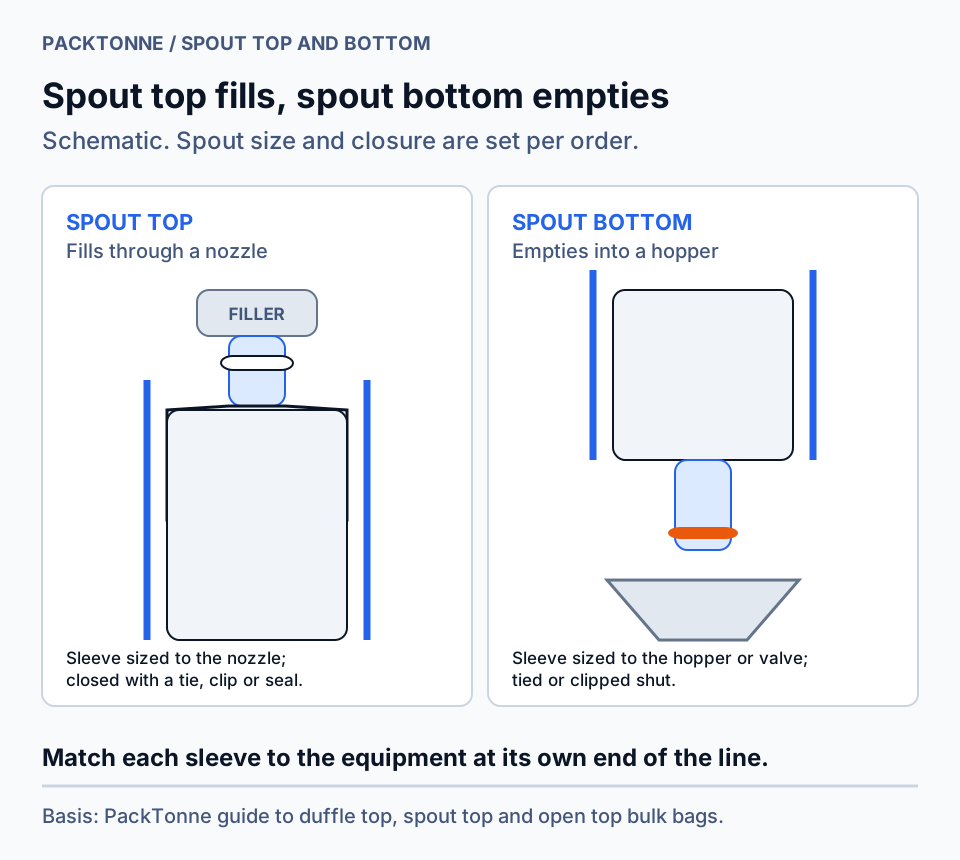
Bulk bags with a spout have a fabric sleeve at the top, the bottom or both. A spout top fits over a filling nozzle for controlled, lower-dust filling. A spout bottom opens to release product in a controlled stream into a hopper or process line, then ties or clips shut. Spout diameter and length are set from your nozzle and discharge equipment, and either end can be paired with a duffle top or a flat bottom.
- Spout top and bottom
- SWL 500–2,000 kg
- Safety factor 5:1 / 6:1
Why Choose Spout Top & Spout Bottom Bulk Bags
Controlled filling
A spout top fits over your nozzle, so product enters through a narrower opening and less dust escapes than through a wide skirt.
Controlled discharge
A spout bottom releases product in a controlled stream into a hopper or process line, instead of cutting the bag open.
Reusable without cutting
A resealable spout lets a multi-trip bag be emptied and refilled. A flat-bottom bag generally cannot once it has been cut.
Sized to your equipment
Spout diameter, length and closure are set from your nozzle and discharge equipment, not picked from a catalogue list.
Why a Sleeve
A spout is the simplest way to connect a bulk bag to equipment. A fabric sleeve slips over a nozzle or hangs into a hopper, and a tie or clip closes it when it is not in use.
- Narrower opening
- Product moves through the sleeve rather than a wide opening, which helps to hold dust in.
- Re-closable
- The sleeve can be tied or clipped shut again between uses, which suits partial discharge and reuse.
- Same woven polypropylene
- The sleeve is cut from the same fabric as the body, so the bag keeps one material and one rating.
- Two separate choices
- Top and bottom are specified independently, each matched to the equipment at its own end.
Key Features
Spout top or bottom
A fabric sleeve at either end, or both, sized to your nozzle or hopper.
Four cross-corner loops
Standard lifting by forklift or hoist. Two-loop and single-loop builds are available.
Double-stitched box seams
Seams and loop stitching are specified to the same safety factor as the fabric.
Mix and match ends
Pair a spout with a duffle top, an open top or a flat bottom to suit your process.
Optional PE liner
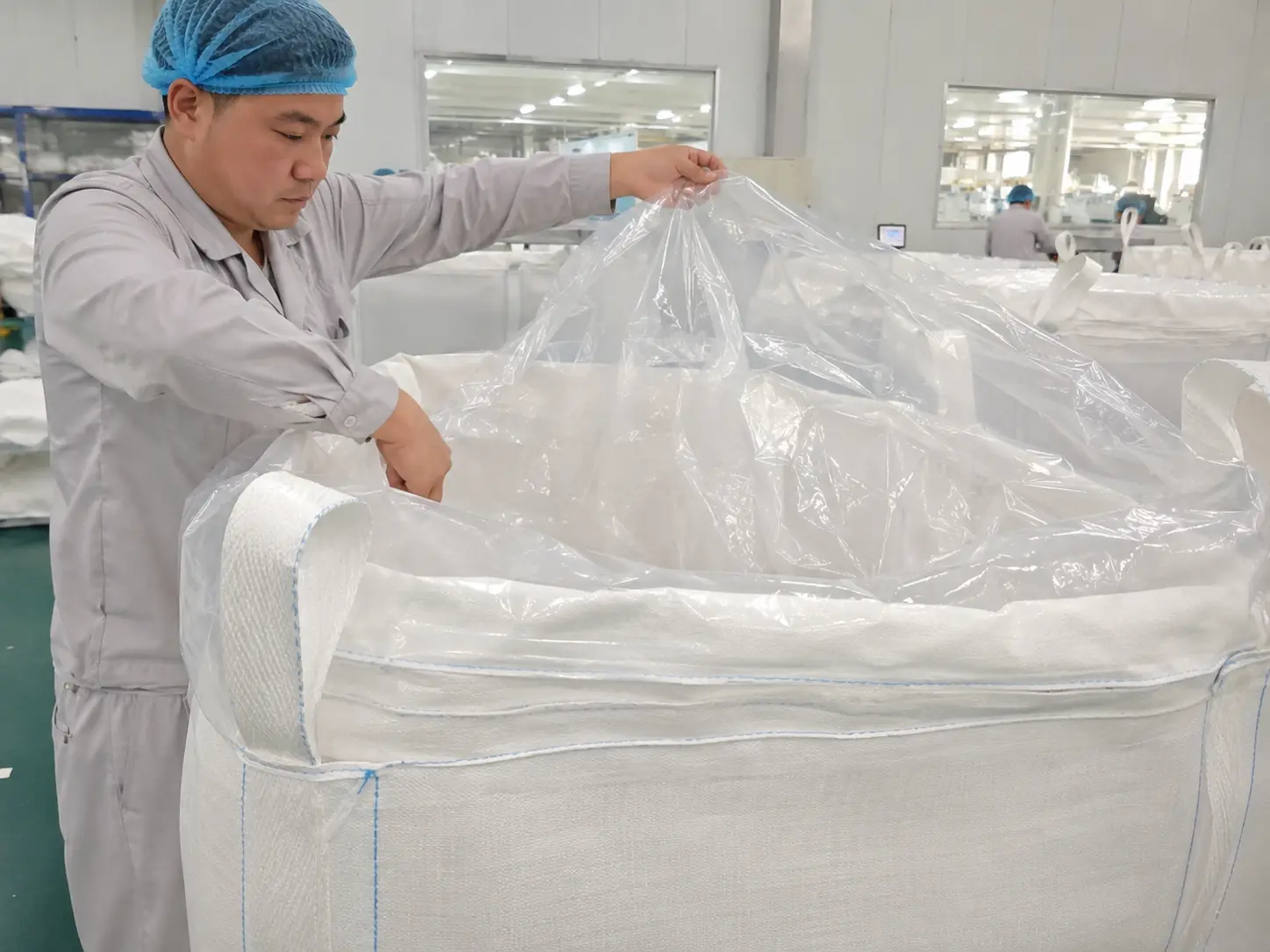
Loose or form-fit liner for products that must stay dry or would sift through the weave.
Custom printing
1–3 colors on 1–4 panels for branding, product data and handling instructions.
Spec Sheet
Construction
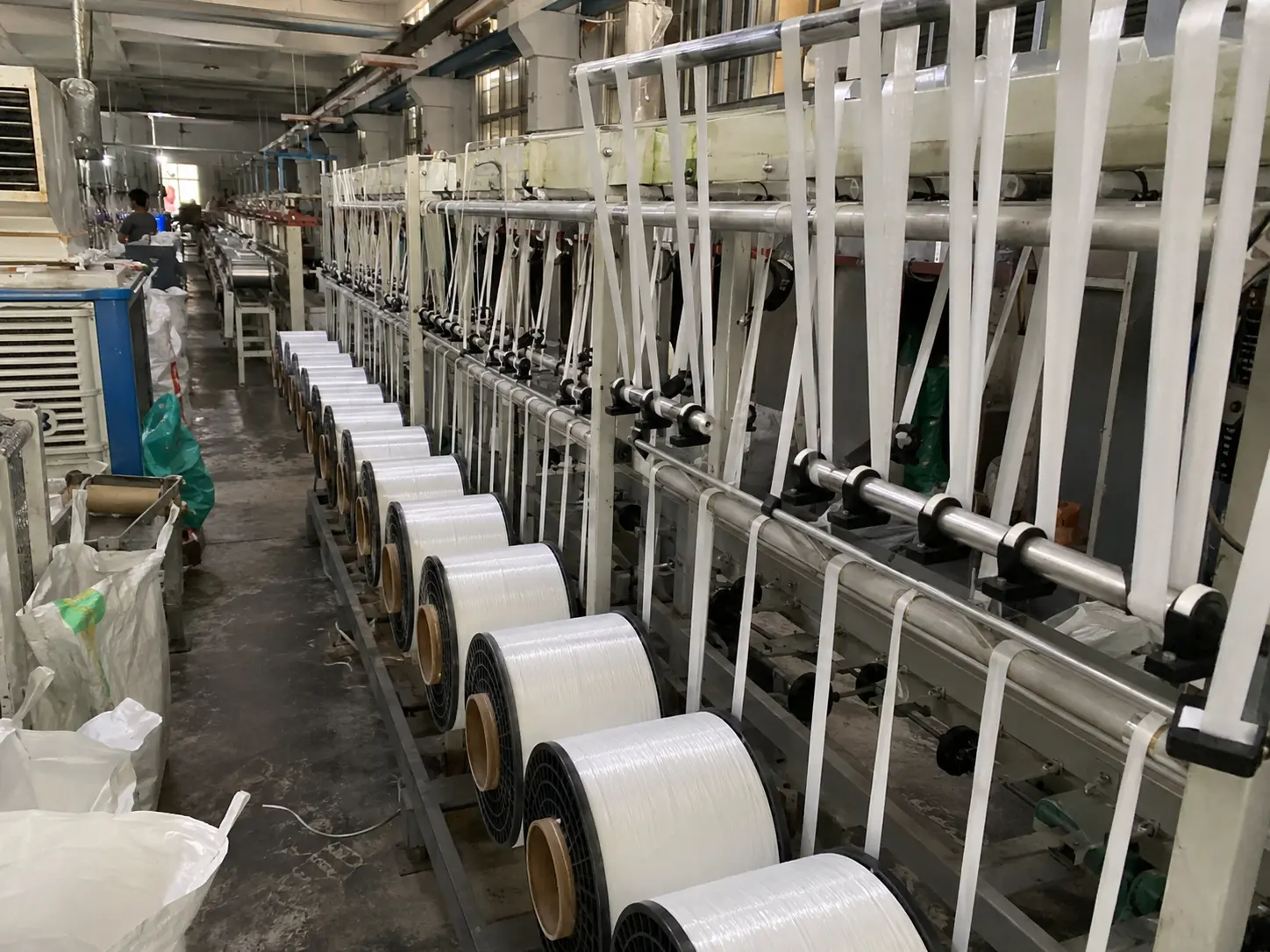
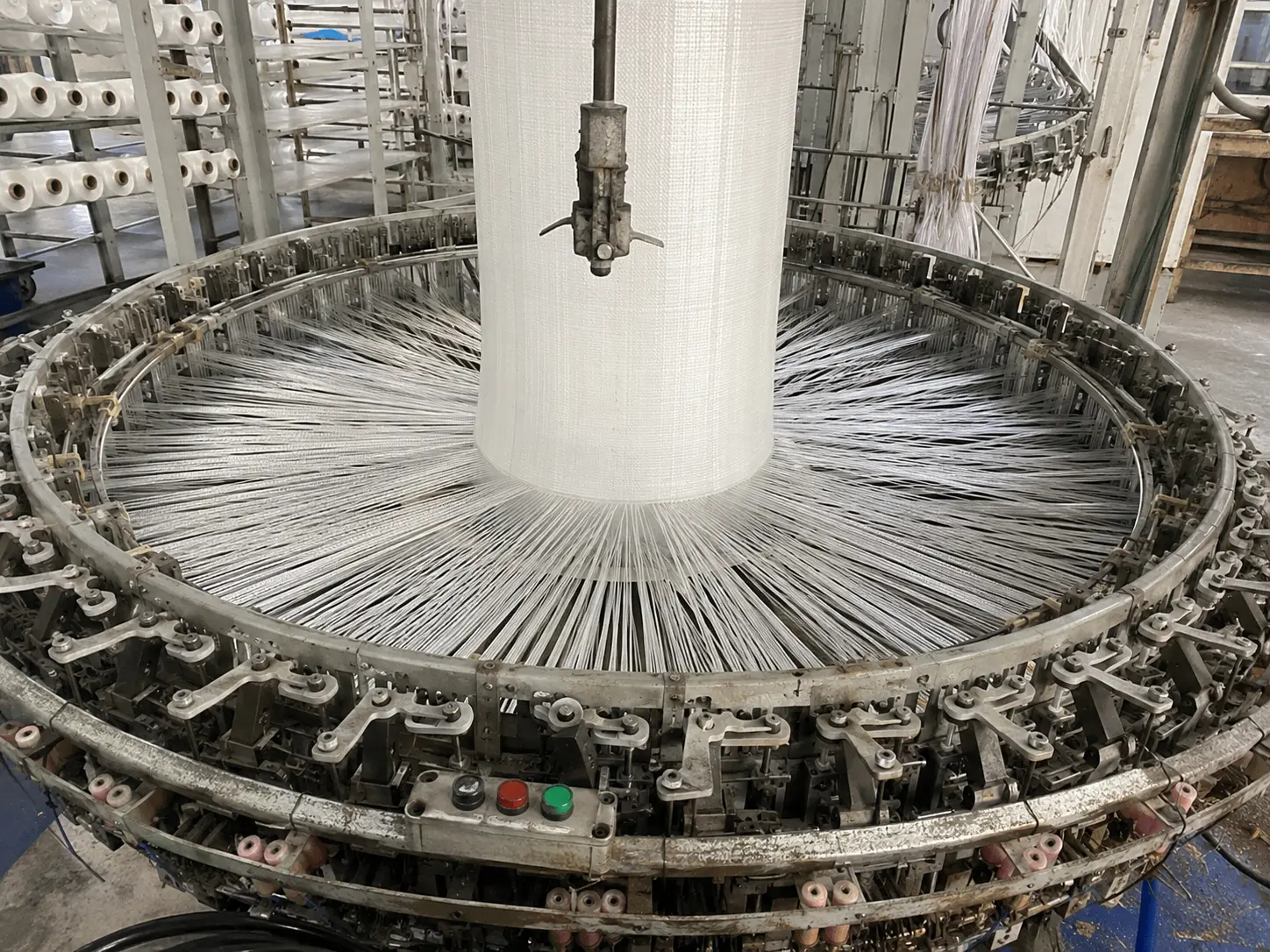
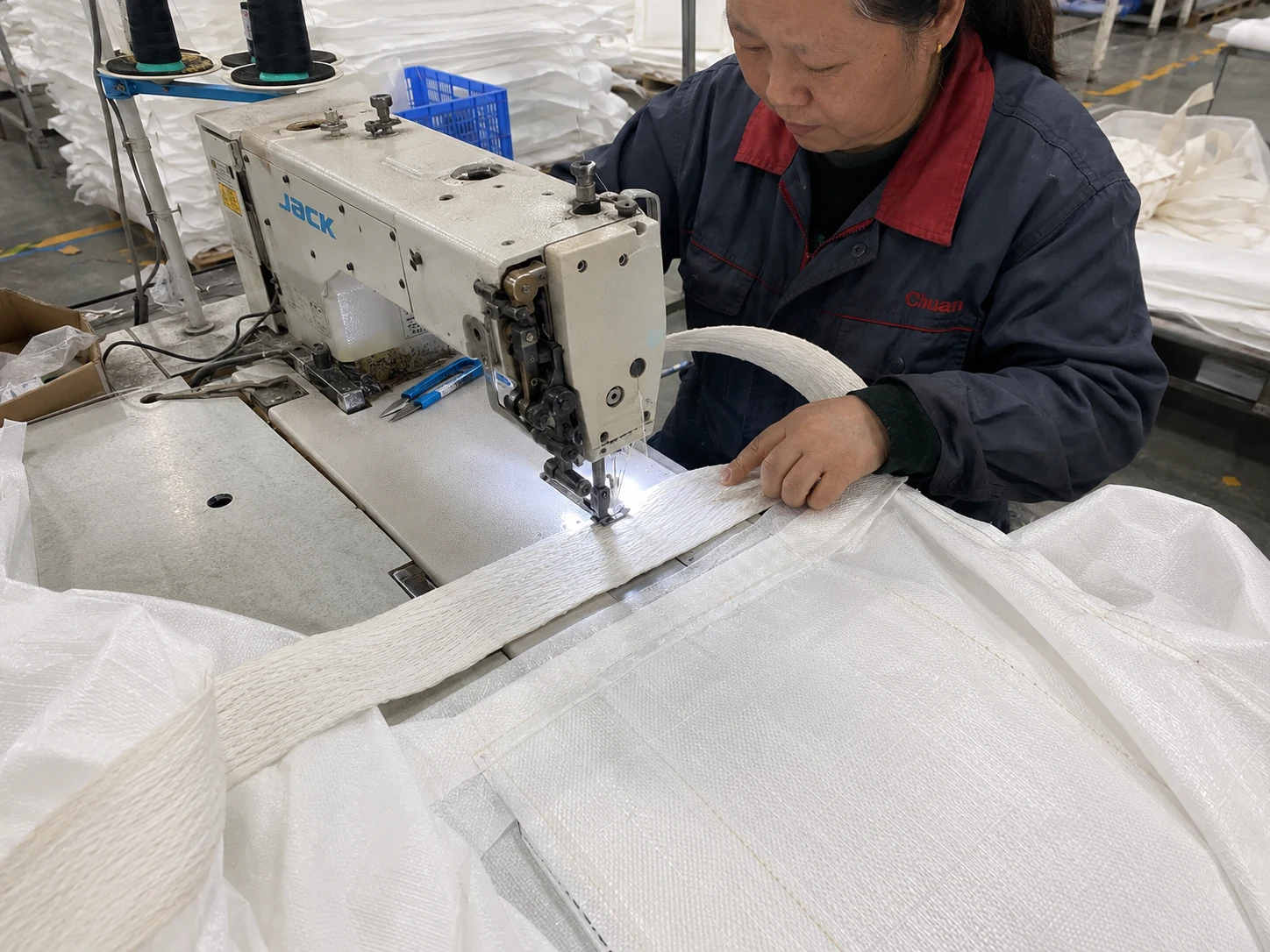
A spout is a fabric sleeve sewn to the top or bottom panel of a standard woven polypropylene FIBC. Panels are cut to your dimensions and joined with box seams, and the loops are stitched to the safety factor you order. The sleeve is cut to the diameter and length your equipment needs, and the closure is chosen for the line: tied, clipped or sealed. FIBCA guidance is to verify before filling that the bottom discharge spout is closed correctly, meaning as the bag manufacturer instructs.
Not for: A spout bottom is a poor fit for lumpy or irregular products that do not flow, because they can bridge in a narrow sleeve; use a flat bottom for those. Standard Type A fabric is not for flammable powders or solvent areas, so ask about anti-static types.
Spout Top vs Spout Bottom vs Duffle Top vs Flat Bottom
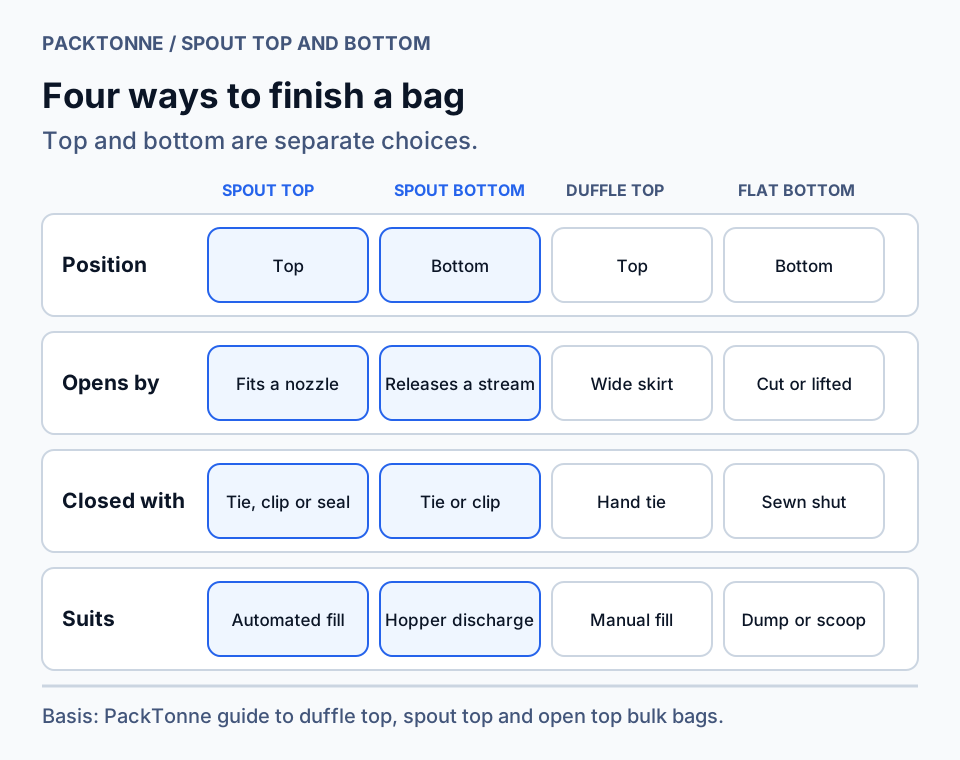
| Spout top | Spout bottom | Duffle top | Flat bottom | |
|---|---|---|---|---|
| Position | Top | Bottom | Top | Bottom |
| How it works | Sleeve fits over a filling nozzle | Sleeve opens to release a controlled stream | Wide skirt gathered after filling | Sewn panel, cut or lifted to empty |
| Closed with | Tie, clip or seal | Tie or clip | Tied by hand | Sewn shut |
| Dust control | Better than a duffle top | Better than cutting the bag open | More dust escapes | Cutting open loses the most |
| Reuse | Not a factor | Can be refilled and reused without cutting | Not a factor | Generally one-way once cut open |
| Choose it when | Automated or dusty filling lines | The bag empties into a hopper or process line | Manual, chute or simple loader filling | Dumping or scooping, or lumpy product |
What You Can Change
- Spout top, spout bottom or both
- Spout diameter and length set to your nozzle, hopper or valve
- Duffle top or open top paired with a spout bottom, or flat bottom paired with a spout top
- Capacity from 500 kg to 2,000 kg
- 4 cross-corner, 2-loop or single loop configurations
- Optional PE liner, loose or form-fit
- 1–3 color printing on 1–4 panels
Where Spout Top & Spout Bottom Bulk Bags Are Used
Hopper and process-line discharge
A spout bottom feeds hoppers, mixers and unloaders in a controlled stream. Match the sleeve to the connection at the equipment.
Unloaders and the bag specAutomated filling lines
A spout top sized to the nozzle keeps the fill controlled and lowers dust compared with a wide skirt.
What a filler needs from the bagPlastic resin and pellets
Free-flowing pellets suit controlled spout discharge, and a spout top lets the fill be matched to a nozzle.
Bulk bags for resin and pelletsChemical powders and granules
Physical form drives the spec: fine powders need dust control, so spout size and closure matter.
FIBC for chemicalsMulti-trip supply loops
A resealable spout lets a bag be emptied and refilled, which suits reuse. Build to 6:1 for multi-trip use.
5:1 versus 6:1 safety factorProblems a Correctly Specified Bag Solves
ProblemA spout that does not match the nozzle or valve
FixSend the size of your equipment so the sleeve diameter and length are set from it, not copied from another spec.
What a filler needs from the bagProblemProduct bridging in the spout
FixUse a flat bottom for lumpy product, or add flow aids at the unloader. A narrow sleeve can arch over cohesive material.
How to empty a bulk bag safelyProblemA spout that opens or is left untied before filling
FixVerify before filling that the bottom discharge spout is closed as the manufacturer instructs, as FIBCA guidance requires.
Bulk bag closuresProblemDust at the discharge point
FixA controlled spout release loses less than cutting the bag open. The connection at the equipment decides the rest.
Discharge stationsOptions at a Glance
How We Spec Your Bag
- 01
Tell us the product
Material, bulk density, target fill weight, and how the bag is filled and emptied.
- 02
We match the spec
Static class, fabric weight, safety factor, loops, top and bottom, liner and printing.
- 03
Sample and approve
A pre-production sample for your own fill test. Production starts only on your written approval.
- 04
Production and QC
Batch-tagged production and load-test reports. Third-party inspection is welcome before shipment.
- 05
Loading and documents
Loading plan, photos at loading and the full export document set.
Checked Before It Ships
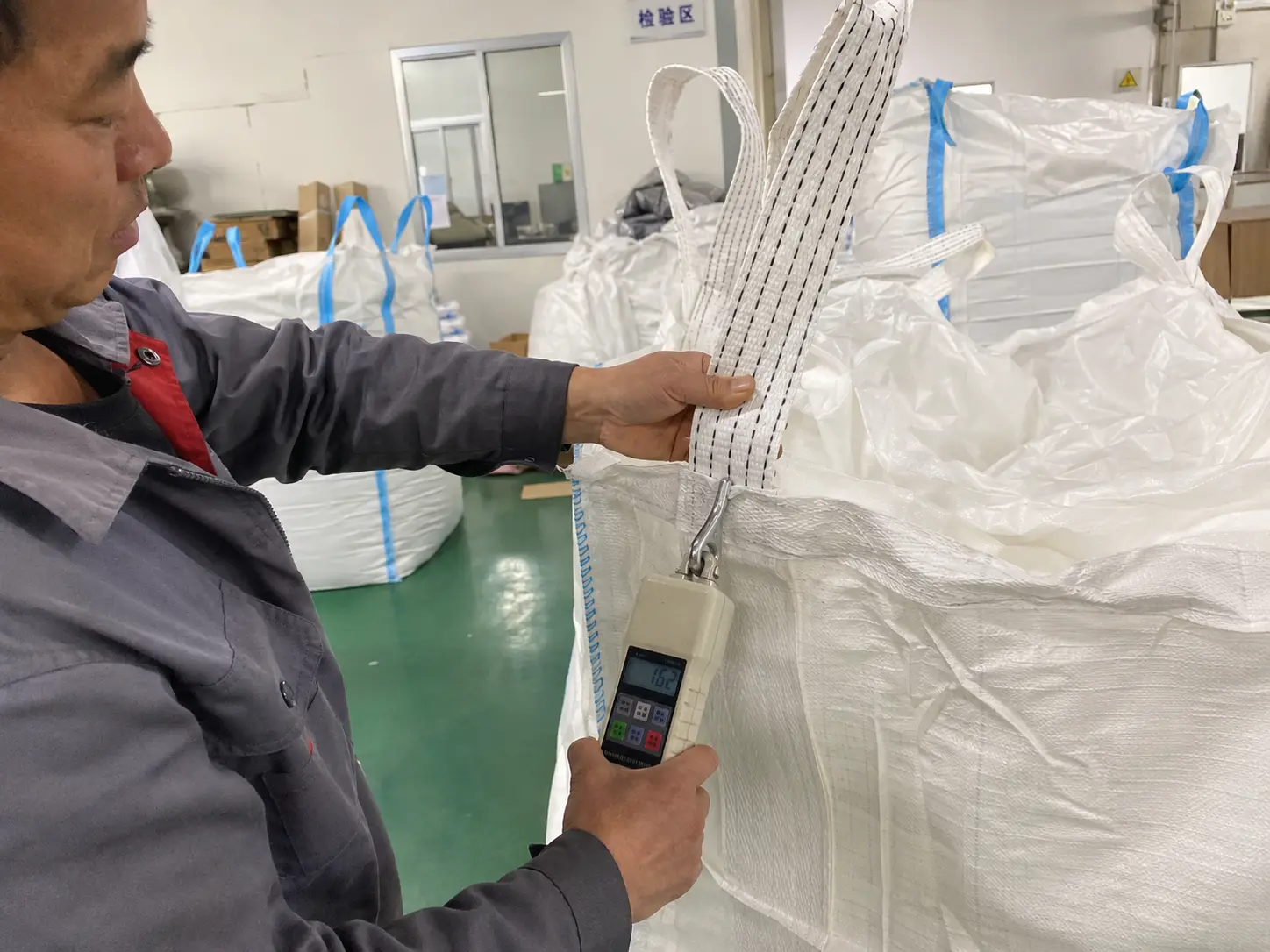
- Incoming fabric checked for weight and tensile strength before cutting
- Load testing on new specifications, to the safety factor on the label
- Every bag tagged with batch number and production date for traceability
- Pre-shipment inspection by a third party or your own inspector on request
What This Bag Is Tested To
- ISO 21898:2024 — cyclic top lift test (30 cycles @ 2× SWL, final cycle @ 5× SWL)
- FIBCA Safe Handling Guidelines v2.0 — verify the bottom discharge spout is closed correctly before filling, and close the fill spout or duffle as the manufacturer instructs
- GB/T 10454-2025 — effective March 2026, dimensional tolerance and single-trip/multi-trip classification
From Our Sourcing Desk
Give the supplier your actual equipment, not a competitor’s spec. A spout that does not match your nozzle or discharge valve slows the line whichever style you chose: an oversized spout defeats the dust control, and an undersized one slows the fill. Send the nozzle or valve size, how the sleeve will be closed, and whether the bag will be reused. If a liner is specified, confirm how it is tied off at the top, since a spout top leaves less room than a duffle top.
Common Questions
What is a spout top bulk bag?
A spout top bulk bag has a fabric sleeve at the top, sized to fit over a filling nozzle. It gives a narrower, more controlled opening than a duffle top, so less dust escapes during filling. After filling, the spout is closed with a tie, clip or seal.
What is a spout bottom bulk bag?
A spout bottom bulk bag has a fabric sleeve at the base that opens to release product in a controlled stream, then ties or clips shut between uses. It is the usual choice when the bag empties into a hopper, mixer or process line rather than being cut open.
Can I get a spout top and a spout bottom on the same bag?
Yes. Top and bottom are separate choices, so a spout top with a spout bottom suits a line that fills by nozzle and empties by hopper. You can also pair either one with a duffle top or a flat bottom to match the equipment at each end.
How do I choose the spout size?
Choose it from the nozzle or discharge valve it has to connect to. An oversized spout defeats the dust control, and an undersized one slows filling or discharge. Send the size of your equipment and we will set the sleeve diameter and length from it.
How is a spout bottom closed before filling?
It is tied or clipped shut as the manufacturer instructs. FIBCA guidance is to verify before filling that the bottom discharge spout is closed correctly. A spout that is not closed properly can release product during filling or handling.
Is a spout bottom better than a flat bottom?
It depends on how the bag is emptied. A spout bottom gives controlled discharge into equipment and lets a multi-trip bag be refilled without cutting. A flat bottom is cheaper and better for lumpy product that would bridge in a narrow sleeve. Choose by your discharge point.
What should I send to get a quote for a bag with a spout?
Send the product and bulk density, the fill weight, the nozzle and discharge valve sizes, how you will close the spouts, whether the bag is single-trip or reused, and whether it needs a liner. We will confirm dimensions, fabric weight and safety factor against that, including the minimum order.
Read Before You Order
- Duffle Top vs Spout Top vs Open Top: Match FIBC to Your LineRead guide
- Bulk Bag Unloaders: Why the Bag Spec Matters More Than the FrameRead guide
- FIBC Discharge Stations: Match the Bag to the EquipmentRead guide
- Bulk Bag Dispenser: 5 Bag Specs That Decide Whether the Hopper WorksRead guide
- Bulk Bag Closures: The Knot That Holds a Tonne Against ItRead guide