Food Grade vs Feed Grade FIBC: 5 Checks Before You Pay for the Higher Grade
Feed grade is not a tested bulk bag grade. Check your customer's rules, the liner, the production area and the documents before deciding to pay for food grade.
PackTonne Sourcing Desk · · 8 min read
Feed grade is not a tested grade of bulk bag. No shared standard defines it, and suppliers use the words differently. What actually matters is how the bag is made, which film touches the product, what documents back it and what your customer or regulator requires. Check those five points before you pay for food grade.
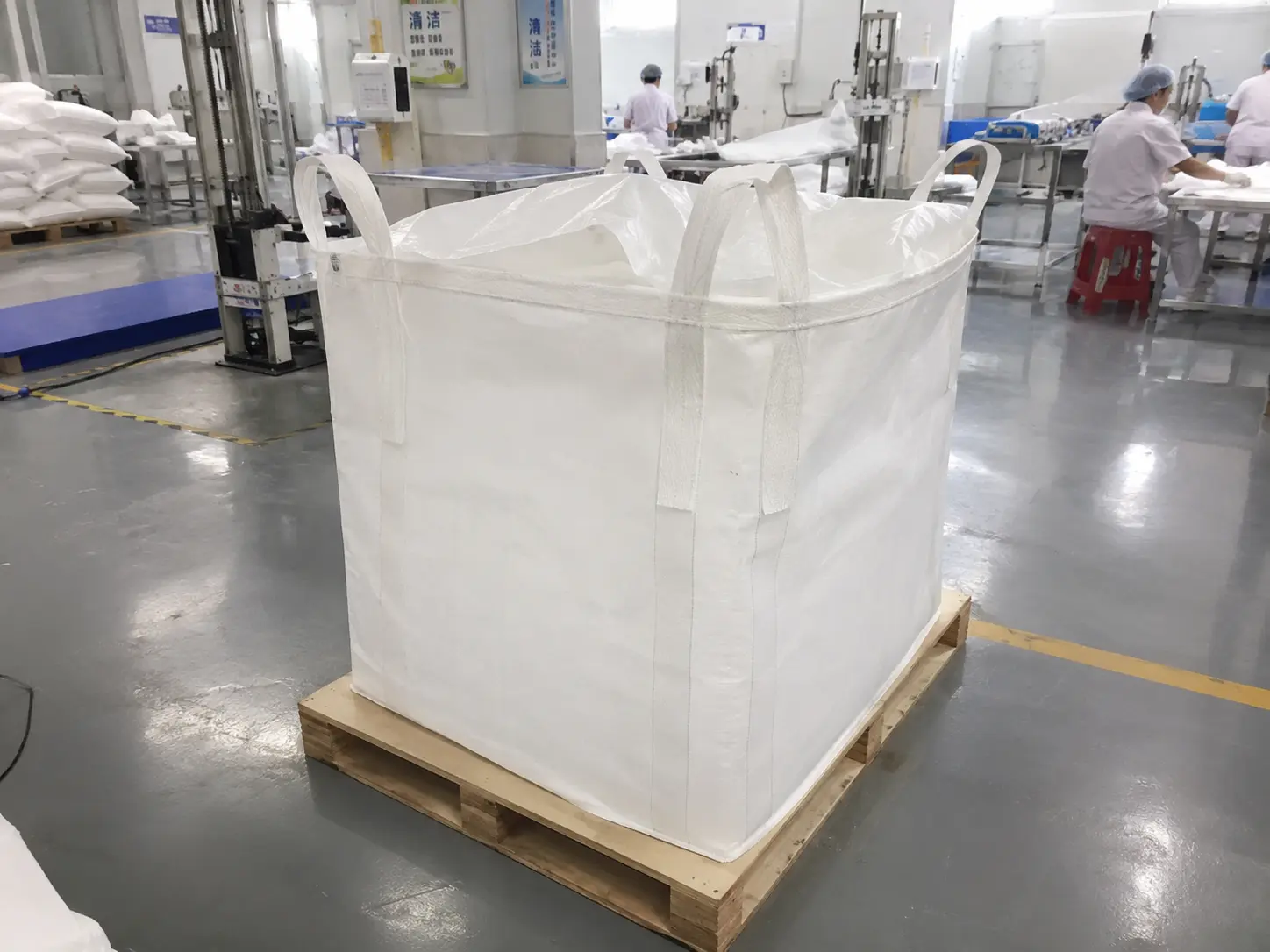
Two Words, No Shared Standard
Food grade and feed grade are supplier terms, not test results. Our guide to what makes a bulk bag food grade explains that a food grade bag is defined by its production environment and its liner, not by a label. “Feed grade” has no equivalent definition.
One supplier, National Bulk Bag, describes it this way. Feed grade bags are made in facilities that are not held to the same cleanliness protocols, and may use recycled resin. Food grade bags are made in certified clean areas from virgin resin. That is a vendor’s view with a stake in the sale, so treat it as one description of the market, not a rule.
| Food grade (as suppliers use it) | Feed grade (as suppliers use it) | |
|---|---|---|
| Typical use | Food, supplements, pharmaceutical ingredients | Animal feed, pet food, livestock feed |
| Production area | Controlled, clean, inspected | Varies by supplier |
| Materials | Film declared for contact use | Varies; may include recycled content |
| Certificates | Often a food safety scheme | Varies by supplier |
| Documents | Declarations and traceability | Varies by supplier |
What Regulation Says About Feed Packaging
FDA’s animal food rule does not define a feed grade bag, but it does set a standard for containers. 21 CFR Part 507 is titled “Current Good Manufacturing Practice, Hazard Analysis, and Risk-Based Preventive Controls for Food for Animals.” Under § 507.27(a)(1), containers used to hold animal food must be appropriately designed, made from suitable materials, cleaned as needed and kept in a condition that guards against contamination. Under § 507.34, sanitation controls must prevent cross-contamination of animal food-packaging material from unclean objects and from personnel.
So the regulator asks for suitable, uncontaminated packaging. It does not name a bag grade. How you show that your bag is suitable is a question for your food safety plan and your supplier’s documents.
5 Checks Before You Pay for the Higher Grade
Work through these in order, and put each one to a person who can answer it.
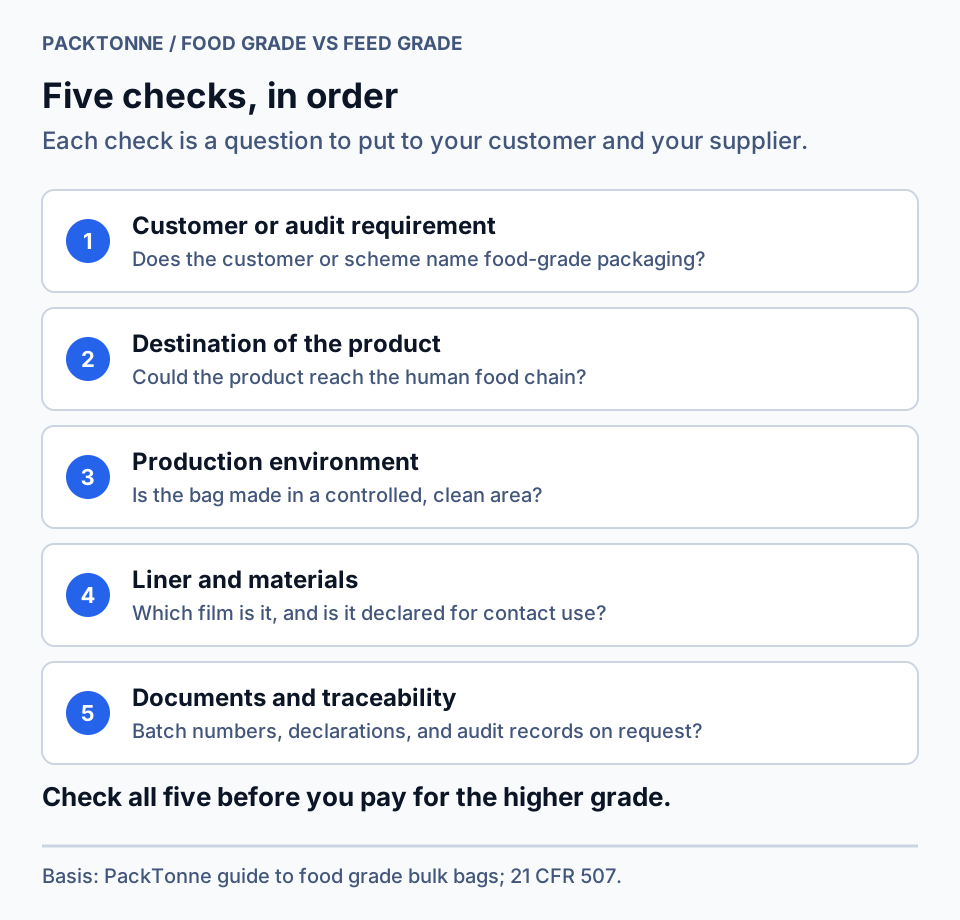
- Customer or audit requirement. If a customer or a scheme you follow names food-grade packaging, that settles it. Ask them for the wording.
- Destination of the product. If the product, or a later product made from it, could reach the human food chain, treat the packaging as food contact.
- Production environment. Ask whether the bag is made in a controlled, clean area, and how contamination is prevented. Our BRC guide explains what a certificate proves and what it does not.
- Liner and materials. The PE liner is usually the layer touching the product, so ask which film it is and whether it is declared for contact use. See our liner guide.
- Documents and traceability. Ask for batch numbers, declarations and audit records, in writing, covering the bag you are buying.
When Feed Grade May Be Enough, and When It Is Not
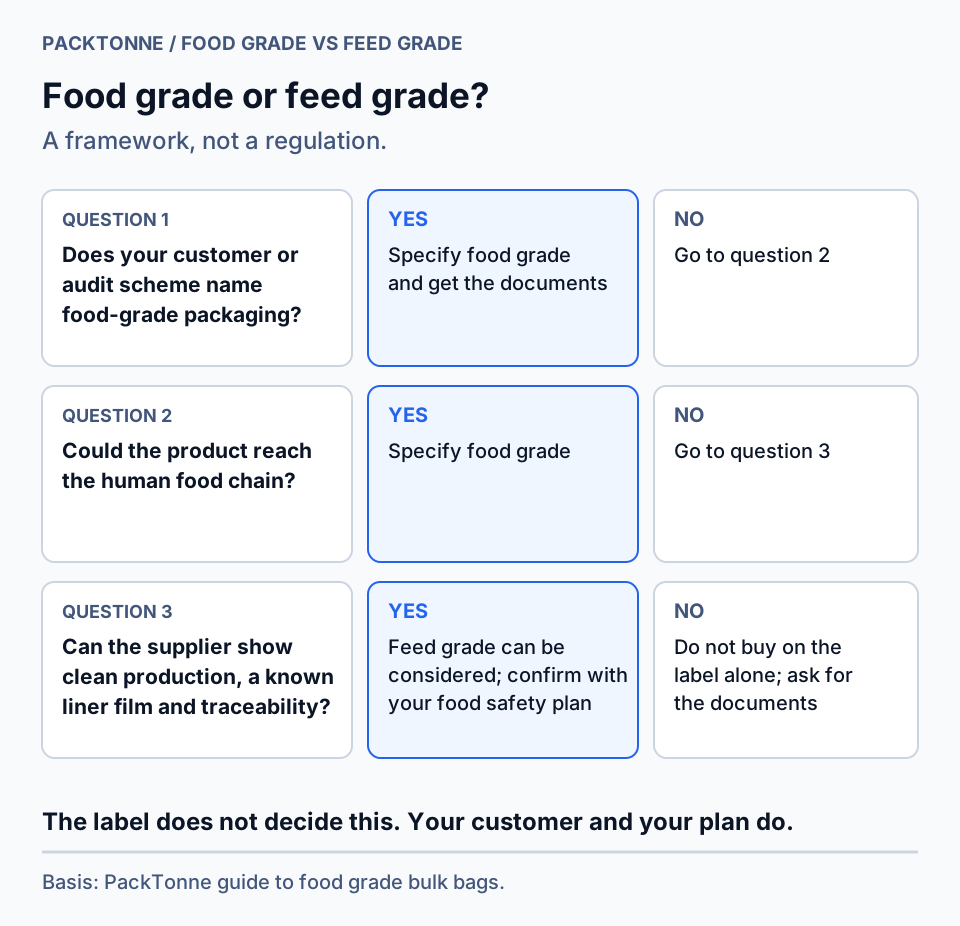
This is a decision for your own plan, not a rule from a bag label. Feed grade may be enough where neither your customer nor your scheme requires food grade, the product stays in the animal feed chain, and the supplier can show clean production, a known liner and traceability. It is not enough where any of those fails.
Common Mistakes
- Treating “feed grade” as tested. There is no shared test. The word tells you little until the supplier says what it covers.
- Accepting a verbal claim. Ask for the production controls, the liner film and the batch records in writing.
- Paying for food grade to cover a gap that sits elsewhere. If the real requirement is a liner declaration or traceability, ask for those directly and price them.
- Buying on price alone. Quotes for “feed grade” bags can differ in resin, liner and production area, so compare them on those points.
Your Decision Checklist
- If you cannot say what your customer requires, you should ask them before you quote or order.
- If the product could reach the human food chain, you should specify food grade.
- If the supplier will not say what “feed grade” covers, you should treat it as unproven.
- If the liner film is unknown, you should ask for the declaration before you buy.
- If you cannot get documents covering this bag, you should not accept the claim.
Final Thoughts
The label is the least useful part of the decision. Settle what your customer and regulator require, then ask your supplier for production controls, a known liner and traceability in writing. If those are in place, you can choose a grade on evidence rather than on a word. For bags where food contact is required, see our food grade bulk bags page. For why a food-contact resin is not the same as a food grade bag, see is polypropylene food safe.
Before You Request a Quote
If you are specifying bags for feed or food ingredients, send us these details:
- The product and whether it could reach the human food chain
- Any customer or audit requirement for packaging
- Liner requirement
- Filled weight and monthly volume
- Destination
We will ask the partner factory what documents it can provide for that specification and tell you what to verify.
Common Questions
Is feed grade the same as food grade for bulk bags?
No, and neither term is a tested grade with one shared definition. Suppliers use both words to describe how a bag is made, what film is used and what documents come with it. Ask each supplier what its own term covers, and judge the bag by its production controls, liner and paperwork, not by the label.
Do I need food grade bags for animal feed?
Not automatically. It depends on your customer's requirements, any audit scheme you follow and whether the product could reach the human food chain. FDA's animal food rule requires containers to be made from suitable materials and kept from contamination, but it does not define a feed grade bag. Check your food safety plan.
What does FDA require for feed packaging?
FDA's animal food rule, 21 CFR Part 507, requires that containers used to hold animal food be designed, made from suitable materials and kept in a condition that guards against contamination, and that sanitation controls prevent cross-contamination of animal food-packaging material. It does not set a bulk bag grade, so your supplier's claim needs documents behind it.
Can a feed grade bag use recycled resin?
Some suppliers describe feed grade bags that way, while describing food grade bags as virgin resin. That is one vendor's view, not a standard. If recycled content matters to you, ask the supplier in writing what the fabric and liner contain, and check that against your customer's and regulator's requirements.
Is the liner what makes a bag food grade?
It is a large part of it. The PE liner is usually the layer that touches the product, so the film and its declaration matter more than the label on the outer fabric. The production environment, traceability and documents are the other parts. Ask for all three, not just the liner.
Is food grade worth the extra cost for animal feed?
That depends on what it protects you against. If a customer or audit scheme requires it, or the product could enter the human food chain, it is not optional. If neither applies, a clean, traceable bag with a known liner may meet your plan. The cost difference varies with the supplier, so get quotes for both.
What documents should I ask a bag supplier for?
Ask what the production area controls are, which film the liner uses and whether it is declared for contact use, how batches are numbered and traced, and which certificates the plant holds. Ask for them in writing and check that they cover the bag you are buying, not just the factory in general.
More in Standards & Compliance
All Standards & Compliance guides- Packing Group I, II, III: What They Mean and What Your Bulk Bag Must MatchPacking group I means great danger, II medium, III minor. See what each shows on shipping papers, decode X/Y/Z marks and check whether a tested FIBC fits.
- BRC Meaning: What BRCGS Stands For and What a BRC Certificate ProvesBRC means British Retail Consortium; BRCGS is BRC Global Standards. See what a BRC packaging certificate covers, how grades work and how to check one.
- Pharma-Grade FIBC: Why Food Grade Isn't Close EnoughCleanroom classification, a full GMP documentation chain and often two-way containment — pharma grade is a different category, not food grade with extras.
- FIBC Safety Labels: An Unreadable Tag Means Stop WorkA bag whose label you can't read is a bag with unknown specifications. Here's what has to be on it, and why a faded tag stops the job.