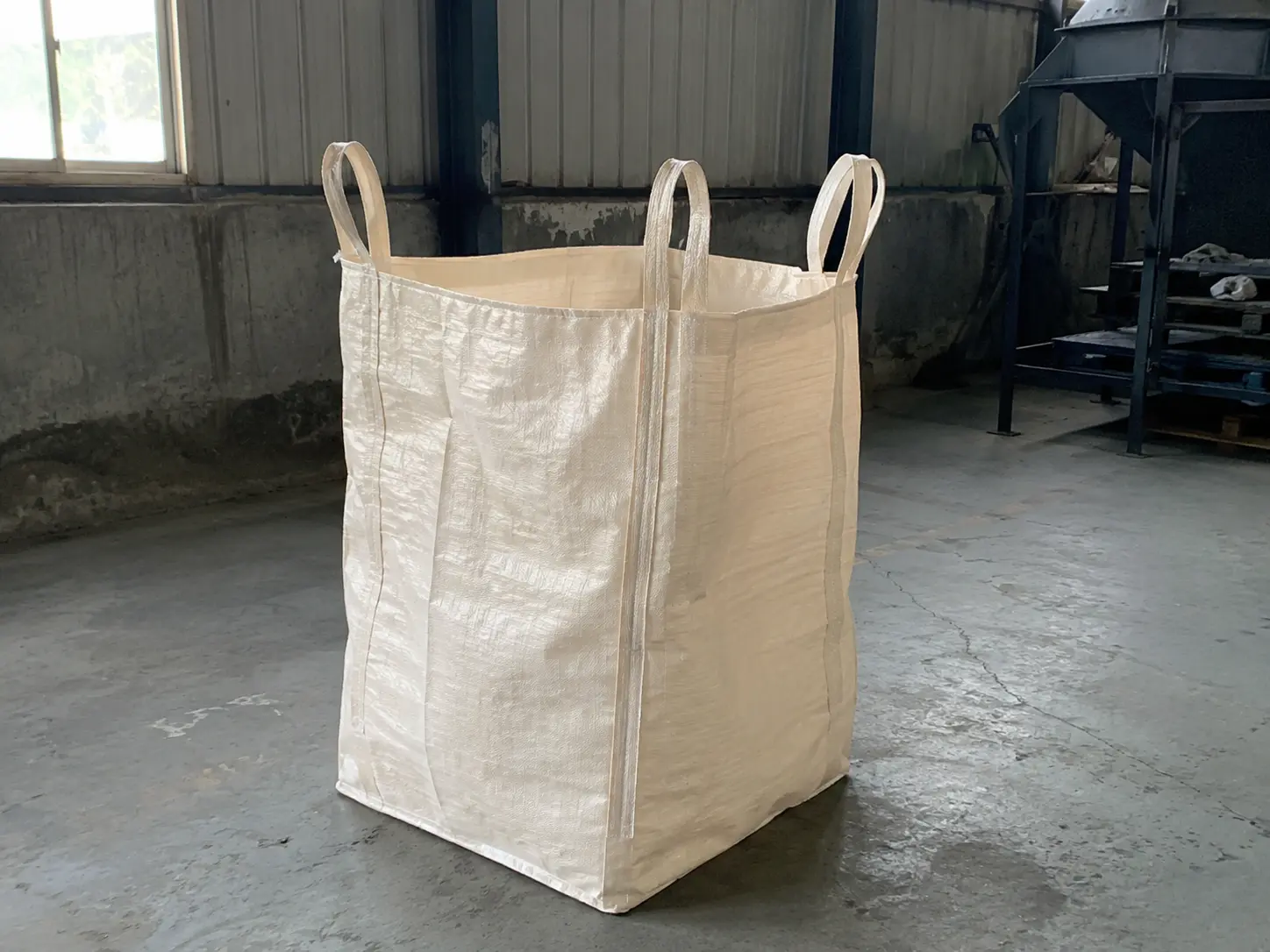
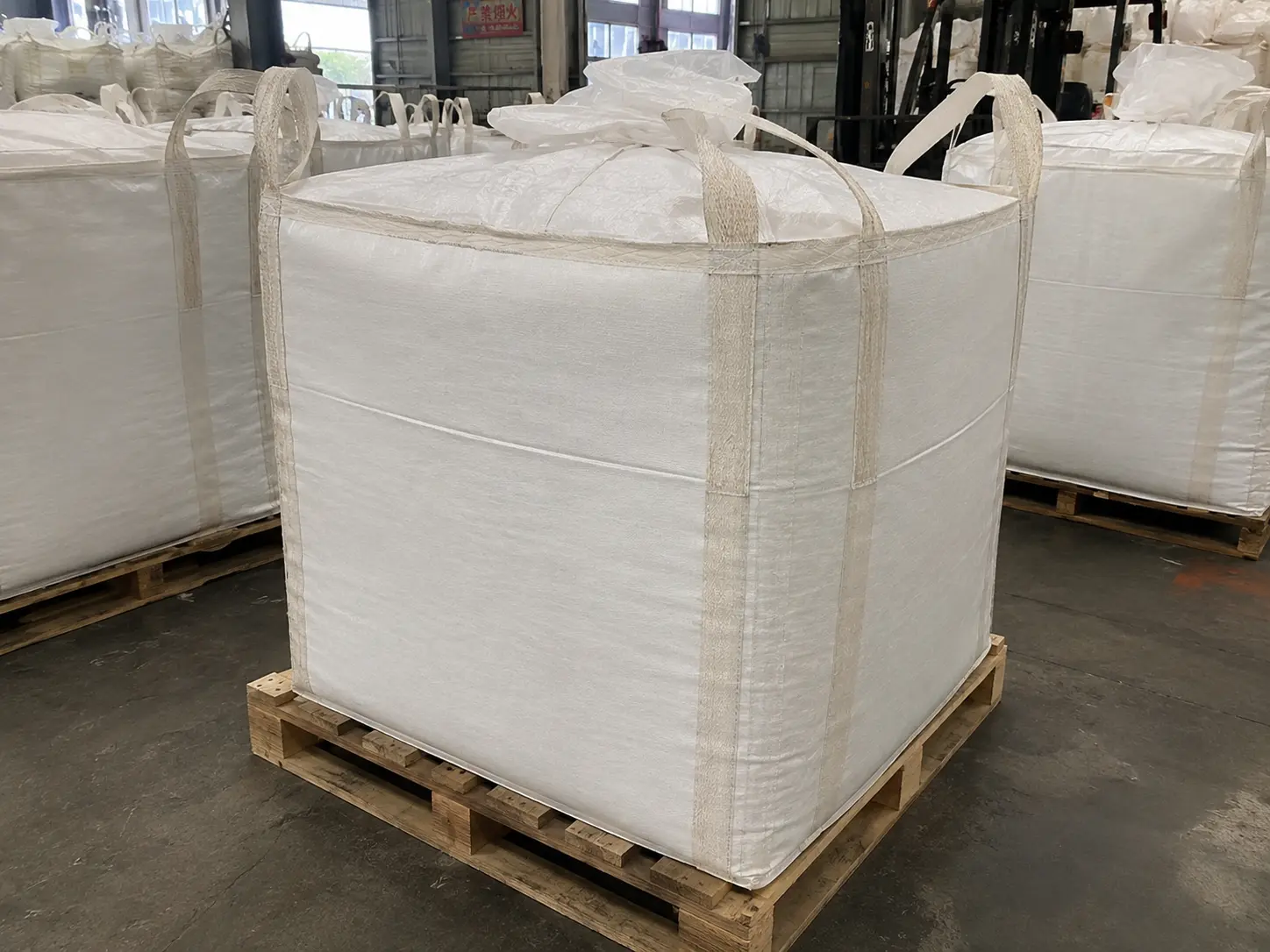
1 Ton Bulk Bags
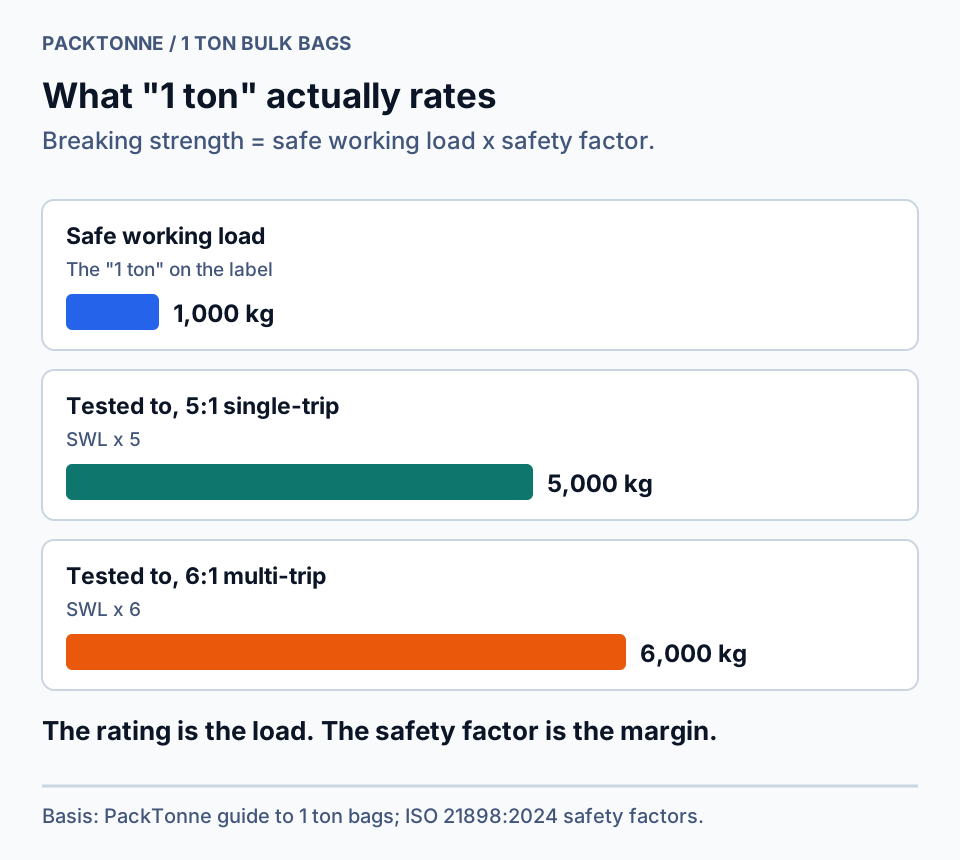
A 1 ton bulk bag is a woven polypropylene FIBC rated to a safe working load of 1,000 kg. The “1 ton” is the rated load, not a size: the same rating comes in different dimensions and fabric weights, and what makes it safe is the safety factor, 5:1 for a single trip or 6:1 for reuse. We build to your product and sell by the production run, shipped by the container.
- SWL 1,000 kg
- Safety factor 5:1 / 6:1
- Sold by the container
Why Choose 1 Ton Bulk Bags
A rating you can check
The 1,000 kg is the safe working load. The safety factor, 5:1 or 6:1, is the margin behind it, and you can ask for it in writing.
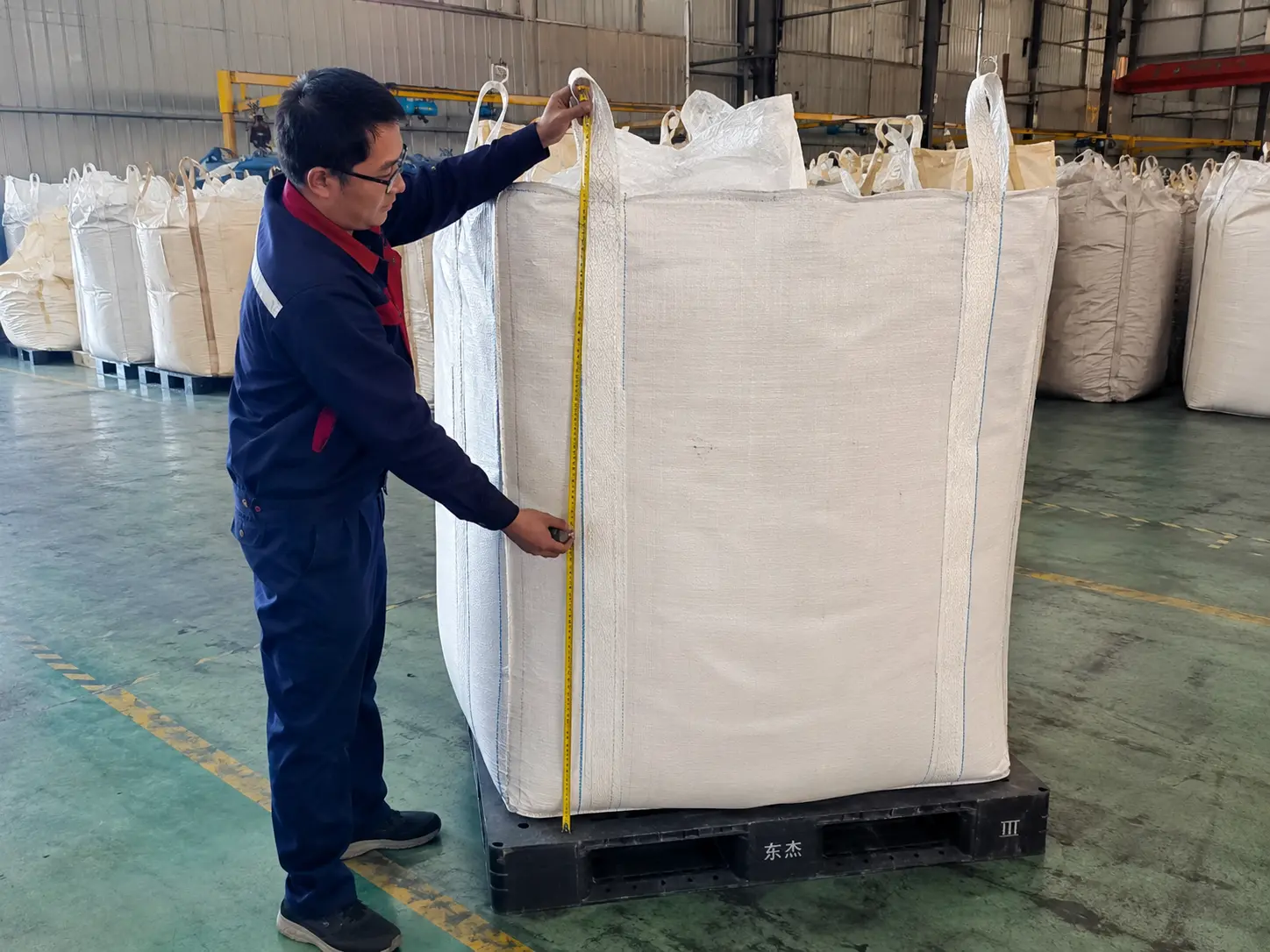
Sized to your product, not to the label
Body dimensions follow bulk density and your pallet or container, so the bag fills sensibly rather than leaving air or bulging.
Single-trip or multi-trip
Build to 5:1 if the bag goes one way, or 6:1 with denser stitching if it will be refilled.
Factory-direct, by the container
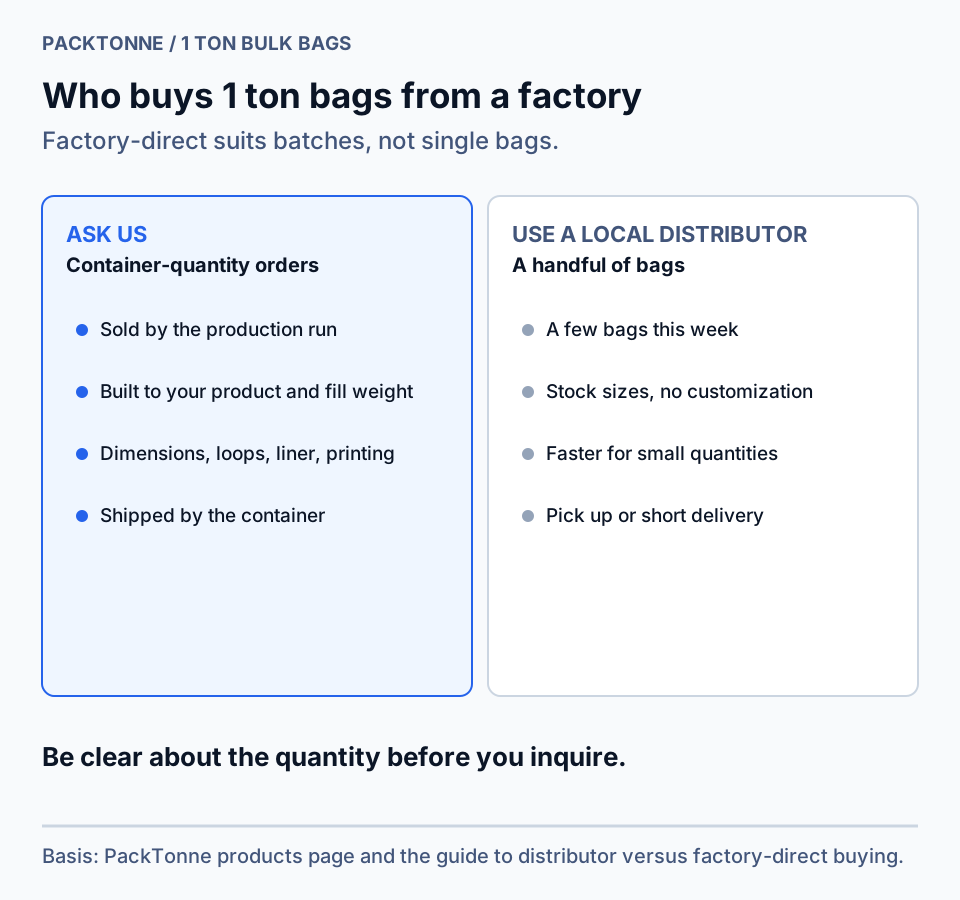
We sell by the production run and ship by the container, which suits regular, container-quantity buyers.
Why Woven Polypropylene
A 1 ton bag is woven from polypropylene tape because it carries a tonne at low weight, takes up almost no water and is chemically inert to most dry products. The weave still lets water through, so add a coating or liner if the product must stay dry.
- Strong for its weight
- An empty 1 ton bag weighs only a few kilograms, yet is rated to lift 1,000 kg.
- Fibers that don’t absorb water
- The fabric does not rot or lose strength when damp. The weave still lets water through.
- Chemically inert
- It resists the acids, alkalis and salts found in most minerals, fertilizers and construction materials.
- Recyclable
- Mono-material polypropylene bags can be reprocessed into pellets at end of life.
Key Features
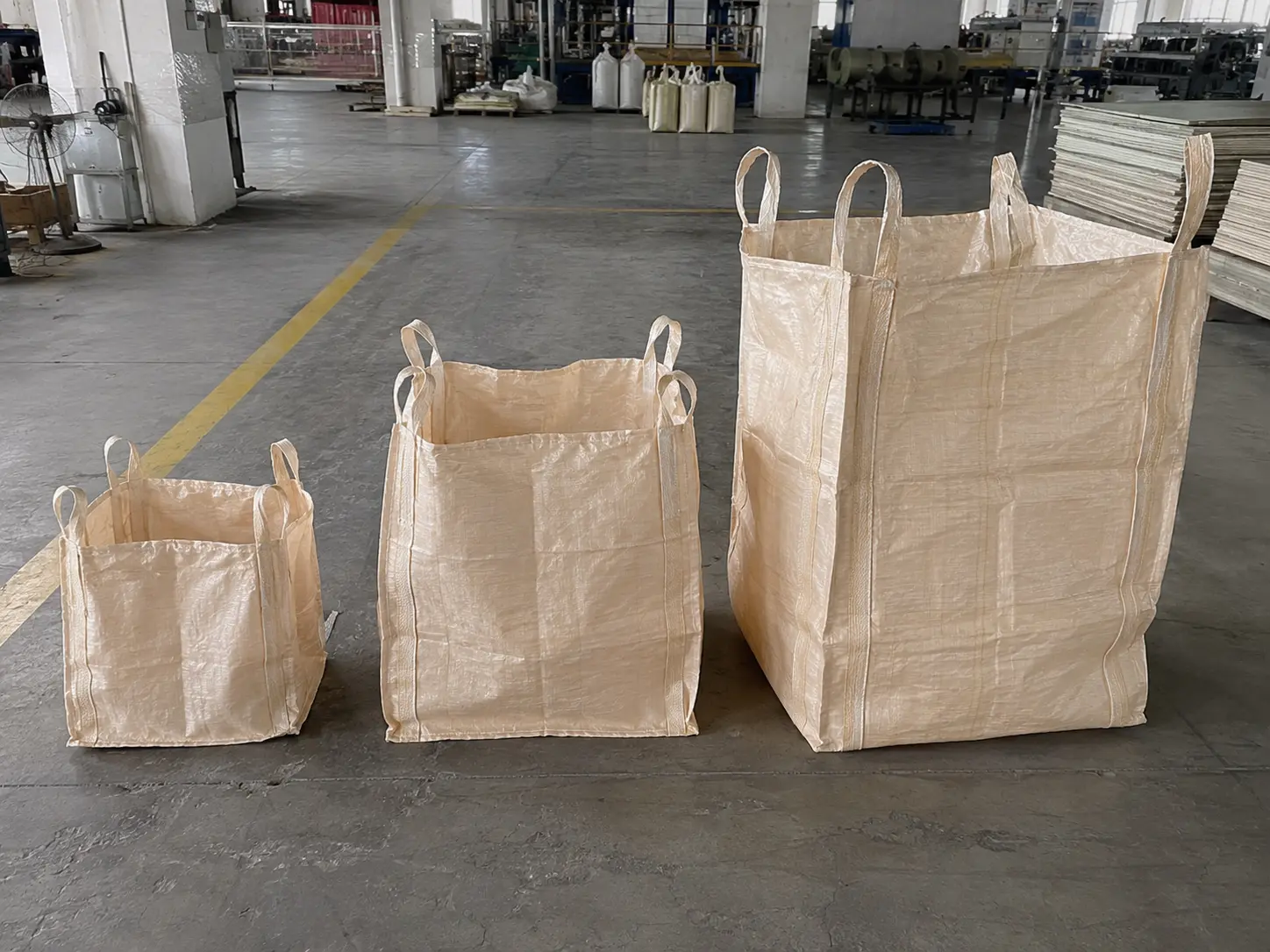
Four cross-corner loops
Standard lifting by forklift or hoist. Two-loop and single-loop builds are available.
Double-stitched box seams
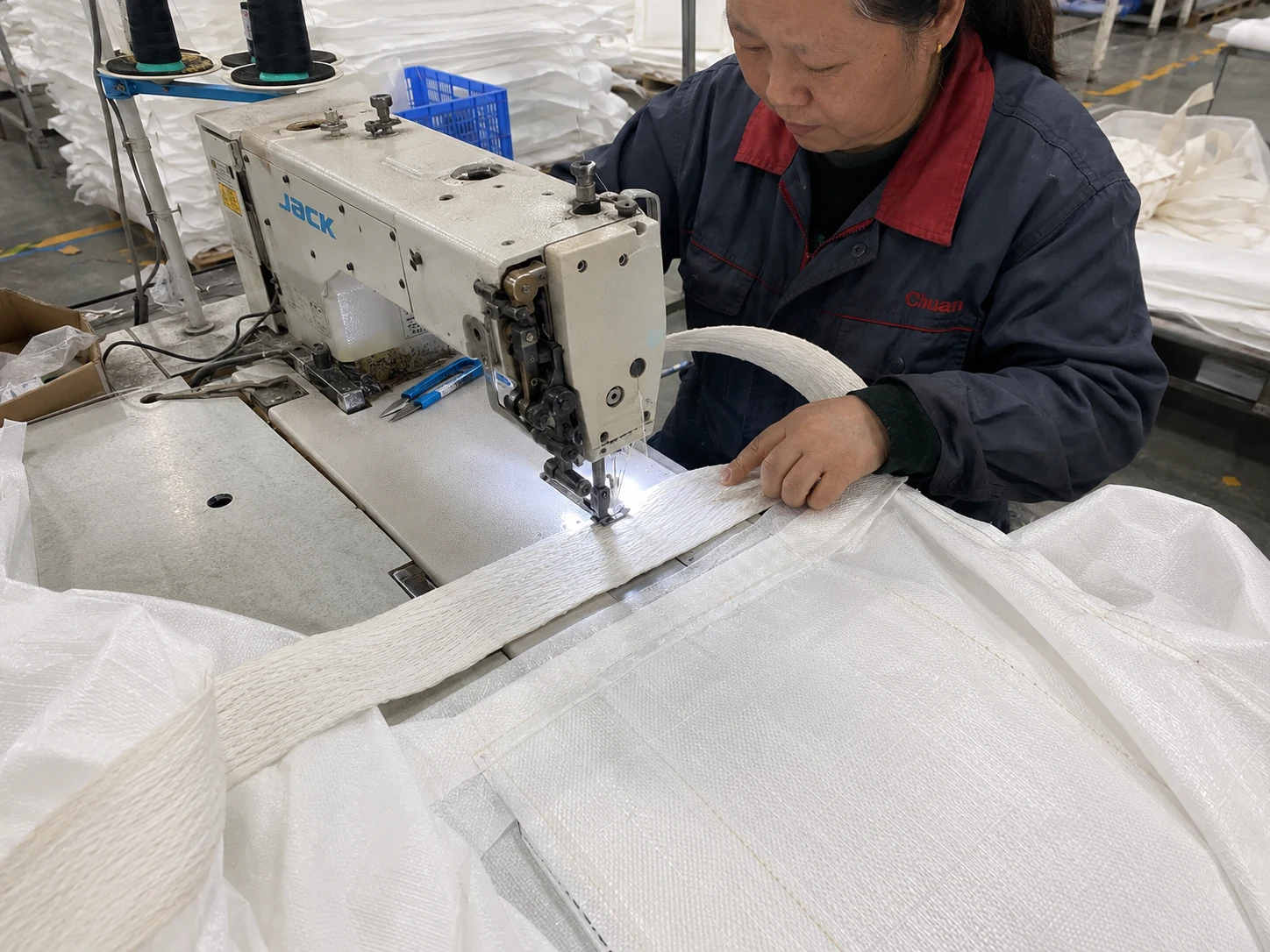
Seams and loop stitching are specified to the same safety factor as the fabric.
Body sized from bulk density
A dense product fills a smaller bag; a light product needs a larger one.
Top and bottom options
Duffle, spout or open top; flat or spout bottom to match your lines.
Optional PE liner
Loose or form-fit liner when the product must stay dry or would sift through the weave.
Custom printing
1–3 colors on 1–4 panels for branding, product data and handling instructions.
Spec Sheet
Construction
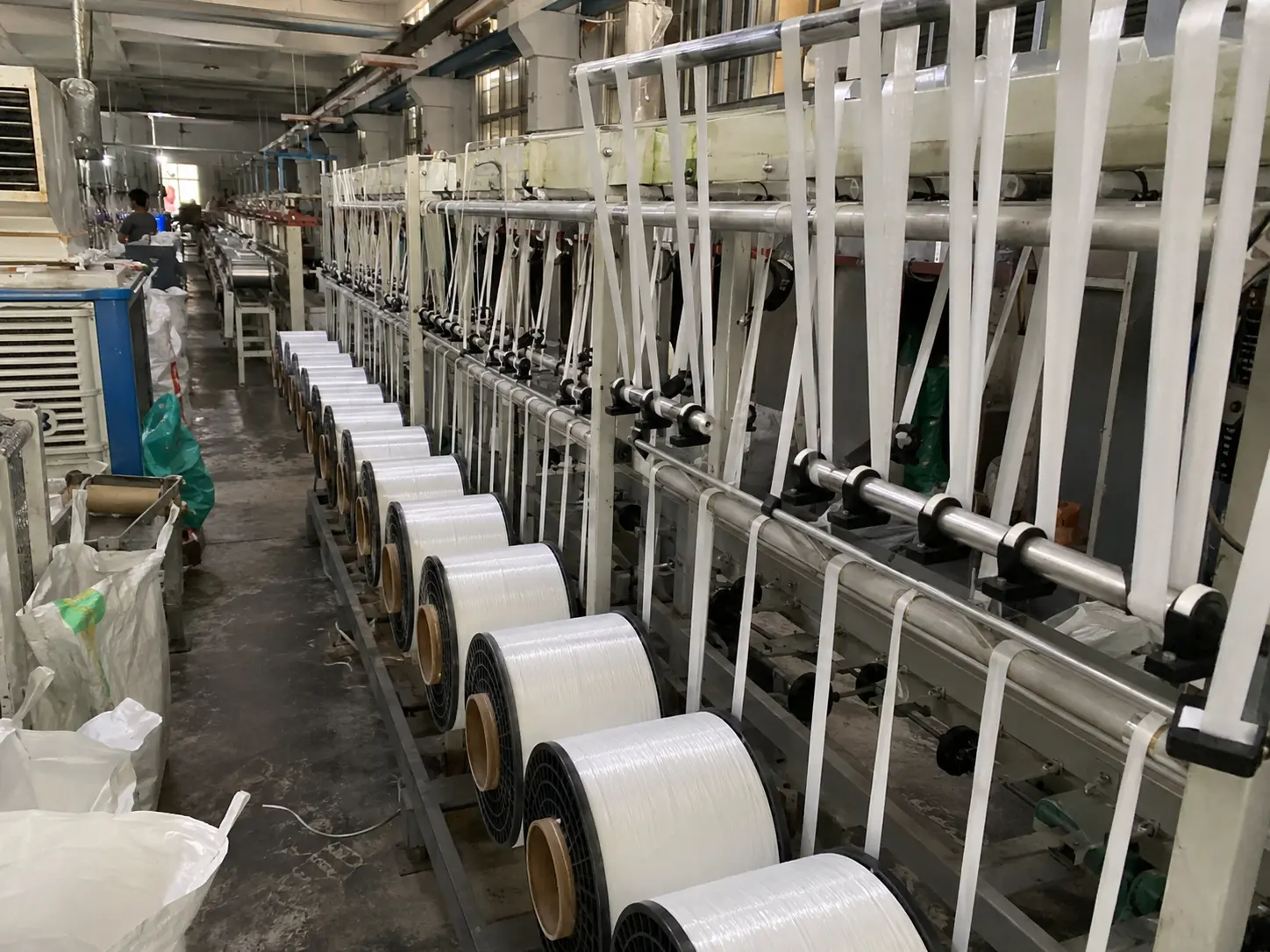
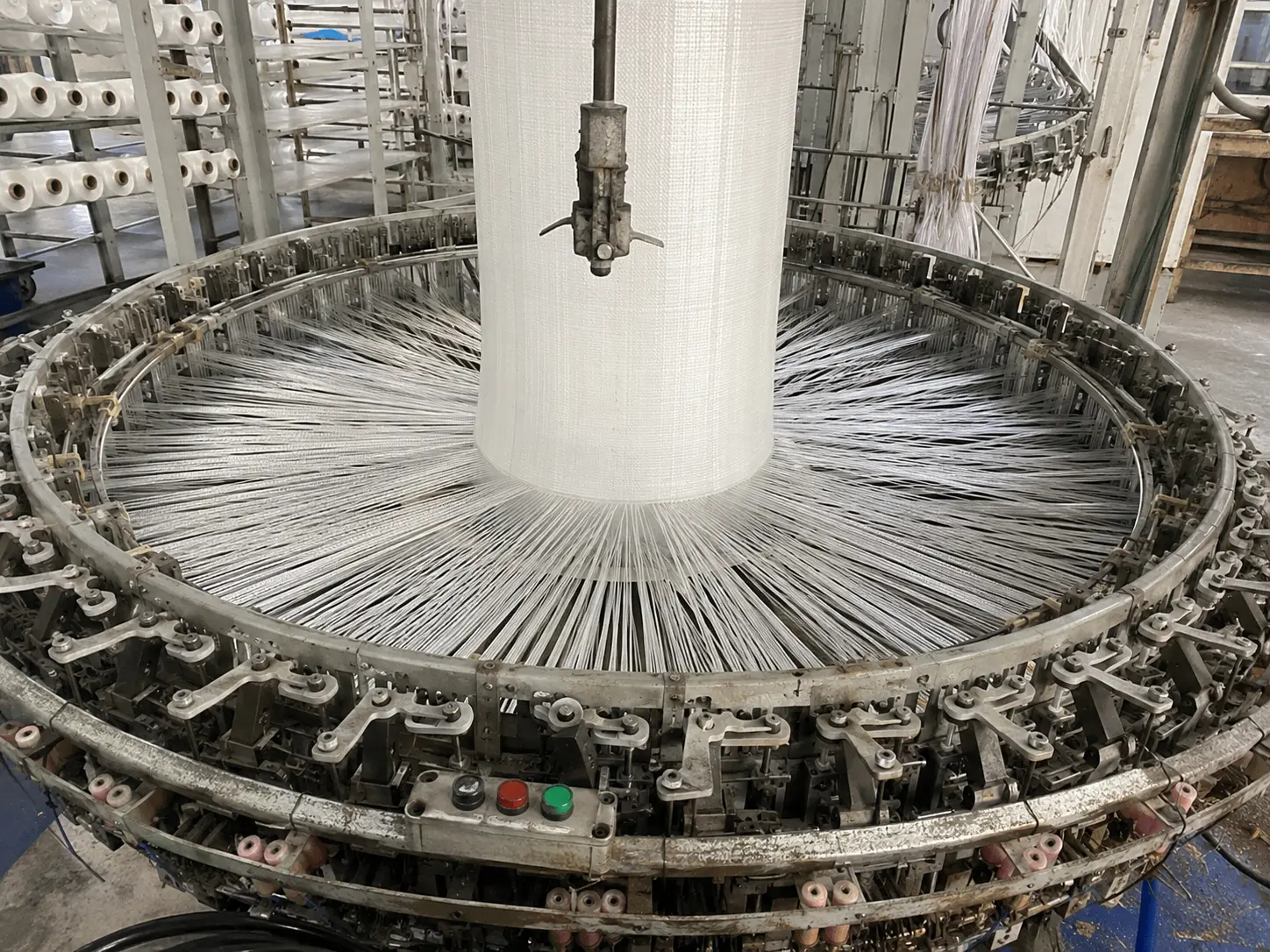
A 1 ton bag starts as polypropylene resin, extruded and stretched into flat tape, then woven into fabric. Panels are cut to your dimensions and joined with a double-stitched box seam, and the lifting loops are cross-stitched at the corners with reinforced thread rated to the bag’s safety factor, so a 6:1 multi-trip bag gets denser stitching than a 5:1 single-trip bag of the same size. The body is sized from your product’s bulk density, because a dense product reaches 1,000 kg in far less volume than a light one.
Not for: This is not the page for a handful of bags. We sell by the production run and ship by the container, so for a few bags this week a local distributor is faster. Standard Type A fabric is also not for flammable powders or solvent areas; ask about anti-static types.
1 Ton Bag: 5:1 Single-Trip vs 6:1 Multi-Trip
| 5:1 single-trip | 6:1 multi-trip | |
|---|---|---|
| Safe working load | 1,000 kg | 1,000 kg |
| Tested to | 5,000 kg (SWL × 5) | 6,000 kg (SWL × 6) |
| Designed for | One fill and one discharge | Repeated filling and emptying |
| Stitching and loops | Specified to 5:1 | Denser stitching, specified to 6:1 |
| Relative cost | Lower | Higher |
| Choose it when | The bag goes one way | The bag will be refilled or returned |
What You Can Change
- Dimensions set from your product’s bulk density and your pallet or container
- 4 cross-corner, 2-loop or single loop configurations
- 5:1 single-trip or 6:1 multi-trip build
- Duffle top, spout top or open top; flat bottom or spout bottom
- Optional PE liner, loose or form-fit
- 1–3 color printing on 1–4 panels
Where 1 Ton Bulk Bags Are Used
Sand, gravel and aggregates
Dense products reach 1,000 kg in little volume, so a shorter or smaller body often fits better.
How full a bag of sand getsCement and dry mortar
Moisture ruins cement for good, so the fabric is paired with a coating or a PE liner.
Bulk bags for cementFertilizer
Most granular fertilizers need no static protection but do need moisture control against caking.
Bulk bags for fertilizerMinerals and ores
Abrasion, not moisture, is the main risk, so fabric weight follows edge sharpness and bulk density.
Bulk bags for miningGrain, feed and seed
Whole grain in non-hazardous areas. Fine grain dust may need a static-protective type.
Bulk bags for grainProblems a Correctly Specified Bag Solves
ProblemQuotes for “1 ton bags” that do not compare
FixAsk for the safety factor, fabric weight and dimensions in writing. The 1,000 kg rating alone does not describe the bag.
1 ton bags explainedProblemPaying for bag volume a dense product cannot fill
FixThe body is sized from bulk density so the bag reaches its rating nearly full. A shorter or smaller bag often fits better.
When a smaller bag is rightProblemBags bulging round and wasting pallet and container space
FixInternal baffles hold the bag square, or the base is matched to your pallet so the bulge stays on it.
Baffle bagsProblemNot knowing how many bags fit in a container
FixContainer loading depends on the bag footprint and stacking. Work it out from your actual dimensions.
Bags per 40ft containerOptions at a Glance
How We Spec Your Bag
- 01
Tell us the product
Material, bulk density, target fill weight, and how the bag is filled and emptied.
- 02
We match the spec
Static class, fabric weight, safety factor, loops, top and bottom, liner and printing.
- 03
Sample and approve
A pre-production sample for your own fill test. Production starts only on your written approval.
- 04
Production and QC
Batch-tagged production and load-test reports. Third-party inspection is welcome before shipment.
- 05
Loading and documents
Loading plan, photos at loading and the full export document set.
Checked Before It Ships
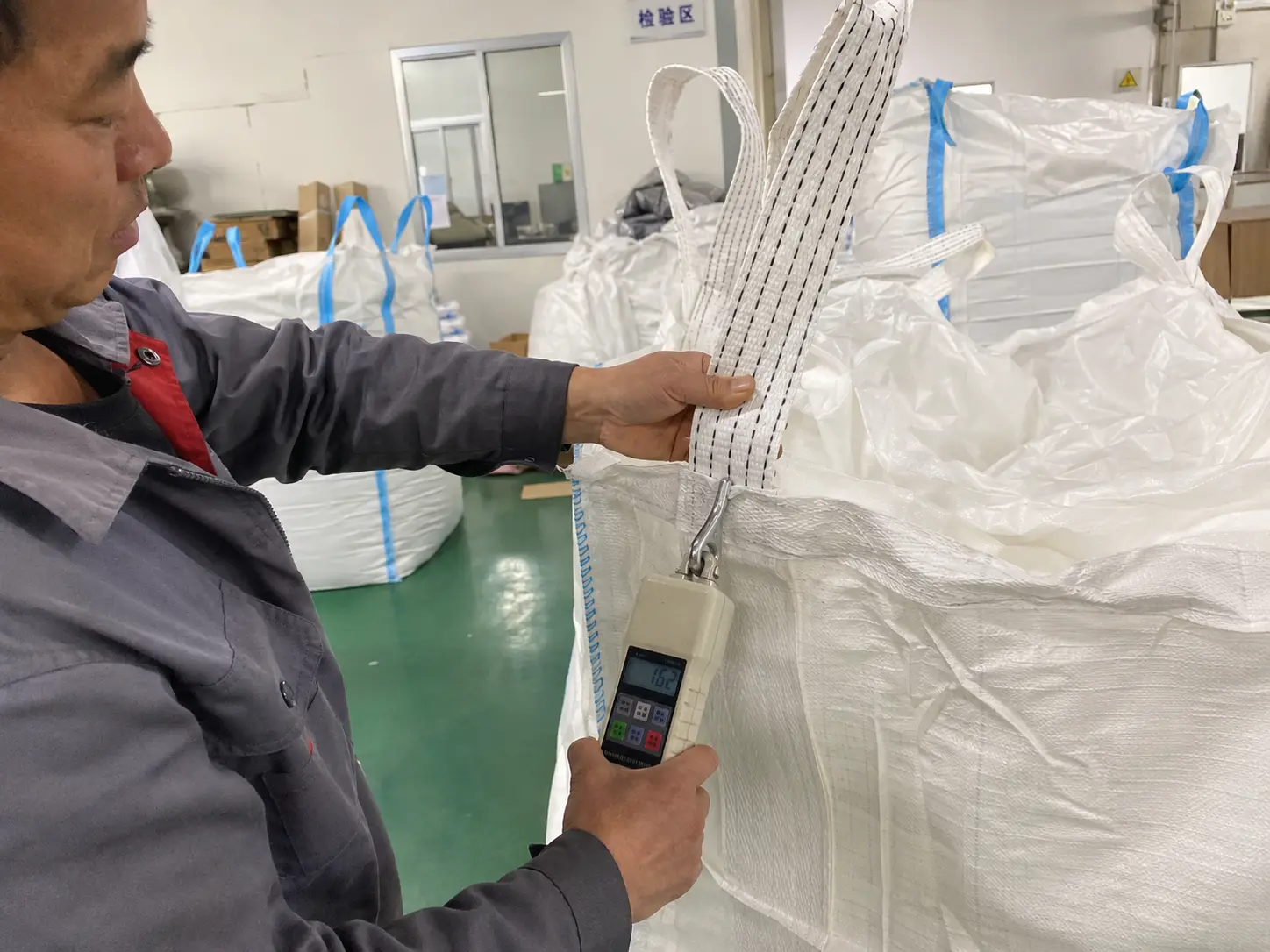
- Incoming fabric checked for weight and tensile strength before cutting
- Load testing on new specifications, to the safety factor on the label
- Every bag tagged with batch number and production date for traceability
- Pre-shipment inspection by SGS, Intertek or your own inspector on request
What This Bag Is Tested To
- ISO 21898:2024 — cyclic top lift test (30 cycles @ 2× SWL, final cycle @ 5× SWL)
- GB/T 10454-2025 — effective March 2026, dimensional tolerance and single-trip/multi-trip classification
From Our Sourcing Desk
Do not compare “1 ton bags” on the rating alone. Two quotes for a 1,000 kg bag can differ in fabric weight, stitching and safety factor, so ask for the safety factor and the fabric weight in writing. Check the bag against your product too: the body size follows bulk density, so a dense product may fit a smaller bag and a light product a larger one. Tell us the quantity up front, because we sell by the production run and shipping is by the container.
Common Questions
What is a 1 ton bulk bag?
A 1 ton bulk bag is a woven polypropylene FIBC with a safe working load of 1,000 kg. The 1 ton is the rated load, not a size. The bag is built to a safety factor, 5:1 for one trip or 6:1 for reuse, and sized from the bulk density of the product it will carry.
How much does a 1 ton bag hold?
Up to 1,000 kg, its safe working load. How full that is depends on the product, because bulk density sets the volume: a dense product reaches 1,000 kg in less space than a light one. Tell us the product and we will size the body so it fills sensibly instead of leaving air or bulging.
What size is a 1 ton bag?
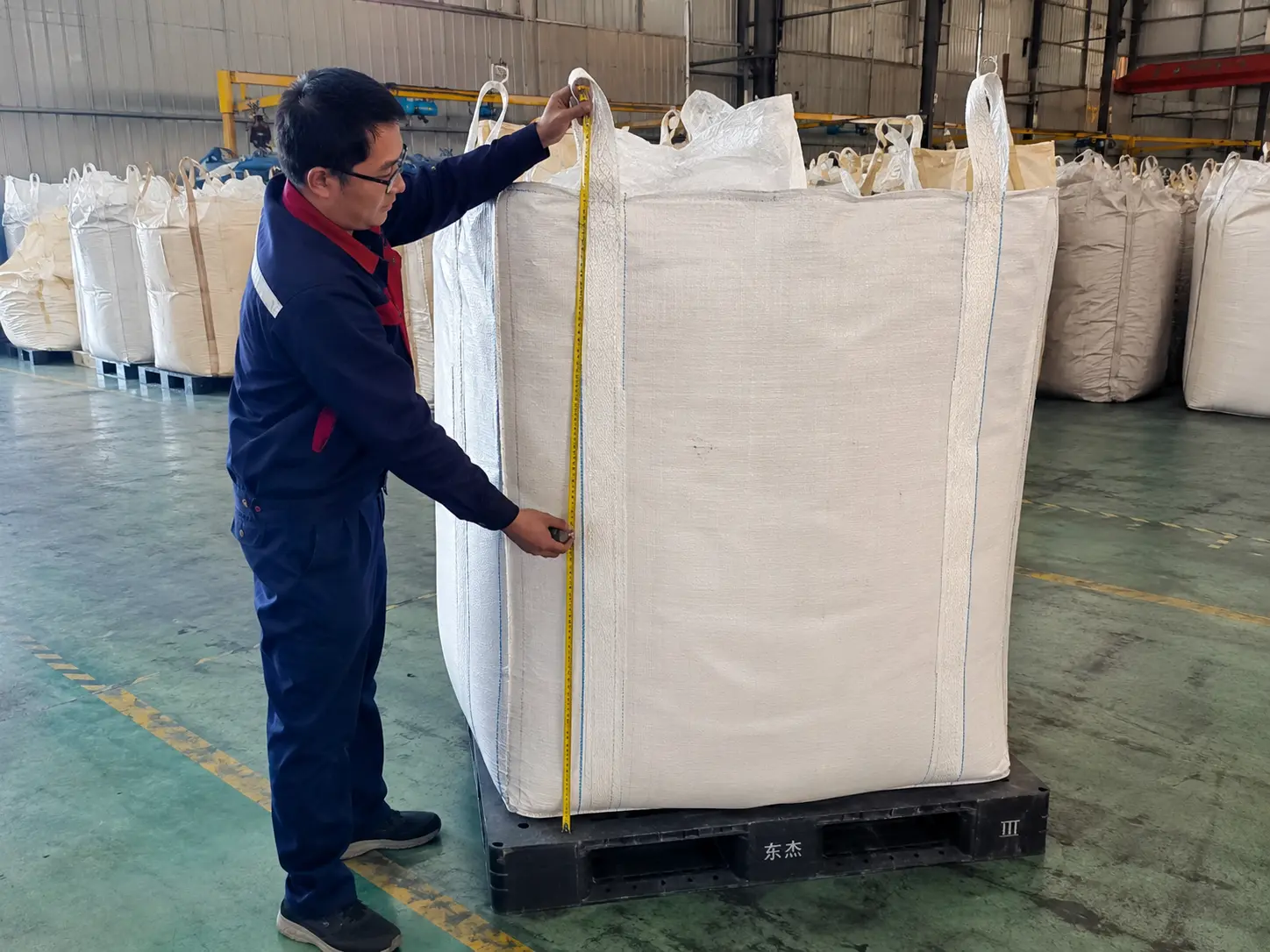
About 90 × 90 × 110 cm is typical, but there is no single size. Dimensions vary by supplier and by the product’s bulk density, and the same 1,000 kg rating can come in different footprints and fabric weights. Send your product and your pallet or container constraints and we will specify the size.
What is the difference between a 5:1 and a 6:1 1 ton bag?
Both carry 1,000 kg. The safety factor is the margin: a 5:1 bag is tested to 5,000 kg and is built for a single trip, while a 6:1 bag is tested to 6,000 kg with denser stitching and is built for reuse. Choose by whether the bag goes one way or is refilled.
Can I buy just a few 1 ton bags from you?
Probably not the best route. We sell by the production run and ship by the container, so small quantities are usually faster through a local distributor. If you need a custom specification in container quantity, send it and we will confirm the minimum order against it rather than quoting a generic figure.
Can 1 ton bags be customized?
Yes. Dimensions, loop type, top and bottom style, liner, safety factor and printing can all be set from your requirement. The more your specification differs from a standard run, the more it affects the minimum order, so send the specification first.
What should I send to quote 1 ton bags?
Send the product and its bulk density, the quantity you need, whether the bag is single-trip or reused, how you fill and empty it, and whether you need a liner or printing. We will confirm dimensions, fabric weight and safety factor against that.
Read Before You Order
- 1 Ton Bags: Why Rated Capacity Isn't the Breaking PointRead guide
- FIBC Safety Factor 5:1 vs 6:1: What the Testing ProvesRead guide
- Bulk Bag Dimensions: Why 90×90×110 Doesn't Fit Every ProductRead guide
- How Many Bulk Bags Fit in a 40ft Container?Read guide
- Where to Buy Bulk Bags: Distributor or Factory-Direct?Read guide