Bulk Bags vs Gaylord Boxes: Which Fits Your Supply Chain?
Gaylord boxes suit domestic, indoor, dry-goods handling. FIBC bags fold flat, resist moisture and scale to export. Here's when each one wins.
PackTonne Sourcing Desk · · 6 min read
An FIBC bulk bag folds flat when empty and handles humidity and rough export handling well; a Gaylord box is a rigid corrugated cardboard container on a pallet base that suits dry, indoor, domestic handling but doesn’t collapse and doesn’t hold up as well to moisture. Neither is universally better — the right choice depends on your shipping distance, storage conditions, and whether you need specialty certification.
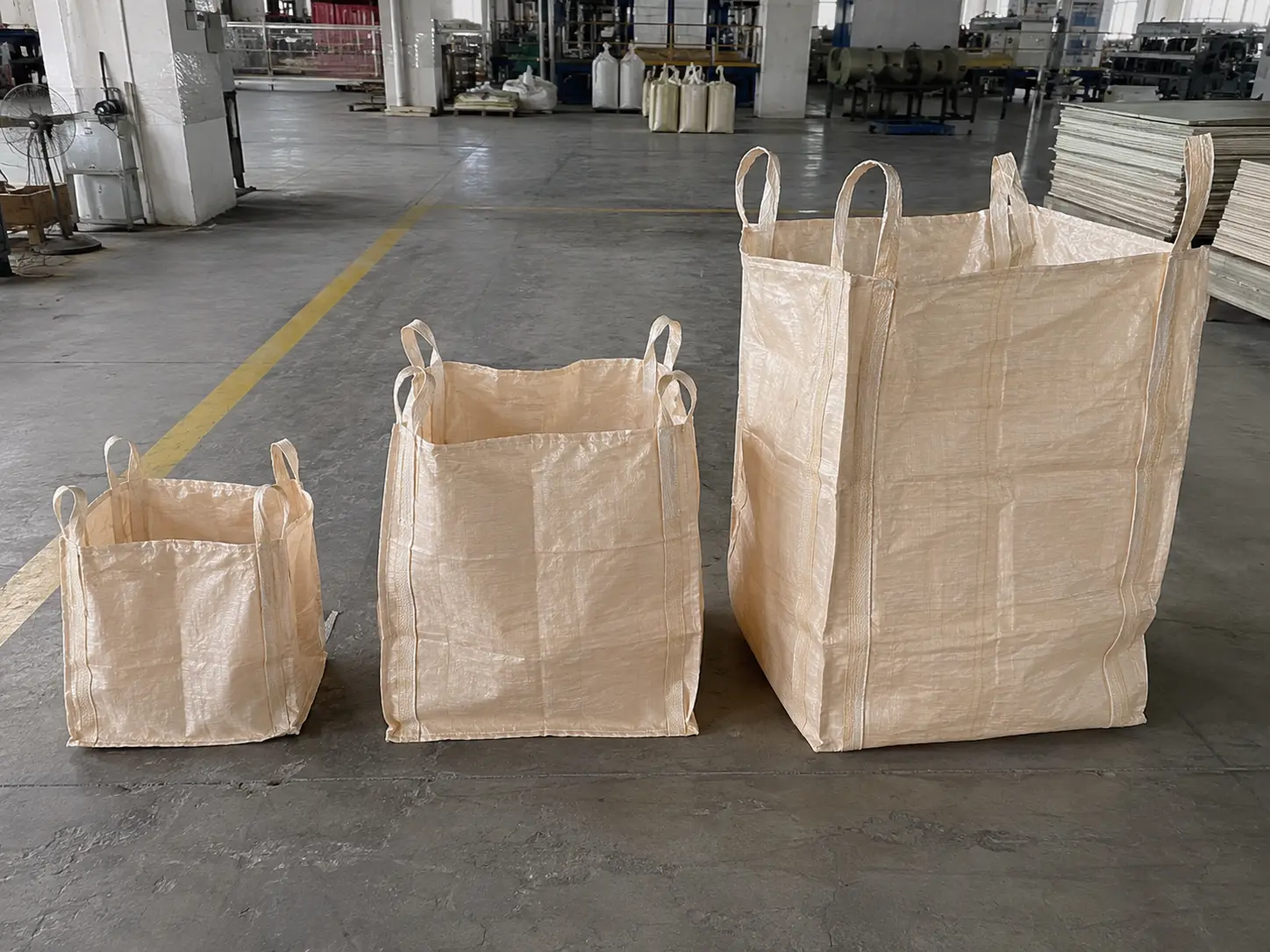
Bulk Bags vs Gaylord Boxes at a Glance
| Factor | FIBC Bulk Bag | Gaylord Box |
|---|---|---|
| Structure | Flexible woven polypropylene | Rigid corrugated cardboard on pallet base |
| Empty footprint | Folds flat — minimal storage/return volume | Rigid — takes up full volume even empty |
| Moisture resistance | Strong — woven PP with optional coating/liner | Weaker — cardboard degrades with sustained humidity |
| Export suitability | Well suited to ocean freight and variable conditions | Less suited — moisture and handling risk over long transit |
| Specialty compliance | Mature UN, food grade, anti-static options | More limited standardized options |
| Typical capacity | 500–3000 kg | Generally smaller volumes, often a few hundred kg |
| Best fit | Export, high volume, varied climate, specialty compliance | Domestic, indoor, dry-goods, closed-loop reuse |
Material and Structure Drive Every Other Difference
An FIBC’s flexible woven PP construction and a Gaylord’s rigid corrugated cardboard-on-pallet structure aren’t just cosmetic differences — nearly every practical tradeoff between the two traces back to this structural choice. Flexible fabric folds, compresses, and handles varied climate exposure differently than rigid cardboard, which holds its shape precisely but is inherently more vulnerable to moisture and physical damage over rough handling.
Empty Footprint: The Practical Difference That Matters Most
A folded FIBC takes a small fraction of the space a Gaylord box occupies even when empty and flattened, since a rigid box’s corrugated structure doesn’t compress the way woven fabric does. This matters enormously for return-empty logistics, shipping unfilled containers to a remote filling location, or simply warehouse storage of empty inventory — the cost difference in freight and storage space for empty containers can be significant at any real volume.
Moisture and Weather Resistance
Woven PP fabric — especially with coating or a liner — handles humidity, rain exposure, and variable climate conditions considerably better than corrugated cardboard, which softens, weakens, and can fail structurally under sustained moisture exposure. This is less of a concern for short domestic hauls in controlled conditions, but it becomes a real risk factor for anything moving through variable weather, long transit times, or humid climates.
Which Wins for International Export
FIBC bulk bags are generally the better fit for export shipping: they handle the humidity variation of ocean transit better, pack more efficiently into container space since they don’t need to preserve a rigid shape, and fold flat for economical empty-container logistics if bags need to travel back to origin. Gaylord boxes’ rigidity and moisture vulnerability make them a riskier choice for the extended transit times and variable conditions international shipping involves.
Which Wins for Domestic, Indoor Use
For dry, indoor, domestic handling — plastics resin, some food ingredients, industrial materials moving short distances in controlled warehouse environments — a Gaylord box can be the more practical and often more cost-effective option, particularly in closed-loop supply chains where boxes get returned and reused between a supplier and a regular customer. The rigid structure also makes hand-loading and automated filling lines simpler in some processing setups where a flexible bag’s changing shape complicates equipment design.
Certification and Specialty Requirements
FIBC has considerably more mature, standardized options for specialty requirements — UN certification for hazardous goods, food grade construction, and anti-static classes for combustible powders are all well-established product categories with recognized testing standards. Gaylord boxes have fewer standardized compliance options in these areas, which matters if your product falls into any of these regulated categories regardless of which container type otherwise seems like a better operational fit.
Cost Considerations Beyond the Sticker Price
Comparing FIBC and Gaylord box costs purely on a per-unit basis misses real operational costs on both sides. FIBC’s flat-fold advantage saves meaningfully on freight and storage for empty containers, a cost that doesn’t show up in the per-bag price but affects total logistics spend. Gaylord boxes in a closed-loop reuse program can spread their cost across many cycles, which changes the economics compared to a single-use comparison — but that reuse model depends on a stable domestic supply chain where boxes reliably come back, something export shipping generally can’t support.
Common Mistakes When Choosing Between the Two
- Comparing only per-unit price without factoring empty-container logistics. FIBC’s folding advantage can offset a higher per-unit price once storage and return freight are included.
- Using Gaylord boxes for export shipments out of habit. Moisture risk and rigid-volume inefficiency compound over long ocean transit in ways that don’t show up on a short domestic route.
- Assuming FIBC compliance options exist in Gaylord form. UN certification and similar standardized compliance categories are considerably less mature for rigid boxes — verify availability before assuming parity.
- Overlooking automated filling line compatibility. Some processing setups are built around a rigid box’s fixed shape; switching to FIBC may require equipment changes worth planning for in advance.
- Assuming one container type fits every part of a supply chain. Some operations reasonably use Gaylord boxes for domestic distribution and FIBC for export legs of the same overall supply chain.
Decision Checklist
- Is this shipment domestic and short-haul, or international and long-transit? International generally favors FIBC on moisture resistance and freight efficiency.
- Does your product need UN certification, food grade, or static protection? FIBC has more mature standardized options for all three.
- How much does empty-container logistics matter to your operation? FIBC’s flat-fold advantage is significant if you’re managing empty container flow.
- Is this a closed-loop domestic supply chain with box reuse? Gaylord boxes can fit well here, particularly at smaller volumes.
- What’s your target capacity per container? Confirm Gaylord box capacity fits your target weight — FIBC generally scales to higher per-unit capacity.
Final Thoughts
The choice usually comes down to where the goods are going and whether the container comes back. Domestic, indoor, closed-loop operations often keep Gaylord boxes reasonably. Export, humidity, and one-way shipping push toward FIBC almost every time. Tell us your route and whether empties return, and we’ll tell you honestly whether switching is worth it for your volume.
Before You Request a Quote
Send these details so we can confirm whether FIBC fits your use case:
- Shipping distance and whether it’s domestic or export
- Product type and any compliance requirements
- Target capacity per container
- Storage and handling conditions, including climate exposure
Request a quote and we’ll confirm whether FIBC is the right fit for your specific shipping and handling needs.
Common Questions
What's the main difference between a bulk bag and a Gaylord box?
An FIBC bulk bag is a flexible woven polypropylene container that folds flat when empty; a Gaylord box is a rigid corrugated cardboard container on a pallet base that keeps its shape whether full or empty. That structural difference drives most of the practical tradeoffs between them.
Which is cheaper to ship empty — bulk bags or Gaylord boxes?
Bulk bags are far cheaper to ship and store empty because they fold flat, taking a fraction of the volume a rigid Gaylord box occupies even collapsed. This matters most for return-empty logistics or shipping empty containers to a filling location.
Are Gaylord boxes suitable for export shipping?
Generally less suitable than FIBC bags — corrugated cardboard is more vulnerable to moisture and humidity over long ocean transit, and rigid boxes take up more container volume than bags that can be packed tightly. FIBC handles the variable humidity and handling conditions of export logistics more reliably.
Can I get a UN certified or food grade Gaylord box?
Specialty compliance options are more limited and less standardized for Gaylord boxes compared to FIBC, where UN certification, food grade construction, and anti-static classes are established, widely available product categories. If your product needs specific compliance certification, FIBC typically has more mature options.
When does a Gaylord box make more sense than a bulk bag?
For domestic, indoor, dry-goods handling — especially in plastics resin or food ingredient processing where boxes are reused in a closed-loop supply chain — a rigid Gaylord box can be the more practical and cost-effective choice, particularly at smaller volumes where FIBC's per-unit economics don't kick in.
Can I switch from Gaylord boxes to bulk bags without changing equipment?
Not always. Gaylord boxes are handled with standard forklift tines; FIBC bags need loop-engaging equipment such as a spreader bar, or at minimum a safe tine-through-loop procedure. Budget for the lifting attachment when costing a switch rather than assuming existing equipment transfers.
Which handles stacking better in a warehouse?
Gaylord boxes stack predictably because rigid walls carry the load. FIBC bags stack well too, but only within their rated configuration and usually in a pyramid pattern rather than straight columns. If dense vertical stacking is central to your storage, confirm the bag's rated stacking limit first.
More in FIBC Basics
All FIBC Basics guides- FIBC vs IBC Totes: Your Product State Decides ThisIBC totes are built for liquids, FIBC bags for dry solids. They rarely compete — except in the narrow band where your product is neither.
- What Is an FIBC Bulk Bag? A Buyer's Starting GuideFIBC means Flexible Intermediate Bulk Container — a woven PP bag moving 500–3000 kg of dry product. Here's how it works and what to check before buying.
- What Is a Super Sack? FIBC vs Bulk Bag vs Jumbo Bag ExplainedSuper sack, FIBC, bulk bag and jumbo bag all describe the same product. Here's where each term comes from and why suppliers use them differently by region.
- Types of FIBC Bags: A/B/C/D, Baffle, Food Grade ExplainedSix FIBC types cover nearly every bulk product. Which one you need depends on what's inside the bag — flammability, moisture, hazard class — not price.