What Is a Super Sack? FIBC vs Bulk Bag vs Jumbo Bag Explained
Super sack, FIBC, bulk bag and jumbo bag all describe the same product. Here's where each term comes from and why suppliers use them differently by region.
PackTonne Sourcing Desk · · 5 min read
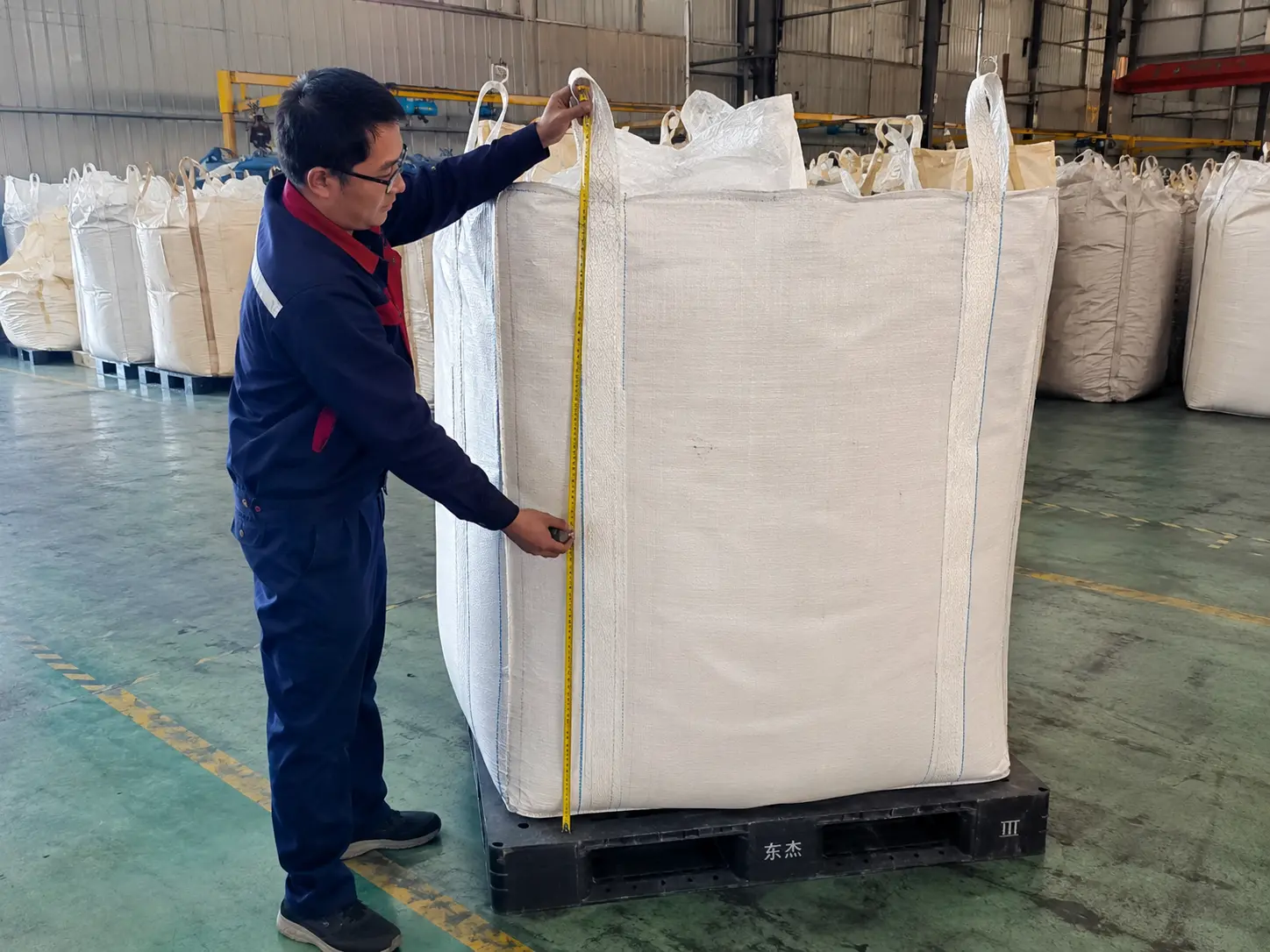
Super sack, FIBC, bulk bag, and jumbo bag all describe the same product: a large woven polypropylene container for moving 500–3000 kg of dry bulk goods. The differences are naming, not design. Super Sack started as a trademark; FIBC is the formal technical term; bulk bag is the common North American generic; jumbo bag dominates in Asian and Middle Eastern markets. Knowing which term you’ll hear where helps you search, compare quotes, and read spec sheets without confusion.
The Four Names at a Glance
| Term | Origin | Where it’s most used | Status |
|---|---|---|---|
| FIBC | Industry acronym: Flexible Intermediate Bulk Container | Technical specs, certifications, trade documents | Formal/technical |
| Bulk bag | Descriptive, generic | North America, general industry conversation | Generic |
| Super sack | Originally a brand name | United States, especially construction and agriculture | Genericized trademark |
| Jumbo bag | Descriptive, regional | Asia, Middle East, parts of Europe | Generic |
FIBC Is the Term You’ll See on Paper
FIBC — Flexible Intermediate Bulk Container — is the term used in international standards, safety certifications, and customs paperwork, because it’s precise and doesn’t carry regional or brand baggage. Each word does work: “flexible” distinguishes it from rigid totes or boxes, “intermediate” places it between small retail packaging and full bulk tank transport, and “container” is the neutral, standards-friendly noun. Testing standards like IEC 61340-4-4 and UN 13H1–13H4 marking reference “FIBC,” not “super sack” or “jumbo bag.” If you’re reading a spec sheet, a certificate, or our types of FIBC bags breakdown, this is the term doing the technical work.
Bulk Bag Is the Everyday North American Term
“Bulk bag” is the term most North American buyers default to in conversation and search — descriptive, generic, no brand association. It’s interchangeable with FIBC in every practical sense; the difference is register, not meaning. Our own bulk bag dimensions guide uses this term for exactly that reason — it’s what buyers actually type into a search bar.
Super Sack Started as a Brand Name
Super Sack was originally a registered trademark belonging to a specific manufacturer, not a generic product category. Over decades of common use, the term genericized — the way “thermos” or “escalator” did — and today most people who say “super sack” mean any FIBC, not the specific branded product. Worth knowing if you ever see it used in a formal or legal context, where the trademark distinction can still matter, but for sourcing purposes it’s functionally identical to “bulk bag.”
You will see it written three ways — “super sack,” “supersack” as one word, and “super sack bags” — and none of them signals anything about the product. The one-word spelling is especially common in US warehouse and logistics usage, so searching only the two-word form leaves out a slice of the supplier market. Suppliers who list supersacks and suppliers who list FIBCs are quoting the same bag.
Jumbo Bag Dominates Outside North America
“Jumbo bag” is the term you’ll hear most from suppliers and buyers across Asia, the Middle East, and parts of Europe — regions that account for a large share of global FIBC manufacturing and trade. China alone accounts for roughly 38% of global FIBC production, and factories there use “jumbo bag” interchangeably with “FIBC” in daily conversation, even when the formal quote or certificate reads “FIBC.” If you’re sourcing from a Chinese or Indian factory, expect to hear both terms in the same email thread.
Other Names You’ll Run Into
Two more terms show up often enough to flag. “Big bag” is common in continental Europe, functioning the same way “jumbo bag” does in Asia — a regional generic term, not a different product. “Bulk sack” appears in the same way, and hybrid forms are everywhere in listings: FIBC super sack, super sack bulk bag, FIBC jumbo bag, FIBC big bag. All of them are one product described twice. “Tote” is the one to watch for confusion: in some industries “tote” refers to a rigid or semi-rigid plastic container, a genuinely different product from a flexible woven FIBC. If a supplier or buyer uses “tote” in conversation, confirm whether they mean a flexible bag or a rigid container before assuming.
Why the Terminology Confusion Matters for Sourcing
Different terms surface different pools of information and suppliers, which matters more in practice than the definitions alone. A web search for “super sack” skews toward US-based construction and agriculture suppliers; “jumbo bag” returns more Asian manufacturers and export-focused listings; “FIBC” pulls technical datasheets and certification bodies. If you’re only searching one term, you’re likely missing part of the supplier landscape — worth running a search on at least two of the four before settling on a shortlist.
Does the Name Change What You’re Buying?
No — the name has no bearing on dimensions, fabric weight, safety factor, or static protection class. What changes the product is the spec: capacity, fabric weight, safety factor, static protection type, liner, and certification. Two quotes for a “super sack” and an “FIBC” at the same spec are the same bag; two quotes for “FIBC” at different specs are different bags regardless of what either supplier calls them. Always compare by spec sheet, not by which term appears on the quote.
Decision Checklist
- Searching for information? Try all four terms — search volume and available content split unevenly across them.
- Talking to an international supplier? Any term works, but leading with “FIBC” plus your spec signals a technical buyer.
- Reading a certification or customs document? Expect “FIBC” — that’s the term regulatory language uses.
- Comparing quotes from different regions? Confirm they’re quoting against the same spec sheet, not just the same name.
Final Thoughts
The terminology only matters until you’re talking specifications. Whichever word you use, a supplier who exports internationally will recognize it — and the moment you send capacity, fabric weight and certification requirements, the naming question disappears entirely. If you’re early enough in sourcing that the vocabulary still feels uncertain, send us what you’re packing and we’ll work back to the right spec from there.
Before You Request a Quote
Whatever term you use, the spec is what matters:
- Target capacity and dimensions
- Static protection class, if your product needs it
- Food grade, UN certification, or other compliance requirement
- Fill and discharge style
- Order quantity
Send these details with your request for a quote and skip the terminology question entirely — a supplier who exports internationally will know exactly what you mean.
Common Questions
What is a super sack exactly?
A super sack is a large woven polypropylene bag used to transport bulk dry goods in quantities from 500 to 3000 kg. It's the same product as an FIBC, bulk bag, or jumbo bag — the name varies by region and industry habit, not by design.
Is Super Sack a brand name?
Yes, originally. Super Sack was a registered trademark of a specific manufacturer, but the term has become genericized through common use, similar to how people say 'thermos' or 'kleenex' for products that aren't that specific brand. Most suppliers today use it as a generic descriptor without meaning the original trademarked product.
What does FIBC stand for?
FIBC stands for Flexible Intermediate Bulk Container. It's the formal, international technical term used in manufacturing specs, testing standards, and trade documentation — the term you'll see on a certification or a customs form rather than in casual conversation.
Is a supersack different from a super sack?
No — the one-word spelling is just a spelling. Supersack, super sack and super sack bags all refer to the same flexible intermediate bulk container. The one-word form shows up more in US warehouse and logistics writing, while spec sheets and certificates almost always use FIBC.
Is a jumbo bag the same as a bulk bag?
Yes. Jumbo bag is the term most commonly used in Asian and Middle Eastern markets for the identical product called a bulk bag in North America or an FIBC in technical documentation. There's no design or spec difference tied to the name.
Which term should I use when contacting a supplier?
Any of them work — suppliers who export internationally recognize all four terms. Using the technical term FIBC alongside your target capacity and application tends to get the most precise first response, since it signals you're asking a spec question rather than a general one.
Will a supplier charge more if I ask for a super sack instead of an FIBC?
They shouldn't — the terms describe the same product, so pricing follows the specification, not the word you used. If a quote changes based on terminology alone, that's worth questioning. Send the spec (capacity, fabric weight, static class, certification) and the naming becomes irrelevant to the number.
Which term should I search when researching suppliers?
Try at least two. Each term surfaces a different slice of the market — super sack skews toward US suppliers, jumbo bag toward Asian manufacturers and exporters, and FIBC toward technical datasheets and certification bodies. Searching only one term means seeing only part of the supplier landscape.
More in FIBC Basics
All FIBC Basics guides- FIBC vs IBC Totes: Your Product State Decides ThisIBC totes are built for liquids, FIBC bags for dry solids. They rarely compete — except in the narrow band where your product is neither.
- What Is an FIBC Bulk Bag? A Buyer's Starting GuideFIBC means Flexible Intermediate Bulk Container — a woven PP bag moving 500–3000 kg of dry product. Here's how it works and what to check before buying.
- Bulk Bags vs Gaylord Boxes: Which Fits Your Supply Chain?Gaylord boxes suit domestic, indoor, dry-goods handling. FIBC bags fold flat, resist moisture and scale to export. Here's when each one wins.
- Types of FIBC Bags: A/B/C/D, Baffle, Food Grade ExplainedSix FIBC types cover nearly every bulk product. Which one you need depends on what's inside the bag — flammability, moisture, hazard class — not price.