FIBC Liners Explained: PE Liner Types
A bulk bag liner isn't just loose-fit or form-fit — material, thickness, and sealing method each change what it actually protects against. Here's how to specify the right one.
PackTonne Sourcing Desk · · 6 min read
A bulk bag liner isn’t a single generic spec — construction (loose-fit or form-fit), material (LDPE or HDPE), thickness, and sealing method each change what it actually protects against. Two bags described simply as “lined” can perform very differently depending on which of these choices a supplier made. This guide breaks down what each liner variable actually controls.
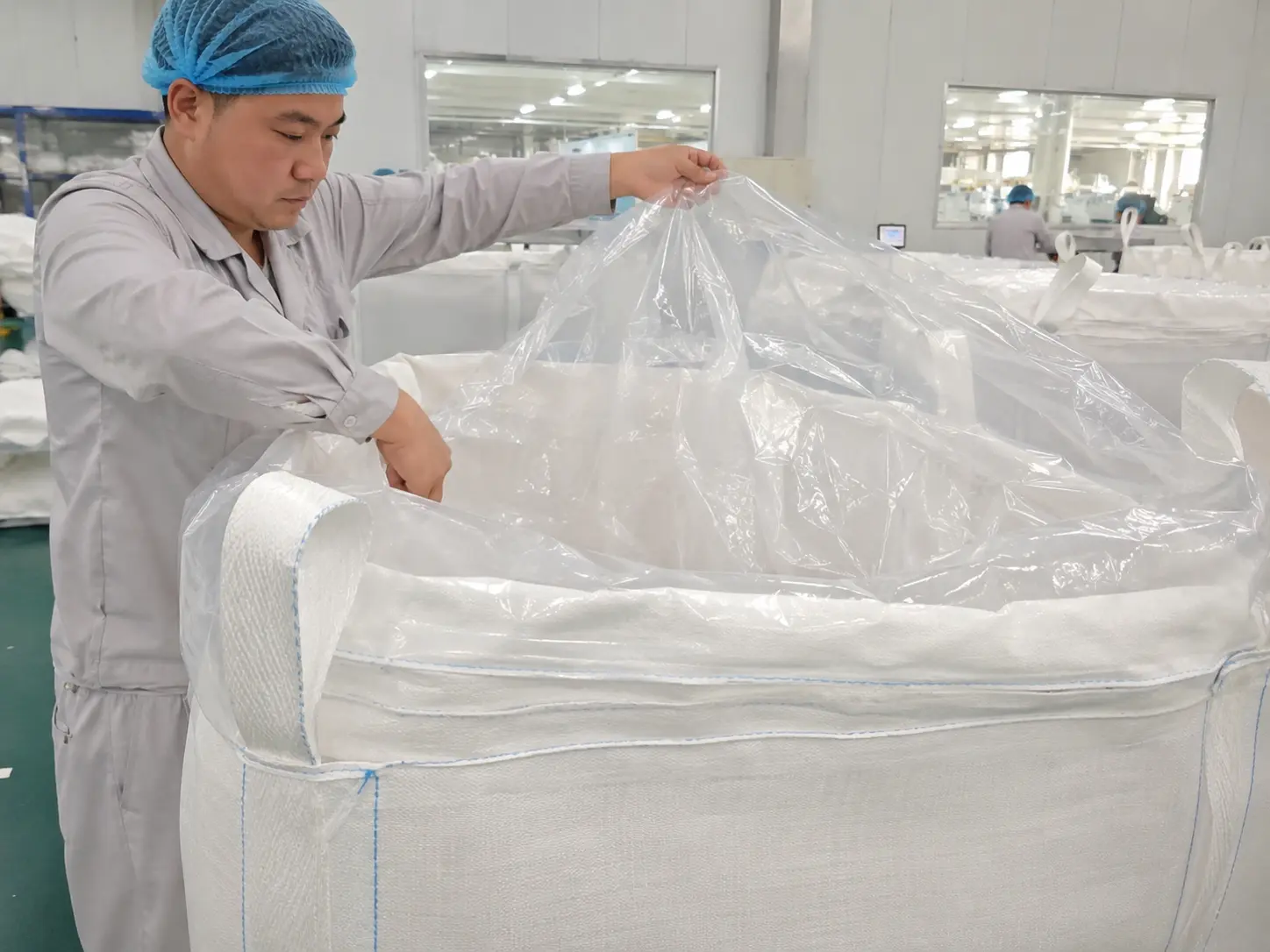
Liner Types at a Glance
| Type | Construction | Best fit | Relative cost |
|---|---|---|---|
| Loose-fit | Separate bag-shaped film, not attached to outer fabric | General moisture protection, cost-sensitive orders | Lowest |
| Form-fit | Sewn to match the bag’s inner wall | Fine powders, precise sealing needs | Moderate |
| Conductive | Static-dissipative material added to liner film | Combustible powders needing both barrier and static protection | Higher |
| Liquid liner | Thick, fully heat-sealed film built for liquid containment | Liquid or semi-liquid bulk products | Highest |
Loose-Fit vs Form-Fit: What Actually Changes
A loose-fit liner is a separate film bag placed inside the FIBC, cheaper to produce but with a looser seal at the corners where product can shift and contact the outer fabric during filling and transit. A form-fit liner is sewn directly to match the bag’s interior contour, sealing more precisely and reducing that contact — the extra sewing step is what adds cost. Fine powders and moisture-sensitive products benefit most from form-fit’s tighter seal; coarser, less sensitive products often do fine with loose-fit’s lower cost. This distinction also connects to fill/discharge style — see our filling and discharge guide for how the top style affects how a liner gets tied off separately from the outer bag.
LDPE vs HDPE: Flexibility vs Puncture Resistance
Low-density polyethylene (LDPE) is more flexible and conforms closely to the bag’s shape, making it the common choice for general moisture protection where the product isn’t especially abrasive. High-density polyethylene (HDPE) is stiffer and more puncture-resistant at a comparable thickness, better suited to sharp or abrasive granular products that would stress a softer film. Neither material is universally “better” — the choice depends on whether puncture resistance or flexibility matters more for your specific product.
Liner Thickness: Matching Micron Rating to the Product
Liner thickness, specified in microns or gauge, trades off directly against cost and foldability — a thicker liner resists puncture and tearing better but costs more and folds less flat, which matters for container loading on floor-loaded shipments. There’s no single correct thickness; match it to your product’s abrasiveness and how much protection the moisture or contamination risk actually justifies. Over-specifying thickness for a low-risk product adds cost without a corresponding benefit.
Think of thickness as a dial you turn based on two questions: how likely is the product to puncture the film during normal handling, and how costly is a failure if it happens. A dense, sharp-edged mineral product justifies a heavier gauge because puncture risk is high and a failure means real product loss or contamination. A fine, non-abrasive powder can often use a lighter gauge safely, since the main risk is moisture rather than physical damage to the film.
Sealing Method: Tie vs Heat Seal
A liner can be closed by hand-tying, similar to the outer bag’s duffle top, or by heat-sealing for a more complete, tamper-evident closure. Heat sealing costs more in equipment and process time but gives a more reliable barrier for moisture-sensitive or high-value products. Hand-tying works fine for less sensitive products where the extra sealing reliability isn’t worth the added step.
Heat sealing also provides a visible tamper indicator — a broken seal is obvious in a way a re-tied knot isn’t, which matters for products where chain-of-custody or contamination evidence is a real concern, not just a moisture question. If traceability from factory to end use matters for your product, factor sealing method into that decision alongside moisture protection.
Conductive Liners: Combining Barrier and Static Protection
A conductive liner adds static-dissipative material into the liner film itself, used when a product needs both contamination protection and static safety — a fine, combustible food ingredient is the clearest example. This is a separate specification from the outer bag’s static protection class and has to be explicitly requested; a standard liner paired with a Type C outer bag doesn’t automatically include conductive liner properties.
Liquid Liners Are a Different Product Category
Liquid or semi-liquid bulk products need a liquid liner — a thicker, fully heat-sealed film construction distinct from the loose-fit or form-fit liners used for dry bulk. These aren’t simply a heavier-gauge version of a standard liner; they’re built and tested specifically for liquid containment, with different sealing and support requirements than dry-product liners. If you’re packing anything other than a dry solid, specify a liquid liner explicitly rather than assuming a thicker standard liner will work.
Why Liner Choices Interact With Each Other
These four variables — construction, material, thickness, and sealing — aren’t independent decisions made in isolation; they compound. A form-fit liner in thin LDPE film with a hand-tied closure gives good sealing precision but weak puncture resistance and a moderate moisture barrier. Swap to HDPE at a heavier gauge with heat sealing, and you get much stronger puncture and moisture protection at meaningfully higher cost. There’s no single “best” combination — the right answer depends on which specific risk (contamination, moisture, puncture, static) matters most for your product, and paying for protection against a risk your product doesn’t actually face is money spent without benefit.
Common Mistakes When Specifying a Liner
- Ordering “a liner” without specifying construction, material, or thickness. Each variable changes performance and cost independently — leaving them unspecified means the supplier is guessing at your actual requirement.
- Assuming loose-fit is always “good enough.” For fine or free-flowing powders, the looser seal at the corners can let meaningful product reach the outer fabric during transit.
- Choosing HDPE by default for puncture resistance you don’t need. If the product isn’t abrasive, LDPE’s flexibility and lower cost is usually the better fit.
- Under-speccing thickness to save cost on a moisture-sensitive product. A thin liner that punctures in transit defeats its own purpose.
- Forgetting that conductive and liquid liners are separate order lines. Neither is included by default with a standard liner request — both need to be specified explicitly.
Decision Checklist
- Does your product sift or shift easily? Form-fit seals better than loose-fit for fine or free-flowing products.
- Is the product abrasive or sharp-edged? HDPE resists puncture better than LDPE at the same thickness.
- How moisture-sensitive is the product? Higher sensitivity justifies thicker film and heat sealing over tying.
- Does the product need static protection in addition to a barrier? Specify a conductive liner explicitly — it’s not automatic.
- Is the product liquid or semi-liquid? You need a liquid liner, not a heavier standard liner.
Before You Request a Quote
Send these details so we can specify the right liner:
- Product type and whether it’s abrasive, fine, or moisture-sensitive
- Whether the product is dry, liquid, or semi-liquid
- Static protection requirements, if any
- Target capacity and fill/discharge style
Request a quote and we’ll confirm liner construction, material, and thickness against your actual product.
Common Questions
What's the difference between a loose-fit and form-fit bulk bag liner?
A loose-fit liner sits inside the bag as a separate bag-shaped film, cheaper but with looser sealing at the corners. A form-fit liner is sewn to match the bag's inner wall, costing more but sealing more precisely with less gap for product to reach the outer fabric.
What's the difference between LDPE and HDPE liners?
LDPE (low-density polyethylene) is more flexible and better at conforming to a bag's shape, while HDPE (high-density polyethylene) is stiffer, more puncture-resistant, and provides a stronger moisture barrier at a given thickness. LDPE suits most general moisture protection; HDPE suits abrasive or puncture-prone products.
How thick should a bulk bag liner be?
Liner thickness is typically specified in microns or gauge, and the right number depends on your product's abrasiveness and moisture sensitivity — thicker liners resist puncture and tearing better but add cost and reduce foldability. There's no universal correct thickness; match it to what the product actually needs.
What is a conductive liner used for?
A conductive liner adds static-dissipative material to the liner itself, used when a product needs both a moisture or contamination barrier and static protection — for example, a fine, combustible food powder. It's a separate spec from the outer bag's static protection class and needs to be ordered explicitly.
Are liquid bulk liners the same as standard FIBC liners?
No — liquid liners are a distinct category built to hold liquid or semi-liquid products inside a standard FIBC shell, using thicker, fully sealed film construction rather than the loose or form-fit liners used for dry bulk products. They're a specialized product, not a thicker version of a standard liner.