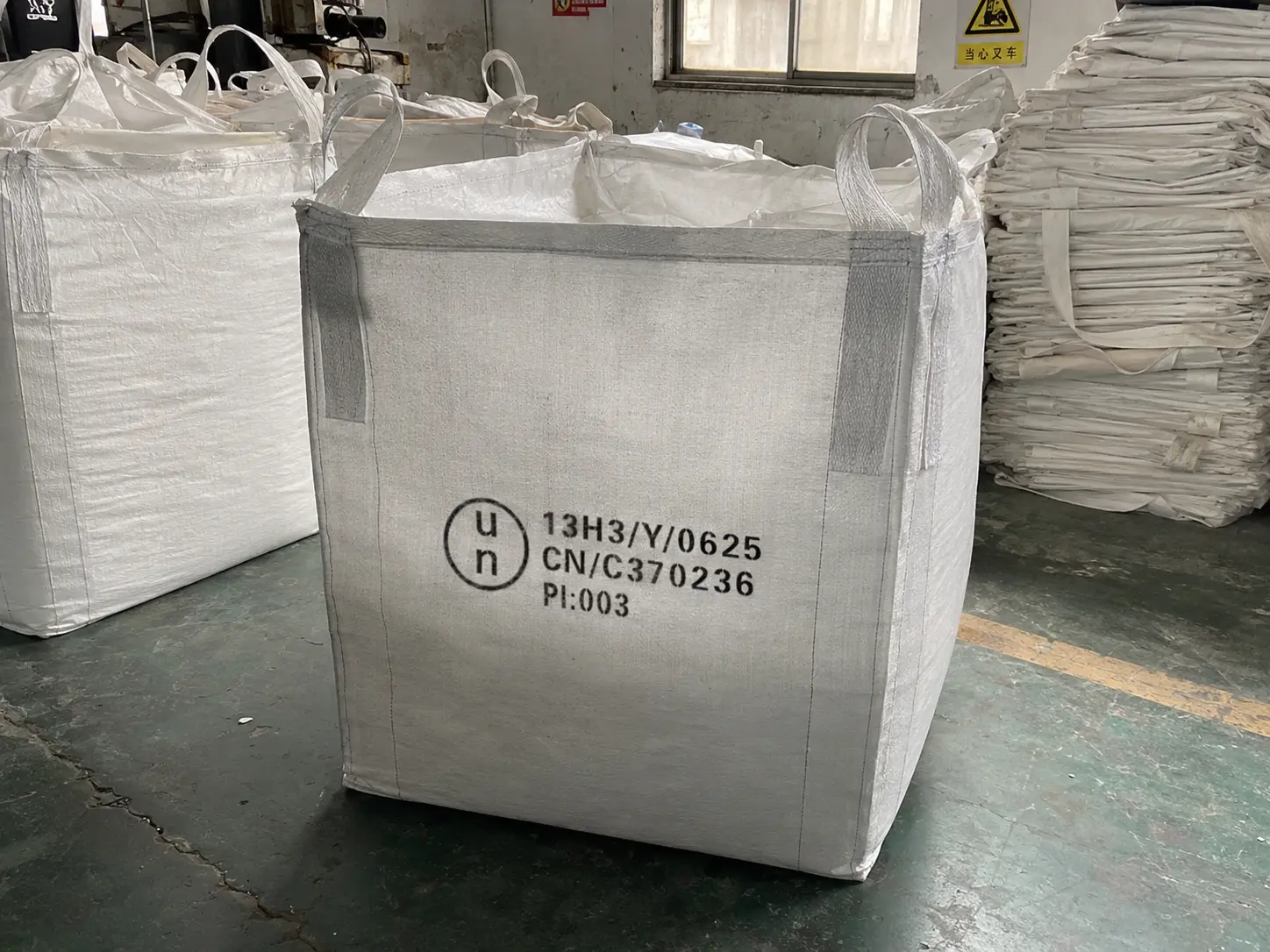
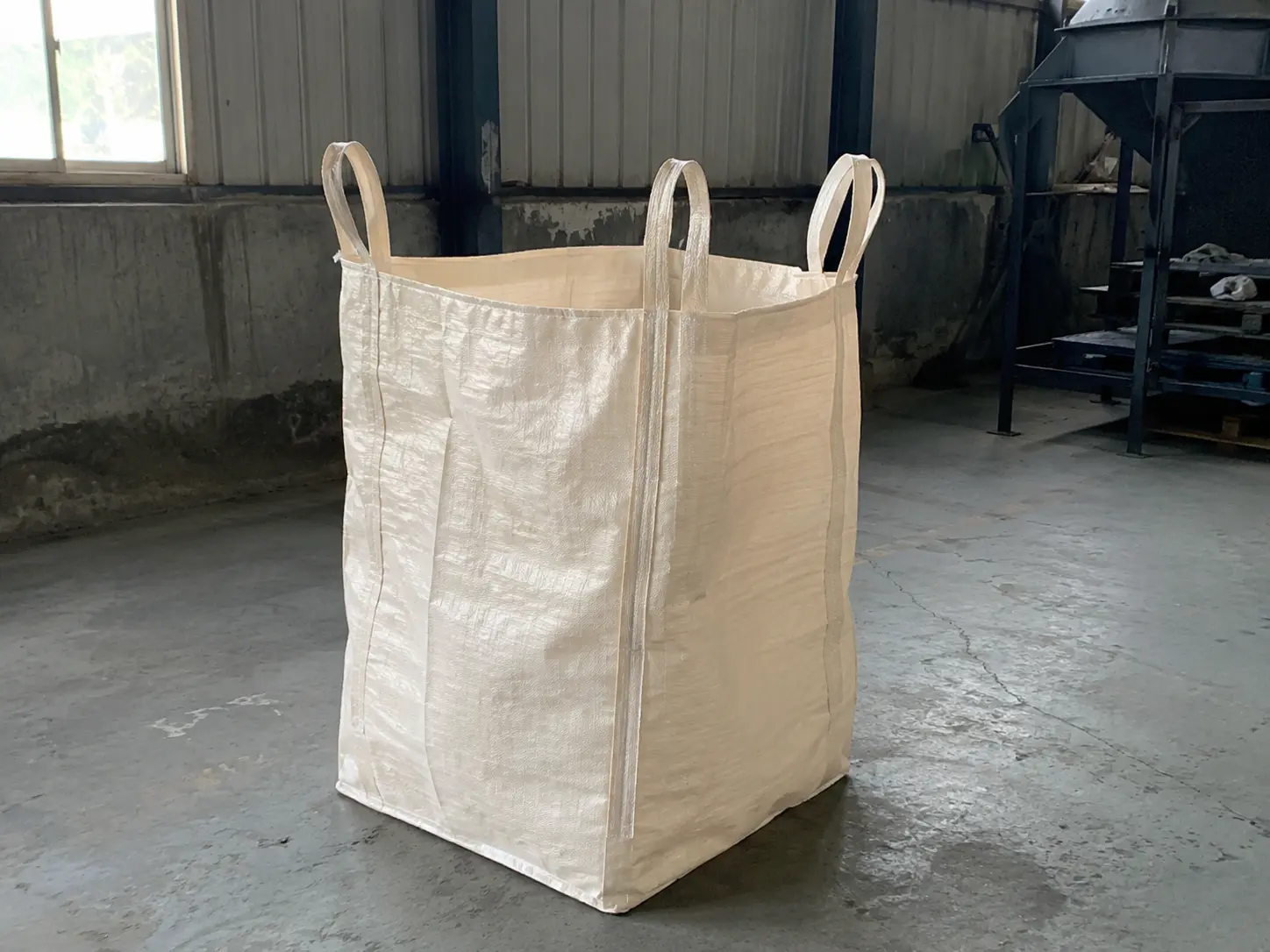
Anti-Static Bulk Bags (Type B/C/D)
Type B, C and D bulk bags manage the electrostatic charge that builds up during filling and discharge, and are required whenever flammable powders, gases or solvents are present. Type B suppresses dangerous discharges without grounding, Type C is conductive and must be grounded, and Type D dissipates static safely without any grounding connection.
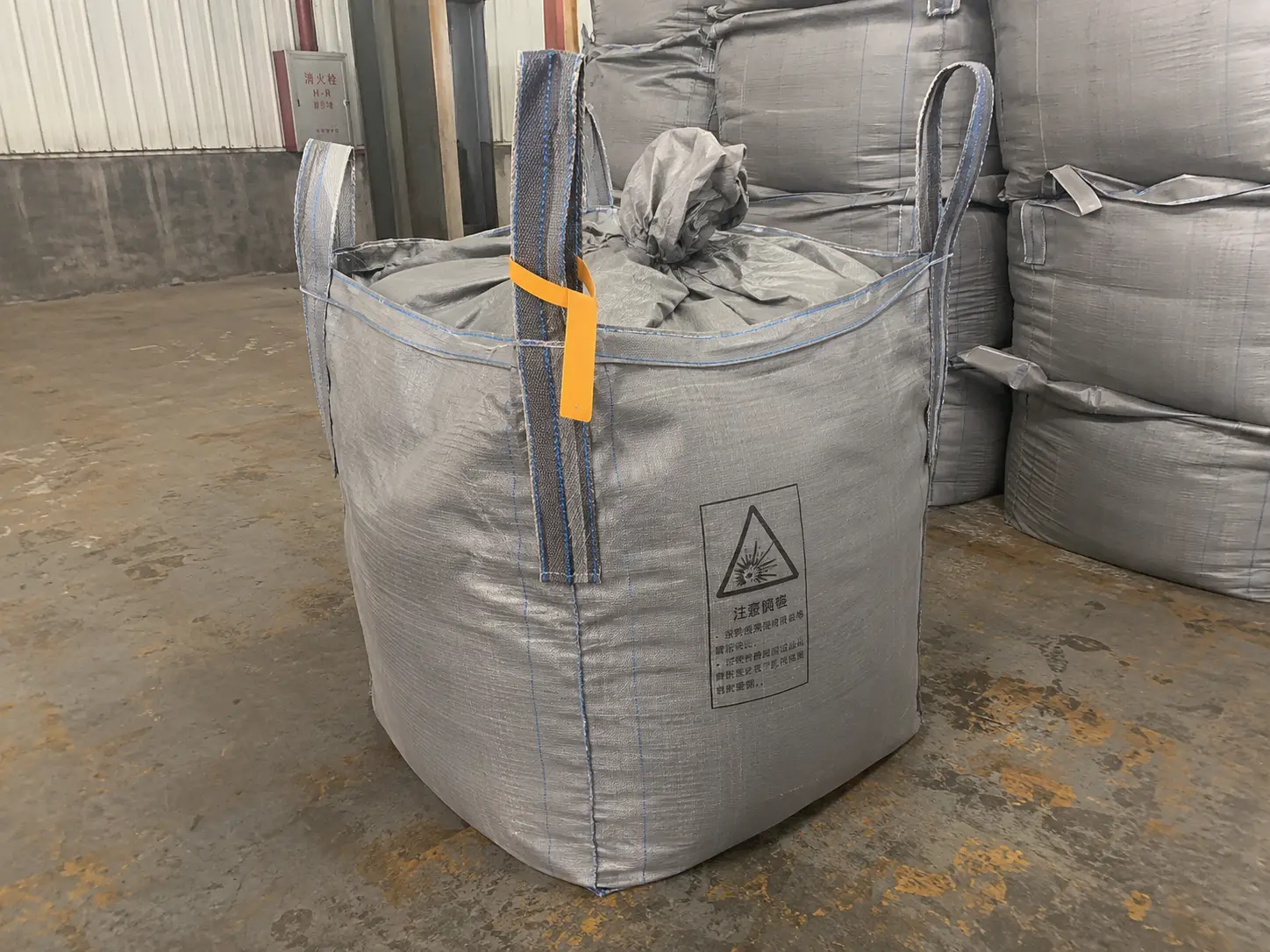
Spec Sheet
Best For
- Chemical plants handling solvents (Type C, grounded)
- Sites where grounding discipline cannot be guaranteed (Type D)
- Dry flammable powders with no nearby solvents (Type B)
- Pharmaceutical and specialty chemical powders
- Powder coatings, flour and starch in controlled environments
Not for: Type B bags do not dissipate static and should never be used near flammable gases or solvents — only for dry, solvent-free flammable powders. See our Type A/B/C/D comparison guide for a full decision checklist.
Construction & Materials
Type B fabric uses a controlled resin formulation that keeps breakdown voltage below 6 kV without adding conductive material. Type C fabric interweaves conductive threads in a grid pattern through the base polypropylene weave, connected to a grounding point — usually a metal tab or conductive loop — that must contact earth during filling and discharge. Type D uses static-dissipative yarns woven at a tighter pitch than standard PP, engineered to bleed off charge through the fabric surface itself rather than through a grounding connection.
Type B vs. Type C vs. Type D at a Glance
| Type B | Type C | Type D | |
|---|---|---|---|
| Grounding required | No | Yes — mandatory | No |
| Safe with flammable powders | Yes | Yes | Yes |
| Safe in flammable gas/vapor | No | Yes (grounded) | Yes (with restrictions) |
| Biggest risk factor | Used near solvents by mistake | Missed grounding clamp | Surface contamination (water, grease) |
What You Can Change
- Grounding tab or conductive loop placement per your site layout
- Combine with food-grade liner for anti-static + food-safe orders
- UN certification available on Type C/D for hazardous powder export
- Fabric weight 150–220 g/m² based on load and abrasion needs
What This Bag Is Tested To
- IEC 61340-4-4 — electrostatic classification and testing of FIBCs
- GB/T 10454-2025 — now makes anti-static performance a mandatory requirement for qualifying FIBC classes (effective March 2026)
From Our Sourcing Desk
Never accept an anti-static claim without a current IEC 61340-4-4 test report tied to the specific fabric batch — resistance properties can drift between production runs if the conductive thread supplier or weave density changes. If your site cannot guarantee 100% grounding compliance on every fill/discharge cycle, specify Type D instead of Type C: the extra cost is small compared to the liability of a missed grounding clamp.
Common Questions
What is the difference between Type B, C and D bulk bags?
Type B suppresses dangerous propagating brush discharges without grounding but does not dissipate charge. Type C is conductive and must be grounded during filling and discharge. Type D uses static-dissipative fabric to release charge safely with no grounding needed.
Do Type C bags need to be grounded?
Yes. Type C bags are conductive and must be physically grounded every time they are filled or discharged. If grounding cannot be guaranteed on your site, Type D is the safer choice.
What test standard applies to anti-static FIBC bags?
IEC 61340-4-4 is the international standard for electrostatic classification and testing of FIBC bulk bags. Ask your supplier for a current test report for the exact fabric batch, not just a datasheet claim.
Is anti-static performance now mandatory under Chinese standards?
Yes, as of GB/T 10454-2025 (effective March 1, 2026), China's national FIBC standard adds mandatory anti-static performance requirements for qualifying bag classes, aligning more closely with the international IEC 61340-4-4 framework.
How often should anti-static test reports be renewed?
Request a fresh IEC 61340-4-4 report for each new fabric batch or production run, not a one-time certificate reused across years. Conductive thread performance can vary between batches even on the same bag design.