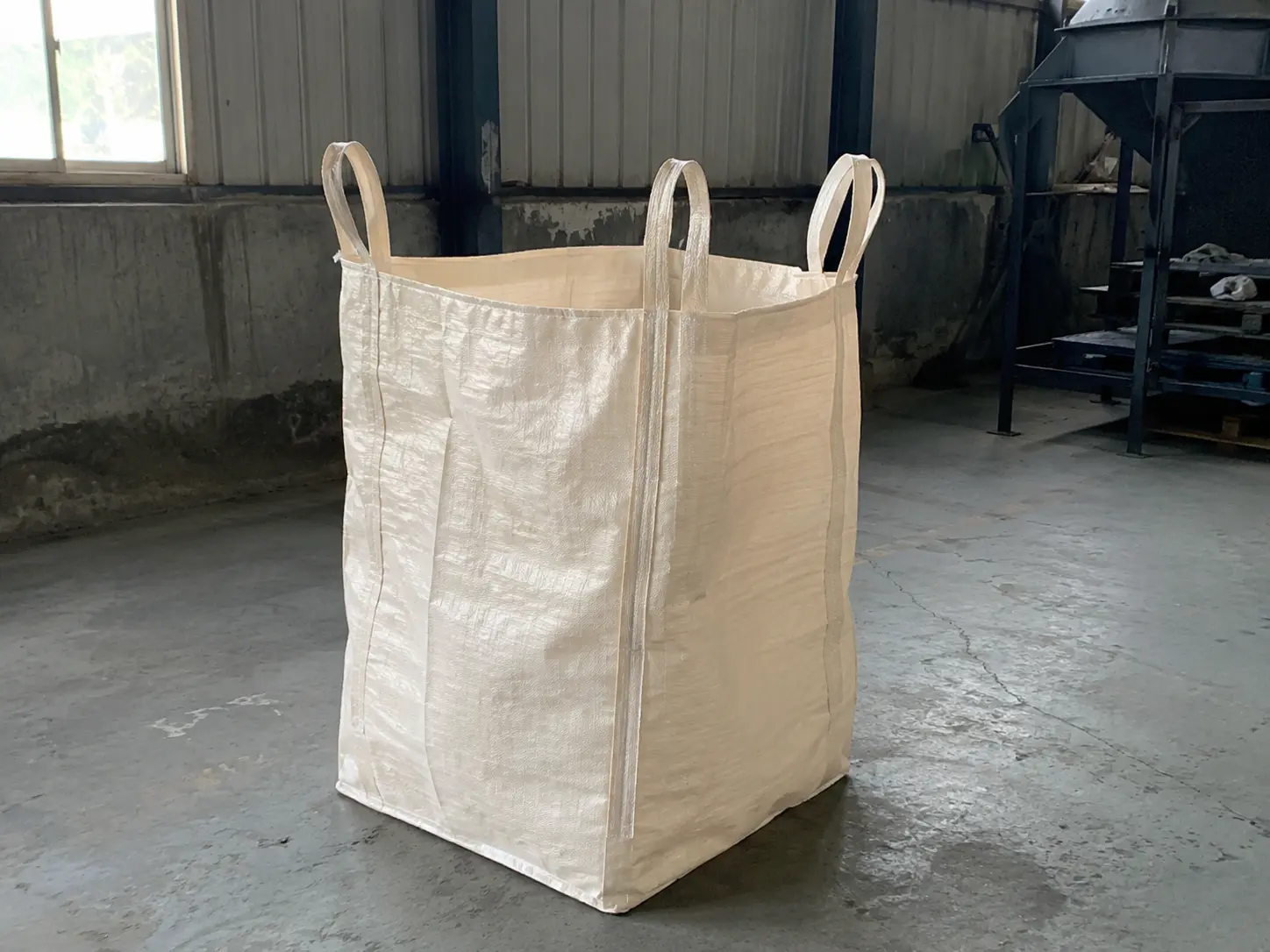
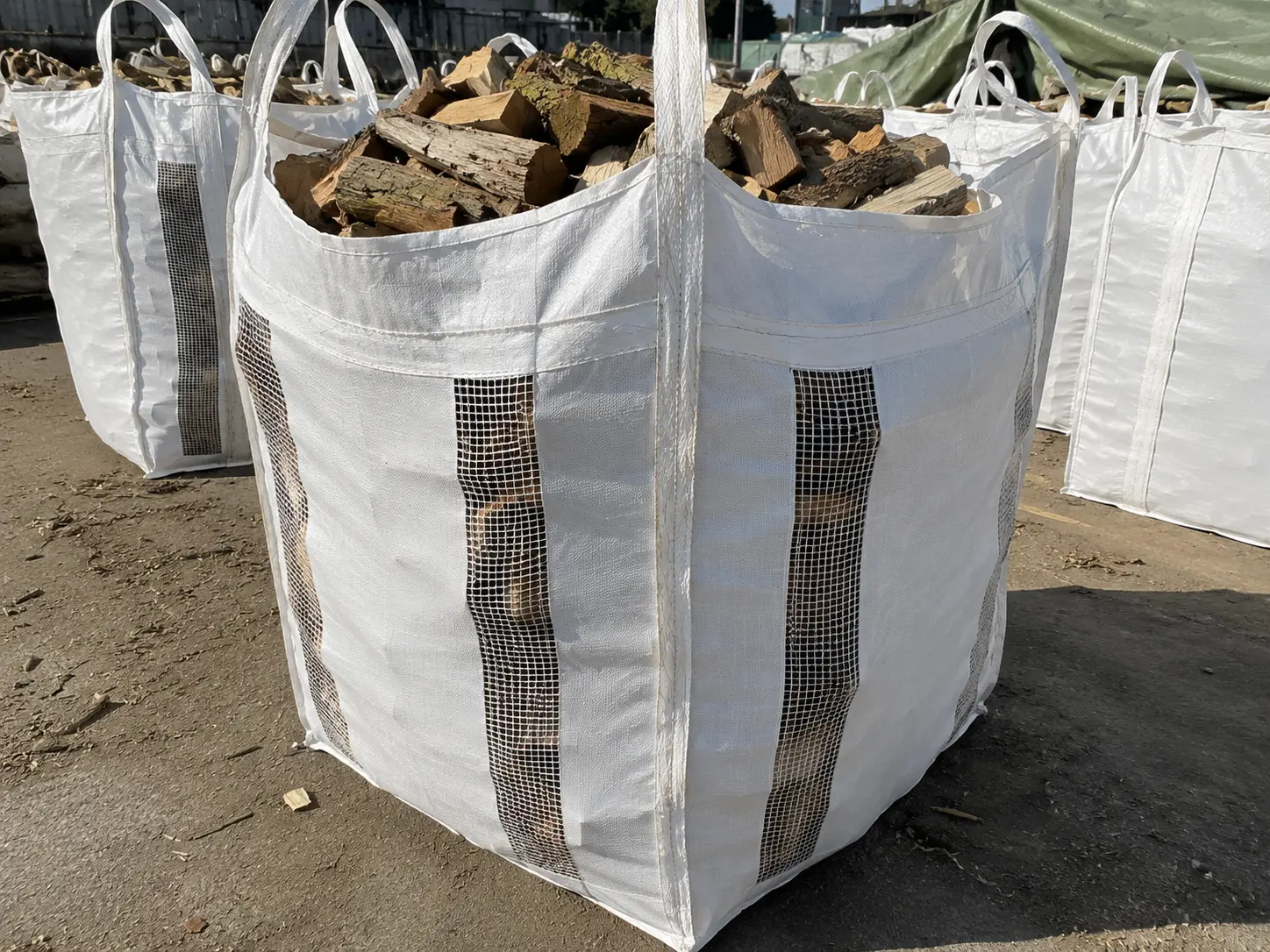
Baffle Bags (Q Bags)
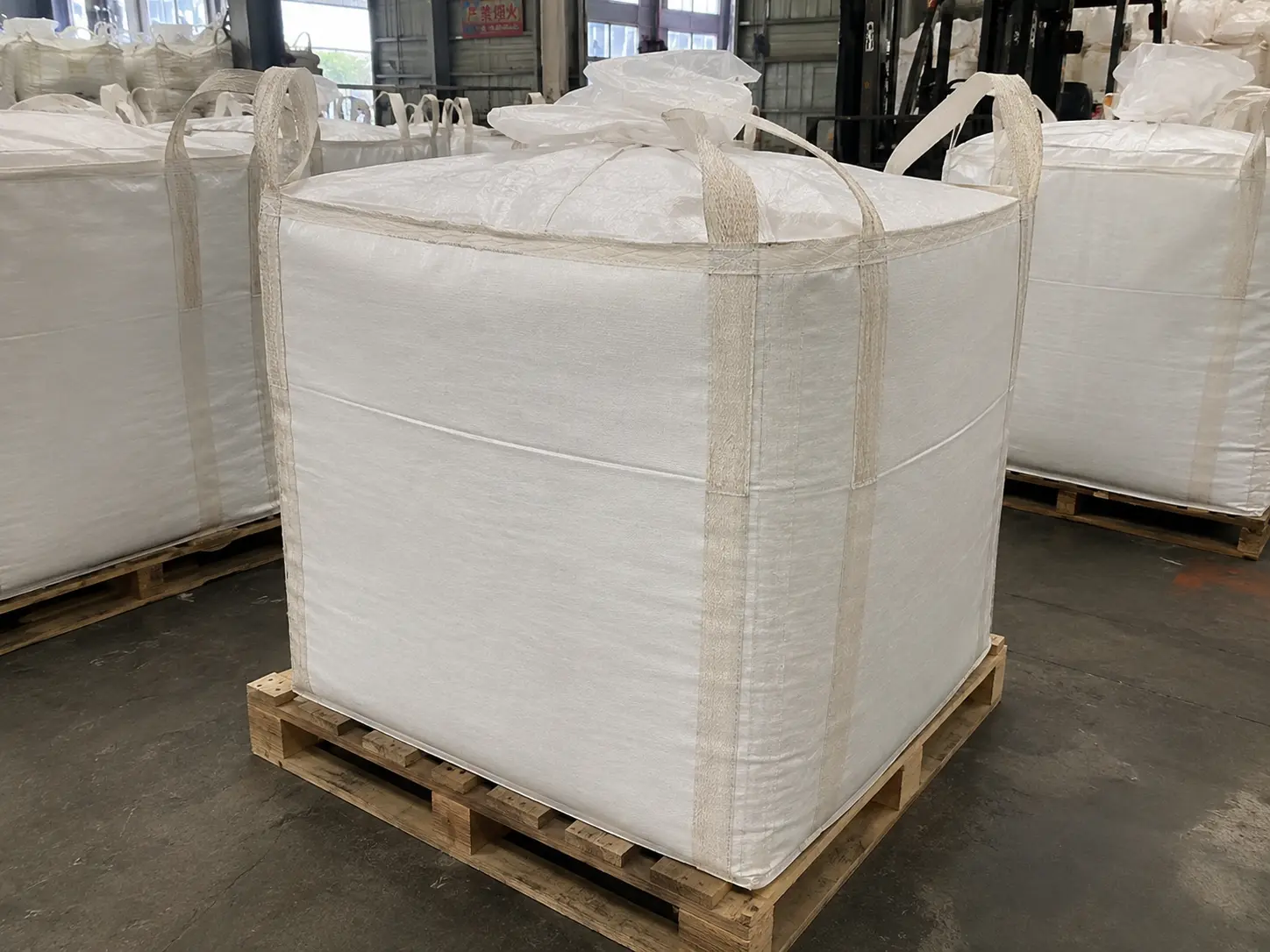
Baffle bags, also called Q bags, have internal fabric panels sewn into the corners that force the bag into a square shape as it fills, instead of the round bulge of a standard FIBC. That square profile packs tighter on pallets and inside containers, which is why baffle construction is one of the fastest-growing FIBC segments among exporters trying to cut per-unit freight cost.
Spec Sheet
Best For
- Palletized granular and powder products needing tight stacking
- Products shipped long distances where container efficiency matters
- Retail-adjacent bulk products where a neat, square shape is preferred
- High-volume exporters optimizing freight cost per unit
Construction & Materials
Extra fabric panels — triangular or rectangular baffles — are cut and sewn into each internal corner before the main body panels are assembled. The baffles are sized so they stay folded flat when the bag is empty, then unfold and pull the corners outward as the bag fills, forcing a square cross-section instead of a round bulge. Because the baffles carry some of the load, seam stitching at those corners is reinforced beyond what a standard Type A bag needs.
Baffle vs. Standard Type A Construction
| Type A (Standard) | Baffle (Q Bag) | |
|---|---|---|
| Shape when filled | Rounds outward | Holds a square profile |
| Container loading | Standard | Tighter — exact gain depends on product and pallet pattern |
| Cost per bag | Baseline | Moderate premium for internal panels |
| Best for | Budget-priority, general purpose | High-volume export, freight-cost-sensitive |
What You Can Change
- Available in Type A, B, C or D static protection
- Height-to-width ratio tuned to your product's bulk density
- Compatible with food-grade liners
- Custom loop and discharge configuration
What This Bag Is Tested To
- ISO 21898:2024 structural testing, same baseline as standard FIBCs
- IEC 61340-4-4 when combined with anti-static fabric
From Our Sourcing Desk
The container-space savings from baffle construction depend heavily on your product's bulk density and your pallet pattern — ask us for a loading plan based on your actual dimensions and product before assuming a fixed percentage gain. Baffle construction adds cost per bag but usually pays for itself in freight savings on high-volume, long-haul routes; it is less worth it for short domestic runs.
Common Questions
What is a baffle bag (Q bag)?
A baffle bag, or Q bag, has internal fabric panels sewn into the corners that hold the bag square when filled, instead of bulging round like a standard FIBC. This improves stacking and container space usage.
How much more space do baffle bags save?
The exact gain depends on your product's bulk density, bag dimensions and pallet pattern — there is no single universal percentage. Send us your specification and we will estimate the container loading difference versus a standard bag.
Can baffle bags be made anti-static or food grade?
Yes. The baffle construction can be combined with Type A–D static protection or food-grade liners — tell us your product and we will specify the right combination.
Is baffle construction worth the extra cost?
It depends on shipping volume and distance. High-volume, long-haul exporters typically recover the added per-bag cost through freight savings, while low-volume domestic shipments may not see enough container efficiency gain to justify it.