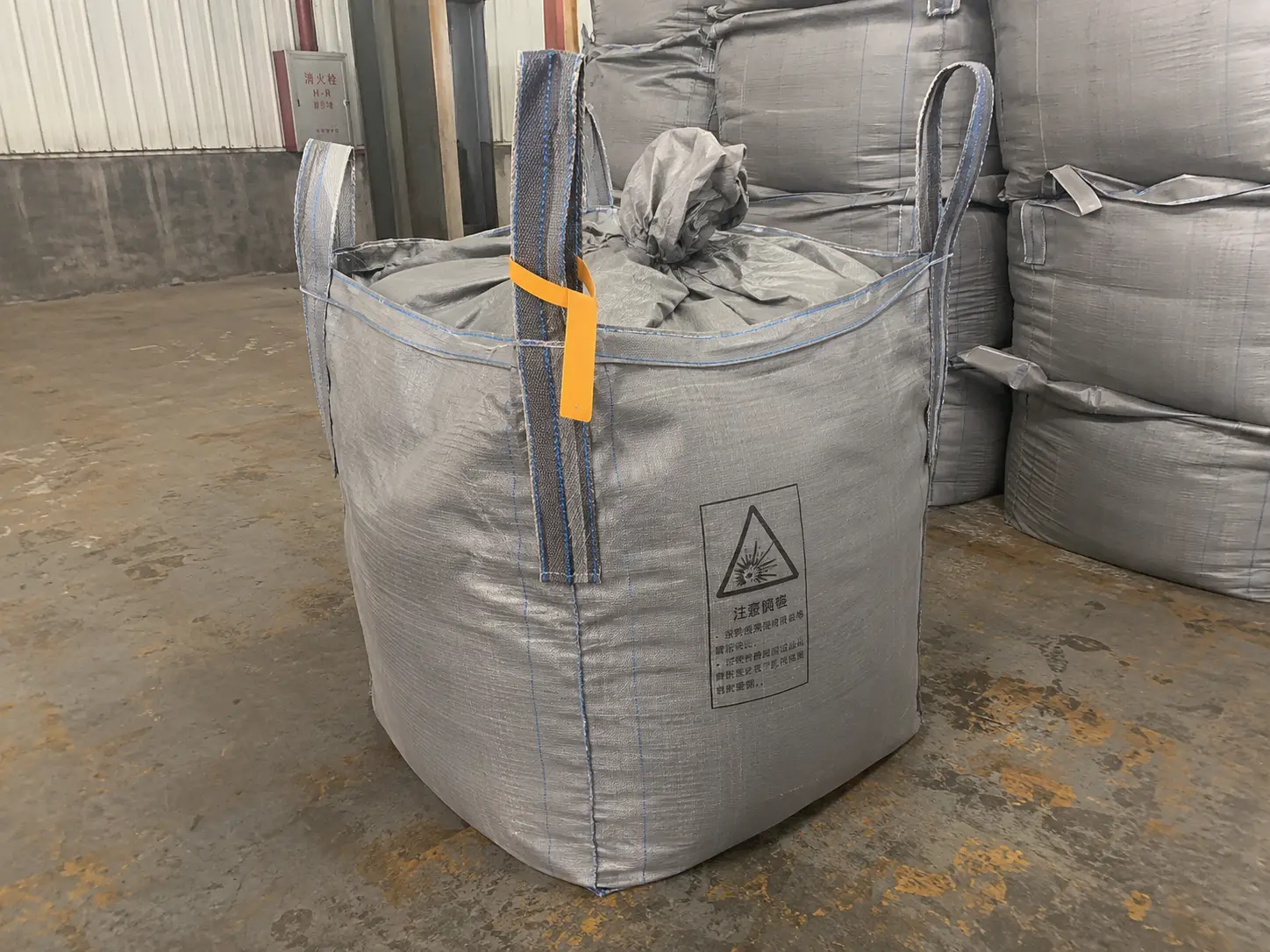
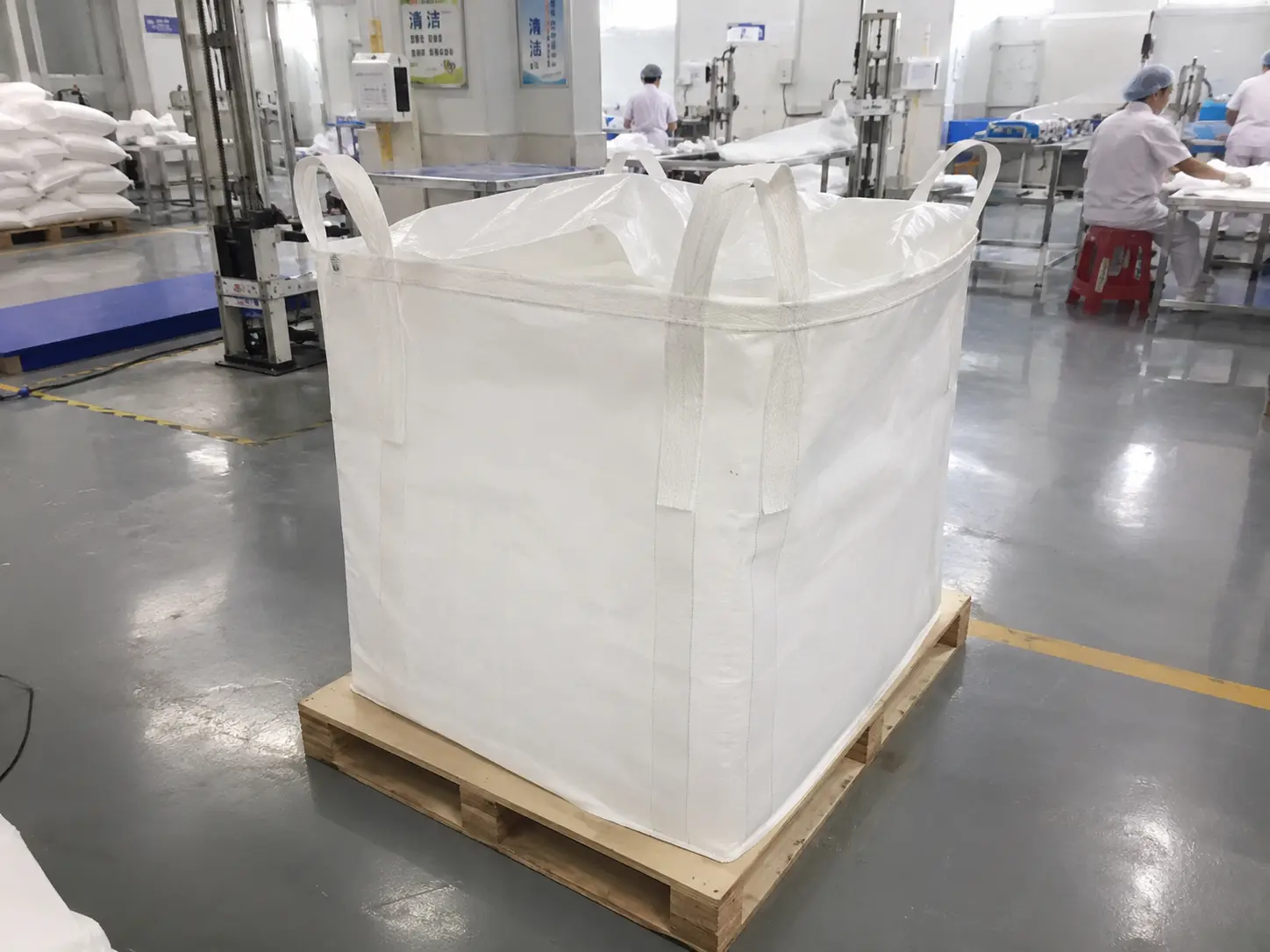
UN Certified Bulk Bags
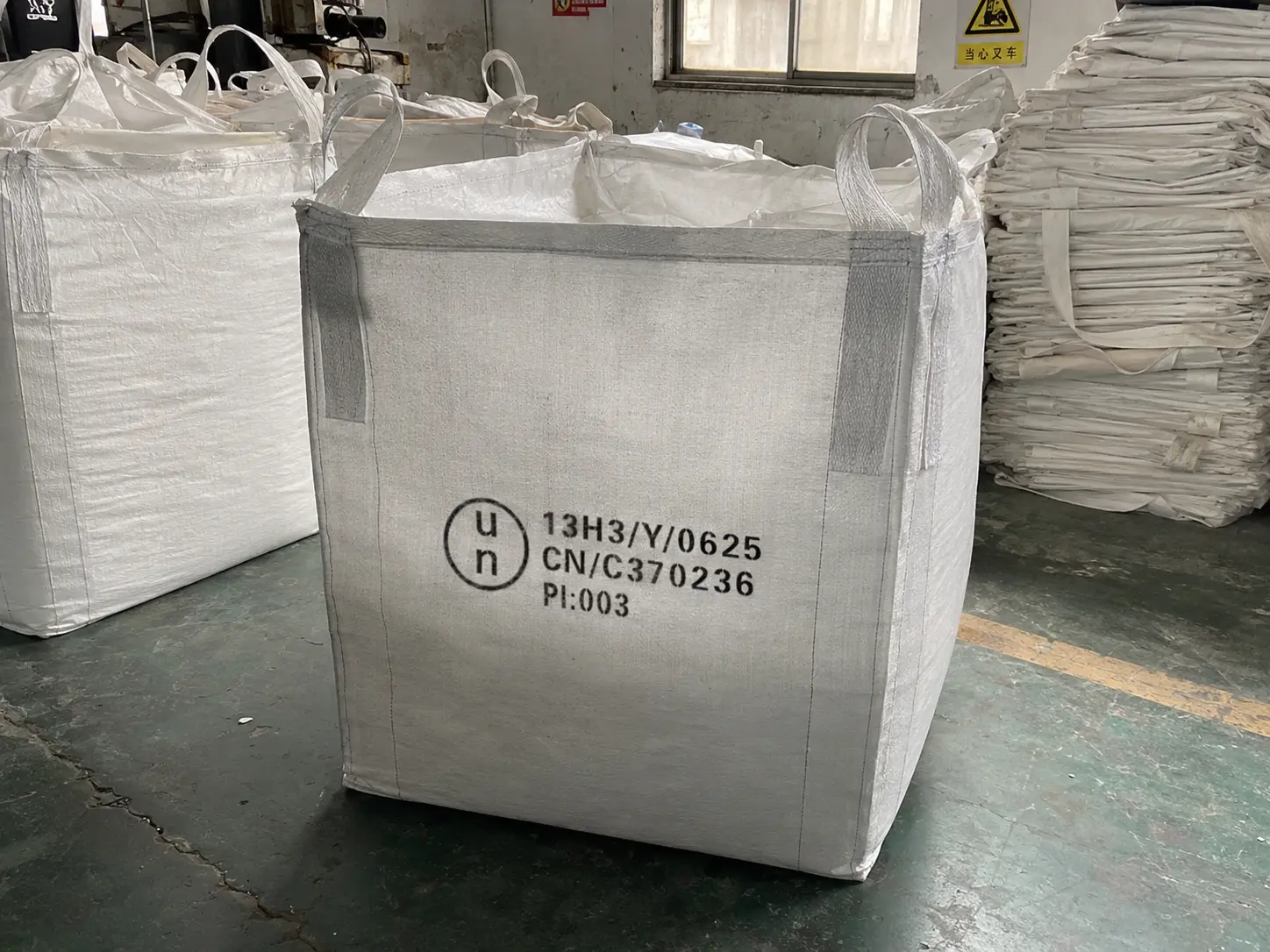
UN certified bulk bags carry a 13H1–13H4 marking that shows they have passed the UN performance tests required to ship hazardous materials by sea and road. The marking code tells you the bag construction (13H = flexible IBC, woven plastic), the content type it is rated for (solids or powders) and whether it is single-trip or multi-trip.
Spec Sheet
Best For
- Hazardous chemical powders and solids for export
- Dangerous goods shipped by sea (IMDG) or road (ADR)
- Products requiring UN packing group II or III certification
- Fertilizer and chemical intermediates classified as dangerous goods
Construction & Materials
Certification starts with the same woven PP base as a standard bag, but the fabric weight, coating and liner combination is locked to match a specific 13H code before testing — you cannot change the coating or liner after the design is certified without re-testing. Bags are then put through the UN test battery: a top-lift test at rated load, a drop test onto a rigid surface, and a stacking test simulating the weight of bags loaded on top during a shipping voyage. Only after passing all three is the 13H marking applied to the batch.
13H1 vs. 13H2 vs. 13H3 vs. 13H4
| 13H1 | 13H2 | 13H3 | 13H4 | |
|---|---|---|---|---|
| Coating | No | Yes | No | Yes |
| Liner | No | No | Yes | Yes |
| Typical use | Dry solids, lower moisture risk | Moisture-sensitive dry solids | Powders needing a containment barrier | Highest protection — hazardous, moisture-sensitive powders |
What You Can Change
- UN number and packing group matched to your product
- Coating and liner combination per 13H1–13H4 spec
- Full UN test certificate supplied with shipment
- Compatible with Type C/D anti-static for combined hazard classes
What This Bag Is Tested To
- UN Model Regulations — 13H1–13H4 packing group testing (drop, top-lift, stacking)
- IMDG Code (sea) and ADR (road) dangerous goods packaging requirements
- ISO 21898:2024 baseline structural testing
From Our Sourcing Desk
Demand is shifting toward UN certified bags even for products that are only borderline hazardous, because customs delays from an under-specified bag cost more than the certification premium. Before ordering, confirm your product's UN number and packing group with your own compliance team — the 13H1 vs 13H2 vs 13H3 vs 13H4 choice depends on whether your cargo needs a liner or coating, not just on hazard class.
Common Questions
What does the UN 13H1–13H4 marking mean?
The code identifies a flexible intermediate bulk container (13H) made of woven plastic, with the final digit indicating construction: 13H1 has no liner or coating, 13H2 is coated, 13H3 has a liner, and 13H4 is both coated and lined. Each variant is tested and rated separately.
Are UN certified bags required for all chemical exports?
UN certification is required whenever the product is classified as dangerous goods under IMDG (sea) or ADR (road) regulations. Non-hazardous chemicals can typically ship in standard or anti-static bags depending on flammability.
What documents come with a UN certified bag order?
Every UN certified shipment includes the UN test certificate for that bag type, showing the accredited testing body, test date and performance results. Keep this on file for customs and compliance audits.
Why are more exporters switching to UN certified bags in 2026?
Even for borderline-hazardous cargo, exporters increasingly prefer UN certified bags because a customs hold over an incorrectly rated bag typically costs far more in delays and demurrage than the certification premium — and buyers now routinely ask for it as a default trust signal.