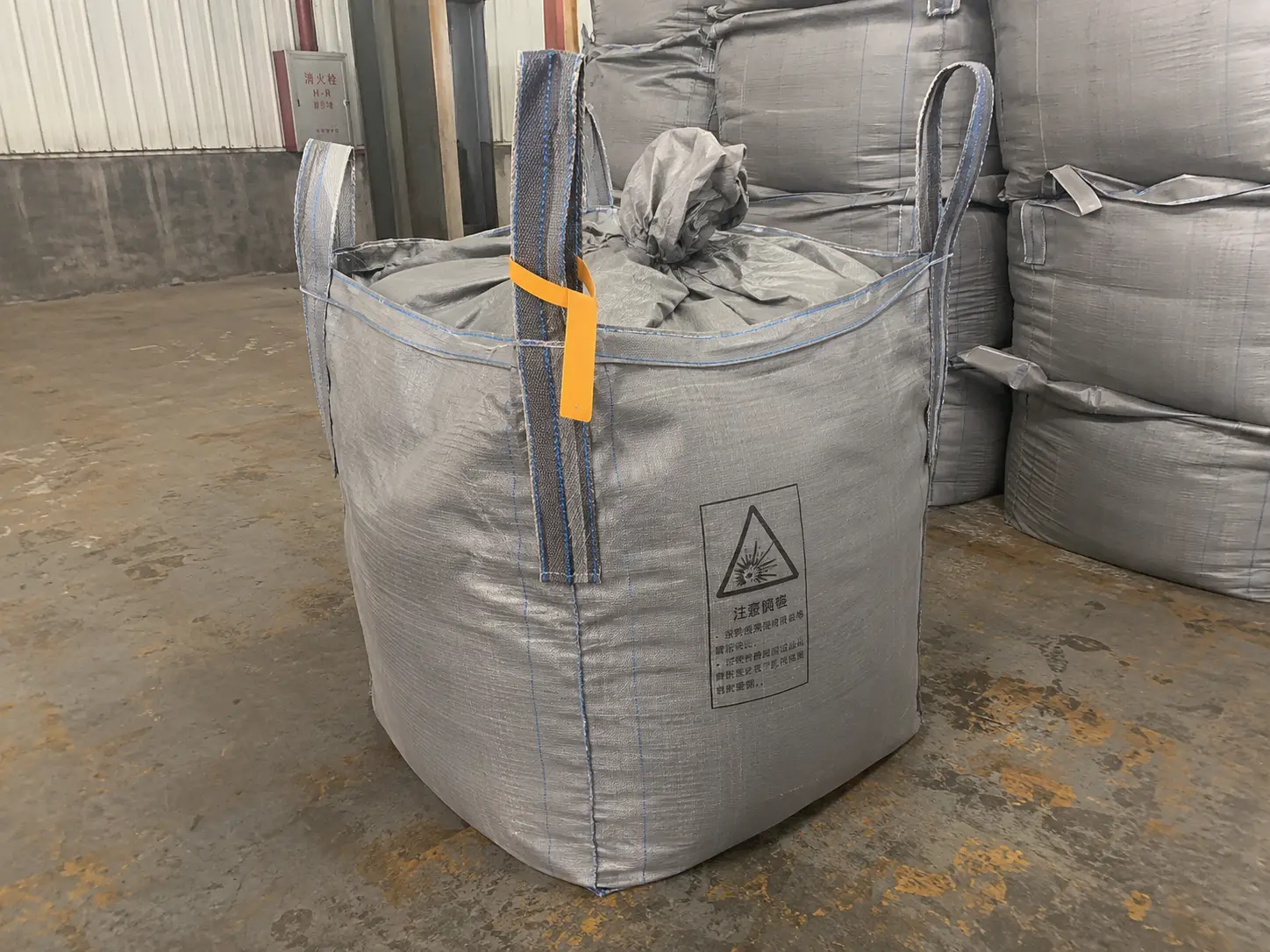
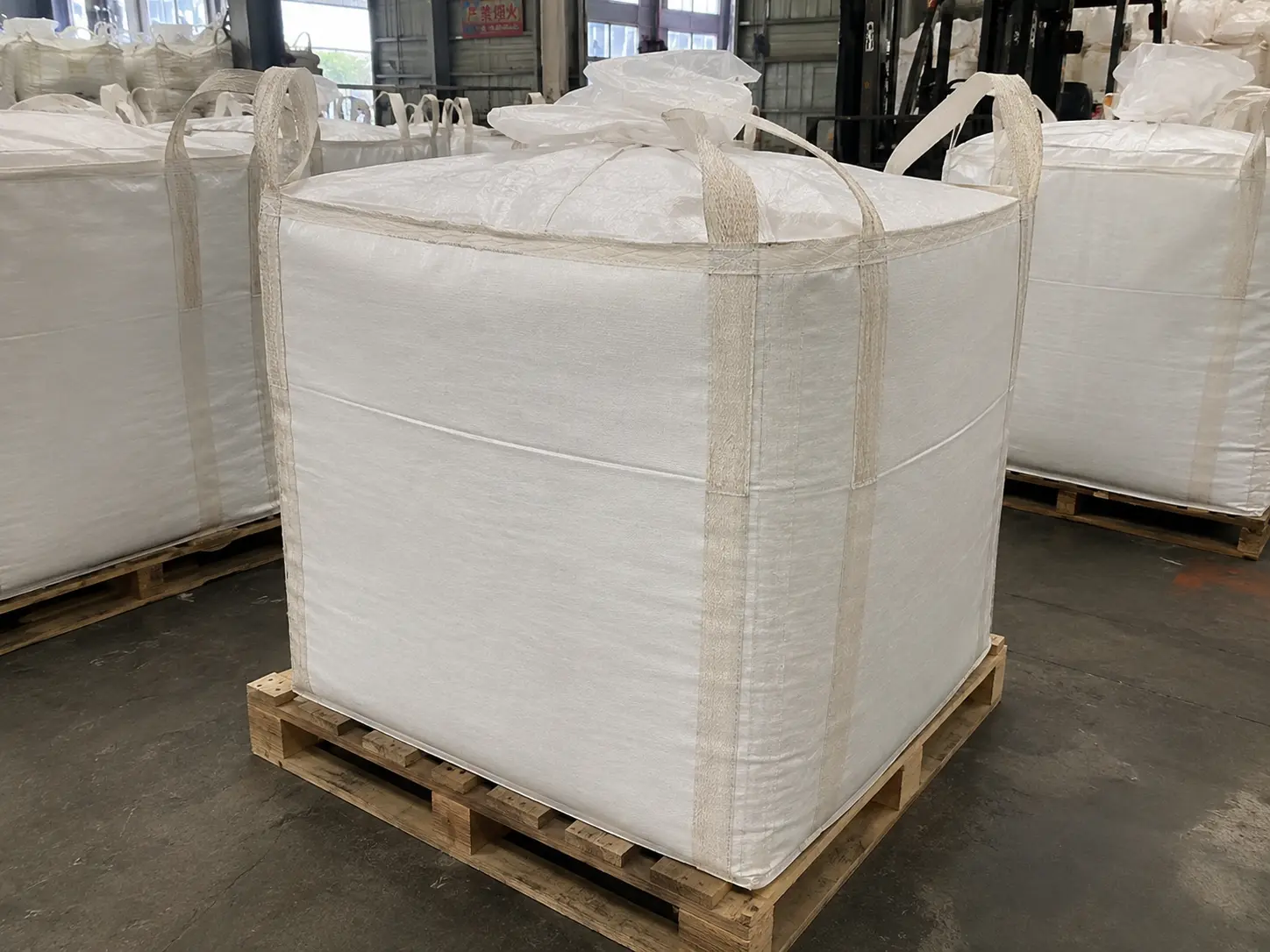
Type A Bulk Bags
Type A bulk bags are standard woven polypropylene FIBCs with no anti-static treatment — the lowest-cost, highest-volume option in the industry. They are built for non-flammable products such as sand, minerals, fertilizer pellets and construction aggregates, where no explosion risk exists during filling or discharge.
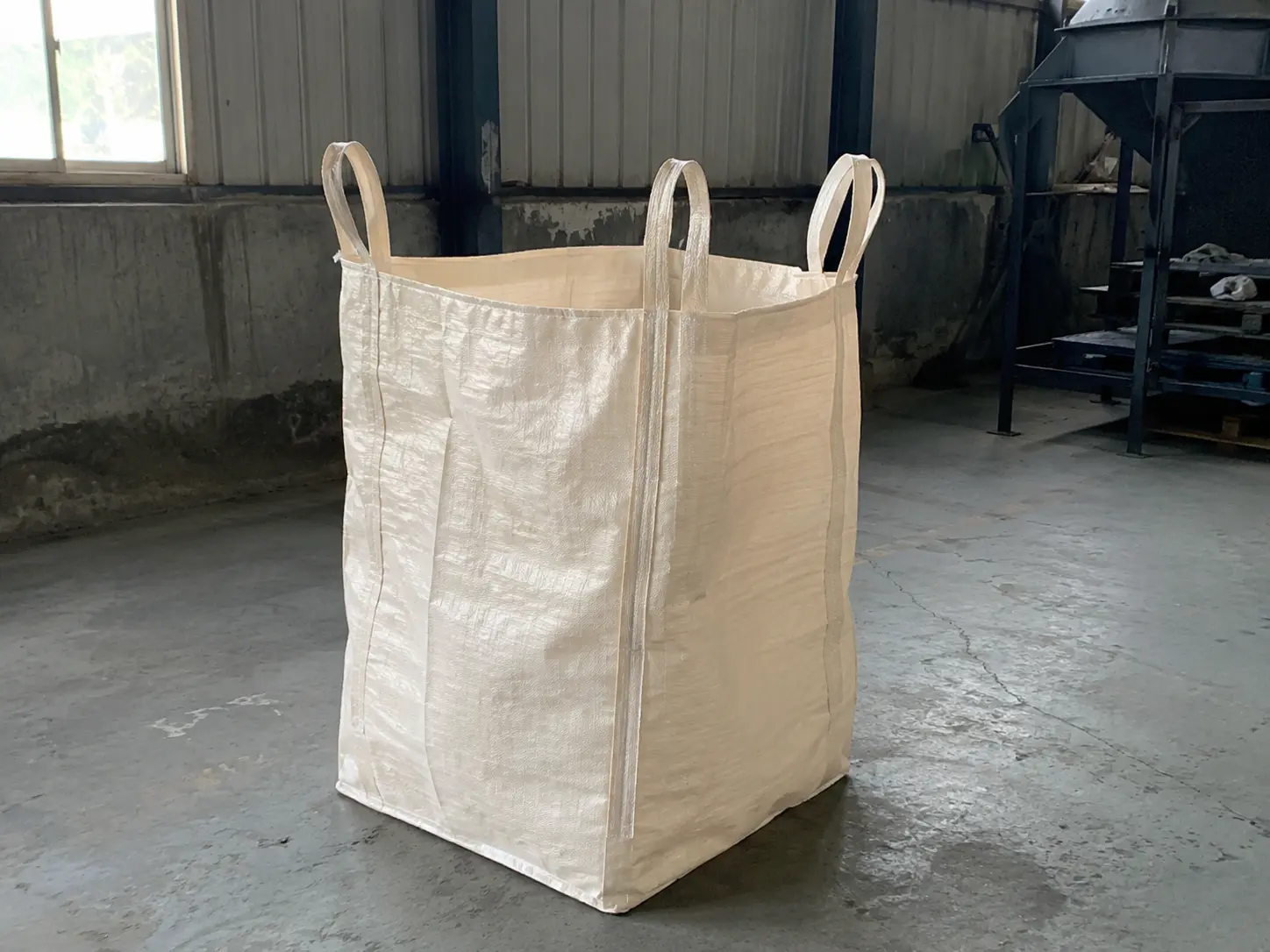
Spec Sheet
Best For
- Sand, gravel and construction aggregates
- Cement, gypsum and dry mortar
- Non-flammable minerals and ores
- Fertilizer pellets and granules
- Food grains in open, non-hazardous environments
Not for: Do not use Type A bags for flammable or combustible powders, or in areas with flammable gases, vapors or solvents — they provide zero static protection. See our anti-static range instead.
Construction & Materials
Type A bags start as polypropylene resin, extruded and stretched into flat tape yarn, then woven into fabric — either circular-woven into seamless tubular panels or flat-woven and cut into separate panels for U-panel construction. Panels are cut to your specified dimensions and joined with a double-stitched box seam. Lifting loops are cross-stitched at the corners with reinforced thread rated to match the bag's safety factor, so a 6:1 multi-trip bag gets denser stitching than a 5:1 single-trip bag of the same size.
Type A vs. Baffle (Q Bag) Construction
| Type A (Standard) | Baffle (Q Bag) | |
|---|---|---|
| Shape when filled | Rounds outward | Holds a square profile |
| Container loading | Standard | Tighter — exact gain depends on product and pallet pattern |
| Cost per bag | Baseline | Moderate premium for internal panels |
| Best for | Budget-priority, general purpose | High-volume export, freight-cost-sensitive |
What You Can Change
- Capacity from 500 kg to 2,000 kg
- 4 cross-corner, 2-loop or single loop configurations
- 1–3 color printing on 1–4 panels
- Optional PE liner, loose or form-fit
- Flat bottom, spout bottom or duffle top discharge
What This Bag Is Tested To
- ISO 21898:2024 — cyclic top lift test (30 cycles @ 2× SWL, final cycle @ 5× SWL)
- GB/T 10454-2025 — effective March 2026, dimensional tolerance and single-trip/multi-trip classification
From Our Sourcing Desk
Type A is a commodity product, so fabric weight is where quality hides. Two suppliers quoting the same 90×90×110 cm bag at different prices are usually differing on GSM (grams per square meter) or thread count — always ask for the exact fabric weight and safety factor in writing, not just "heavy duty" on a datasheet. If sustainability commitments matter to your buyers, ask about mono-material PP options; GB/T 10454-2025 now formally recognizes recycled content above 95% identical-polymer purity.
Common Questions
What is a Type A bulk bag used for?
Type A bulk bags are used for non-flammable, non-hazardous bulk materials such as sand, minerals, fertilizer and construction aggregates. They are the standard, lowest-cost FIBC and carry no static protection rating.
What fabric weight do Type A bags use?
Standard Type A bags use 140–210 g/m² woven polypropylene, with the exact weight chosen based on your safe working load and safety factor requirement.
Can Type A bags be customized?
Yes. Dimensions, loop type, discharge option, liner and printing are all customizable from an MOQ of 1,000 pieces per specification.
What test standard applies to Type A bulk bags in 2026?
Type A bags are tested under ISO 21898:2024, including the cyclic top lift test (30 cycles at 2× safe working load, plus a final cycle at 5×). In China, the new GB/T 10454-2025 standard, effective March 2026, adds stricter dimensional tolerances and formally separates single-trip from multi-trip requirements.
Are recycled-content Type A bags available?
Yes. Mono-material polypropylene construction using recycled content above 95% identical-polymer purity is increasingly available and is now explicitly recognized under GB/T 10454-2025. Ask us if your buyer requires a specific recycled-content percentage.