Duffle Top vs Spout Top vs Open Top: FIBC Filling & Discharge Options
FIBC top and bottom styles are chosen independently — duffle, spout, or open top for filling; spout or flat bottom for discharge. Here's how to match each to your equipment.
PackTonne Sourcing Desk · · 7 min read
FIBC top and bottom styles are chosen independently, matched to your filling and discharge equipment rather than to the product itself. Three common top styles handle filling: duffle top, spout top, and open top. Two common bottom styles handle discharge: spout bottom and flat bottom. Mixing and matching — spout top with flat bottom, or duffle top with spout bottom — is normal and often the right call.
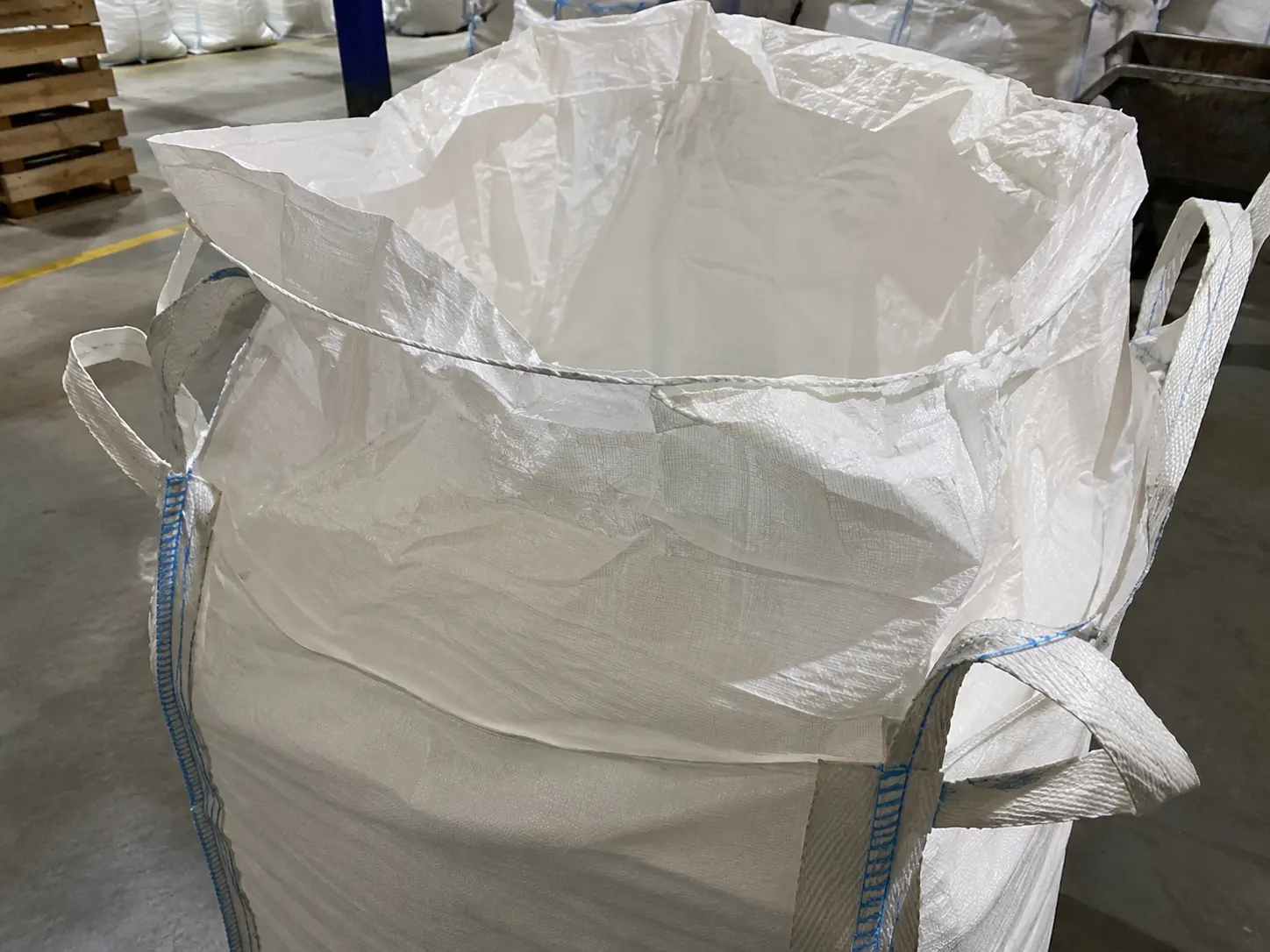
Top and Bottom Styles at a Glance
| Style | Position | How it works | Best fit |
|---|---|---|---|
| Duffle top | Top | Extended skirt gathered and tied after filling | Manual filling, simple equipment |
| Spout top | Top | Fabric sleeve fits over a filling nozzle | Automated or high-dust filling lines |
| Open top | Top | No closure; wide opening, often covered with a separate lid | Fast manual filling, low dust sensitivity |
| Spout bottom | Bottom | Fabric sleeve opens to release product in a controlled stream | Discharge into a hopper or process line |
| Flat bottom | Bottom | Sewn flat panel, cut open or lifted to empty | Manual discharge, scooping, dumping |
Duffle Top: Simple and Low-Cost
A duffle top is an extended fabric skirt around the opening, gathered and tied closed by hand after filling — the same basic mechanic as a duffle bag. It needs no special filling hardware, which makes it the default choice for manual or semi-automated lines without a dedicated fill spout. The tradeoff is dust control: an open skirt during filling lets more dust escape than a sleeve-style spout, which matters for fine powders or dust-sensitive environments.
If the bag uses an inner liner, the duffle skirt also gives operators room to tie the liner separately from the outer fabric — useful for moisture-sensitive products where the liner needs its own seal independent of the bag closure. That extra step adds a few seconds per bag but keeps the product protected even if the outer tie loosens in transit.
Spout Top: Built for Controlled, Lower-Dust Filling
A spout top has a fabric sleeve sized to fit over a filling nozzle, letting product flow in through a narrower, more controlled opening than a duffle top’s wide skirt. That control reduces dust escape during filling and works well with automated or semi-automated filling lines that position a nozzle over the bag. The sleeve adds a small amount of fabric and sewing versus a duffle top, a minor cost difference against the operational benefit on high-volume or dust-sensitive lines.
After filling, the spout is typically closed with a cable tie, clip, or heat seal rather than a hand-tied knot, which is faster on a production line running many bags per hour and gives a more consistent closure than a manually tied duffle skirt. Spout diameter should match your nozzle size — an oversized spout defeats the dust-control benefit, and an undersized one slows fill rate.
Open Top: Fastest to Fill, No Built-In Closure
An open top bag has no gathered skirt or spout — just a wide, unclosed opening at the top edge. It’s the fastest style to fill by hand or by dumping product in from above, but it has no built-in way to close once filled; operators typically use a separate lid, tarp, or strapping to cover the load for transit. Open top suits situations where filling speed matters more than a sealed closure, and where the product isn’t sensitive to exposure during short transport.
Because there’s no built-in closure, open top bags depend entirely on whatever covering method you add afterward — a loose tarp is faster but less secure than a lid designed to match the bag’s opening. If the load travels any real distance or sits outdoors before use, factor that covering step into your process rather than treating open top as a complete solution on its own.
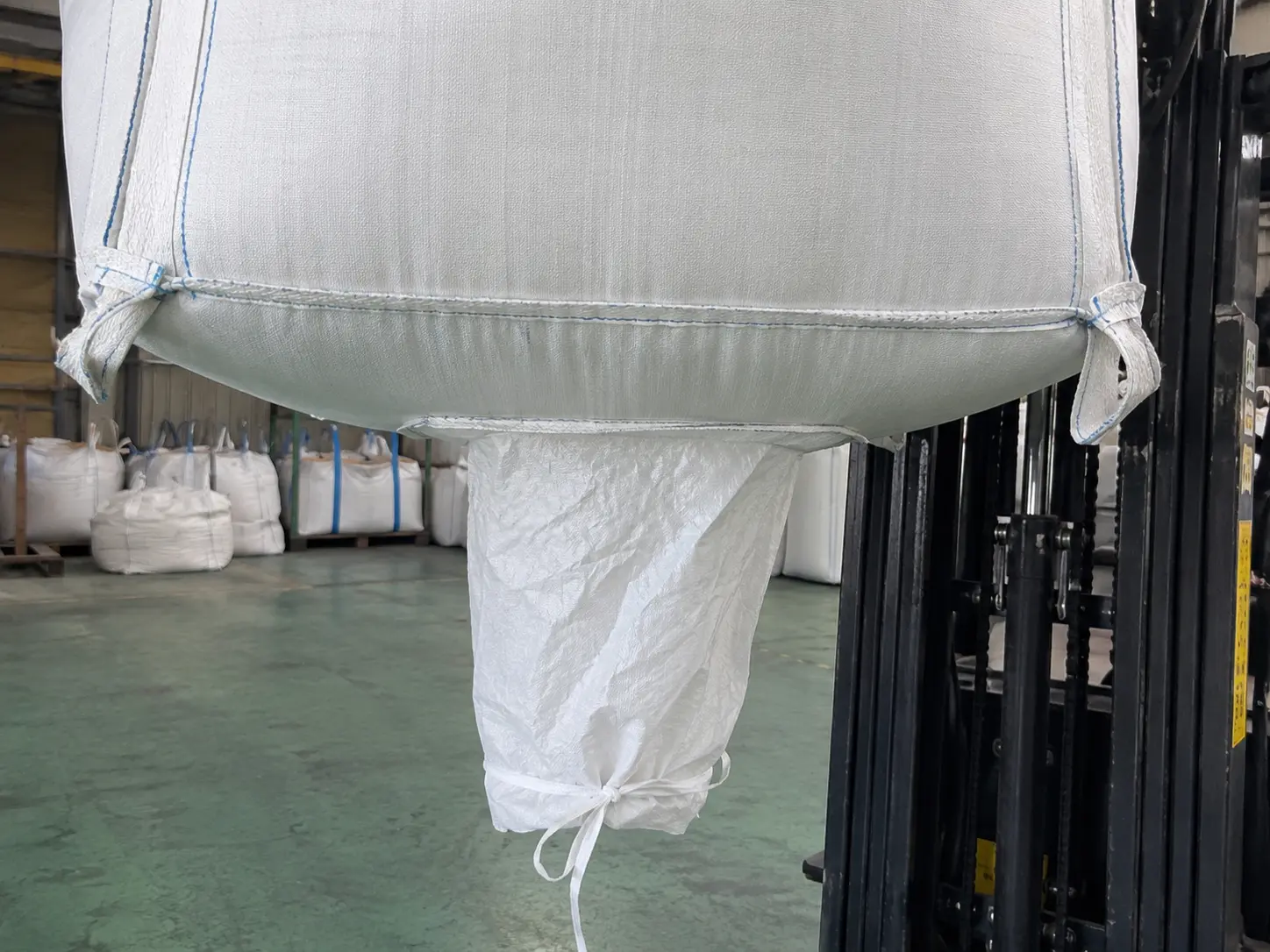
Spout Bottom: Controlled Discharge Into Process Lines
A discharge spout at the bottom mirrors the spout top’s mechanism — a fabric sleeve that opens to let product flow out in a controlled stream, then gets tied or clipped shut between uses. This is the standard choice when the bag empties directly into a hopper, mixer, or other process equipment rather than being dumped or scooped by hand. Controlled discharge also reduces product loss and dust compared to cutting a bag open, which matters for higher-value or fine-particle products.
A spout bottom also matters for multi-trip bags: a bag that discharges through a resealable spout can be refilled and reused without cutting, while a flat-bottom bag generally can’t once it’s been opened. If your operation is moving toward reusable, multi-trip FIBCs rather than single-use bags, spout bottom construction is close to a requirement, not just a convenience.
Flat Bottom: Simple and Ready to Cut or Dump
A flat bottom is a sewn, closed panel with no spout — the bag is emptied by cutting it open, tipping it to dump the contents, or scooping product out manually. It’s the lowest-cost bottom style and the right fit when discharge doesn’t need to feed directly into equipment — construction aggregate dumped on-site, or product scooped out in smaller batches. It’s a one-way discharge in practice: once cut open, the bag isn’t reused for that load.
Flat bottom is also the more forgiving choice for irregular or lumpy products that don’t flow well through a narrow spout — aggregate, chunky granules, or anything prone to bridging and clogging a discharge sleeve. If your product doesn’t pour smoothly on its own, a spout bottom may cause more handling delay than it saves.
Common Mistakes When Specifying Fill and Discharge Style
- Copying a competitor’s spec without checking your own equipment. Their nozzle diameter or hopper setup may not match yours — confirm against your actual line, not someone else’s.
- Assuming a cheaper duffle top is always the right call. On a high-volume dusty line, the labor and cleanup cost of manual tie-off can outweigh the small per-bag savings versus spout top.
- Ordering flat bottom for a bag that needs to feed a hopper. Flat bottom means cutting the bag open — a genuine mismatch if your discharge point expects a controlled stream.
- Overlooking spout diameter. A spout that doesn’t match your nozzle or discharge valve slows the line regardless of which style you picked.
- Forgetting the liner tie-off point. If a liner is specified, confirm the top style gives operators room to seal it separately from the outer bag.
Matching Top and Bottom to Your Actual Process
Filling and discharge are two separate equipment questions, so pick each style based on what’s on that end of your process, not on what the other end uses. A line filling by automated nozzle but discharging by manual dump is a legitimate combination: spout top, flat bottom. A manually filled bag feeding into a hopper is the reverse: duffle top, spout bottom. Don’t assume symmetry — ask what equipment touches each end of the bag before specifying.
Fill and discharge style also changes usable fill volume slightly, since spout fabric adds height without adding storage capacity — a detail covered in our bulk bag dimensions guide if you’re sizing a bag against a target weight.
Decision Checklist
- How does your line fill the bag — nozzle, dump, or manual? Nozzle favors spout top; dump or manual favors duffle or open top.
- Is dust control a concern during filling? Spout top reduces dust exposure more than duffle or open top.
- How does your process discharge the bag — into equipment, or by cutting/dumping? Equipment favors spout bottom; cutting or dumping favors flat bottom.
- Do top and bottom need to match each other? No — choose each independently based on that end’s equipment.
- Is the bag reused, or single-trip? Spout closures reseal for partial use; flat bottom and open top are typically one-way once opened.
Before You Request a Quote
Tell your supplier both ends of your process:
- Filling method: nozzle, manual pour, or dump
- Discharge method: hopper feed, dump, or manual scoop
- Dust sensitivity of the product
- Target capacity and dimensions
- Whether the bag is single-trip or needs to reseal for partial discharge
Request a quote with your filling and discharge setup and we’ll confirm the right top and bottom combination.
Common Questions
What is a duffle top on a bulk bag?
A duffle top is an extended fabric skirt around the bag's top opening that gets gathered and tied closed after filling, similar to a duffle bag. It's a simple, low-cost closure that works with most filling equipment and needs no special hardware.
What's the difference between spout top and duffle top?
A spout top has a fabric sleeve at the opening designed to fit over a filling nozzle for a more controlled, lower-dust fill, while a duffle top is a wider opening gathered and tied shut afterward. Spout top suits automated or dusty filling lines; duffle top suits simpler manual filling.
What does discharge spout mean on an FIBC?
A discharge spout is a fabric sleeve at the bottom of the bag that opens to release product in a controlled stream, then ties or clips shut between uses. It's the standard choice when product needs to flow into a hopper or process line rather than be dumped or scooped.
Can I mix a spout top with a flat bottom on the same bag?
Yes — top and bottom styles are chosen independently based on your filling and discharge equipment. A spout top for automated filling paired with a flat bottom for manual scooping is a common combination.
Which top and bottom style is cheapest?
Duffle top and flat bottom are generally the lowest-cost options because they need no additional spout fabric or hardware. Spout styles add a small per-bag cost for the extra material and sewing, offset by faster or cleaner filling and discharge in operations that run high volumes.