How Many Bulk Bags Fit in a 40ft Container?
There's no single answer — loading count depends on pallet vs floor loading, bag size, fabric thickness, and liner. Here's the reference point and the factors that move it.
PackTonne Sourcing Desk · · 6 min read
There’s no single number for how many bulk bags fit in a 40ft container — it depends on pallet vs floor loading, bag dimensions, fabric thickness, and whether the bags are lined. A common pallet-loading reference point is roughly 200 bags per pallet across 40–48 pallets, which works out to somewhere around 8,000–9,600 bags under that specific assumption. Your actual count depends on your bag’s exact spec — see our dimensions guide if you haven’t finalized your bag’s footprint yet — not a generic chart.
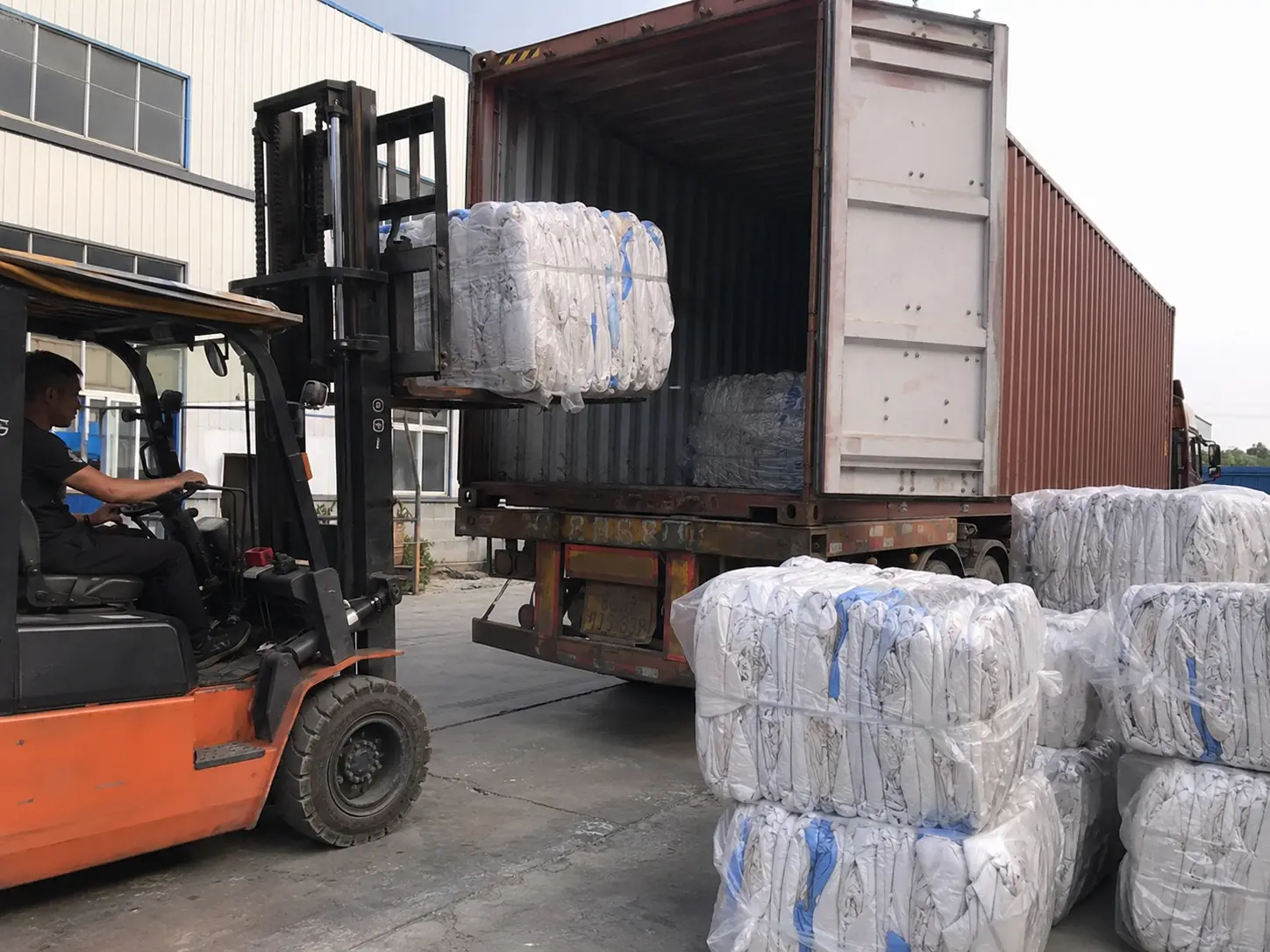
What Changes the Count
| Factor | How it affects loading | Direction |
|---|---|---|
| Packing method | Pallet loading is standardized but uses space on the pallets themselves; floor loading can pack denser | Floor loading often increases count |
| Bag dimensions | Larger footprint or height per bag means fewer bags per layer | Larger bags decrease count |
| Fabric weight | Heavier, stiffer fabric folds less flat | Heavier fabric decreases count |
| Liner | Adds bulk that resists flat folding | Lined bags decrease count |
| Folding density | How tightly bags are folded before loading | Tighter folding increases count |
The Pallet-Loading Reference Point
Standard pallet loading puts roughly 200 bags on each pallet, and a 40ft container typically holds 40 to 48 pallets — a starting reference that works out to somewhere in the 8,000–9,600 bag range for that specific loading method. Treat this as a reference point for planning, not a guaranteed count: it assumes a particular bag size and folding approach that may not match your exact spec.
Floor Loading Can Increase Count, But Depends on Folding
Loading folded bags directly onto the container floor, without pallets, skips the space pallets themselves occupy and can meaningfully increase how many bags fit. How much depends entirely on folding density — how tightly and consistently the bags fold flat, which varies with fabric weight and construction. A thinner, more flexible fabric folds tighter than a heavy, stiff one, so the same container can hold noticeably different counts depending on which fabric spec you’re shipping.
Liners Reduce How Tightly Bags Fold
A bag with a PE liner doesn’t fold as flat as an unlined bag of the same dimensions, because the liner adds its own bulk on top of the outer fabric. This matters more for floor-loaded shipments, where folding density drives the count directly — a lined bag shipment will generally fit fewer units than an equivalent unlined shipment in the same container.
Bag Size and Fabric Weight Change the Math Directly
Larger bags — whether by footprint or height — simply take up more container volume per unit, reducing count in direct proportion to size. Fabric weight compounds this: a heavier-GSM bag built for a higher safety factor is stiffer and bulkier when folded than a lighter-GSM bag of the same dimensions. Two orders with identical stated capacity but different fabric weight specs can load meaningfully different quantities into the same container.
Common Mistakes When Estimating Loading Count
- Using a competitor’s or a generic online figure as your own count. Their bag spec almost certainly differs from yours in dimensions, GSM, or liner.
- Assuming pallet and floor loading produce the same count. They rarely do — floor loading usually fits more, but only if folding density supports it.
- Ignoring liner impact on folding. A lined-bag order calculated using an unlined reference number will come up short on actual container space.
- Planning freight cost off an estimated count before confirming the real number. A miscalculated loading plan changes your per-unit freight cost meaningfully once the real count comes in different.
- Not accounting for how bags are secured for transit. Strapping, wrapping, or dunnage takes some space too, and isn’t always factored into a rough per-pallet estimate.
Why the Reference Number Still Has Real Limits
The 200-bags-per-pallet, 40–48-pallet reference point is a genuinely useful starting assumption for early planning — budgeting freight cost roughly, or comparing container count against total order size before a detailed quote. But it assumes a specific bag size and packing approach; a bag noticeably larger, heavier, or lined differently will move meaningfully off that reference, sometimes by more than buyers expect when they treat it as a fixed number rather than a planning starting point.
Why We Won’t Give You One Number
A fixed “X bags per container” answer without knowing your dimensions, fabric weight, liner, and packing method would be a guess dressed up as a fact — not useful for actually planning a shipment. The honest answer is that loading count is a calculation specific to your bag, and giving you a made-up number that doesn’t match your actual spec would cost you more in a miscalculated shipment than the convenience of a quick answer is worth.
How to Get an Accurate Loading Plan
Send these details and we’ll calculate a real loading plan for your specific order:
- Bag dimensions (footprint and height, including or excluding loops)
- Fabric weight (GSM)
- Liner — present or not, loose-fit or form-fit
- Preferred packing method — pallet or floor loading
- Target total order quantity
Decision Checklist
- Do you have your bag’s exact dimensions and fabric weight? That’s the starting point for any real calculation.
- Are you pallet loading or floor loading? The two methods can produce meaningfully different counts for the same bags.
- Does your bag have a liner? Factor in reduced folding density if so.
- Is your order size flexible, or fixed to a specific container count? Tell your supplier which constraint matters more — total units or total containers.
- Have you asked for a calculated loading plan rather than a rule-of-thumb number? A generic figure won’t match your specific spec closely enough to plan shipping costs accurately.
Before You Request a Quote
Request a quote with your bag dimensions, fabric weight, liner spec, and packing method preference, and we’ll calculate the loading plan for your actual container, not an industry average.
Common Questions
How many bulk bags fit in a 40ft container?
There's no fixed number — it depends on whether you're pallet loading or floor loading, bag dimensions, fabric weight, and whether the bags have a liner. A common pallet-loading reference point is around 200 bags per pallet across 40–48 pallets, but your actual count depends on your specific bag spec.
Does floor loading fit more bags than pallet loading?
Often yes, because folded bags stacked directly on the container floor skip the space pallets themselves take up. But the actual gain depends on how densely the bags fold, which varies with fabric thickness and whether a liner is present.
Do lined bags reduce container loading capacity?
Yes. A liner adds bulk that resists folding as flat as an unlined bag, so lined bags take up more volume per unit when folded, reducing how many fit in the same container space compared to unlined bags of the same dimensions.
Why won't suppliers give a fixed loading number without more information?
Because the honest answer genuinely depends on variables specific to your bag — dimensions, fabric weight, liner, and packing method. A fixed number without that information would be a guess, not a calculation.
How can I get an accurate loading count for my order?
Send your bag's exact dimensions, fabric weight, whether it's lined, and your preferred packing method (pallet or floor). A supplier can calculate a real loading plan from those specifics rather than quoting a generic figure.