What Is Woven Polypropylene?
Woven polypropylene is extruded PP tape woven on a circular loom into a strong, lightweight fabric — the material behind nearly every FIBC bulk bag. Here's how it's made and why it works.
PackTonne Sourcing Desk · · 6 min read
Woven polypropylene is polypropylene resin extruded into flat tape, then woven on a circular loom into a fabric with a distinctive crosshatch structure. That weave is what gives FIBC bags their strength-to-weight ratio — light enough to handle by hand when empty, strong enough to carry a ton when full. It’s the base material behind nearly every bulk bag on the market, including the Type A standard bags most non-hazardous products ship in.
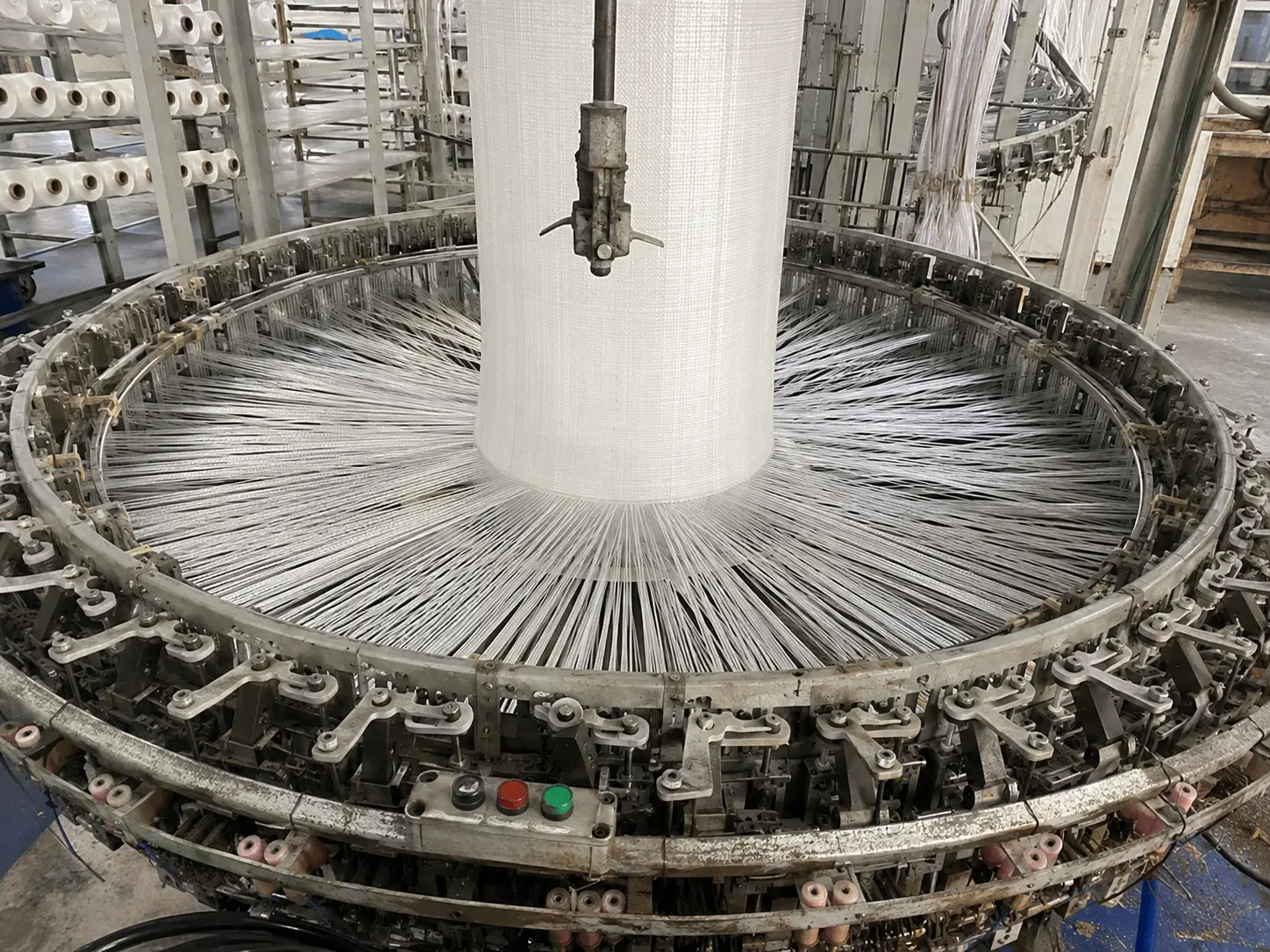
How Woven Polypropylene Is Made
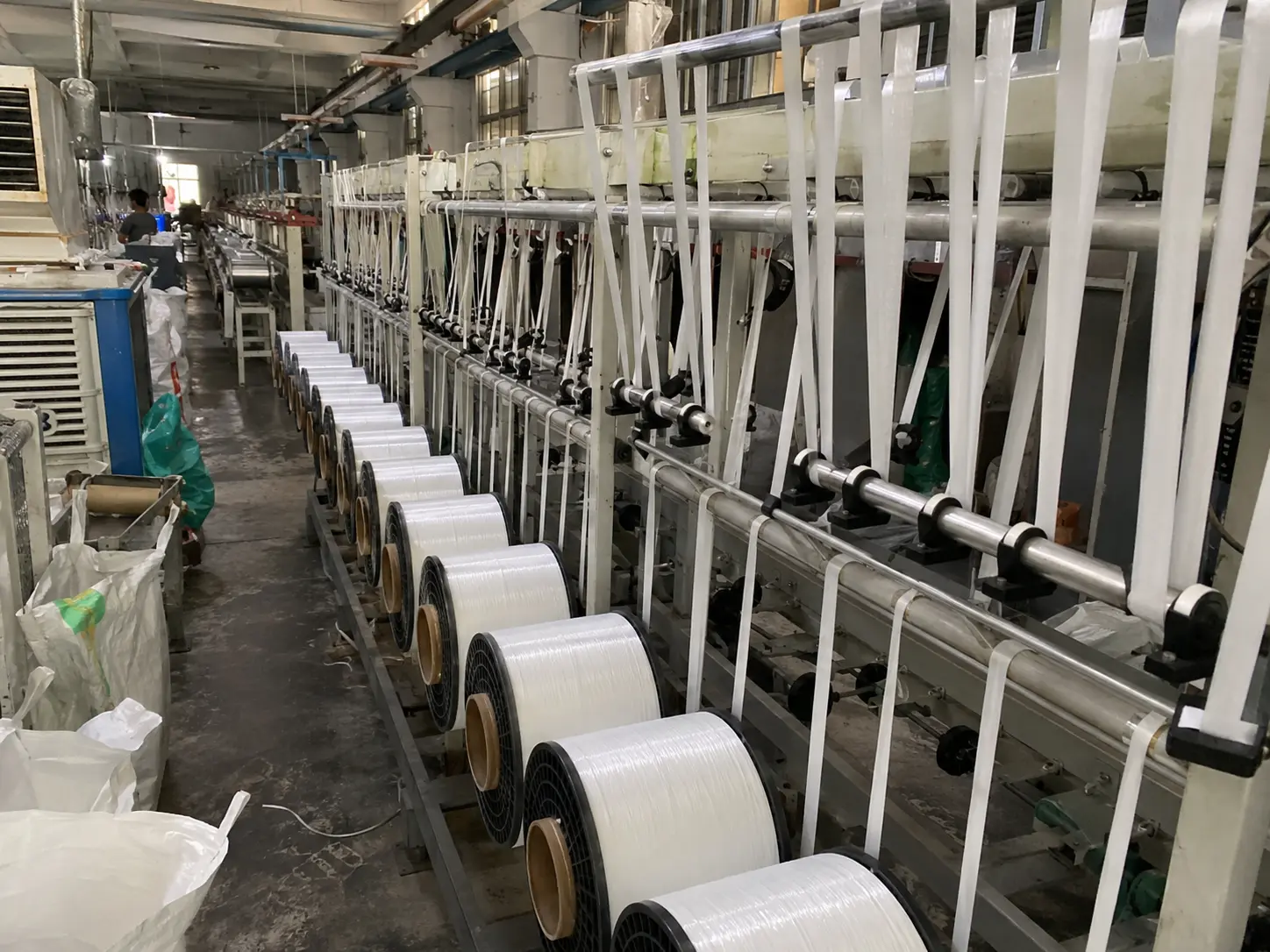
Two steps turn raw resin into bag fabric: extrusion and weaving.
| Step | What happens | Why it matters |
|---|---|---|
| Tape extrusion | PP resin is melted and extruded through a die into thin flat tape, then stretched to align the polymer chains | Stretching increases tensile strength — under-stretched tape tears easily |
| Circular loom weaving | Tapes are woven on a circular loom into seamless tubular fabric | Seamless tube construction removes a side seam as a weak point |
| Cutting and fabrication | Fabric is cut to size, and panels are sewn with reinforced stitching at load-bearing points | Stitching quality at loops and seams determines real-world safety factor as much as the fabric itself |
Fabric Weight (GSM) Is the Main Strength Variable
Grams per square meter (GSM) measures how much material is packed into the weave, and it’s the single biggest driver of a bag’s strength and cost. Standard FIBC fabric runs 140–210 g/m², with the exact number set by target load, safety factor, and how abrasive the product is. Our price guide covers how GSM moves cost — the short version is that heavier fabric costs more per meter but survives rougher handling and higher safety factors.
Why PP Instead of Other Materials
Polypropylene displaced older bulk packaging materials — jute, cotton canvas, paper — because it beats them on the properties that matter for bulk transport: it doesn’t absorb moisture, resists most chemicals and won’t rot, and its strength-to-weight ratio lets a bag carry far more than its own weight without needing rigid structure. Jute is biodegradable but weak when wet and inconsistent in strength; canvas is durable but heavy and expensive at scale. PP fabric costs less to produce, ships lighter empty, and performs consistently — which is why it became the default material for FIBCs rather than a niche alternative.
Consistency is the underrated advantage. Natural fibers like jute vary batch to batch depending on crop conditions, which makes strength testing less predictable at scale. Extruded PP tape comes from a controlled industrial process, so fabric from the same GSM specification behaves the same way whether it was woven this month or six months ago — a property that matters more once you’re ordering thousands of bags against a fixed safety factor.
Woven vs Non-Woven: A Common Mix-Up
Woven PP and non-woven PP sound similar but aren’t interchangeable. Woven PP interlaces extruded tape on a loom, producing the crosshatch structure with real tensile strength that FIBCs need. Non-woven PP bonds loose fibers together — lighter, cheaper, and common in shopping bags or disposable covers, but far too weak for a load-bearing bulk container. If a spec sheet just says “polypropylene” without specifying woven construction, ask — the two materials aren’t close substitutes.
Coating Adds a Barrier the Base Weave Doesn’t Have
Raw woven PP fabric is water-resistant but not fully waterproof — moisture can pass through the gaps in the weave under sustained exposure. A polyethylene coating laminated to one or both sides closes those gaps, adding a real moisture barrier for hygroscopic products like fertilizer or sensitive powders. Coating is a separate spec decision from fabric weight, and it adds a modest cost premium on top of the base GSM price.
Mono-Material Design Is the Sustainability Trend
The industry is shifting toward mono-material construction — building the entire bag from PP wherever possible, including reinforcements and threads — because a single-polymer bag is simpler to recycle than one mixing PP with other plastics. China’s GB/T 10454-2025 standard, effective March 2026, formalizes this by permitting recycled PP content as long as the same polymer makes up over 95% of the material. That threshold keeps recycled-content bags close enough to virgin PP in composition to stay genuinely recyclable, rather than becoming a mixed-plastic product that’s harder to process at end of life.
This shift is also market-driven, not just regulatory. Multi-trip woven PP FIBCs — designed for repeated use rather than a single haul — are a growing segment as buyers move away from single-use packaging toward circular logistics. A mono-material bag fits that model better than a mixed-material one: at end of useful life, it can go back into the same recycling stream it came from instead of requiring separation first.
What to Check on a Woven PP Spec Sheet
- GSM (fabric weight): the base number every other spec builds on
- Tape width and weave density: finer detail suppliers should provide on request, affecting fabric feel and tear resistance
- Coating: present or absent, and on one or both sides
- Recycled content percentage: relevant if sustainability commitments or import regulations require disclosure
- Stitching and reinforcement at loops and seams: as important to real-world strength as the fabric weight itself
Before You Request a Quote
If sourcing fabric spec matters for your product, send:
- Target load capacity and safety factor
- Whether the product is moisture-sensitive (affects coating decision)
- Abrasiveness of the product (affects GSM choice)
- Any recycled-content or sustainability requirement
Request a quote with these details and we’ll confirm the right fabric weight and construction for your load.
Common Questions
What is woven polypropylene made of?
Woven polypropylene is made from polypropylene resin extruded into flat tapes, then woven on a circular loom into fabric. The tape width, thickness, and weave density determine the fabric's final strength and weight.
Is woven polypropylene the same as plastic?
Yes — polypropylene is a thermoplastic polymer, the same broad material family as many rigid plastics, just processed into thin tape and woven rather than molded. This is what gives FIBC fabric both flexibility and tensile strength.
What's the difference between woven and non-woven polypropylene?
Woven PP is tape extruded and interlaced on a loom, producing a fabric with visible crosshatch structure and high tensile strength — this is what FIBC bags use. Non-woven PP is fibers bonded together without weaving, weaker and typically used for lighter applications like shopping bags or disposable covers, not load-bearing bulk containers.
Does woven polypropylene fabric weight affect the bag's strength?
Yes, directly. Fabric weight, measured in grams per square meter (GSM), is the base driver of a bag's load capacity and abrasion resistance — heavier GSM fabric handles rougher material and higher safety factors, at a higher cost.
Can woven polypropylene be recycled?
Yes, and China's new GB/T 10454-2025 standard formalizes this — recycled PP content is allowed as long as the same polymer makes up over 95% of the material, keeping the fabric mono-material and easier to recycle again at end of life.