FIBC Bulk Bag Price Guide 2026: What Drives the Cost?
A basic FIBC and a certified, printed, lined bag of the same size can differ by 60% or more. Here's what actually drives FIBC bulk bag prices in 2026.
PackTonne Sourcing Desk · · 7 min read
There’s no single price for an FIBC bulk bag. A basic Type A bag and a UN-certified, printed, lined bag of the same size can differ by 60% or more per piece. Price comes from fabric weight, safety factor, static protection class, liner, certification, printing and order volume — not from capacity alone. This guide breaks quotes down into their actual cost drivers, so you can read a quote instead of just comparing one number.
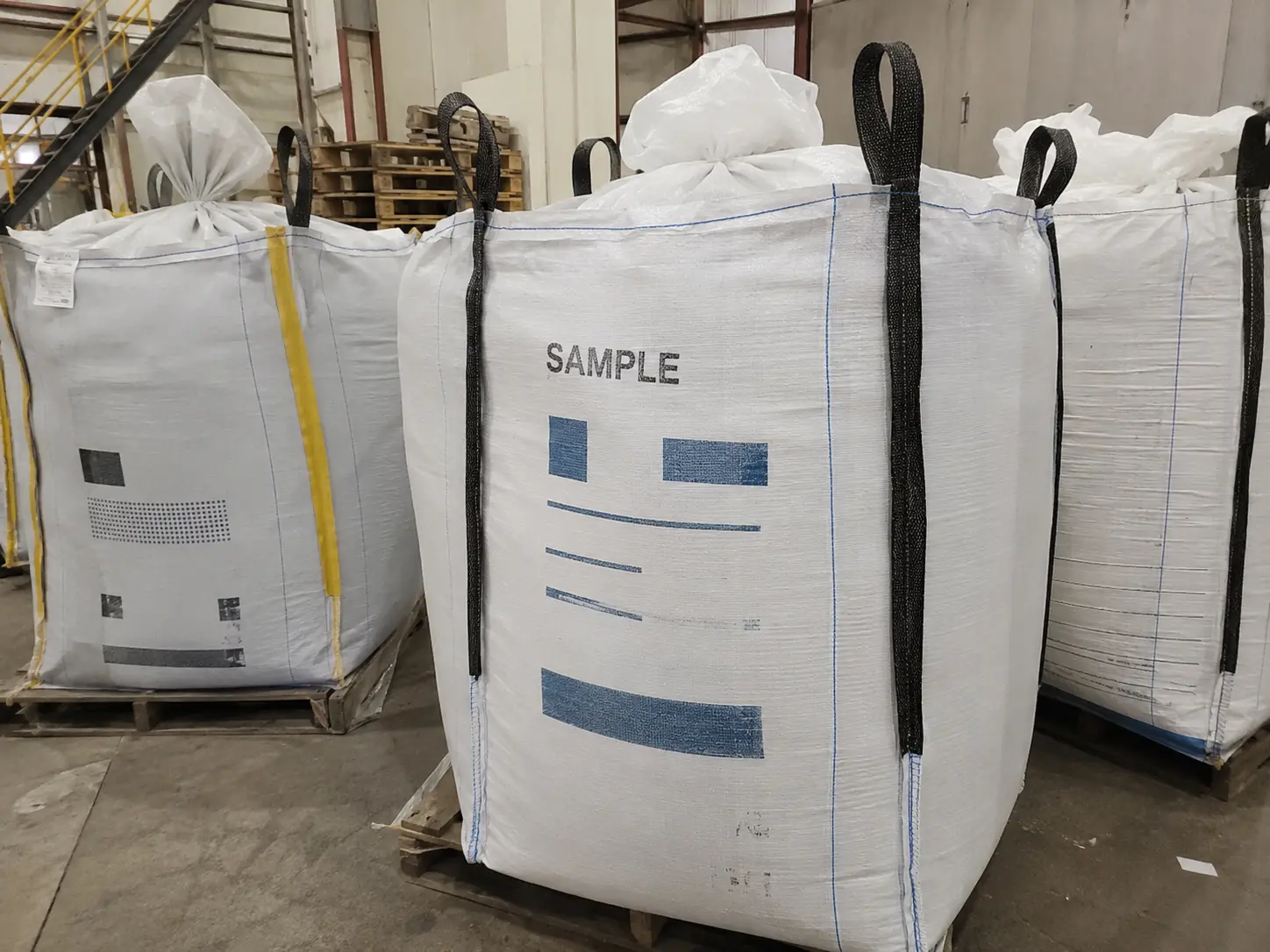
What Actually Moves the Price
| Cost driver | Typical price impact | Why |
|---|---|---|
| Fabric weight (GSM) | Base driver | Heavier woven PP survives rougher handling but costs more per meter |
| Safety factor (5:1 vs 6:1) | +10–20% | Multi-trip bags need denser stitching and heavier fabric |
| Static protection (Type B/C/D) | +10–60% | Conductive threads and controlled resin cost more to weave |
| Liner (loose vs form-fit) | +5–15% | Form-fit liners add sewing steps |
| UN certification | +15–30% | Locked spec, testing and documentation add cost |
| Baffle construction | +8–15% | Extra panels and reinforced corner stitching |
| Printing | Fixed plate fee once, small per-bag add after | Plate cost is one-time; ink cost is marginal |
Use this as a starting map, not a fixed formula — your own quote will move within these ranges depending on your factory and quantity.
Fabric Weight Is the Base Driver
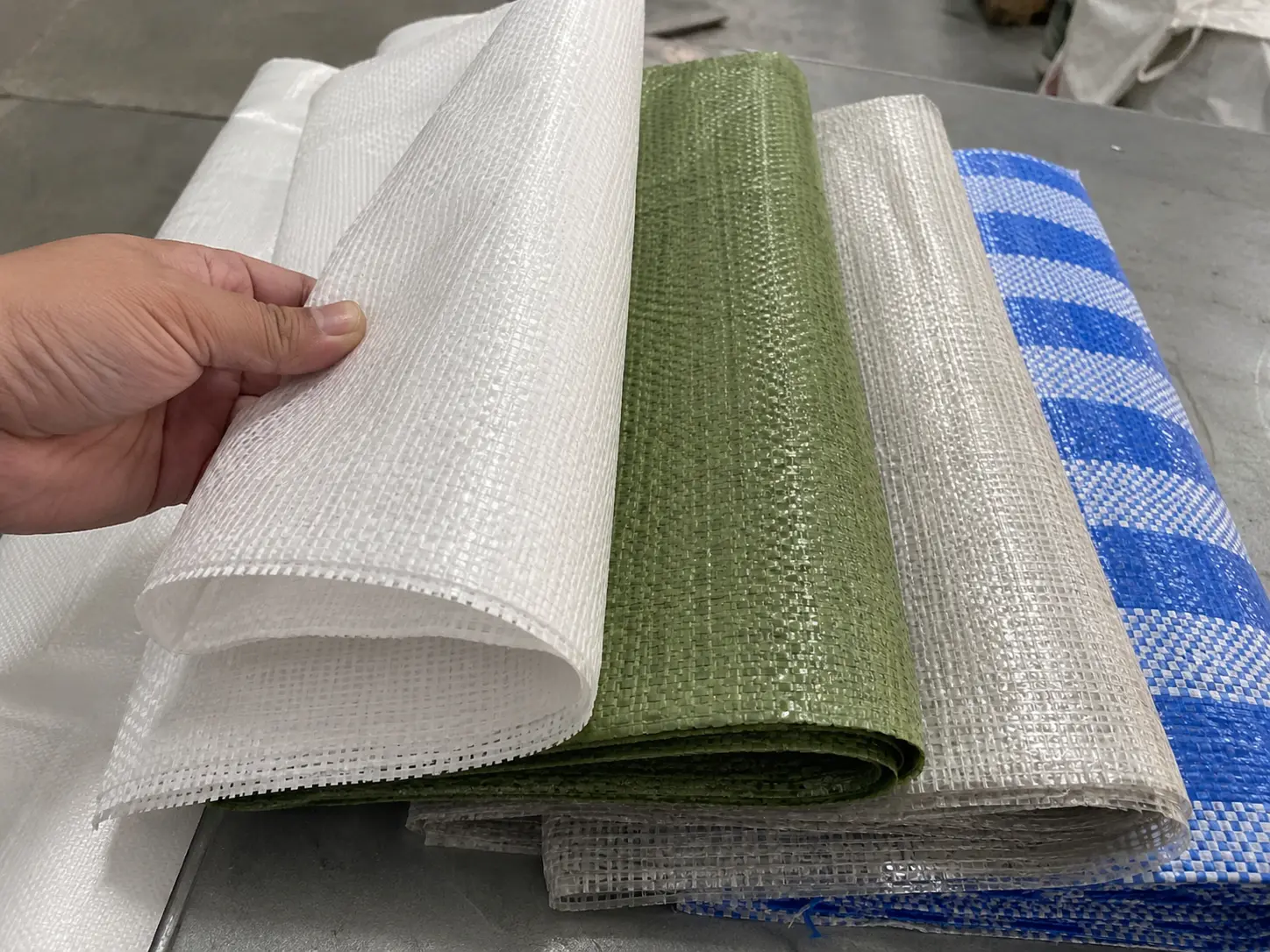
Fabric weight, measured in grams per square meter (GSM), is where most of the base cost lives. A 90×90×110 cm bag rated for 1 ton might use anywhere from 140 to 220 g/m² depending on safety factor and abrasiveness of the product inside. Two suppliers quoting the same dimensions at different prices are almost always differing on GSM, not on margin. Ask for the exact fabric weight in writing before comparing numbers — “heavy duty” on a datasheet is not a specification.
Safety Factor and Trip Count Change the Math
Single-trip bags are tested to a 5:1 safety factor; multi-trip bags need 6:1. That extra margin means denser stitching at the loops and seams, and often a heavier base fabric. If you’re only shipping a product once, a 5:1 single-trip bag is the cheaper, correct choice — paying for 6:1 construction you’ll never reuse is money spent on a feature you don’t need.
Static Protection Adds the Widest Range
Type A bags carry no static protection and sit at the bottom of the price range. Anti-static Type B, C and D bags cost more because the fabric either uses a controlled resin formulation (Type B), interwoven conductive threads (Type C), or a tighter-pitch dissipative weave (Type D) — all more expensive to produce than plain woven PP. This is the widest cost swing in the table, so specifying the correct type matters as much for your budget as for safety.
Liners and Coatings Are a Small Line Item
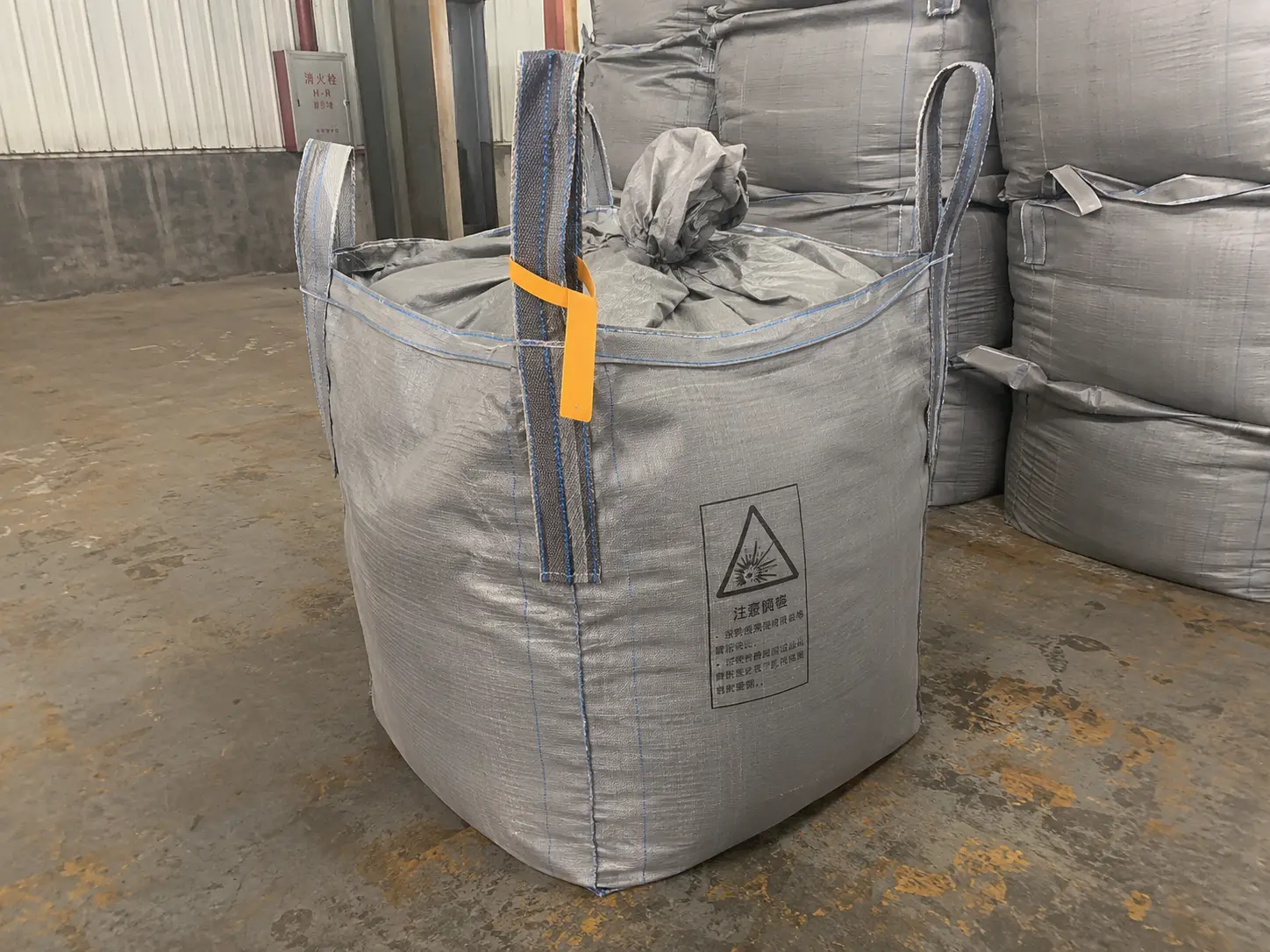
A loose liner is the cheapest way to protect a moisture-sensitive product. A form-fit liner, sewn to match the bag’s inner wall, costs more because it adds a sewing step — but it fills more precisely and protects better against contamination. Coating the outer fabric adds a smaller premium again, mainly relevant for fertilizer and other hygroscopic products.
UN Certification Costs More Than the Bag Itself Suggests
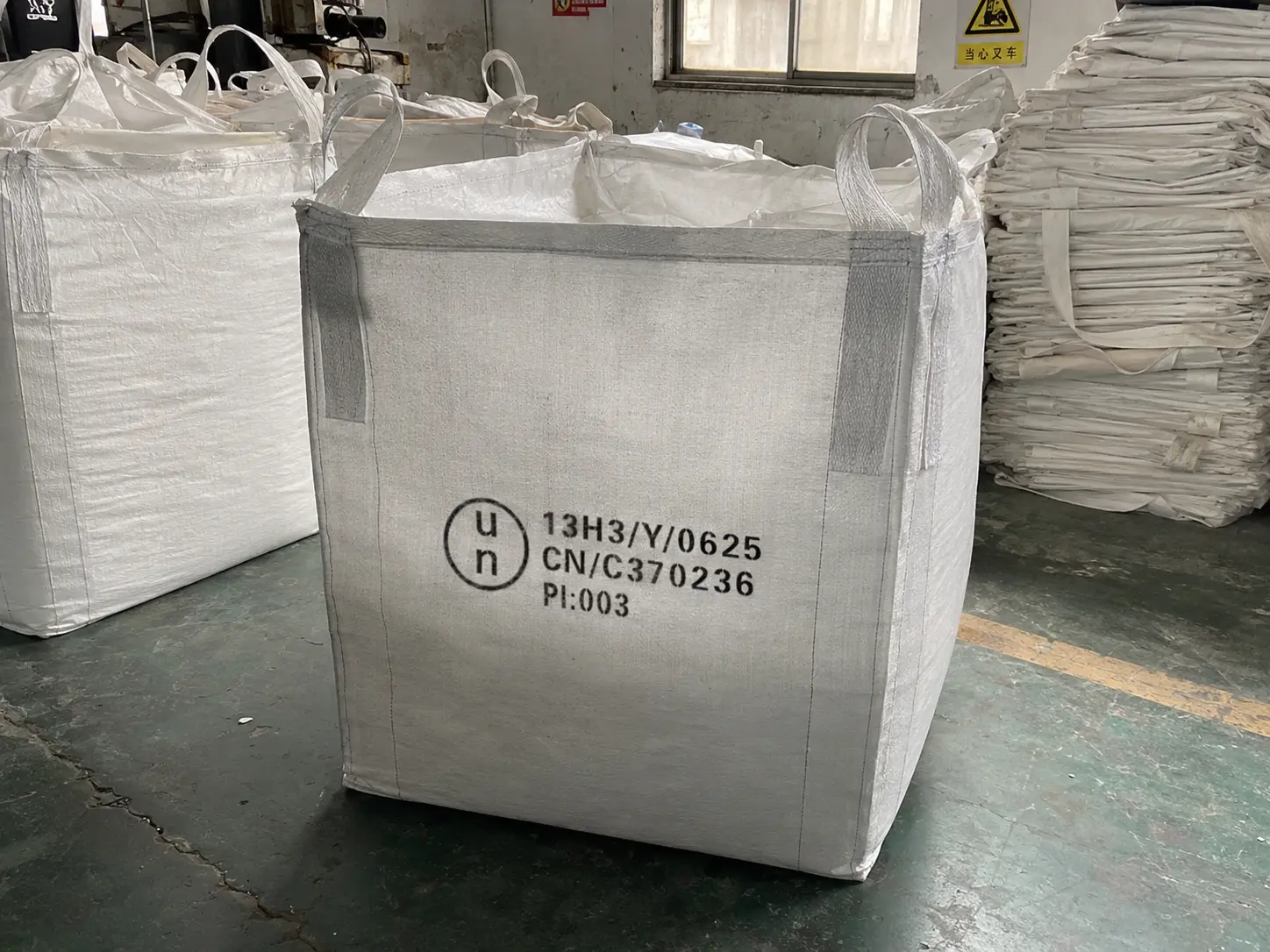
UN certified bags cost more not because the fabric is exotic, but because the whole design — fabric weight, coating, liner — has to be locked before testing, and can’t be changed afterward without re-certifying. The testing, documentation and traceability that come with the 13H marking are what you’re paying the premium for, not extra material.
Baffle Construction Trades Per-Bag Cost for Per-Container Savings
Baffle bags cost more per piece because of the extra internal panels and reinforced corner stitching. On high-volume, long-haul routes that premium is usually recovered in freight savings from tighter container loading. On short or low-volume runs, it often isn’t worth the extra cost — ask for a per-container comparison, not just a per-bag price, before deciding.
Printing Is a Fixed Fee, Then Marginal
Custom printing has two cost components: a one-time plate fee per color per design, and a small marginal ink cost per bag after that. More colors and more printed panels raise the plate fee but barely move the per-bag price once you’re in production. If you’re testing a market before committing to full branding, ask about single-color printing to keep the plate fee low.
Order Quantity Changes the Curve, Not Just the Total
Fixed costs — plate fees, tooling, setup — get divided across the run, so quantity affects price per bag more early in the curve than later. A jump from 1,000 to 5,000 bags usually drops the per-bag price more than a jump from 50,000 to 100,000. Ask your supplier for pricing at two or three quantity breaks so you can see where the curve actually flattens for your order size.
Freight Terms Change What “Price” Means
An FOB quote covers the bag only; you arrange and pay for freight separately. A CIF quote folds freight into one number, which is easier to budget but harder to audit line by line. DDP goes further and includes duties. None of these terms change the bag’s manufacturing cost — they change who’s carrying which cost and where in the shipment it shows up.
Before You Request a Quote
Send every supplier the same specification, not just a target price:
- Product to be packed, and its flammability if relevant
- Bag size and rated capacity
- Safety factor — single-trip or multi-trip
- Static protection class, if any
- Liner and coating requirement
- UN certification, if your product needs it
- Printing and branding requirements
- Order quantity and destination port
A quote that doesn’t break these out line by line is hiding where the price actually comes from.
Common Questions
What is the average price of an FIBC bulk bag?
There isn't one average price — a basic Type A bag and a UN-certified, lined, printed bag of the same size can differ by 60% or more. Price depends on fabric weight, safety factor, static protection, liner, certification and print, not on capacity alone.
Why do quotes from different suppliers vary so much for the same bag?
Two suppliers quoting the same dimensions are usually differing on fabric weight (GSM) or safety factor, not padding their margin. Always ask for GSM and safety factor in writing before comparing prices.
Does a higher order quantity always lower the price per bag?
Usually, but not linearly. Printing and tooling costs are fixed and spread across the run, so a 5,000-bag order sees a bigger per-bag drop than a 50,000-bag order sees going to 100,000. Ask for pricing at two or three quantity breaks to see where the curve flattens.
Is FOB or CIF pricing better for a first-time importer?
FOB usually gives a lower headline price because you arrange your own freight, while CIF folds shipping into one number that's easier to budget but harder to audit. First-time importers often prefer CIF for simplicity, then switch to FOB once they have a reliable freight forwarder.
How do I compare quotes fairly across suppliers?
Send every supplier the exact same specification — size, GSM, safety factor, loop type, liner, and quantity — and ask them to quote against it line by line. A quote that doesn't break out these line items is hiding where the price actually comes from.