How Are FIBC Bags Manufactured? Step-by-Step Process Explained
From PP resin to a finished bulk bag: extrusion, circular loom weaving, cutting, reinforced sewing, quality testing and batch-traceable packing. Here's what happens at each stage.
PackTonne Sourcing Desk · · 6 min read
FIBC manufacturing runs through six stages: PP resin extrusion, circular loom weaving, cutting and panel prep, reinforced sewing, liner fitting where specified, and quality testing before batch-traceable packing. Each stage shapes the finished bag’s strength and compliance — a shortcut at any step shows up later as a real-world failure point, not just a spec sheet number.
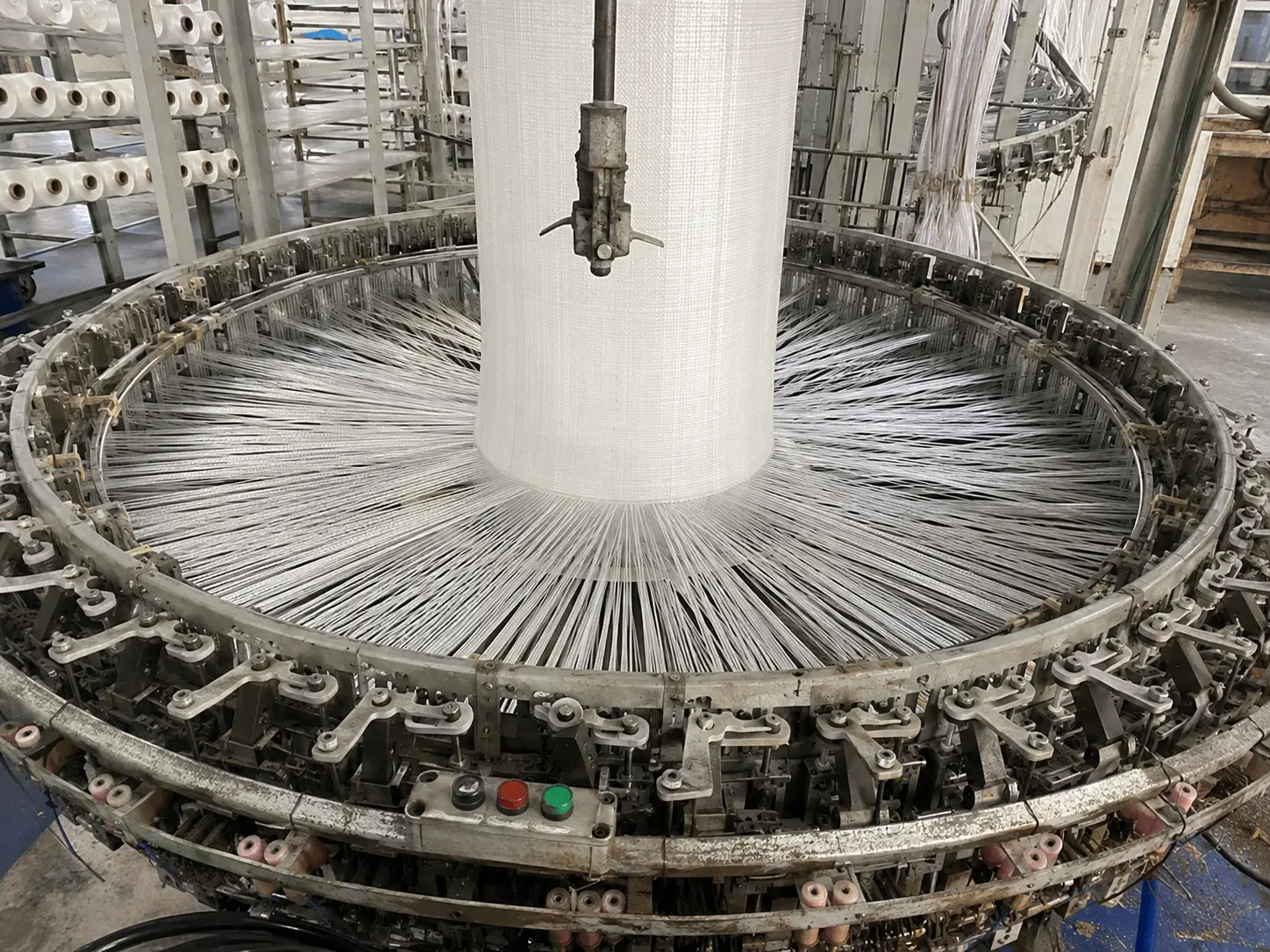
The Manufacturing Process at a Glance
| Stage | What happens | Why it matters |
|---|---|---|
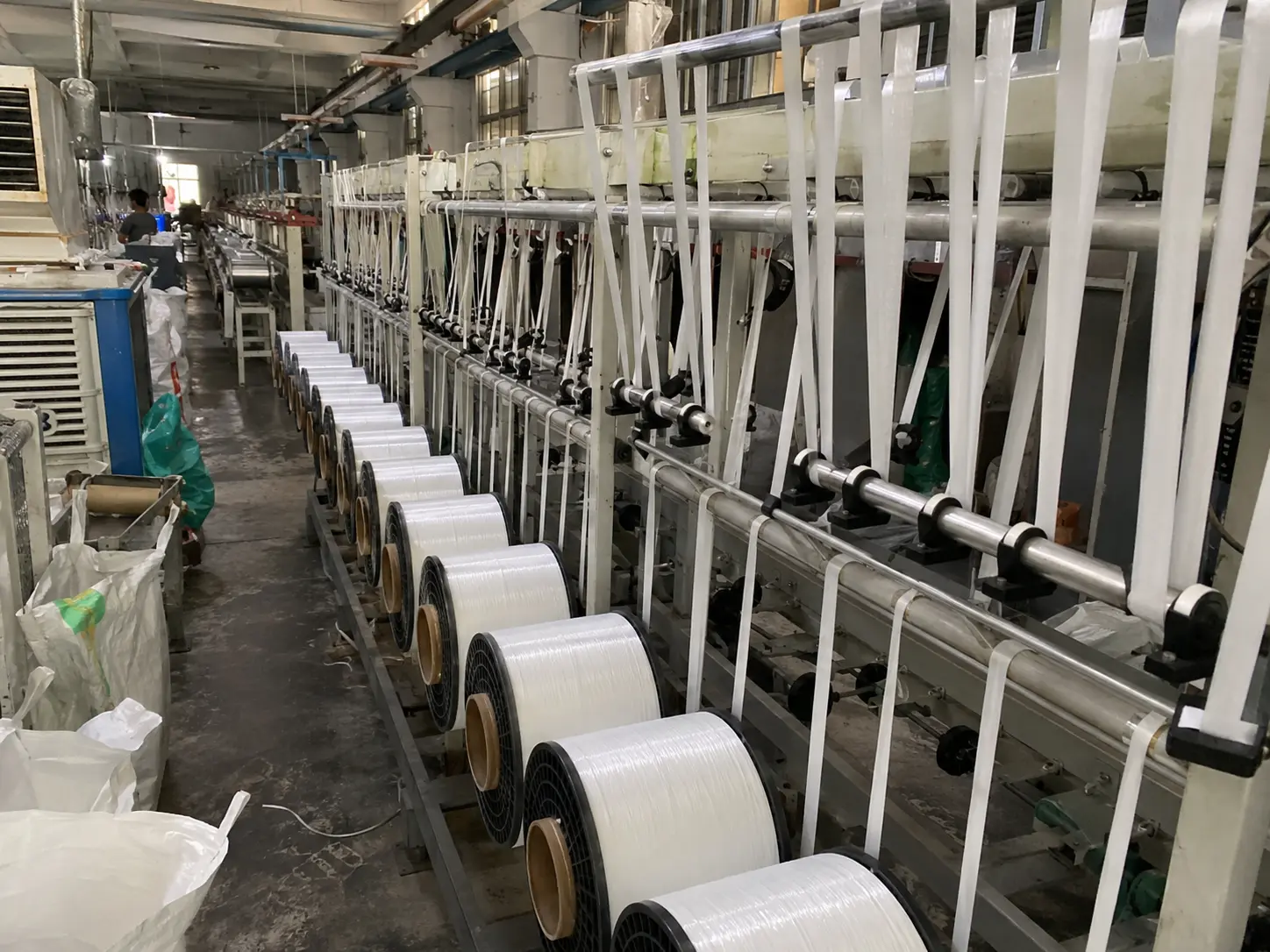
| Extrusion | PP resin melted and extruded into flat tape, then stretched | Stretching sets tensile strength; under-stretched tape tears |
| Weaving | Tape woven on a circular loom into seamless tubular fabric | Seamless tube removes a side seam as a weak point |
| Cutting & panel prep | Fabric cut to size for body, base and top panels | Panel accuracy affects final dimensions and fabric waste |
| Sewing & reinforcement | Panels joined with reinforced stitching at loops and seams | Stitching quality determines real-world safety factor as much as fabric does |
| Liner fitting | PE liner inserted for food grade, moisture-sensitive, or certified loads | Adds the actual contamination or moisture barrier |
| Testing & QC | Tensile, safety factor, and standard-specific tests per batch | Confirms the bag performs to its rated spec, not just its label |
Extrusion Sets the Base Material Properties
Raw PP resin is melted and forced through a die into thin flat tape, then stretched to align the polymer chains along the tape’s length. This stretching step is what gives the tape its tensile strength — insufficiently stretched tape looks the same but tears far more easily under load. See our woven polypropylene guide for more on how tape becomes fabric.
Weaving Turns Tape Into Load-Bearing Fabric
A circular loom interlaces the extruded tape into seamless tubular fabric, producing the crosshatch weave visible on any FIBC. Weaving as a seamless tube — rather than flat fabric later sewn into a tube — removes a longitudinal seam that would otherwise be a weak point under load.
Cutting and Panel Prep
Woven fabric is cut into body, base, and top panels sized to the target dimensions. Precision here affects two things: whether the finished bag hits its rated dimensions, and how much fabric waste the run generates — a factor that shows up in cost on high-volume orders more than on small ones.
Sewing and Reinforcement Determine Real-World Safety Factor
Panels are joined with reinforced stitching at the loops, corners and seams — the points that carry the most load when a full bag is lifted. Common reinforcement techniques include cross-corner bottom stitching and double-layer lifting loops. A bag’s tested safety factor (5:1 single-trip, 6:1 multi-trip) depends on this stitching holding under repeated load cycles, not on fabric weight alone — a heavy-GSM bag with weak stitching can still fail at the loops before the fabric tears.
Liner Fitting Adds Protection Where the Base Fabric Can’t
For food grade, moisture-sensitive, or certain certified loads, a PE liner is inserted and sewn or fitted to the inner wall. This step is where a general-purpose bag becomes a food grade bag — the liner is the actual food-contact barrier, not the outer woven PP shell.
Testing and Quality Control Before Packing
Before bags ship, testing confirms the finished product actually meets its rated spec: tensile strength on the fabric, load testing against the stated safety factor, and — for anti-static or UN certified bags — the specific tests each standard requires (IEC 61340-4-4 for static classes, drop and stacking tests for UN marking). Batch-level documentation ties test results to a specific production run, which matters if a quality question comes up after shipment.
ISO 21898:2024 raised the bar on this step for the industry generally, adding a cyclic top-lift test — 30 lift cycles at 2x safe working load, then a final cycle at 5x — that a bag has to survive without seam splitting, loop failure, or fabric tearing. Testing to this level takes longer than a basic pull test, but it’s what actually predicts how a bag performs under repeated real-world handling rather than a single lab pull.
What to Ask a Factory Before You Order
- Can you provide batch-level test reports for tensile strength and safety factor?
- What reinforcement technique do you use at the loops and base seams?
- For anti-static or certified bags, what standard were they tested against?
- Do you support third-party pre-shipment inspection (SGS, Intertek) for larger orders?
- How is batch traceability recorded — production date, batch number, order reference?
We work directly with partner factories in Shandong that follow this process; ask us for the specific documentation behind a given order rather than a general capability claim, since the right answer depends on your exact spec.
Common Defects Worth Checking For
- Uneven tape stretch: shows up as inconsistent fabric thickness across a panel, weakening tensile strength in patches rather than uniformly
- Skipped stitches or single-pass seams at load points: a visible gap in stitching at the loops or base corners, where reinforcement matters most
- Liner misalignment: a liner that shifts or bunches inside the outer bag instead of sitting flush, reducing its effective barrier
- Missing or illegible batch labels: a traceability gap that becomes a real problem only when you need to isolate a specific production run
Most of these are visible on inspection before a shipment leaves the factory, which is the practical reason third-party pre-shipment inspection earns its cost on larger orders — catching a defect before it’s on a container is far cheaper than after.
Before You Request a Quote
Send these details and we’ll confirm the manufacturing steps relevant to your order:
- Target capacity, dimensions, and safety factor
- Static protection, food grade, or certification requirements
- Order quantity
- Whether you need third-party pre-shipment inspection
Request a quote and we’ll walk through the process behind your specific order.
Common Questions
How are FIBC bulk bags made?
PP resin is extruded into flat tape, woven into fabric on a circular loom, cut into panels, sewn with reinforced stitching at the loops and seams, fitted with a liner if specified, then tested and packed with batch traceability. Each stage affects the final bag's strength and compliance.
What quality checks happen during FIBC manufacturing?
Tensile strength testing, safety factor load testing, seam and stitching inspection, and — for anti-static or UN certified bags — specific static or drop testing against the relevant standard. Reputable factories document these checks per batch, not just per order.
Why does stitching quality matter as much as fabric weight?
A bag's real-world safety factor depends on the loops and seams holding under load, not just the fabric itself tearing resistant. Poor stitching at a high-stress point can fail before the fabric does, regardless of how heavy the GSM rating is.
What's the difference between a factory's standard process and a custom order?
The core process — extrusion, weaving, cutting, sewing — stays the same. Custom orders add steps: liner fitting for food grade or moisture-sensitive products, static thread integration for anti-static types, locked-spec production and testing for UN certification, and plate setup for printing.
How can I verify a factory's manufacturing quality before ordering?
Ask for batch-level test reports — tensile strength, safety factor, GSM — and consider a third-party pre-shipment inspection through a service like SGS or Intertek for larger orders. A factory confident in its process will have this documentation ready, not something to compile after you ask.