FIBC Loop Types: Cross Corner vs Side Seam vs Single Loop
Loop count and attachment style determine what lifting equipment can safely handle your bags. Here's how four-loop, two-loop, and single-loop configurations actually differ.
PackTonne Sourcing Desk · · 6 min read
Loop count and attachment style determine what lifting equipment can safely handle your bags — this is an equipment compatibility question, not a matter of preference. Four-loop is the mainstream configuration, fitting standard forklift spreader bars and most cranes. Two-loop and single-loop are specialized configurations tied to specific handling equipment. Ordering the wrong loop type means bags you can’t safely lift with what you actually have on site.
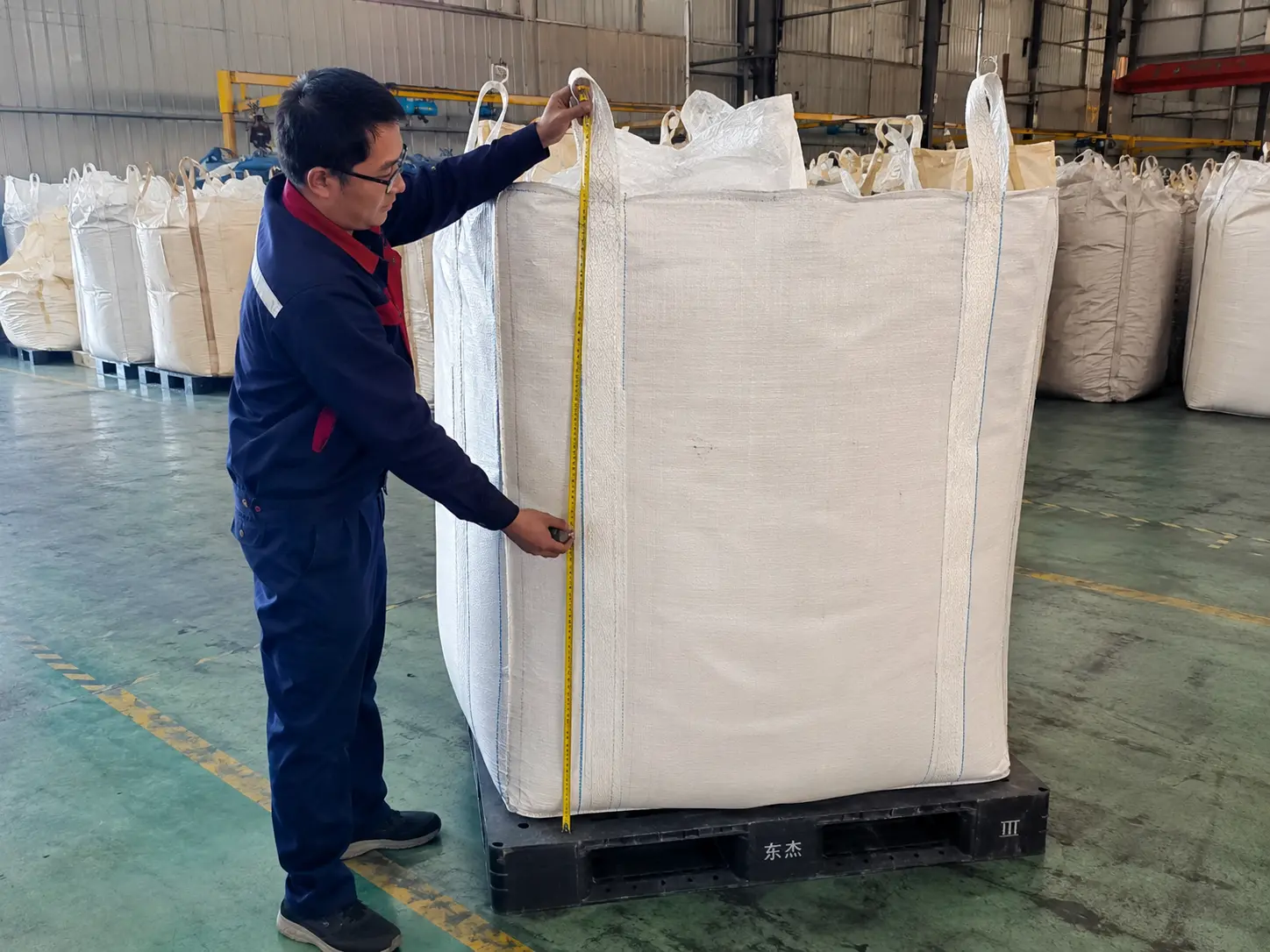
Loop Configurations at a Glance
| Configuration | Loop count | Attachment style | Equipment needed |
|---|---|---|---|
| Four-loop (standard) | 4, one per corner | Cross-corner or side-seam | Standard forklift spreader bar, most cranes |
| Two-loop | 2, opposite corners or sides | Cross-corner typically | Two-point lifting equipment |
| Single-loop | 1, central | Central reinforced attachment | Single-hook crane or hoist |
Four-Loop: The Standard Configuration
Four-loop bags — one loop at each top corner — are the mainstream configuration because they distribute the full load evenly across all four attachment points, and they’re compatible with the widest range of lifting equipment: standard forklift spreader bars, most overhead cranes, and manual hoist setups. Unless you have a specific reason to consider an alternative, four-loop is the default that fits nearly any handling situation.
Cross-Corner vs Side-Seam: A Construction Difference, Not Just a Look
Cross-corner loops attach diagonally across each corner, so the lifting stress transfers into both adjacent side panels rather than concentrating at a single seam — a construction choice that adds reinforcement at the point of highest stress during a lift. Side-seam loops attach along the vertical side seam instead of the corner itself, a different stress path into the fabric that some manufacturers use as a standard construction approach. Both are legitimate, tested configurations; the difference matters more for how a specific factory builds their bags than as a universal “better” choice between the two.
Two-Loop Bags: A Narrower Fit
Two-loop bags reduce the attachment points to two, typically at opposite corners, designed for handling equipment set up specifically for two-point lifting rather than the four-point spread a standard forklift bar expects. This configuration makes sense when your existing equipment is already built around two-point handling, but it’s a narrower fit than four-loop — confirm compatibility with your actual lifting equipment before specifying two-loop, since it won’t work the same way with standard four-point gear.
Single-Loop Bags: Built Around Specific Equipment
Single-loop bags centralize lifting into one reinforced attachment point, designed for a single-hook crane or hoist rather than a spreader bar arrangement. This is the most specialized of the three configurations and the most tightly tied to specific site equipment — a single-loop bag isn’t a general-purpose alternative to four-loop, it’s a match to a particular handling setup that some operations use, particularly where a single-hook crane is already the standard lifting method on site.
Matching Loop Type to Your Lifting Equipment
The decision isn’t really about the bag — it’s about what’s already on your dock or in your yard. A forklift with a standard spreader bar needs four-loop. A crane or hoist with a single hook needs single-loop or a bag with a lifting sling. A facility already using two-point handling equipment for other loads might specify two-loop for consistency across its material handling. Confirm this against your actual equipment before finalizing an order — this is one spec where guessing wrong means bags that simply can’t be lifted safely on your site, not just a suboptimal choice. It’s worth checking this alongside your bag’s fill and discharge style, since both loop type and top/bottom construction are about matching the bag to your actual handling process rather than a generic spec.
Common Mistakes When Specifying Loop Type
- Ordering based on what “looks standard” rather than checking actual equipment. Four-loop is common, but common isn’t automatically compatible with every site’s specific gear.
- Assuming any four-loop bag works with any forklift spreader bar. Loop spacing and spreader bar dimensions still need to line up — confirm actual measurements, not just configuration type.
- Switching loop configuration mid-relationship with a supplier without confirming equipment fit first. A change that seems minor on a spec sheet can mean bags your current equipment can’t lift.
- Treating cross-corner and side-seam as interchangeable without checking factory-specific construction quality. Both are legitimate, but verify the specific factory’s stitching and reinforcement at whichever attachment point they use.
- Not accounting for load distribution differences when switching from four-loop to two-loop. Two-point lifting concentrates stress differently across the bag than four-point does — confirm the bag’s construction accounts for that.
Why Loop Configuration Isn’t Just About the Bag
It’s worth stepping back from the bag spec itself: loop configuration is really a statement about your site’s material handling infrastructure, not a preference about the product. A facility standardizing on new equipment might use that as an opportunity to also reconsider loop configuration across future orders, rather than defaulting to whatever configuration previous orders happened to use. If you’re evaluating new lifting equipment and new bulk bag specs at the same time, coordinate the two decisions together rather than locking in one before the other.
Decision Checklist
- What lifting equipment do you actually have — forklift, crane, hoist? This determines the loop configuration before anything else does.
- Is your equipment set up for four-point, two-point, or single-hook lifting? Match loop count and attachment to that answer specifically.
- Are you standardizing across multiple bag orders? Consistency in loop type simplifies training and reduces handling errors across a facility.
- Have you confirmed compatibility with your specific equipment model, not just its general type? Spreader bar dimensions and hook capacities vary — verify against your actual gear.
- Are you considering a change from your current loop configuration? Confirm your equipment can handle the new configuration before switching, not after bags arrive.
Before You Request a Quote
Tell us your lifting equipment setup and we’ll confirm the right loop configuration:
- Equipment type — forklift with spreader bar, crane, hoist, or other
- Current loop configuration, if you’re replacing an existing order
- Target capacity and dimensions
- Any static protection, food grade, or certification requirements
Request a quote with your equipment details and we’ll confirm the loop configuration that actually fits your site.
Common Questions
What's the most common FIBC loop configuration?
Four-loop, one at each top corner, is the mainstream configuration because it distributes load evenly and works with standard forklift spreader bars and most crane hooks without special equipment.
What's the difference between cross-corner and side-seam loop attachment?
Cross-corner loops attach diagonally across each corner, spreading load through both adjacent side panels for added reinforcement. Side-seam loops attach along the vertical side seams instead of the corners, a construction choice that changes how stress transfers into the fabric during lifting.
When would I choose a two-loop bag over four-loop?
Two-loop bags fit specific handling equipment designed for two-point lifting, and can simplify handling in operations already set up that way. They're less common than four-loop and need equipment compatibility confirmed before ordering.
What is a single-loop FIBC bag used for?
Single-loop bags use one central loop, designed for specific crane or hoist equipment with a single hook attachment rather than a spreader bar. They're a specialized configuration tied closely to the lifting equipment available at a given site.
Can I switch loop types without changing my lifting equipment?
No — loop configuration and lifting equipment are tightly linked. Ordering a bag with a loop type that doesn't match your forklift, crane, or hoist setup means you can't safely lift it, regardless of the bag's other specifications.