Custom Printed Bulk Bags: Options, Plate Fees & Minimums
Custom printing on FIBC bags means a one-time plate fee per color, a higher MOQ than plain bags, and a print method suited to woven PP texture. Here's how the cost actually breaks down.
PackTonne Sourcing Desk · · 6 min read
Custom printing on an FIBC bag has two cost components: a one-time plate fee per color per design, and a small marginal ink cost per bag after that. Printed bags also carry a higher minimum order than plain bags, since the plate setup cost needs enough units to be worthwhile. This guide breaks down what actually drives printing cost and MOQ, so a quote makes sense instead of just looking like a flat markup — our price guide covers where printing fits among the other cost drivers if you’re comparing a full quote.
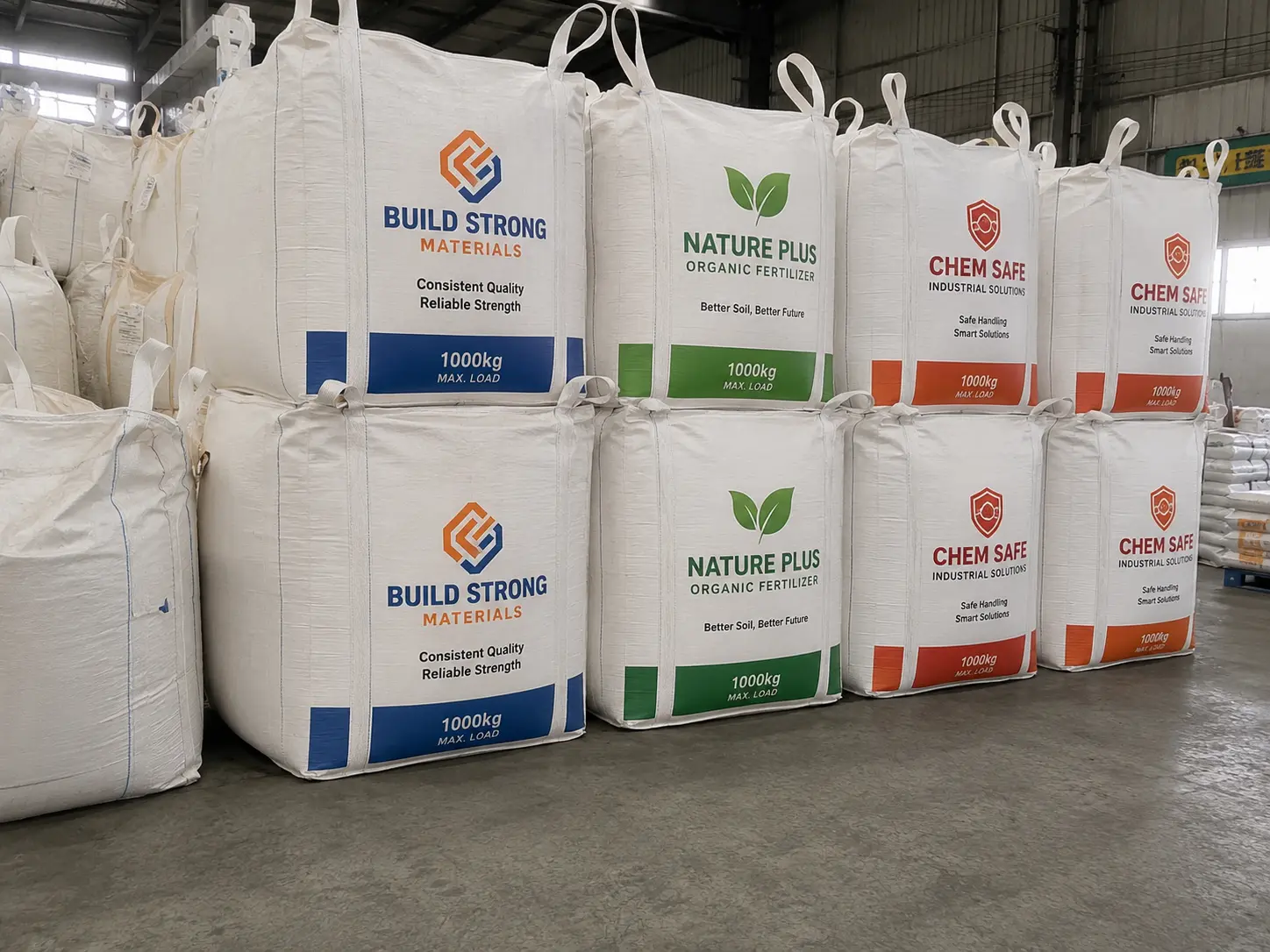
Printing Cost Structure at a Glance
| Component | Cost behavior | What drives it |
|---|---|---|
| Plate fee | One-time, per color, per design | Number of colors and design complexity |
| Ink cost | Marginal, per bag | Barely changes with color count once in production |
| MOQ | Higher than plain bags | Needs to spread the plate fee across enough units |
| Placement | Adds cost per additional panel printed | Side panel only vs. side plus top/base |
How Plate Fees Actually Work
A printing plate is made once per color per design and reused for the entire run — that’s why the fee is fixed regardless of whether you order 1,000 or 10,000 bags. Once the plate exists, each bag only adds a small ink cost, which is why unit price barely moves once you’re past the initial run. This structure is exactly why plate fees matter more on smaller orders: a $200 plate fee spread across 1,000 bags adds far less per unit than the same fee spread across 200.
Screen Printing Is the Standard Method for Woven PP
Screen printing is the most common method for printing on woven polypropylene, because the fabric’s coarse texture holds screen-printed ink evenly and supports solid color blocks and clean logo edges. Digital printing exists in the industry but is less common for large solid-color designs on this fabric type — the woven texture doesn’t reproduce fine digital detail as cleanly as it holds a screen-printed block. If your design needs photographic detail or gradient shading, ask your supplier directly whether their process can achieve it before finalizing artwork.
MOQ for Printed Bags Runs Higher Than Plain Bags
Printing MOQ is set to make the plate fee worthwhile relative to the run size, so it’s typically higher than the minimum for an unprinted bag of the same spec. Don’t assume a factory’s plain-bag MOQ applies once printing enters the order — confirm the printed minimum specifically, and ask whether it changes with color count or design complexity.
Color Count and Placement Drive Cost More Than Bag Size
Each additional color needs its own plate, so a two-color design costs roughly double the plate fee of single-color — not a small increment. Placement compounds this: printing on multiple panels (side plus top, or multiple sides) multiplies the plate and setup cost rather than adding a flat fee. If you’re testing a new market or a new bag design before committing to full branding, single-color, single-panel printing keeps the initial cost lowest while you validate demand.
Artwork Requirements: Vector Files Save Time
Vector formats — AI, EPS, or high-resolution PDF, with colors separated by plate — are the standard artwork requirement for print setup. A raster image like a JPG or PNG usually needs to be redrawn as vector art before a plate can be made, adding time to your production schedule. If you already have brand vector files, send those from the first conversation rather than a logo pulled from a website.
Printing vs Labels: Not Always an Either/Or
Printed branding on the fabric itself and separate adhesive or sewn-in labels solve different problems. Printing puts your brand visibly on the bag body — the right call for marketing visibility on a pallet or in a warehouse. Labels handle variable information that changes batch to batch — production date, batch number, weight — information that doesn’t make sense to print permanently since it’s different on every run. Most food grade, UN certified, or traceability-conscious orders use both: printed branding plus a separate label for batch-specific data.
Printed Ink and Outdoor Exposure
Woven PP bags stored or transported outdoors face UV exposure, which fades most inks over time regardless of print method. If your bags will sit outside for extended periods before use — construction sites, agricultural storage — ask your supplier about UV-resistant ink options, and set branding expectations accordingly. A bright, saturated print straight off the production line isn’t necessarily what it’ll look like after weeks in the sun.
Common Mistakes When Ordering Custom Printing
- Assuming the plain-bag MOQ applies to printed bags. Confirm the printed minimum separately.
- Sending raster artwork and expecting immediate plate setup. Vector conversion adds time you can plan around if you know it’s needed upfront.
- Adding colors without checking the cost jump. Each color is close to a full additional plate fee, not a small add-on.
- Testing a new design at full color and multi-panel placement. Start single-color, single-panel for a market test; expand once you’ve validated the design.
- Forgetting print placement affects visibility on a palletized or stacked bag. Side panels are the most commonly visible placement once bags are stacked or loaded.
Decision Checklist
- Do you have vector artwork ready, or does it need to be redrawn? Factor redraw time into your schedule if not.
- How many colors does your design actually need? Each one adds a near-full plate fee.
- Is this a market test or a committed brand rollout? Start minimal for a test; invest in full color and placement once validated.
- Have you confirmed the printed MOQ, not just the plain-bag minimum? They’re usually different numbers.
- Does your design need photographic detail? Confirm your supplier’s print method can actually achieve it before finalizing.
Before You Request a Quote
Send these details so we can quote your printed order accurately:
- Number of colors in your design
- Placement — which panels need printing
- Artwork format — vector files if available
- Target order quantity
- Bag spec — capacity, fabric weight, and any static or certification requirements
Request a quote with your artwork and spec, and we’ll confirm plate fees and minimums against your actual design.
Common Questions
How much does it cost to print a logo on a bulk bag?
Printing has two cost components: a one-time plate fee per color per design, and a small marginal ink cost per bag after that. The plate fee is fixed regardless of order size, so it matters more on smaller runs; per-bag ink cost barely moves the total price once you're in production.
What's the minimum order for custom printed bulk bags?
Printing MOQ typically runs higher than an unprinted bag's minimum, because the plate setup cost needs to spread across enough units to be worthwhile. Ask your supplier for the printed MOQ specifically — don't assume it matches the plain-bag minimum.
What printing method is used on woven polypropylene bags?
Screen printing is the most common method for woven PP fabric, because the coarse woven texture holds screen-printed ink well and supports solid color blocks. Digital printing exists but is less common on this fabric type for large solid-color designs.
Does adding more colors significantly increase the price?
Yes — each additional color needs its own plate, so a two-color design costs roughly double the plate fee of a one-color design, not a small increment. If you're testing a market before committing to full branding, single-color printing keeps the plate fee lowest.
What artwork format do I need to provide for bulk bag printing?
Vector file formats (AI, EPS, or high-resolution PDF) with colors separated by plate are standard. Raster images (JPG, PNG) usually need to be redrawn as vector art before a plate can be made, which adds time — send vector files from the start if you have them.