Types of FIBC Bags Explained: A/B/C/D, Baffle, Food Grade & More
Six FIBC bag types cover nearly every bulk product: standard, four anti-static classes, food grade, UN certified, baffle and ventilated. Here's how to pick the right one.
PackTonne Sourcing Desk · · 8 min read
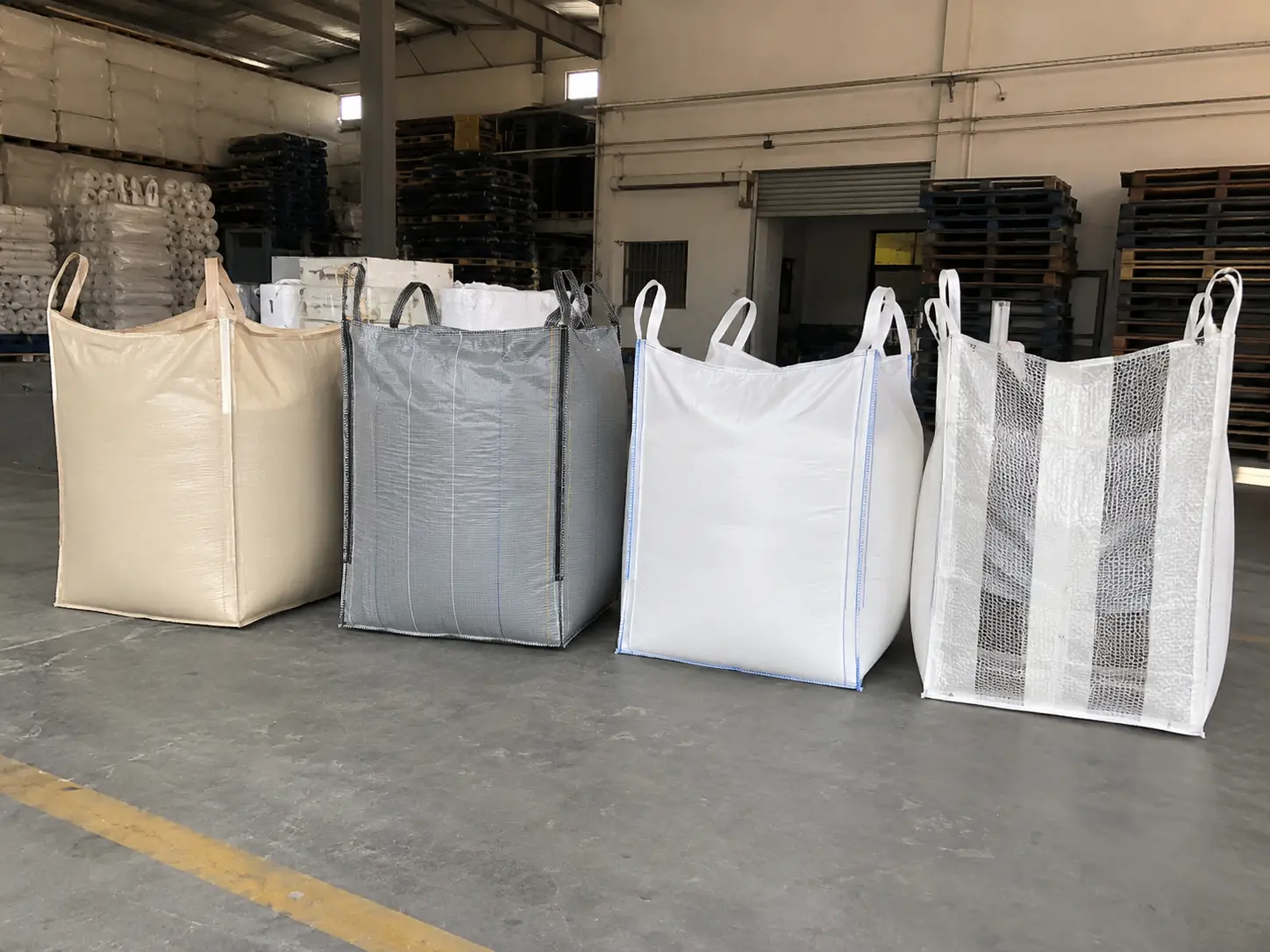
Six FIBC types cover nearly every bulk product moved in a 500–3000 kg bag: Type A standard, Type B/C/D anti-static, food grade, UN certified, baffle, and ventilated. The type you need depends on what’s inside the bag — flammability, moisture sensitivity, hazard classification, or airflow requirement — not on price or brand. This guide breaks down what each type is built for, so you can match a bag to your product instead of guessing.
FIBC Types at a Glance
| Type | Key feature | Needs grounding | Typical use |
|---|---|---|---|
| Type A | Standard woven PP, no static protection | No | Sand, non-combustible minerals, fertilizer |
| Type B | Breakdown voltage <6kV | No | Dry combustible powders, no solvent present |
| Type C | Interconnected conductive threads | Yes, mandatory | Solvent environments, chemical plants |
| Type D | Static dissipative weave | No | Sites where grounding can’t be guaranteed |
| Food Grade | Clean production, PE liner | Depends on fabric type | Food, feed, pharmaceutical ingredients |
| UN Certified | 13H1–13H4 marking | Depends on fabric type | Hazardous goods, sea and road freight |
| Baffle | Internal panels hold square shape | Depends on fabric type | Palletized granules needing tight stacking |
| Ventilated | Open-weave breathable fabric | Depends on fabric type | Firewood, onions, potatoes |
This table is a starting map. Several categories stack — a bag can be food grade and Type C, or baffle and UN certified, at the same time.
Type A: The Baseline Bag
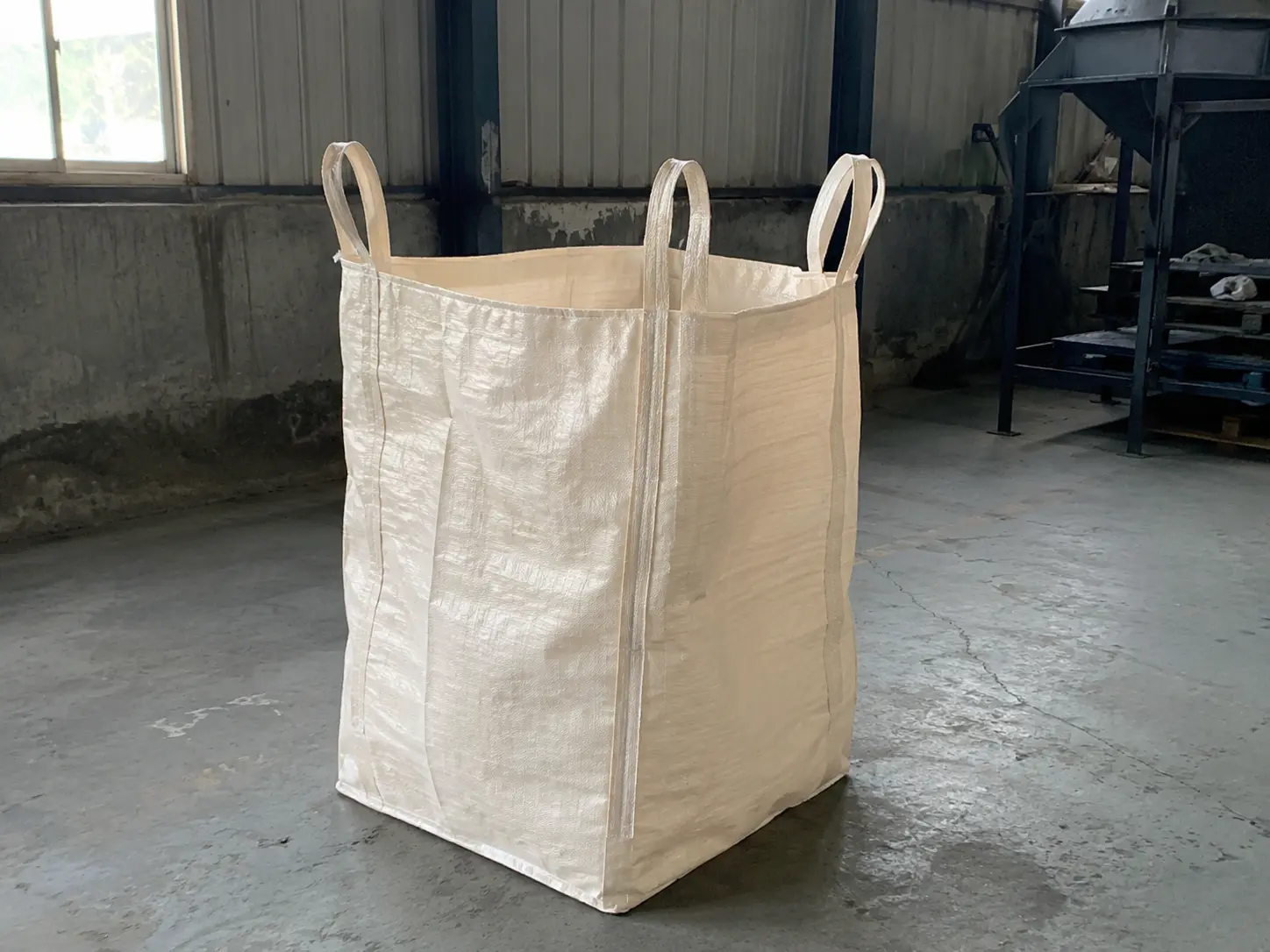
Type A is standard woven polypropylene with no static protection, and it’s the right choice whenever your product isn’t flammable. Sand, gravel, non-combustible minerals and most fertilizers ship in Type A because there’s no ignition risk to manage. It’s also the cheapest of the six types — paying for anti-static construction on a product that can’t generate a dust explosion is money spent on a feature you’ll never use. Base fabric weight typically runs 140–210 g/m², chosen to match load and safety factor rather than static concerns. See full specs on the Type A standard bags page.
Type B: Limited Protection, No Grounding
Type B fabric keeps breakdown voltage under 6kV, low enough to prevent propagating brush discharges, without requiring the bag to be grounded. It fits dry combustible powders in an environment with no flammable solvents or gases nearby — grain dust or some plastic resins, for example. Type B is a step up from Type A in cost and a step down from Type C in protection scope; it doesn’t cover solvent vapor environments. Because it needs no grounding hardware, it’s often the practical middle option for sites that handle combustible dust but can’t guarantee a clamp gets used every cycle.
Type C: Conductive, Must Be Grounded
Type C bags weave interconnected conductive threads through the fabric, and grounding during filling and discharge is mandatory — skip the ground clamp and the bag offers no real protection. This is the standard choice for chemical plants and any site handling flammable solvents or vapors, tested to IEC 61340-4-4. Full specs and grounding requirements are on the anti-static bulk bags page.
Type D: Dissipative, No Grounding Required
Type D uses a denser static-dissipative weave that bleeds off charge without needing a grounding connection, which makes it the practical choice for sites where a reliable ground point can’t be guaranteed — remote filling stations, mobile operations, older facilities. It costs more than Type B but removes the grounding failure point that makes Type C risky when operators skip the clamp.
Food Grade: Clean Production, Not a Fabric Property
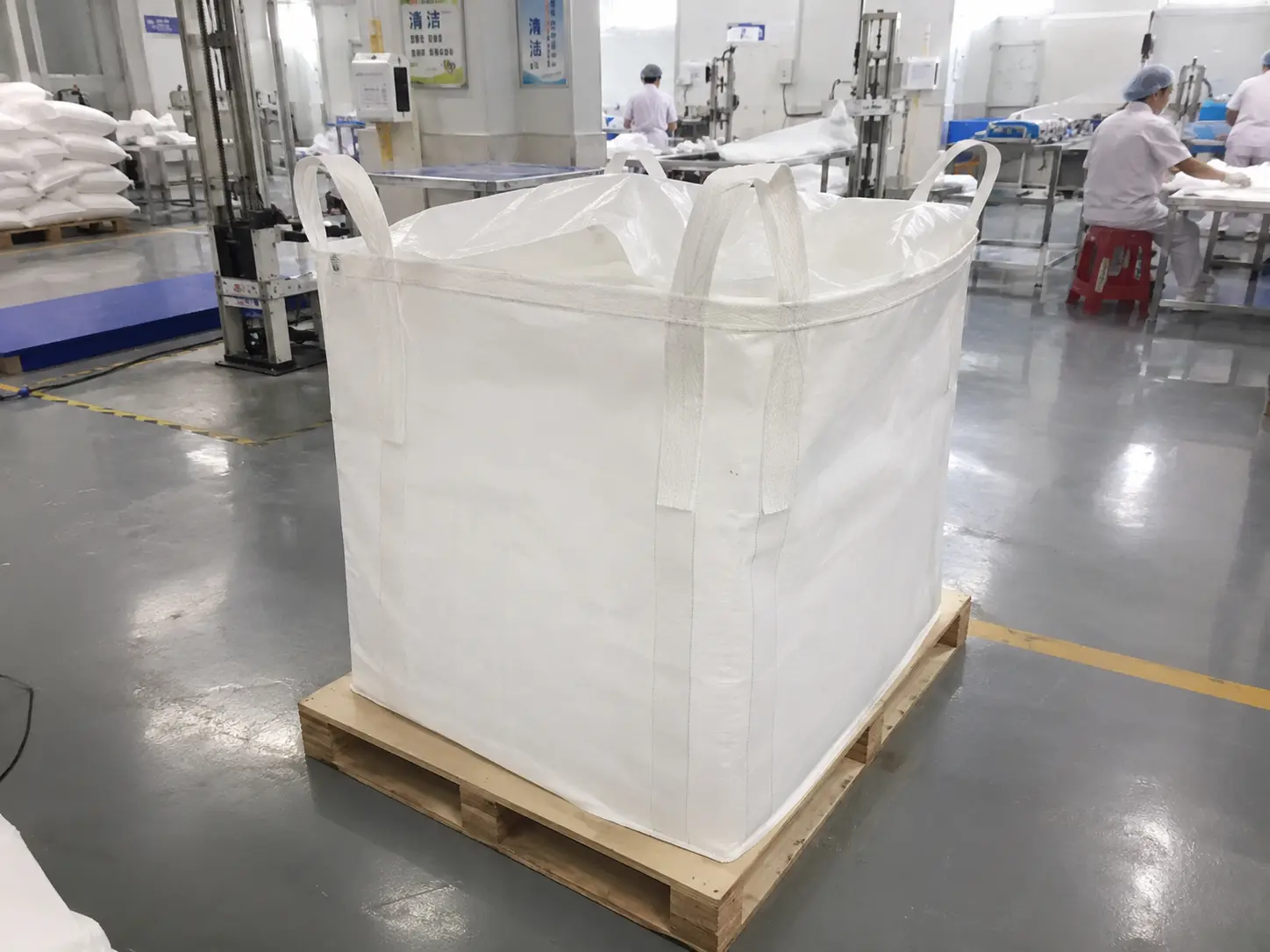
Food grade status comes from the production environment and liner, not from the base fabric weave. These bags are made in controlled conditions with a PE liner built to keep contaminants out, meeting FDA-relevant requirements for food, animal feed and pharmaceutical ingredients. A food grade bag can also carry Type B or C static protection if the product needs both — the two classifications aren’t mutually exclusive. Details on liner options and construction are on the food grade bulk bags page.
UN Certified: For Regulated Hazardous Goods
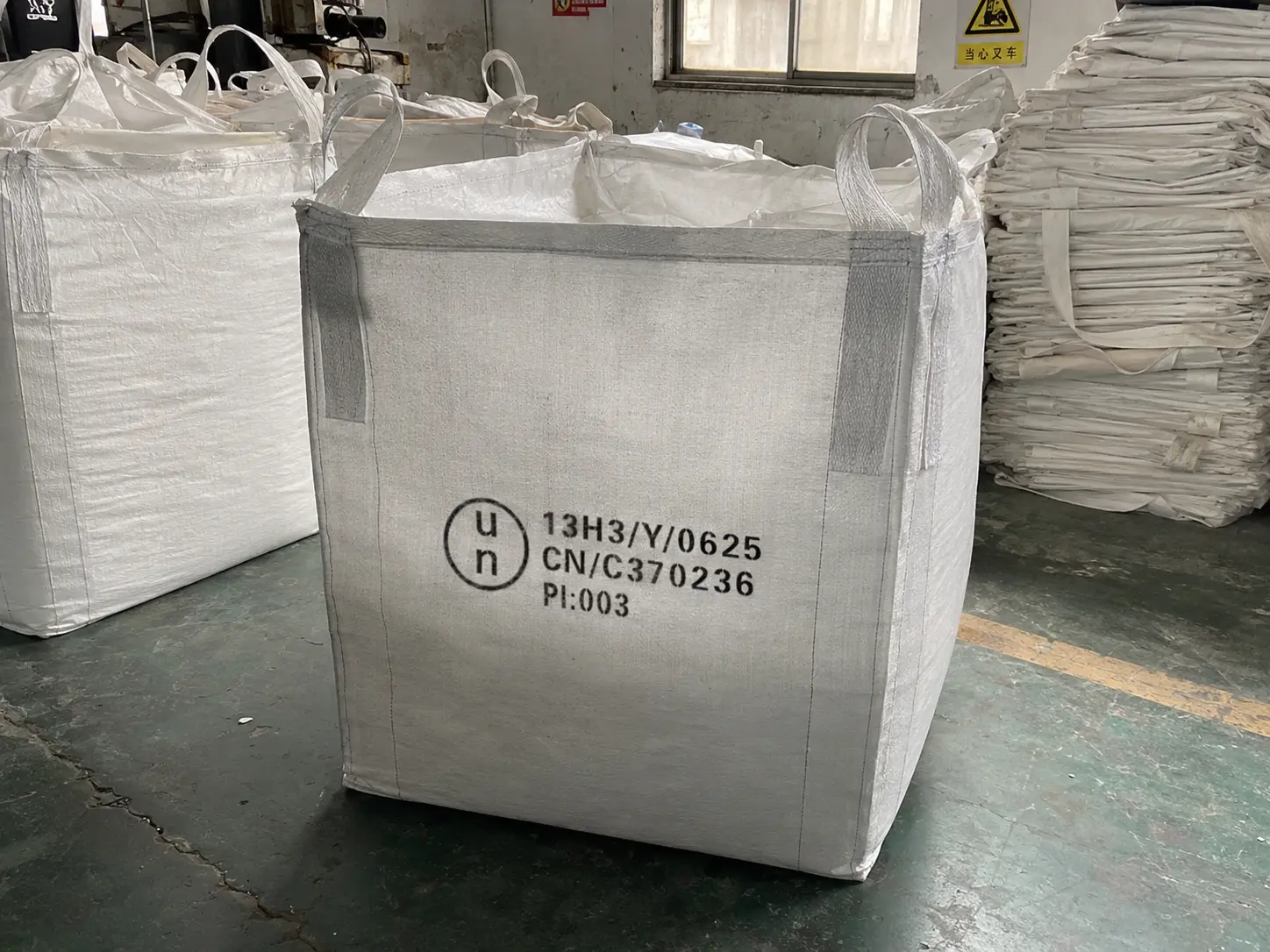
UN certified bags carry a 13H1–13H4 marking that confirms the bag passed testing for a specific hazard class, packing group and fabric spec — required whenever you’re shipping a UN-classified dangerous good by sea or road. The certification locks the design: fabric weight, coating and liner can’t change after testing without recertifying the bag. That’s a different sourcing conversation than a standard bag — you’re buying a fixed, tested design, not a spec that can flex to your preferences. Non-hazardous products don’t need this certification regardless of how they’re packed. See the marking codes explained on the UN certified bulk bags page.
Baffle Bags: Built to Hold Their Shape
Baffle bags have internal fabric panels sewn across the corners that keep the bag square when filled, instead of bulging into a round shape like a standard bag does. That squared profile improves pallet stacking and container utilization — the main reason buyers pay the premium for baffle construction. It’s a shape feature, not a hazard or cleanliness feature, so a baffle bag can also be food grade, UN certified, or anti-static. More on the construction on the baffle bags page.
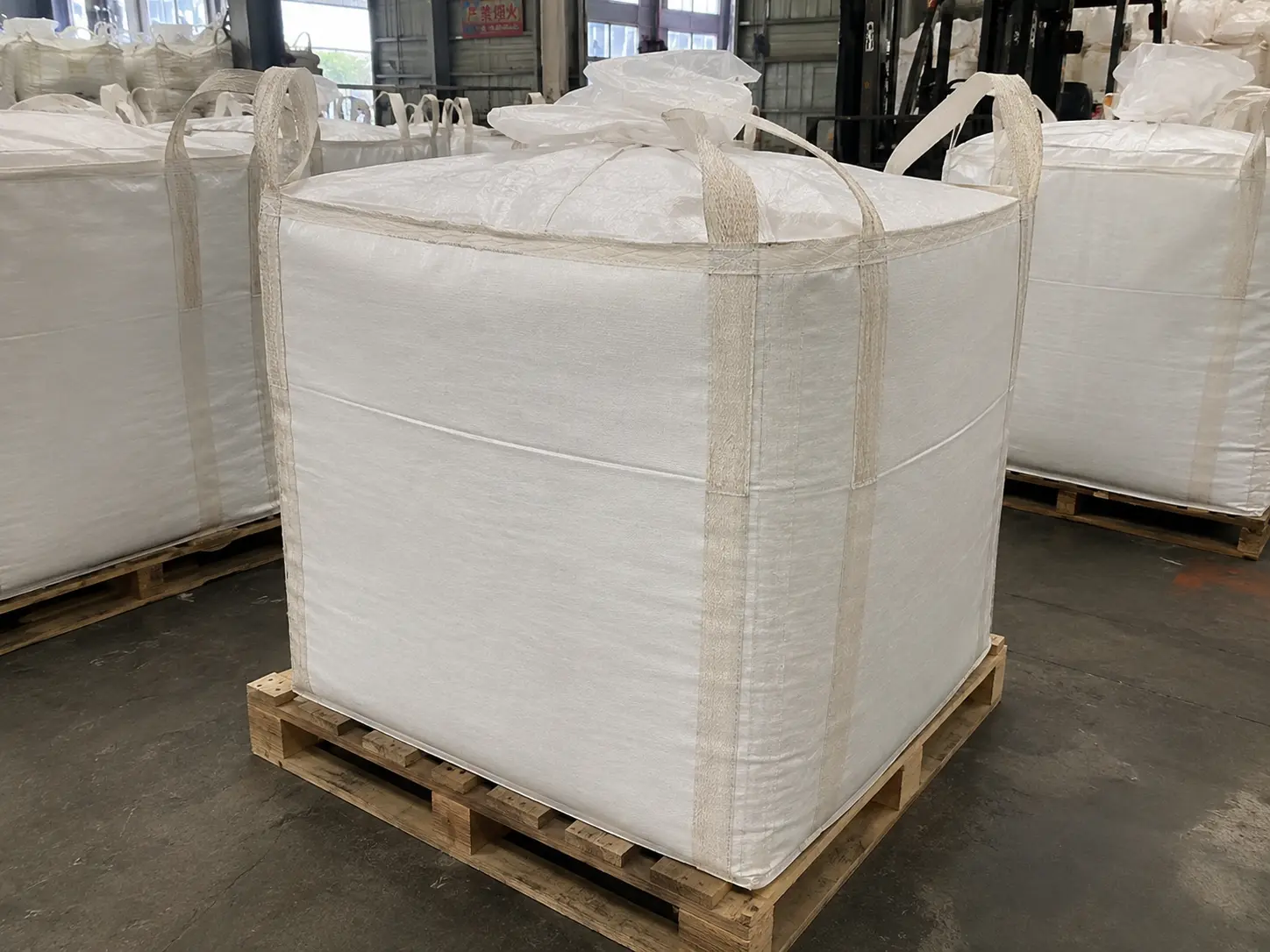
Ventilated Bags: Built for Airflow
Ventilated bags use an open-weave, breathable fabric instead of solid woven PP, letting air pass through the bag to prevent moisture buildup and rot. Firewood, onions and potatoes are the typical loads — anything that needs to breathe during storage or transit rather than stay sealed. This is the one category where solid fabric would actively hurt the product instead of protecting it, trapping moisture against the load and accelerating spoilage. The open weave also means these bags aren’t suited to fine powders or granules, which would simply sift through the gaps. Full spec on the ventilated bags page.
The Letter Grade Isn’t a Quality Ranking
Type A, B, C and D describe static protection, not overall build quality — a Type A bag can have a heavier fabric and stronger stitching than a poorly made Type C bag. Don’t assume a higher letter means a “better” bag across the board; it means better suited to a specific ignition risk. Matching the wrong letter to your product either wastes money on unneeded protection or leaves a real hazard unaddressed, so treat the type selection as a safety question first and a cost question second.
Categories That Stack
Static class, food grade, UN certification, baffle and ventilation aren’t mutually exclusive — most bags combine one static class with zero or more of the other categories. A fertilizer exporter might need Type A plus baffle for tight container loading. A solvent-based chemical exporter might need Type C plus UN certification. Tell your supplier every relevant property of the product, not just the one that seems most obvious, so nothing gets missed in the spec.
How to Choose: A Decision Checklist
Work through these questions in order — each one narrows the field:
- Is the product flammable or combustible dust? If no, Type A. If yes, move to question 2.
- Is there flammable solvent or vapor present during filling/discharge? If yes, Type C with mandatory grounding. If no, Type B or D depending on whether grounding is reliably available on site.
- Is the product food, feed, or pharmaceutical grade? If yes, add food grade construction on top of whatever static class you selected.
- Is the product a UN-classified dangerous good? If yes, it needs UN certification regardless of static class.
- Does the product need to breathe (firewood, produce)? If yes, ventilated fabric overrides the solid-weave options above.
- Does container or pallet space matter more than per-bag cost? If yes, add baffle construction.
Most buyers land on one primary type plus zero or one add-on category. If your product checks boxes in more than two categories, send us the spec and let us confirm the right combination.
Before You Request a Quote
Have these answers ready before contacting a supplier:
- Product name and whether it’s classified as a dangerous good
- Flammability and whether solvents or vapors are present during handling
- Food, feed or pharmaceutical use, if applicable
- Target capacity and dimensions
- Whether container loading efficiency matters for your route
Send this to us and we’ll confirm the right type combination and request a quote against your exact specification.
Common Questions
How many types of FIBC bags are there?
Six main types cover nearly every use case: Type A standard, Type B/C/D anti-static, food grade, UN certified, baffle, and ventilated. Some bags combine categories — a food grade bag can also be Type C, and a baffle bag can also be UN certified.
What's the difference between Type A, B, C and D FIBC bags?
The letter refers to static protection, not overall quality. Type A has none. Type B limits breakdown voltage but doesn't need grounding. Type C uses conductive threads and must be grounded during filling and discharge. Type D dissipates static without grounding, using a denser conductive weave.
Can a bulk bag be both food grade and anti-static?
Yes. Food grade refers to the production environment and liner material, not the fabric's static properties. A bag can be manufactured to food grade standards and also carry Type B or C anti-static protection if the product needs both.
Do I need a UN certified bag for my product?
Only if you're shipping a UN-classified dangerous good by sea or road. Non-hazardous powders, granules and minerals don't need UN certification — a standard or anti-static bag rated for the right safety factor is enough.
What's the difference between a baffle bag and a standard bag?
A baffle bag has internal fabric panels sewn across the corners that hold the bag square when filled. A standard bag without baffles bulges into a rounder shape, which wastes space on a pallet or in a container.